The Toyota Harrier II (XU30): A Pioneer in Luxury Crossovers
The Toyota Harrier II (XU30) represents the second generation of Toyota’s acclaimed mid-size luxury crossover SUV. Produced from 2003 to 2013, the XU30 generation, particularly the 3.0 V6 24V (220 Hp) Automatic variant manufactured between 2003 and 2005, played a pivotal role in defining the modern luxury crossover segment. While known globally as the Toyota Harrier, this model was also rebadged and sold in North America as the Lexus RX 330 (and later RX 350), effectively launching Lexus into the burgeoning premium SUV market with immense success. In its primary markets, such as Japan and parts of Asia, the Harrier carved out a niche for consumers seeking SUV versatility combined with the comfort, refinement, and driving dynamics of a luxury sedan, without the ruggedness or fuel consumption typically associated with traditional body-on-frame SUVs.
The XU30 generation built upon the success of its predecessor, evolving its design, enhancing its powertrain options, and integrating more sophisticated features. The 3.0 V6 variant, in particular, was a popular choice, offering a compelling blend of smooth performance, respectable fuel efficiency for its class, and the legendary reliability synonymous with the Toyota brand. Its sophisticated powertrain architecture, combined with a comfortable and spacious interior, positioned the Harrier as a highly desirable vehicle for urban families and individuals seeking a premium, versatile daily driver.
Engine and Performance of the Toyota Harrier II (XU30) 3.0 V6
At the heart of the 2003-2005 Toyota Harrier II (XU30) 3.0 V6 24V Automatic model lies Toyota’s venerable 1MZ-FE engine. This 3.0-liter (2994 cm3 or 182.71 cu. in.) V6 engine is renowned for its smooth operation, robust reliability, and efficient power delivery. Featuring a DOHC (Double Overhead Camshaft) valvetrain with VVT-i (Variable Valve Timing with intelligence), the engine was engineered for optimal performance across the RPM range, while also contributing to improved fuel economy and reduced emissions.
The 1MZ-FE in this configuration produced a healthy 220 horsepower at 5800 rpm, providing ample power for highway cruising and confident overtaking maneuvers. Torque output stood at 304 Nm (224.22 lb.-ft.) at 4400 rpm, ensuring strong acceleration from a standstill and responsive performance in various driving conditions. The engine’s naturally aspirated design, coupled with a multi-port manifold injection system, contributed to its linear power delivery and refined character. Power was managed by a 4-speed automatic transmission, which, while not as gear-rich as later transmissions, was well-matched to the engine’s torque curve, offering seamless shifts and a comfortable driving experience.
The powertrain architecture directed power to the front wheels (Front Wheel Drive), a common setup for crossovers prioritizing on-road comfort and efficiency over extreme off-road capability. This configuration, combined with a kerb weight of 3681.72 lbs. (1670 kg), resulted in a weight-to-power ratio of 7.6 kg/Hp (131.7 Hp/tonne), indicating a respectable balance between mass and motive force. Fuel economy for the combined cycle was rated at 10.3 liters per 100 km, translating to approximately 22.8 US mpg, which was competitive for a V6-powered luxury crossover of its time. The 19.02 US gallon (72-liter) fuel tank provided a substantial cruising range.
Design and Features of the Toyota Harrier II (XU30)
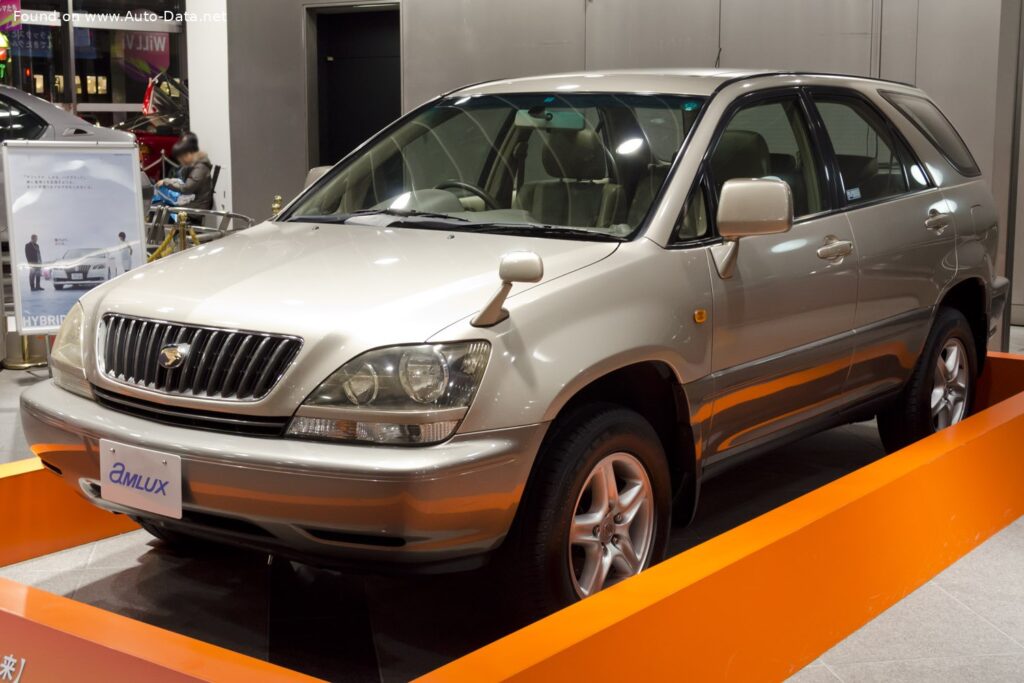
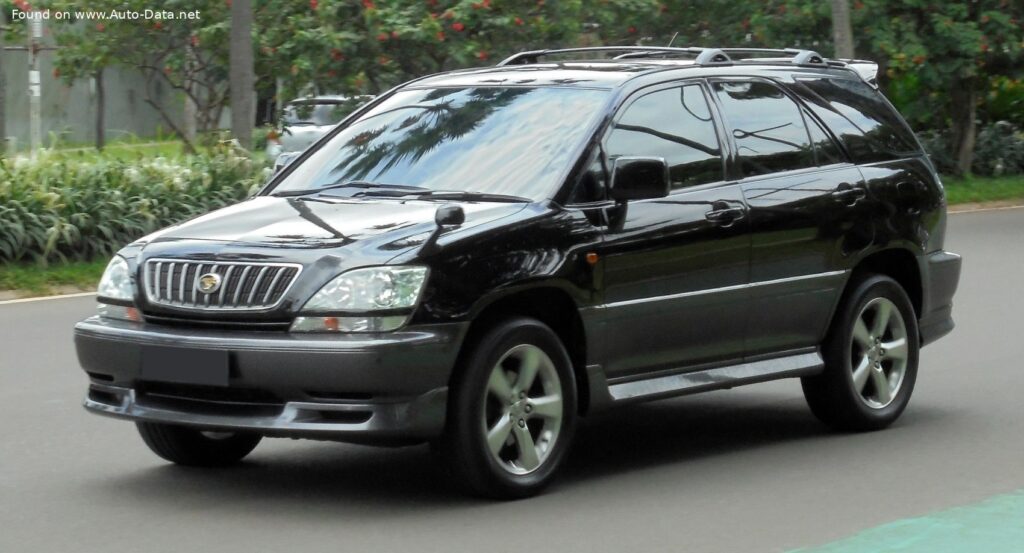
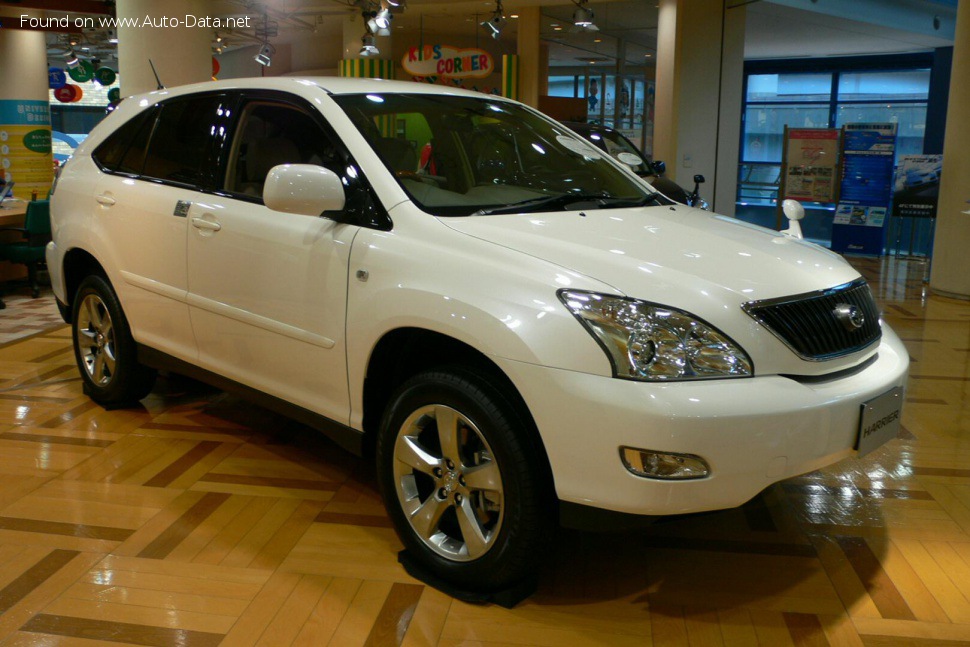
The design of the Toyota Harrier II (XU30) was a significant evolution, establishing a more sleek and aerodynamic profile compared to its predecessor and contemporary traditional SUVs. Classified as an SUV/Crossover, its body type featured five doors and comfortably accommodated five occupants. The exterior styling was characterized by smooth lines, a flowing roofline, and a sophisticated stance that blended the practicality of an SUV with the elegance of a luxury sedan. This aesthetic contributed to its appeal in urban and suburban environments, where a commanding presence without excessive bulk was desired.
Inside, the Harrier II (XU30) prioritized comfort, space, and premium appointments. The cabin was designed to be quiet and refined, utilizing high-quality materials throughout. Ergonomics were carefully considered, with controls intuitively placed for the driver. The generous dimensions, including a length of 186.22 inches (4730 mm) and a width of 72.64 inches (1845 mm), translated into ample passenger room in both the front and rear seats. The vehicle’s height of 66.14 inches (1680 mm) and a wheelbase of 106.89 inches (2715 mm) further contributed to a stable ride and spacious interior.
Practicality was a key strength, with a versatile cargo area. The minimum trunk space measured 15.54 cu. ft. (440 liters), which could be expanded significantly to a maximum of 75.22 cu. ft. (2130 liters) by folding down the rear seats, making it highly adaptable for various hauling needs. In terms of driving dynamics and safety, the Harrier II (XU30) came equipped with a hydraulic power steering rack and pinion system, providing a comfortable and responsive steering feel. Front ventilated disc brakes and rear disc brakes, complemented by an Anti-lock Braking System (ABS), ensured confident stopping power. The vehicle rode on 225/65 R17 tires mounted on 6.5 Jx 17 ET35 wheel rims, offering a good balance of ride comfort and handling stability.
Technical Specifications: Toyota Harrier II (XU30) 3.0 V6 24V (220 Hp) Automatic
| Category | Specification | Value |
|---|---|---|
General Information |
||
| Brand | Toyota | Harrier |
| Generation | Harrier II (XU30) | |
| Type (Engine) | 3.0 V6 24V (220 Hp) Automatic | |
| Start of Production | 2003 year | |
| End of Production | 2005 year | |
| Powertrain Architecture | Internal Combustion Engine | |
| Body Type | SUV, Crossover | |
| Seats | 5 | |
| Doors | 5 | |
Performance Specs |
||
| Fuel Consumption (Combined) | 10.3 l/100 km (22.8 US mpg) | |
| Fuel Type | Petrol (Gasoline) | |
| Weight-to-Power Ratio | 7.6 kg/Hp (131.7 Hp/tonne) | |
| Weight-to-Torque Ratio | 5.5 kg/Nm (182 Nm/tonne) | |
Engine Specs |
||
| Power | 220 Hp @ 5800 rpm | |
| Power per Liter | 73.5 Hp/l | |
| Torque | 304 Nm (224.22 lb.-ft.) @ 4400 rpm | |
| Engine Layout | Front, Longitudinal | |
| Engine Model/Code | 1MZ-FE | |
| Engine Displacement | 2994 cm3 (182.71 cu. in.) | |
| Number of Cylinders | 6 | |
| Engine Configuration | V-engine | |
| Cylinder Bore | 87.5 mm (3.44 in.) | |
| Piston Stroke | 83 mm (3.27 in.) | |
| Compression Ratio | 10.5:1 | |
| Valves per Cylinder | 4 | |
| Fuel Injection System | Multi-port manifold injection | |
| Engine Aspiration | Naturally aspirated engine | |
| Valvetrain | DOHC, VVT-i | |
| Engine Oil Capacity | 4.7 l (4.97 US qt) | |
| Coolant Capacity | 9 l (9.51 US qt) | |
Space, Volume and Weights |
||
| Kerb Weight | 1670 kg (3681.72 lbs.) | |
| Trunk Space (Minimum) | 440 l (15.54 cu. ft.) | |
| Trunk Space (Maximum) | 2130 l (75.22 cu. ft.) | |
| Fuel Tank Capacity | 72 l (19.02 US gal) | |
Dimensions |
||
| Length | 4730 mm (186.22 in.) | |
| Width | 1845 mm (72.64 in.) | |
| Height | 1680 mm (66.14 in.) | |
| Wheelbase | 2715 mm (106.89 in.) | |
| Front Track | 1575 mm (62.01 in.) | |
| Rear Track | 1560 mm (61.42 in.) | |
| Ride Height (Ground Clearance) | 185 mm (7.28 in.) | |
Drivetrain, Brakes and Suspension Specs |
||
| Drivetrain Architecture | Internal combustion engine drives the front wheels | |
| Drive Wheel | Front wheel drive | |
| Number of Gears and Type of Gearbox | 4 gears, automatic transmission | |
| Front Brakes | Ventilated discs | |
| Rear Brakes | Disc | |
| Assisting Systems | ABS (Anti-lock Braking System) | |
| Steering Type | Steering rack and pinion | |
| Power Steering | Hydraulic Steering | |
| Tire Size | 225/65 R17 | |
| Wheel Rims Size | 6.5 Jx 17 ET35 | |
Legacy and Market Impact of the Toyota Harrier II (XU30)
The Toyota Harrier II (XU30) left an indelible mark on the automotive landscape, particularly in its primary markets of Japan and parts of Asia. Its most significant legacy, however, is its dual identity as the Lexus RX in North America. By offering a sophisticated, car-like driving experience in an SUV package, the Harrier/RX essentially pioneered the luxury crossover segment globally. It demonstrated that consumers desired the elevated driving position and utility of an SUV without the compromises in ride quality, handling, or fuel efficiency often associated with traditional, truck-based SUVs.
In Japan, the Harrier II (XU30) was lauded for its premium feel, advanced technology for its era, and unwavering reliability. It became a benchmark for domestic luxury SUVs, offering a compelling alternative to more traditional sedans and larger, less refined SUVs. Its smooth V6 engine, comfortable interior, and distinctive styling resonated strongly with buyers looking for a vehicle that exuded status and practicality. Competitors in its segment included models like the Nissan Murano and to some extent, higher trims of the Honda CR-V, though the Harrier often positioned itself a step above in terms of luxury and engine performance.
The success of the XU30 generation, both as the Toyota Harrier and the Lexus RX, solidified Toyota’s reputation for innovation and foresight in product development. It proved that a vehicle could blend seemingly disparate attributes—SUV ruggedness (or at least, utility) and luxury sedan refinement—into a highly desirable package. This model influenced countless subsequent crossover designs across the industry, setting new standards for how luxury and utility could coexist. Even today, the Harrier continues to be a popular choice in used car markets, a testament to its enduring quality, reliability, and timeless design. Its historical significance lies in its role as a trailblazer, shaping consumer expectations and paving the way for the ubiquitous luxury crossovers that dominate today’s automotive market.