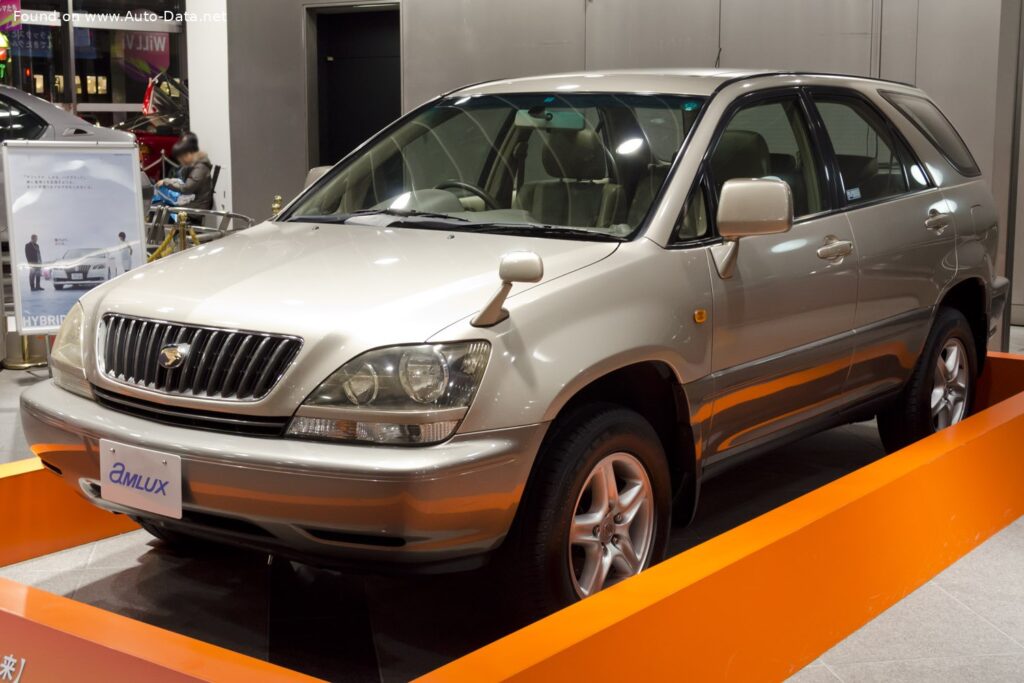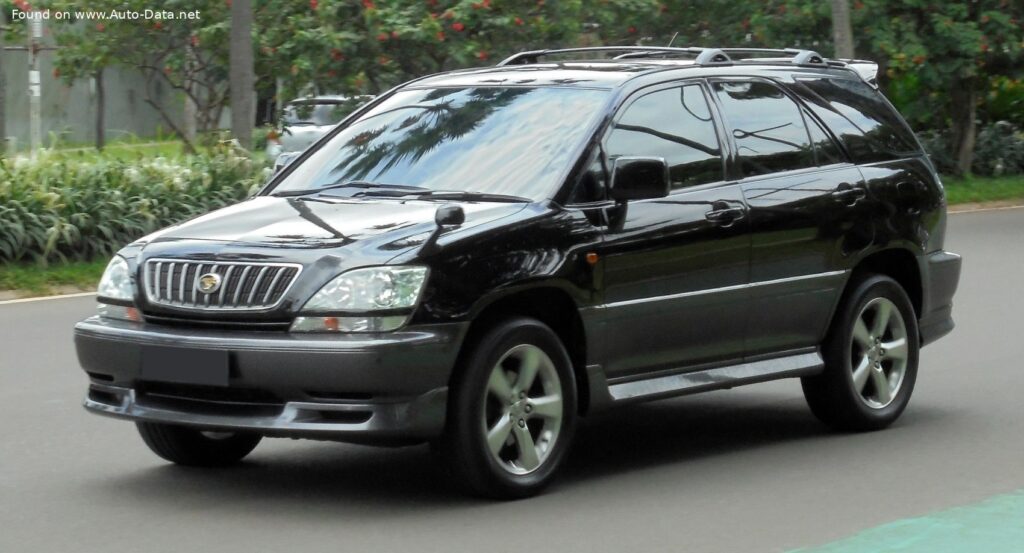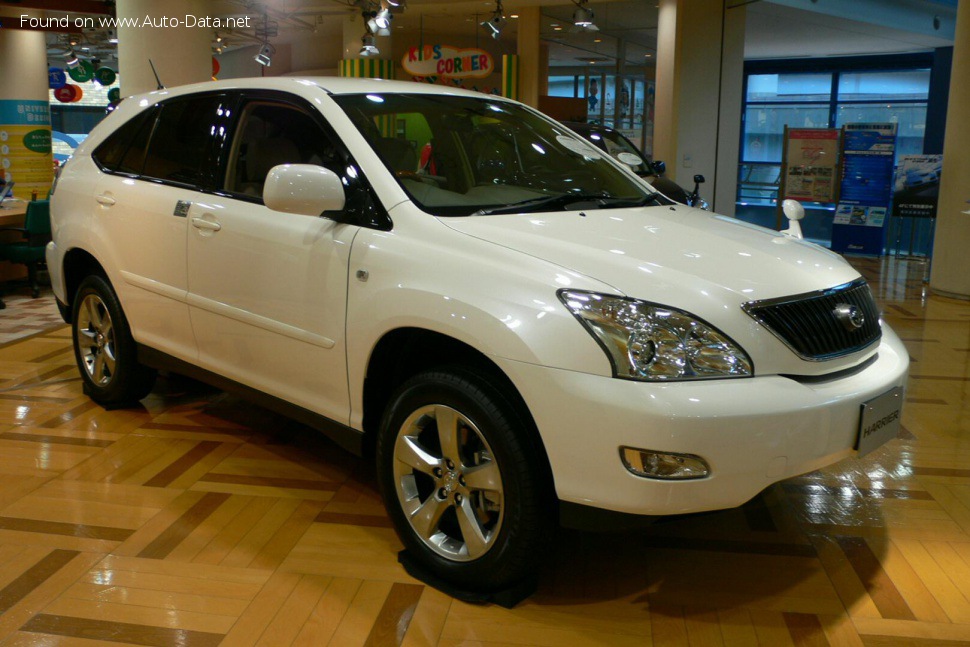
Introduction to the Toyota Harrier II (XU30) 3.3 V6 Hybrid E-Four
The Toyota Harrier II, specifically the XU30 generation, represents a significant milestone in the evolution of luxury crossovers, particularly for its pioneering hybrid variant. Launched in 2005, the Toyota Harrier II (XU30) 3.3 V6 (272 Hp) Hybrid E-Four e-CVT stood as a testament to Toyota’s commitment to advanced powertrain technology, blending robust performance with improved fuel efficiency in a premium package. While the Harrier nameplate was primarily targeted at the Japanese and Asian markets, this particular generation shared its platform and many mechanical components with the Lexus RX, which was sold globally, including in the United States as the Lexus RX 330 and later, the RX 400h, its hybrid counterpart.
The XU30 Harrier, produced from 2005 to 2013, cemented its position in the mid-size SUV segment as a sophisticated and technologically advanced offering. Its hybrid powertrain, featuring a powerful 3.3-liter V6 engine combined with an innovative E-Four all-wheel-drive system, showcased Toyota’s leadership in hybrid vehicle development. This model catered to discerning customers seeking the versatility of an SUV coupled with the refined driving dynamics and environmental consciousness that a hybrid system provided.
Engineering and Performance of the Toyota Harrier II (XU30) Hybrid
At the heart of the Toyota Harrier II (XU30) hybrid model lies a sophisticated Full Hybrid Electric Vehicle (FHEV) powertrain architecture. This system ingeniously combines a conventional internal combustion engine with two electric motors and an electronic continuously variable transmission (e-CVT) to deliver a compelling blend of power, efficiency, and all-wheel-drive capability.
Powertrain Configuration
The primary power source is Toyota’s well-regarded 3MZ-FE 3.3-liter V6 engine. This naturally aspirated, DOHC (Double Overhead Camshaft) engine features VVT-i (Variable Valve Timing with intelligence) and produces a healthy 211 horsepower at 5600 rpm, with a peak torque of 212.42 lb.-ft. at 4400 rpm. The engine is mounted longitudinally at the front, driving the front wheels through the e-CVT system.
Complementing the gasoline engine are two synchronous electric motors. The first electric motor, designated 1JM, is integrated with the front axle and contributes a substantial 167 horsepower at 4500 rpm and an impressive 245.61 lb.-ft. of torque from 0 to 1500 rpm. This motor works in tandem with the V6 engine, providing immediate torque for acceleration and enabling electric-only driving at lower speeds.
The innovative “E-Four” all-wheel-drive system is realized through a second electric motor, which powers the rear wheels independently. This rear electric motor delivers 68 horsepower between 4610-5120 rpm and 95.88 lb.-ft. of torque from 0 to 610 rpm. This setup eliminates the need for a mechanical driveshaft, providing on-demand all-wheel drive, enhancing traction, and contributing to overall system efficiency. The entire hybrid system, comprising the V6 engine and both electric motors, delivers a robust combined system output of 272 horsepower.
Dynamic Capabilities
The combined efforts of this advanced powertrain translate into impressive performance for an SUV of its size. The Toyota Harrier II (XU30) Hybrid accelerates from 0 to 60 mph in a swift 6.9 seconds, a notable figure for a hybrid SUV of its era. Its top speed is electronically limited to 124.27 mph (200 km/h). The vehicle’s weight-to-power ratio stands at 7.1 kg/Hp (140.9 Hp/tonne), indicating a well-balanced power delivery. The hybrid system is supported by a durable Nickel-metal hydride (NiMH) battery technology, a proven choice for Toyota’s early hybrid vehicles. Furthermore, the vehicle achieved an SU-LEV (Super Ultra-Low Emission Vehicle) rating, underscoring its commitment to environmental responsibility.
Design and Features
The Toyota Harrier II (XU30) adopts a sleek and refined SUV/Crossover body type, characterized by its elegant lines and substantial road presence. With five doors and seating for five occupants, it offers practicality and comfort for families and individuals alike. The design ethos of the XU30 generation aimed for a more car-like driving experience compared to traditional body-on-frame SUVs, emphasizing ride comfort and handling.
Exterior and Interior Aesthetics
Measuring 187.99 inches in length, 72.64 inches in width, and 66.54 inches in height, with a wheelbase of 106.89 inches, the Harrier II (XU30) provides a spacious interior and a commanding view of the road. Its exterior features include a distinctive grille, integrated headlights, and a smooth profile that helped define the luxury crossover segment. The 17-inch wheels (6.5 Jx 17 ET35) wrapped in 225/65 R17 tires contribute to both its aesthetic appeal and stable handling.
Inside, the Harrier II (XU30) offered a well-appointed cabin with high-quality materials and thoughtful ergonomics. While specific interior features vary by trim, the vehicle generally included amenities expected in a premium SUV, such as automatic climate control, a sophisticated infotainment system, and comfortable seating. The trunk space is generous, ranging from 15.54 cu. ft. with all seats up to a cavernous 75.22 cu. ft. with the rear seats folded, offering excellent versatility for cargo.
Safety and Chassis
Safety was a priority for the Harrier II (XU30). It came equipped with standard safety features for its time, including an Anti-lock Braking System (ABS) with ventilated discs at the front and disc brakes at the rear, ensuring confident stopping power. The steering system employed a hydraulic rack and pinion setup, providing precise and responsive control. The E-Four all-wheel-drive system also contributed to enhanced stability and traction in various driving conditions.
Technical Specifications
| Category | Specification | Value (US Units) |
|---|---|---|
| General Information | ||
| Brand | Toyota | |
| Model | Harrier | |
| Generation | Harrier II (XU30) | |
| Type (Engine) | 3.3 V6 (272 Hp) Hybrid E-Four e-CVT | |
| Start of Production | 2005 year | |
| End of Production | 2013 year | |
| Powertrain Architecture | FHEV (Full Hybrid Electric Vehicle) | |
| Body Type | SUV, Crossover | |
| Seats | 5 | |
| Doors | 5 | |
| Performance Specs | ||
| Fuel Type | Petrol (Gasoline) | |
| Acceleration 0 – 60 mph | 6.9 sec | |
| Maximum Speed | 200 km/h | 124.27 mph |
| Emission Standard | SU-LEV | |
| Weight-to-power ratio | 7.1 kg/Hp | 140.9 Hp/tonne |
| Weight-to-torque ratio | 6.7 kg/Nm | 149.2 Nm/tonne |
| Electric Cars and Hybrids Specs | ||
| Battery Technology | Nickel-metal hydride (NiMH) | |
| Electric Motor 1 Power | 167 Hp @ 4500 rpm. | |
| Electric Motor 1 Torque | 333 Nm @ 0-1500 rpm. | 245.61 lb.-ft. @ 0-1500 rpm. |
| Electric Motor 1 Model/Code | 1JM | |
| Electric Motor 1 Type | Synchronous | |
| Electric Motor 2 Power | 68 Hp @ 4610-5120 rpm. | |
| Electric Motor 2 Torque | 130 Nm @ 0-610 rpm. | 95.88 lb.-ft. @ 0-610 rpm. |
| Electric Motor 2 Type | Synchronous | |
| System Power | 272 Hp | |
| Internal Combustion Engine Specs | ||
| Power | 211 Hp @ 5600 rpm. | |
| Power per liter | 63.7 Hp/l | |
| Torque | 288 Nm @ 4400 rpm. | 212.42 lb.-ft. @ 4400 rpm. |
| Engine Layout | Front, Longitudinal | |
| Engine Model/Code | 3MZ-FE | |
| Engine Displacement | 3310 cm3 | 201.99 cu. in. |
| Number of Cylinders | 6 | |
| Engine Configuration | V-engine | |
| Cylinder Bore | 92 mm | 3.62 in. |
| Piston Stroke | 83 mm | 3.27 in. |
| Compression Ratio | 10.8:1 | |
| Number of Valves per Cylinder | 4 | |
| Fuel Injection System | Multi-port manifold injection | |
| Engine Aspiration | Naturally aspirated engine | |
| Valvetrain | DOHC, VVT-i | |
| Engine Oil Capacity | 4.7 l | 4.97 US qt |
| Coolant | 10.3 l | 10.88 US qt |
| Space, Volume and Weights | ||
| Kerb Weight | 1930 kg | 4254.92 lbs. |
| Max. Weight | 2505 kg | 5522.58 lbs. |
| Max Load | 575 kg | 1267.66 lbs. |
| Trunk (boot) Space – minimum | 440 l | 15.54 cu. ft. |
| Trunk (boot) Space – maximum | 2130 l | 75.22 cu. ft. |
| Fuel Tank Capacity | 56 l | 14.79 US gal |
| Dimensions | ||
| Length | 4775 mm | 187.99 in. |
| Width | 1845 mm | 72.64 in. |
| Height | 1690 mm | 66.54 in. |
| Wheelbase | 2715 mm | 106.89 in. |
| Front Track | 1575 mm | 62.01 in. |
| Rear (Back) Track | 1560 mm | 61.42 in. |
| Ride Height (Ground Clearance) | 185 mm | 7.28 in. |
| Minimum Turning Circle | 11.4 m | 37.4 ft. |
| Drivetrain, Brakes and Suspension Specs | ||
| Drivetrain Architecture | ICE drives front wheels, 1 electric motor drives front wheels, 1 electric motor drives rear wheels. Ability for full electric or mixed mode. | |
| Drive Wheel | All-wheel drive (4×4) | |
| Number of Gears and Type of Gearbox | Automatic transmission e-CVT | |
| Front Brakes | Ventilated discs | |
| Rear Brakes | Disc | |
| Assisting Systems | ABS (Anti-lock braking system) | |
| Steering Type | Steering rack and pinion | |
| Power Steering | Hydraulic Steering | |
| Tires Size | 225/65 R17 | |
| Wheel Rims Size | 6.5 Jx 17 ET35 | |
Legacy and Market Impact
The Toyota Harrier II (XU30) 3.3 V6 Hybrid E-Four e-CVT holds a significant place in automotive history, particularly in Asian markets where it was sold as the Harrier. Its legacy is deeply intertwined with its pioneering role as one of the first luxury hybrid SUVs, especially within the Toyota family. While the Harrier brand was distinct in Japan, this model gained international recognition through its Lexus counterpart, the RX 400h (also XU30), which was sold in North America and Europe. This relationship is crucial for understanding its global impact, as the RX 400h was essentially the same vehicle, rebadged and marketed under Toyota’s luxury division.
In its primary markets, the Harrier II (XU30) Hybrid was celebrated for its innovative powertrain, which offered a compelling combination of V6 power and impressive fuel economy for an SUV of its size. It was often seen as a status symbol, blending environmental consciousness with upscale appeal. Its smooth, quiet operation, particularly in electric-only mode at low speeds, contributed to a premium driving experience that set it apart from many conventional gasoline-powered SUVs.
Competitors in its segment varied by region but generally included premium mid-size SUVs from European and domestic manufacturers. In Japan and Asia, it competed with models like the Nissan Murano, Honda CR-V (though slightly smaller), and various offerings from European brands like BMW X3 or Mercedes-Benz GLK, though the Harrier’s hybrid advantage often gave it a unique selling proposition. The Harrier’s reputation for reliability, a hallmark of Toyota vehicles, further solidified its appeal.
The Harrier II (XU30) Hybrid’s historical significance lies in its demonstration of high-performance hybrid technology in a mainstream luxury SUV. It proved that hybrid powertrains were not just for compact cars but could effectively power larger, more demanding vehicles without sacrificing performance or luxury. This model helped pave the way for a broader adoption of hybrid technology across various vehicle segments and laid the groundwork for future generations of hybrid SUVs, including the highly successful Lexus RX hybrid models that followed. Its robust design, advanced engineering, and commitment to efficiency ensured its lasting impact on the automotive landscape.