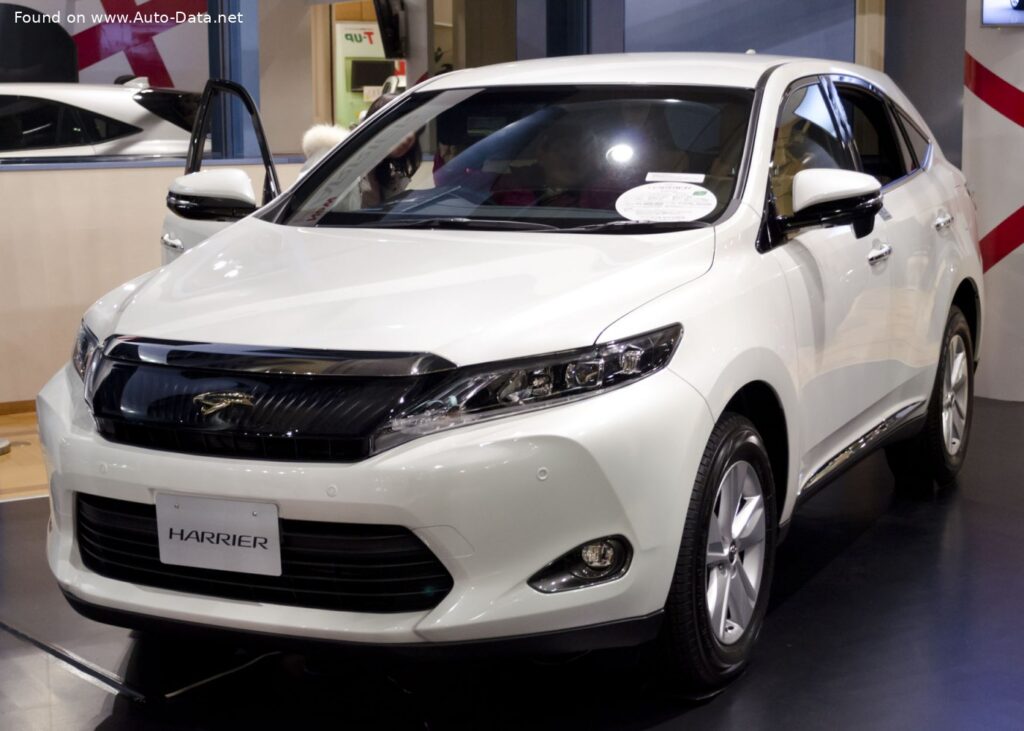
In the dynamic landscape of the North American automotive market, certain vehicles achieve legendary status, while others, equally innovative, remain tantalizing glimpses from distant shores. The Toyota Harrier is one such enigma, a sophisticated SUV that, while not directly sold under its original badge in the U.S. and Canada during its third generation, carries a significant lineage and showcases Toyota’s prowess in premium, efficient utility vehicles. The Toyota Harrier III (XU60) 2.5 (197 Hp) Hybrid E-Four e-CVT, produced from 2013 to 2017, represents a pinnacle of Toyota’s hybrid engineering and luxury aspirations in its home market, offering a compelling blend of performance, fuel economy, and refined comfort that resonated with discerning buyers.
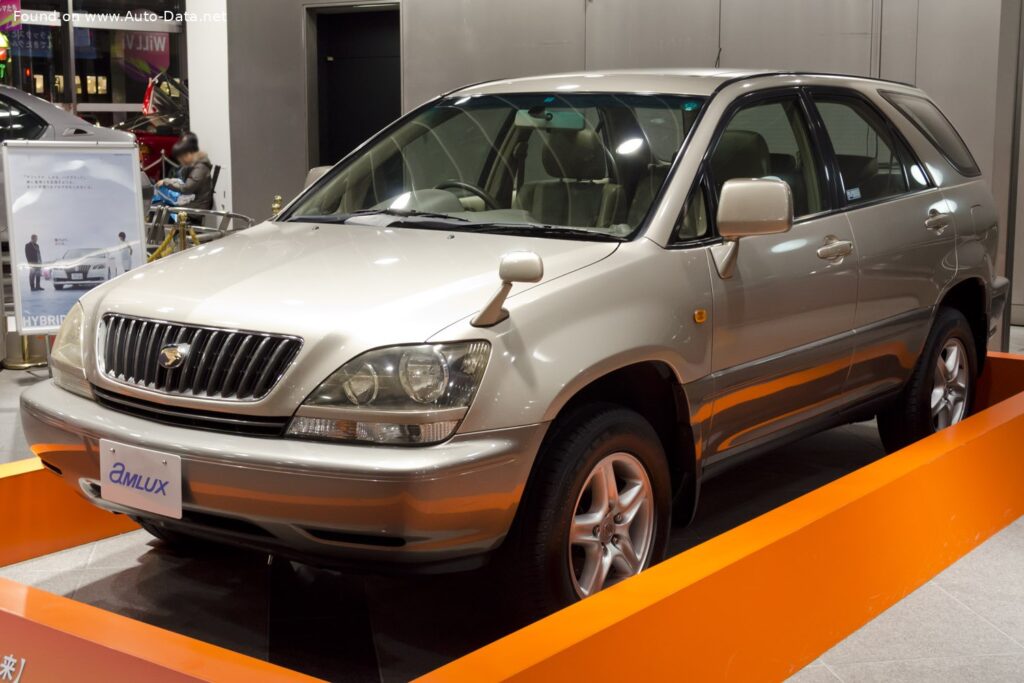
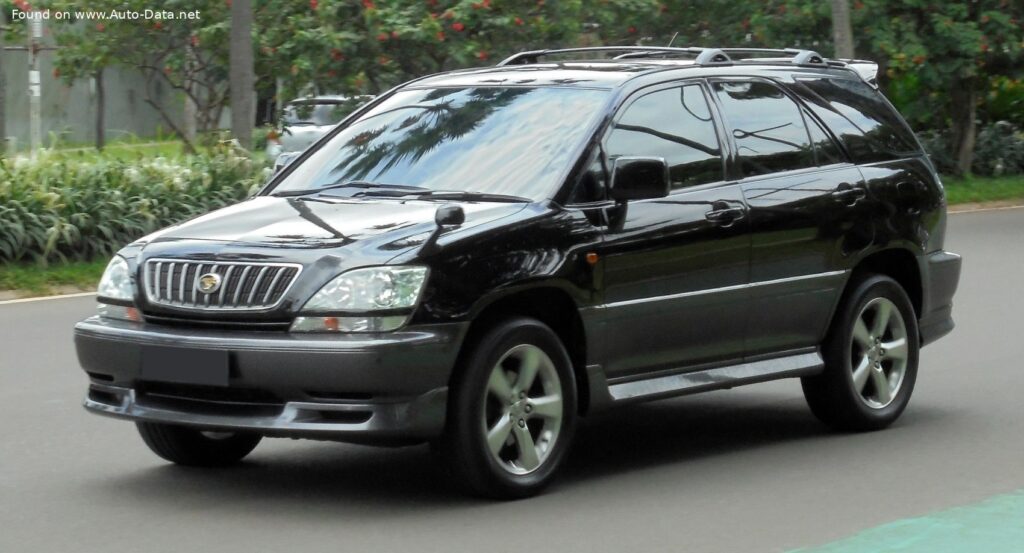
For many North Americans, the name “Harrier” might conjure images of the Harrier Jump Jet, but in automotive circles, it’s intrinsically linked to the early days of the luxury crossover. The first-generation Harrier (XU10) was famously rebadged as the Lexus RX in 1998, effectively creating the luxury crossover segment that dominates today’s market. While subsequent generations of the RX diverged stylistically and mechanically, the Harrier continued its own evolution as a premium Toyota offering in Japan and select Asian markets. The XU60 generation, in particular, solidified its identity as a stylish, technologically advanced SUV, embodying the spirit of innovation that defined its forebears and hinting at the future direction of Toyota’s global SUV lineup.
The Toyota Harrier III (XU60) 2.5 (197 Hp) Hybrid E-Four e-CVT: Engineering Excellence
Underpinning the Harrier III’s appeal was its advanced powertrain, especially in the hybrid E-Four configuration. Toyota, a pioneer in hybrid technology, engineered this variant to deliver both robust performance and exceptional fuel efficiency, a combination highly sought after in the mid-size SUV segment. The “E-Four” designation signifies an all-wheel-drive system achieved through a clever arrangement of electric motors, providing enhanced traction and stability without the mechanical complexity of traditional AWD systems.
Engine & Performance
At the heart of the Toyota Harrier III (XU60) 2.5 (197 Hp) Hybrid E-Four e-CVT lies a sophisticated full hybrid electric vehicle (FHEV) powertrain architecture. The primary internal combustion engine is a 2.5-liter (2493 cm3 or 152.13 cu. in.) naturally aspirated inline-four, code 2AR-FXE. This DOHC engine features a high compression ratio of 12.5:1 and multi-port manifold injection, delivering a healthy 152 horsepower at 5700 rpm and 151.94 lb-ft of torque between 4400-4800 rpm. Its design emphasizes efficiency and smooth operation, characteristic of Toyota’s Atkinson-cycle engines often found in hybrids.
Complementing the gasoline engine are two synchronous electric motors. The first electric motor, model 2JM, drives the front wheels, contributing a substantial 143 horsepower and 199.14 lb-ft of torque. The second electric motor, model 2FM, is strategically placed to power the rear wheels, adding 68 horsepower and 102.52 lb-ft of torque. This innovative E-Four setup allows for seamless all-wheel-drive capability, enabling the vehicle to run in full electric, mixed, or gasoline-only modes depending on driving conditions and battery charge. The combined system output for this hybrid variant is an impressive 197 horsepower, providing ample motivation for daily driving and highway cruising.
Power delivery is managed by an electronic continuously variable transmission (e-CVT), renowned for its smooth, gearless acceleration and optimized efficiency. This sophisticated drivetrain translates into remarkable fuel economy, with official combined figures ranging from 4.5-4.6 liters per 100 km, which translates to an outstanding 52.3 – 51.1 US mpg. This efficiency, combined with a 14.79 US gallon fuel tank, gives the Harrier an excellent cruising range, a practical advantage for North American road trips.
Features & Innovation
While specific detailed features like infotainment system size or advanced driver-assistance systems (ADAS) are not explicitly listed in the technical data, the Toyota Harrier III (XU60), as a premium mid-size SUV of its era (2013-2017), would have been equipped with a comprehensive suite of modern amenities and safety technologies for its intended market. Toyota’s commitment to safety and convenience means that even base models typically included a strong foundation of features.
Expected features for a vehicle of this caliber would include a contemporary infotainment system, likely featuring a touchscreen display, Bluetooth connectivity for hands-free calling and audio streaming, and perhaps an integrated navigation system. Premium audio options and multi-zone climate control would also be common. For safety, beyond the standard ABS (Anti-lock Braking System) listed, the Harrier would have featured a full complement of airbags, electronic stability control, and traction control. Given Toyota’s reputation, it’s highly probable that higher trims offered early iterations of ADAS technologies, such as a pre-collision system, lane departure warning, and adaptive cruise control, which were beginning to become more prevalent in the automotive landscape during this production period.
The design language of the XU60 Harrier was characterized by sharp lines, a bold front fascia, and a sleek profile, setting it apart from more utilitarian SUVs. Its interior would have offered a refined ambiance with quality materials, comfortable seating for five, and thoughtful ergonomics, reflecting its premium positioning. The spacious cabin, with 104.72 inches of wheelbase and ample cargo room (though not explicitly detailed in the provided data, a general expectation for an SUV of this size), made it a practical choice for families and individuals seeking comfort and utility.
Technical Specifications: Toyota Harrier III (XU60) 2.5 (197 Hp) Hybrid E-Four e-CVT
| Category | Specification |
|---|---|
| General Information | |
| Brand | Toyota |
| Model | Harrier |
| Generation | Harrier III (XU60) |
| Type (Engine) | 2.5 (197 Hp) Hybrid E-Four e-CVT |
| Production Start | 2013 year |
| Production End | 2017 year |
| Powertrain Architecture | FHEV (Full Hybrid Electric Vehicle) |
| Body type | SUV |
| Seats | 5 |
| Doors | 5 |
| Performance Specs | |
| Fuel consumption (combined) | 4.5-4.6 l/100 km (52.3 – 51.1 US mpg) |
| Fuel Type | Petrol (Gasoline) |
| Weight-to-power ratio | 8.9 kg/Hp, 112.6 Hp/tonne |
| Weight-to-torque ratio | 8.5 kg/Nm, 117.7 Nm/tonne |
| Electric Cars and Hybrids Specs | |
| Battery technology | Nickel-metal hydride (NiMH) |
| Electric motor 1 Power (Front) | 143 Hp |
| Electric motor 1 Torque (Front) | 270 Nm (199.14 lb-ft) |
| Electric motor 1 Model/Code | 2JM |
| Electric motor 1 Type | Synchronous |
| Electric motor 2 Power (Rear) | 68 Hp |
| Electric motor 2 Torque (Rear) | 139 Nm (102.52 lb-ft) |
| Electric motor 2 Model/Code | 2FM |
| Electric motor 2 Type | Synchronous |
| System power (Total) | 197 Hp |
| Internal Combustion Engine Specs | |
| Power | 152 Hp @ 5700 rpm |
| Power per litre | 61 Hp/l |
| Torque | 206 Nm @ 4400-4800 rpm (151.94 lb-ft @ 4400-4800 rpm) |
| Engine layout | Front, Transverse |
| Engine Model/Code | 2AR-FXE |
| Engine displacement | 2493 cm3 (152.13 cu. in.) |
| Number of cylinders | 4 |
| Engine configuration | Inline |
| Cylinder Bore | 90 mm (3.54 in.) |
| Piston Stroke | 98 mm (3.86 in.) |
| Compression ratio | 12.5:1 |
| Number of valves per cylinder | 4 |
| Fuel injection system | Multi-port manifold injection |
| Engine aspiration | Naturally aspirated engine |
| Valvetrain | DOHC |
| Engine oil capacity | 4.4 l (4.65 US qt) |
| Coolant capacity | 6.7 l (7.08 US qt) |
| Space, Volume and Weights | |
| Kerb Weight | 1750-1800 kg (3858.09 – 3968.32 lbs) |
| Max. weight | 2075 kg (4574.59 lbs) |
| Max load | 275-325 kg (606.27 – 716.5 lbs) |
| Fuel tank capacity | 56 l (14.79 US gal) |
| Dimensions | |
| Length | 4720 mm (185.83 in.) |
| Width | 1835 mm (72.24 in.) |
| Height | 1690 mm (66.54 in.) |
| Wheelbase | 2660 mm (104.72 in.) |
| Front track | 1560-1570 mm (61.42 – 61.81 in.) |
| Rear (Back) track | 1560-1570 mm (61.42 – 61.81 in.) |
| Ride height (ground clearance) | 175 mm (6.89 in.) |
| Minimum turning circle (turning diameter) | 11.2 m (36.75 ft) |
| Drivetrain, Brakes and Suspension Specs | |
| Drivetrain Architecture | ICE drives front wheels, 1 electric motor drives front wheels, 1 electric motor drives rear wheels. Ability for running in full electric or mixed mode. |
| Drive wheel | All wheel drive (4×4) – E-Four |
| Number of gears and type of gearbox | Automatic transmission e-CVT |
| Front suspension | Independent type McPherson |
| Rear suspension | Double wishbone |
| Front brakes | Ventilated discs |
| Rear brakes | Disc |
| Assisting systems | ABS (Anti-lock braking system) |
| Steering type | Steering rack and pinion |
| Power steering | Electric Steering |
| Tires size | 22

|