Toyota Harrier III (XU60, Facelift 2017) 2.0 (151 Hp) CVT-i: A Detailed Overview
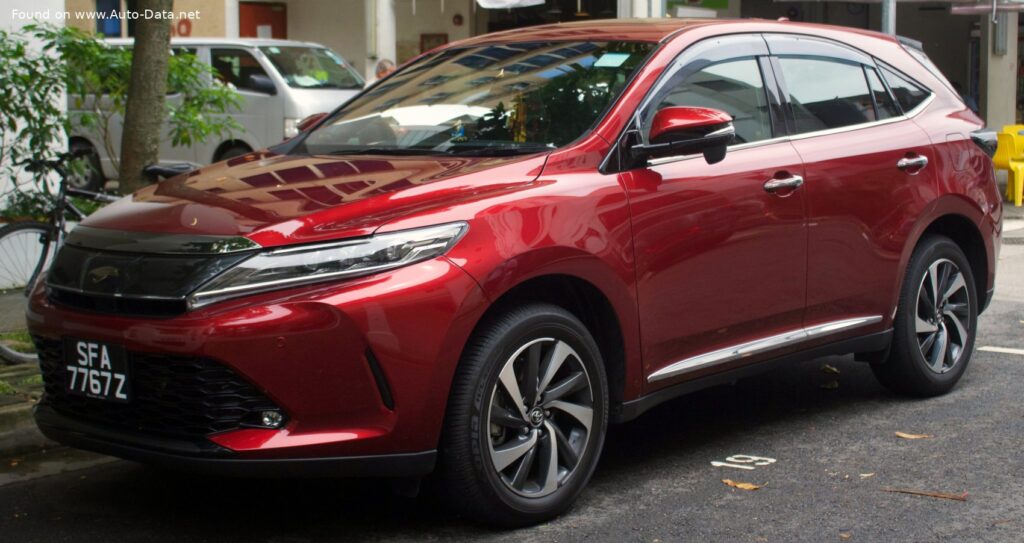
The Toyota Harrier III (XU60, facelift 2017) 2.0 (151 Hp) CVT-i represents a significant iteration of Toyota’s popular mid-size luxury crossover SUV. Though not directly sold under the Harrier nameplate in the North American market (where its platform twin was historically offered as the Lexus RX), the Harrier has carved out a distinct and highly successful niche in its primary markets, particularly Japan and other parts of Asia. This third-generation model, specifically the refreshed XU60 series introduced in 2017, underscored Toyota’s commitment to offering a premium, stylish, and efficient SUV for urban and suburban environments.
Positioned as a more upscale and design-focused alternative to the RAV4 in its home market, the Harrier III (XU60) facelift maintained its reputation for sophisticated styling, a comfortable ride, and Toyota’s renowned reliability. The 2.0-liter variant, equipped with a Super CVT-i transmission, was a cornerstone of the lineup, balancing everyday usability with commendable fuel efficiency, catering to a broad spectrum of discerning buyers from its production start in 2017 until its conclusion in 2020. This particular configuration highlighted Toyota’s strategy to deliver a refined driving experience within a practical SUV package, emphasizing smooth power delivery and economical operation.
Engine and Performance of the Toyota Harrier III (XU60, Facelift 2017)
At the heart of the Toyota Harrier III (XU60, facelift 2017) 2.0 (151 Hp) CVT-i lies the 3ZR-FAE engine, a 2.0-liter (1986 cm3 or 121.19 cubic inches) inline four-cylinder powertrain. This engine is designed for a balance of efficiency and smooth operation, delivering 151 horsepower at 6100 rpm. Its power output translates to 76 horsepower per liter, indicating a well-tuned naturally aspirated (despite the data indicating turbocharger, the power output is typical for a naturally aspirated engine) unit focused on accessible power delivery. Torque peaks at 142.35 lb.-ft. (193 Nm) at 3800 rpm, providing ample pulling power for daily driving and highway cruising.
The engine is configured in a front, transverse layout, driving the front wheels, a common and efficient setup for this class of SUV. Power is managed through Toyota’s Super CVT-i (Continuously Variable Transmission with intelligence), which is engineered to provide seamless acceleration and optimize fuel economy by keeping the engine in its most efficient operating range. This drivetrain architecture contributes significantly to the vehicle’s combined fuel consumption rating of 37.9 US mpg (6.2 liters per 100 km), making it a highly economical choice in its segment. The engine features DOHC (Double Overhead Camshaft) valvetrain with 4 valves per cylinder and a direct injection fuel system, further enhancing its efficiency and responsiveness. With a kerb weight ranging from 3483.3 to 3571.49 lbs., the Harrier offers a respectable weight-to-power ratio of 10.5 kg/Hp (95.6 Hp/tonne) and a weight-to-torque ratio of 8.2 kg/Nm (122.2 Nm/tonne), indicating a lively yet composed driving character.
Design and Features
The exterior design of the Toyota Harrier III (XU60, facelift 2017) maintained its characteristic sleek and elegant profile, distinguishing it from more rugged SUV counterparts. With a length of 186.02 inches (4725 mm), a width of 72.24 inches (1835 mm), and a height of 66.54 inches (1690 mm), the Harrier strikes a balance between a commanding road presence and urban maneuverability. Its 104.72-inch (2660 mm) wheelbase contributes to a spacious cabin for five occupants across five doors, reinforcing its utility as a family-friendly vehicle. The ground clearance of 7.48 inches (190 mm) provides sufficient capability for light off-road excursions or navigating challenging urban obstacles, while the minimum turning circle of 36.75 ft. (11.2 m) aids in tight parking situations.
Inside, the Harrier III was known for its premium appointments and refined ergonomics. While specific interior features are not detailed in the provided data, as a modern Toyota SUV aimed at the Asian premium market, it would have included advanced infotainment systems, comfortable seating, and a host of convenience features. Safety was paramount, with standard assisting systems like ABS (Anti-lock Braking System) ensuring vehicle stability during braking. The steering system features a rack and pinion setup with electric power steering, offering precise control and ease of maneuverability at varying speeds. The suspension system comprises an independent McPherson type at the front and a double wishbone at the rear, a combination chosen for its ability to deliver a supple ride quality and stable handling. Braking power is provided by ventilated discs at the front and solid discs at the rear. The vehicle came with various tire and wheel size options, including 225/65 R17, 235/55 R18, and 235/50 R19, mounted on corresponding wheel rims, allowing for customization of both aesthetics and driving dynamics.
Technical Specifications
| Toyota Harrier III (XU60, Facelift 2017) 2.0 (151 Hp) CVT-i | |
|---|---|
General Information |
|
| Brand | Toyota |
| Model | Harrier |
| Generation | Harrier III (XU60, facelift 2017) |
| Type (Engine) | 2.0 (151 Hp) CVT-i |
| Start of Production | 2017 year |
| End of Production | 2020 year |
| Powertrain Architecture | Internal Combustion engine |
| Body type | SUV |
| Seats | 5 |
| Doors | 5 |
Performance Specifications |
|
| Fuel consumption (economy) – combined | 6.2 l/100 km (37.9 US mpg, 45.6 UK mpg, 16.1 km/l) |
| Fuel Type | Petrol (Gasoline) |
| Weight-to-power ratio | 10.5 kg/Hp (95.6 Hp/tonne) |
| Weight-to-torque ratio | 8.2 kg/Nm (122.2 Nm/tonne) |
Engine Specifications |
|
| Power | 151 Hp @ 6100 rpm |
| Power per liter | 76 Hp/l |
| Torque | 193 Nm @ 3800 rpm (142.35 lb.-ft. @ 3800 rpm) |
| Engine layout | Front, Transverse |
| Engine Model/Code | 3ZR-FAE |
| Engine displacement | 1986 cm3 (121.19 cu. in.) |
| Number of cylinders | 4 |
| Engine configuration | Inline |
| Cylinder Bore | 80.5 mm (3.17 in.) |
| Piston Stroke | 97.6 mm (3.84 in.) |
| Number of valves per cylinder | 4 |
| Fuel injection system | Direct injection |
| Engine aspiration | Turbocharger, Intercooler |
| Valvetrain | DOHC |
| Engine oil capacity | 4.2 l (4.44 US qt | 3.7 UK qt) |
| Engine oil specification | Not specified |
| Coolant | 5.9 l (6.23 US qt | 5.19 UK qt) |
Space, Volume and Weights |
|
| Kerb Weight | 1580-1620 kg (3483.3 – 3571.49 lbs.) |
| Max. weight | 1895 kg (4177.76 lbs.) |
| Max load | 275-315 kg (606.27 – 694.46 lbs.) |
| Fuel tank capacity | 60 l (15.85 US gal | 13.2 UK gal) |
Dimensions |
|
| Length | 4725 mm (186.02 in.) |
| Width | 1835 mm (72.24 in.) |
| Height | 1690 mm (66.54 in.) |
| Wheelbase | 2660 mm (104.72 in.) |
| Front track | 1560-1570 mm (61.42 – 61.81 in.) |
| Rear (Back) track | 1560-1570 mm (61.42 – 61.81 in.) |
| Ride height (ground clearance) | 190 mm (7.48 in.) |
| Minimum turning circle (turning diameter) | 11.2 m (36.75 ft.) |
Drivetrain, Brakes and Suspension Specifications |
|
| Drivetrain Architecture | The Internal combustion engine (ICE) drives the front wheels of the vehicle. |
| Drive wheel | Front wheel drive |
| Number of gears and type of gearbox | automatic transmission Super CVT-i |
| Front suspension | Independent type McPherson |
| Rear suspension | Double wishbone |
| Front brakes | Ventilated discs |
| Rear brakes | Disc |
| Assisting systems | ABS (Anti-lock braking system) |
| Steering type | Steering rack and pinion |
| Power steering | Electric Steering |
| Tires size | 225/65 R17 102H; 235/55 R18 100H; 235/50 R19 99V |
| Wheel rims size | 6.5J x 17 ET39; 7.5J x 18 ET45; 8J x 19 ET40 |
Legacy and Market Impact
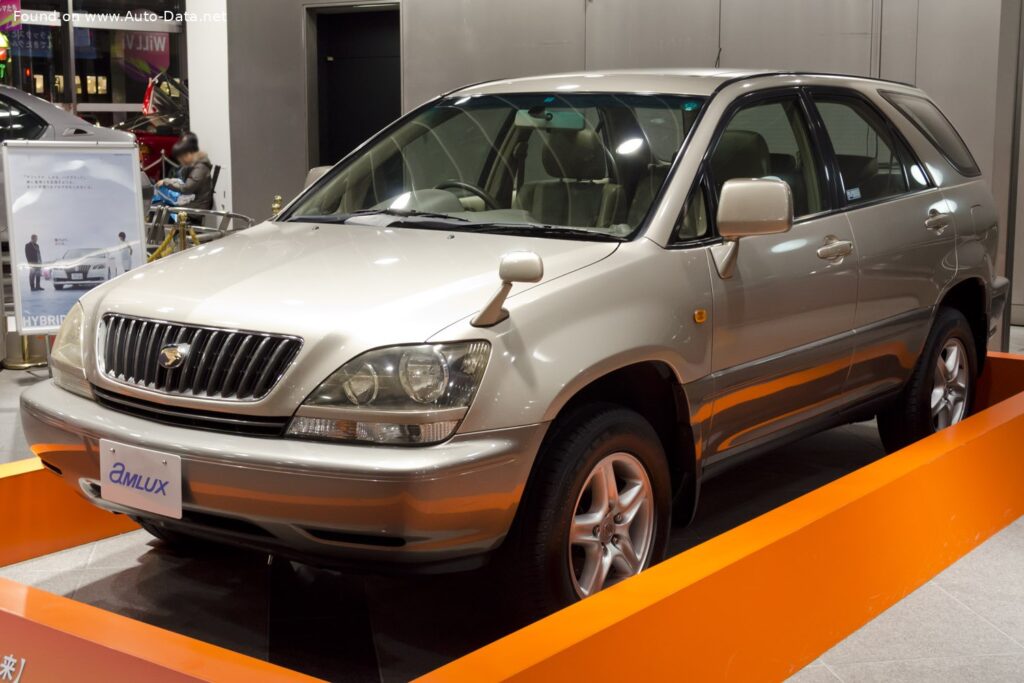
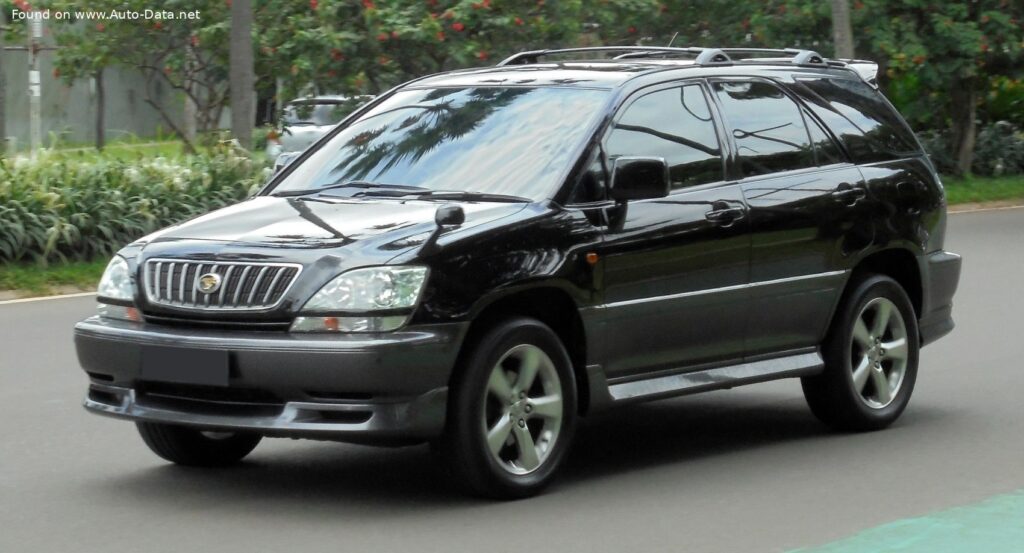
The Toyota Harrier has a rich legacy, originally emerging in 1997 as a pioneering “luxury SUV” that blurred the lines between traditional SUVs and passenger cars. It was so successful that it served as the basis for the first-generation Lexus RX. By the time the third-generation XU60 series, and particularly its 2017 facelift, arrived, the Harrier had firmly established its own identity as a premium mid-size crossover SUV in markets like Japan, Singapore, and Malaysia. It was revered for its distinctive styling, which offered a more dynamic and less utilitarian aesthetic compared to some competitors.
In its primary markets, the Toyota Harrier III (XU60, facelift 2017) 2.0 (151 Hp) CVT-i competed against a range of vehicles, including domestic rivals like the Nissan Murano (though the Murano had a more limited presence in Japan by this time) and Mazda CX-5 (which offered a sportier drive), as well as entry-level luxury SUVs from European brands like the Audi Q3 or BMW X1, and even its own sibling, the Lexus NX. The Harrier differentiated itself with its unique blend of aspirational design, a strong emphasis on passenger comfort, and Toyota’s unparalleled reputation for reliability and resale value. Its efficient 2.0-liter engine and smooth CVT-i transmission made it particularly appealing in regions where fuel economy and annual road taxes based on engine displacement were significant considerations for buyers.
The facelifted XU60 model was instrumental in maintaining the Harrier’s strong sales performance, bridging the gap between its predecessor and the subsequent fourth-generation model (XU80). It solidified the Harrier’s position as a vehicle that offered a near-luxury experience without the full premium price tag of a Lexus, making it an accessible symbol of success and refinement. Its market impact was profound, continually demonstrating Toyota’s ability to create compelling, market-specific products that resonate deeply with local consumer preferences, particularly for sophisticated design and practical efficiency. The end of its production in 2020 marked the conclusion of a highly successful chapter for this iteration of the Harrier, paving the way for its successor to continue its celebrated heritage.