Introduction to the Toyota Harrier IV (XU80) 2.5 Hybrid E-Four e-CVT
The Toyota Harrier IV, internally designated XU80, represents the fourth generation of Toyota’s mid-size luxury crossover SUV. Launched in June 2020, this iteration of the Harrier continues its tradition of offering a sophisticated, comfortable, and efficient vehicle, primarily targeted at the Japanese and select Asian markets. While not directly sold as the “Harrier” in the United States, its platform and essence are closely related to the second-generation Toyota Venza, which serves as its North American counterpart, giving it a global connection. The specific variant under review, the 2.5 (222 Hp) Hybrid E-Four e-CVT, exemplifies modern automotive engineering with its advanced Full Hybrid Electric Vehicle (FHEV) powertrain and intelligent all-wheel-drive system, blending robust performance with exceptional fuel economy.
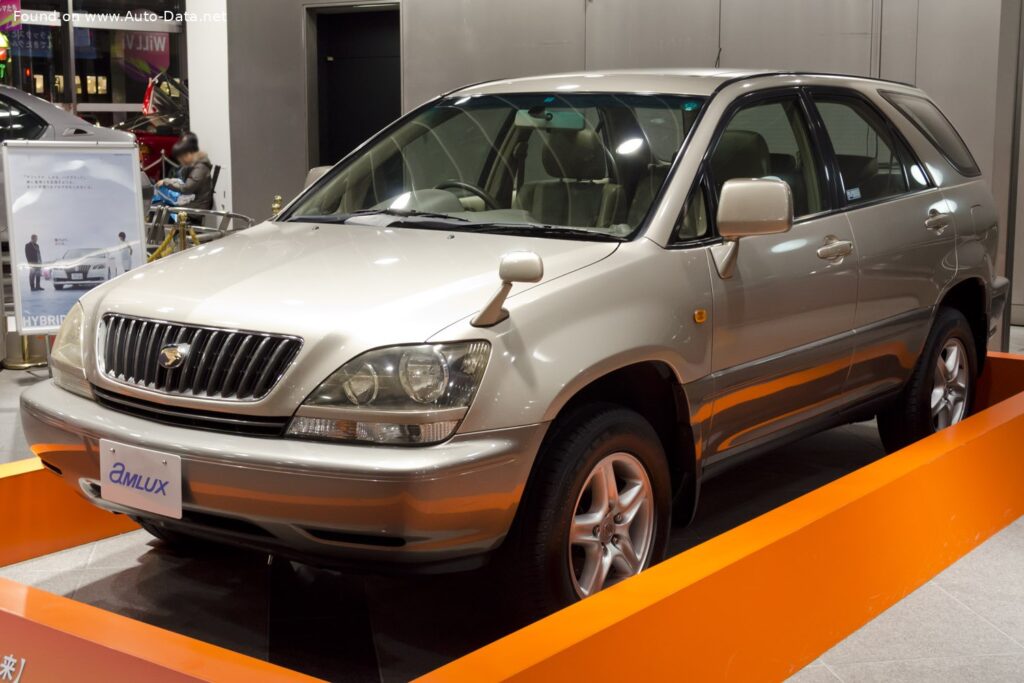
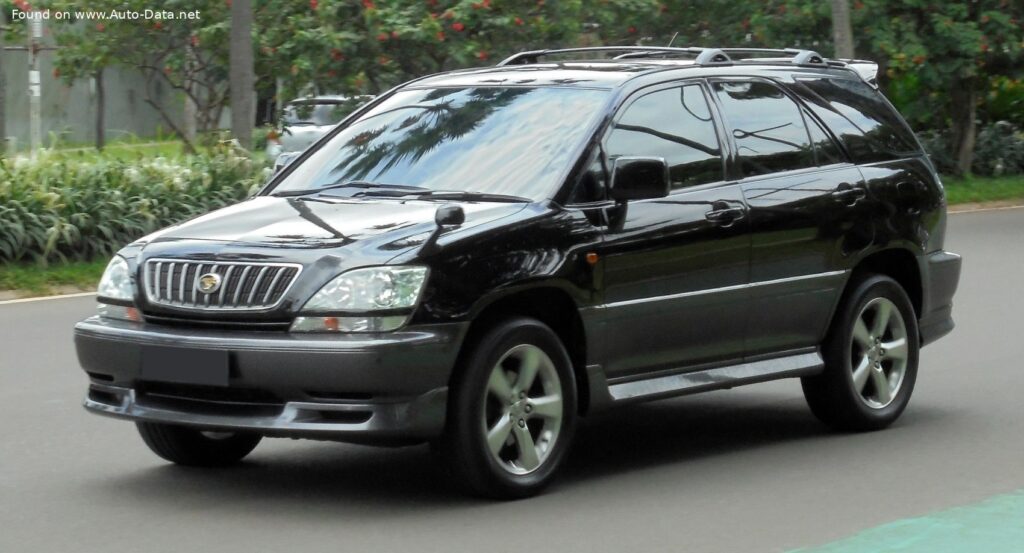
The Toyota Harrier IV (XU80) is positioned as a premium urban SUV, bridging the gap between mainstream crossovers and entry-level luxury vehicles. It emphasizes a sleek, coupe-like design, a refined interior, and cutting-edge technology. The XU80 generation builds upon a legacy that began in 1997, where the original Harrier was instrumental in defining the luxury crossover segment, even serving as the basis for the first Lexus RX. This modern Harrier continues to push boundaries in terms of efficiency, driving dynamics, and occupant comfort, making it a compelling choice in its competitive segment.
Engine & Performance of the Toyota Harrier IV (XU80)
At the heart of the Toyota Harrier IV (XU80) 2.5 Hybrid E-Four e-CVT lies a sophisticated hybrid powertrain designed for both efficiency and responsive performance. The internal combustion engine (ICE) component is a 2.5-liter (2487 cm³, 151.77 cu. in.) A25A-FXS inline-four gasoline engine. This naturally aspirated unit features a front, transverse layout and utilizes an advanced fuel injection system combining both direct injection and multi-port manifold injection, optimizing fuel delivery for power and efficiency. It produces a robust 178 horsepower at 5700 rpm and a peak torque of 221 Nm (163 lb-ft) across a broad range from 3600-5200 rpm. With 4 valves per cylinder and a bore of 87.5 mm (3.44 in.) and a piston stroke of 103.4 mm (4.07 in.), the engine is engineered for smooth operation and durability.
The FHEV architecture integrates two synchronous electric motors with the gasoline engine. The primary electric motor (model 3NM), driving the front wheels, delivers 120 horsepower and a significant 202 Nm (148.99 lb-ft) of torque. An additional electric motor (model 4NM) is dedicated to the rear axle, providing 54 horsepower and 121 Nm (89.25 lb-ft) of torque. This innovative E-Four system provides on-demand all-wheel-drive capability, enhancing traction and stability in various driving conditions. The combined system output of the hybrid powertrain is an impressive 222 horsepower, offering brisk acceleration and confident overtaking maneuvers.
Power is seamlessly managed by an electronic Continuously Variable Transmission (e-CVT), which optimizes engine and motor output for maximum efficiency and smooth power delivery without traditional gear shifts. The vehicle’s powertrain architecture allows for operation in full electric mode at lower speeds, or a blend of electric and gasoline power for higher speeds and demands. Energy is stored in a compact Lithium-ion (Li-Ion) battery pack. This advanced setup contributes to an excellent weight-to-power ratio of 7.6 kg/Hp (132.1 Hp/tonne) and a weight-to-torque ratio of 7.6 kg/Nm (131.5 Nm/tonne).
Fuel economy is a standout feature of this hybrid system. The Harrier IV (XU80) achieves an urban fuel consumption of 5.3 liters per 100 kilometers (44.4 US mpg) and an even more impressive extra-urban consumption of 4.7 liters per 100 kilometers (50 US mpg). These figures underscore Toyota’s commitment to environmental performance, further aided by a Start & Stop System and a particulate filter for reduced emissions. The fuel tank capacity stands at 55 liters (14.53 US gallons), providing a substantial range between fill-ups.
Design & Features of the Toyota Harrier IV (XU80)
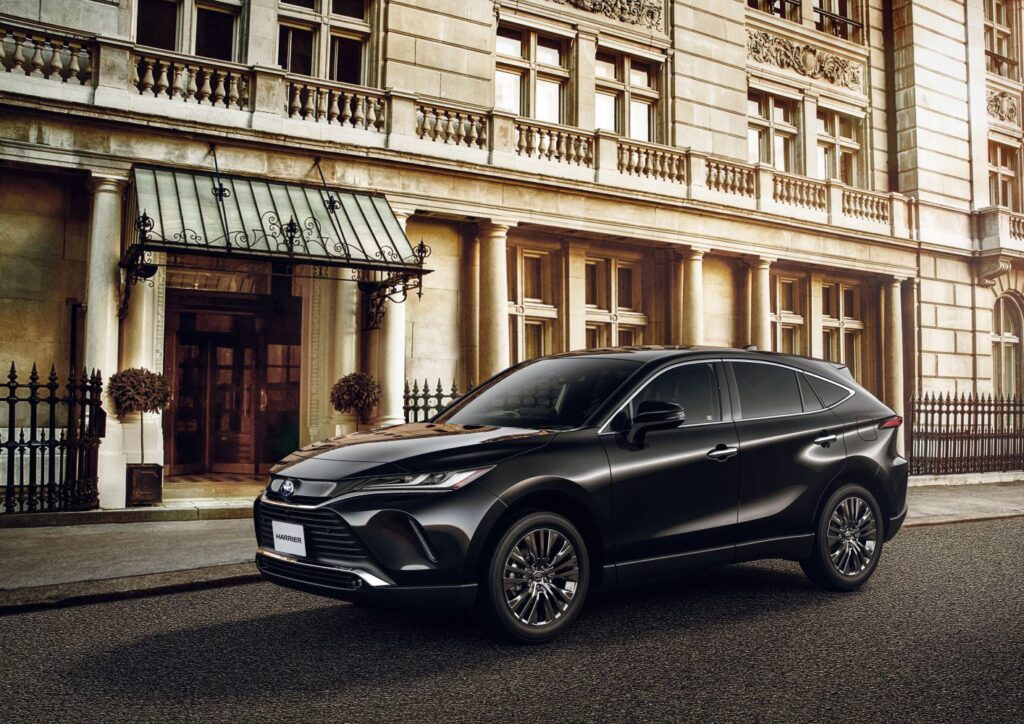
The Toyota Harrier IV (XU80) embodies a sleek and sophisticated design philosophy, departing from the more rugged SUV aesthetics to embrace a refined, coupe-like silhouette. Classified as a 5-door, 5-seat SUV, its exterior styling is characterized by fluid lines, a prominent front grille, and slim LED lighting elements that give it a distinctive and modern presence. The overall length of 4740 mm (186.61 in.), width of 1855 mm (73.03 in.), and height of 1660 mm (65.35 in.) contribute to its athletic yet elegant stance. A wheelbase of 2690 mm (105.91 in.) ensures a spacious cabin and stable ride.
Inside, the Harrier IV offers a premium and comfortable environment. The cabin is designed with high-quality materials, soft-touch surfaces, and meticulous attention to detail, reflecting its upscale positioning. Seating for five occupants is generous, with an emphasis on ergonomic comfort for both front and rear passengers. The dashboard layout is driver-centric, featuring modern infotainment systems (though specific details are not provided, it’s typical for a 2020 Toyota to include a large touchscreen, smartphone integration, and advanced driver-assistance systems).
Practicality is also a key aspect, with a kerb weight ranging from 1680-1750 kg (3703.77 – 3858.09 lbs.) and a maximum permissible weight of 2025 kg (4464.36 lbs.), allowing for a maximum load of 275-345 kg (606.27 – 760.59 lbs.). The ground clearance of 190 mm (7.48 in.) provides adequate capability for urban obstacles and light unpaved roads, while the minimum turning circle of 11-11.4 meters (36.09 – 37.4 ft.) ensures maneuverability in tight city spaces.
Underpinning the Harrier’s refined ride is an advanced suspension system, featuring independent McPherson struts at the front and a sophisticated double wishbone setup at the rear. This combination is tuned to deliver a comfortable ride quality while maintaining responsive handling. Braking performance is handled by ventilated discs at the front and solid discs at the rear, complemented by an Anti-lock Braking System (ABS) for enhanced safety. The electric power steering system, with a rack and pinion setup, provides light and precise control, further enhancing the driving experience. The vehicle rides on 225/55 R19 tires mounted on 19-inch wheel rims, which contribute to both its aesthetic appeal and dynamic capabilities.
Technical Specifications
| Category | Specification |
|---|---|
| Brand | Toyota |
| Model | Harrier |
| Generation | Harrier IV (XU80) |
| Type (Engine) | 2.5 (222 Hp) Hybrid E-Four e-CVT |
| Start of Production | June, 2020 |
| Powertrain Architecture | FHEV (Full Hybrid Electric Vehicle) |
| Body Type | SUV |
| Seats | 5 |
| Doors | 5 |
| Performance Specs | |
| Fuel Consumption (Urban) | 5.3 l/100 km (44.4 US mpg) |
| Fuel Consumption (Extra Urban) | 4.7 l/100 km (50 US mpg) |
| Fuel Type | Petrol (Gasoline) |
| Weight-to-Power Ratio | 7.6 kg/Hp (132.1 Hp/tonne) |
| Weight-to-Torque Ratio | 7.6 kg/Nm (131.5 Nm/tonne) |
| Electric Cars and Hybrids Specs | |
| Battery Technology | Lithium-ion (Li-Ion) |
| Electric Motor 1 Power | 120 Hp |
| Electric Motor 1 Torque | 202 Nm (148.99 lb.-ft.) |
| Electric Motor 1 Model/Code | 3NM |
| Electric Motor 1 Type | Synchronous |
| Electric Motor 2 Power | 54 Hp |
| Electric Motor 2 Torque | 121 Nm (89.25 lb.-ft.) |
| Electric Motor 2 Model/Code | 4NM |
| Electric Motor 2 Type | Synchronous |
| System Power | 222 Hp |
| Internal Combustion Engine Specs | |
| Power | 178 Hp @ 5700 rpm. |
| Power per Liter | 71.6 Hp/l |
| Torque | 221 Nm @ 3600-5200 rpm. (163 lb.-ft. @ 3600-5200 rpm.) |
| Engine Layout | Front, Transverse |
| Engine Model/Code | A25A-FXS |
| Engine Displacement | 2487 cm³ (151.77 cu. in.) |
| Number of Cylinders | 4 |
| Engine Configuration | Inline |
| Cylinder Bore | 87.5 mm (3.44 in.) |
| Piston Stroke | 103.4 mm (4.07 in.) |
| Number of Valves per Cylinder | 4 |
| Fuel Injection System | Direct injection and Multi-port manifold injection |
| Engine Aspiration | Naturally aspirated engine |
| Engine Oil Capacity | 4.5 l (4.76 US qt) |
| Coolant Capacity | 6.7 l (7.08 US qt) |
| Engine Systems | |
| Start & Stop System | Yes |
| Particulate Filter | Yes |
| Space, Volume and Weights | |
| Kerb Weight | 1680-1750 kg (3703.77 – 3858.09 lbs.) |
| Max. Weight | 2025 kg (4464.36 lbs.) |
| Max Load | 275-345 kg (606.27 – 760.59 lbs.) |
| Fuel Tank Capacity | 55 l (14.53 US gal) |
| Dimensions | |
| Length | 4740 mm (186.61 in.) |
| Width | 1855 mm (73.03 in.) |
| Height | 1660 mm (65.35 in.) |
| Wheelbase | 2690 mm (105.91 in.) |
| Front Track | 1605 mm (63.19 in.) |
| Rear (Back) Track | 1625 mm (63.98 in.) |
| Ride Height (Ground Clearance) | 190 mm (7.48 in.) |
| Minimum Turning Circle | 11-11.4 m (36.09 – 37.4 ft.) |
| Drivetrain, Brakes and Suspension Specs | |
| Drivetrain Architecture | ICE drives front wheels, one electric motor drives front wheels, one electric motor drives rear wheels. Ability for running in full electric or mixed mode. |
| Drive Wheel | All-wheel drive (4×4) |
| Number of Gears and Gearbox Type | Automatic transmission e-CVT |
| Front Suspension | Independent type McPherson |
| Rear Suspension | Double wishbone |
| Front Brakes | Ventilated discs |
| Rear Brakes | Disc |
| Assisting Systems | ABS (Anti-lock braking system) |
| Steering Type | Steering rack and pinion |
| Power Steering | Electric Steering |
| Tires Size | 225/55 R19 |
| Wheel Rims Size | 19 inches |
Legacy & Market Impact of the Toyota Harrier IV (XU80)
The Toyota Harrier has always held a significant position in Toyota’s global lineup, particularly in Asian markets, as a pioneer of the luxury crossover segment. The fourth-generation Toyota Harrier IV (XU80) continues this legacy, evolving to meet contemporary demands for efficiency, technology, and refined aesthetics. Its introduction in 2020 reaffirmed Toyota’s commitment to offering a premium, comfortable, and environmentally conscious SUV experience.
In its primary markets, such as Japan and other parts of Asia, the Harrier IV (XU80) is celebrated for its distinctive styling, which sets it apart from more utilitarian SUVs. Its sleek, coupe-like profile and upscale interior appeal to consumers seeking a vehicle that blends practicality with luxury. The hybrid E-Four e-CVT variant, in particular, resonates strongly in markets where fuel efficiency and lower emissions are increasingly prioritized, without compromising on performance or all-weather capability.
Globally, the impact of the Harrier IV is felt indirectly in North America through the second-generation Toyota Venza. The Venza, essentially a rebadged and slightly re-tuned version of the XU80 Harrier, allows American consumers to experience the same platform, hybrid powertrain, and sophisticated design language. This strategy highlights the Harrier’s versatile appeal and its ability to adapt to different market preferences, demonstrating Toyota’s global platform sharing efficiency.
Competitors in its segment vary by region but generally include other mid-size crossovers with premium aspirations. In Japan and Asia, it competes with models like the Mazda CX-5, Honda CR-V Hybrid, Nissan X-Trail (Rogue in the US), and even entry-level offerings from luxury brands such as the Lexus NX or Acura RDX, given the Harrier’s upscale features and refinement. Its reputation for Toyota’s legendary reliability, coupled with its advanced hybrid technology, gives it a strong competitive edge.
The Harrier IV’s full hybrid electric vehicle (FHEV) powertrain and E-Four all-wheel-drive system are central to its market impact. They address critical consumer concerns regarding fuel costs and environmental responsibility, while still delivering confident driving dynamics. The seamless integration of the gasoline engine and electric motors, managed by the e-CVT, provides a smooth, quiet, and efficient driving experience that is highly valued. The Lithium-ion battery technology further underscores its modern approach to electrification.
Historically, the Harrier nameplate helped establish the concept of the “luxury SUV” long before it became a mainstream segment. The XU80 continues this pioneering spirit by offering a compelling package that balances elegance, innovation, and eco-friendliness. Its success reinforces Toyota’s position as a leader in hybrid technology and as a brand capable of delivering vehicles that excel in both functionality and desirability. The Harrier IV (XU80) stands as a testament to Toyota’s continuous evolution in the automotive landscape, setting benchmarks for design, efficiency, and driving pleasure in the modern crossover market.