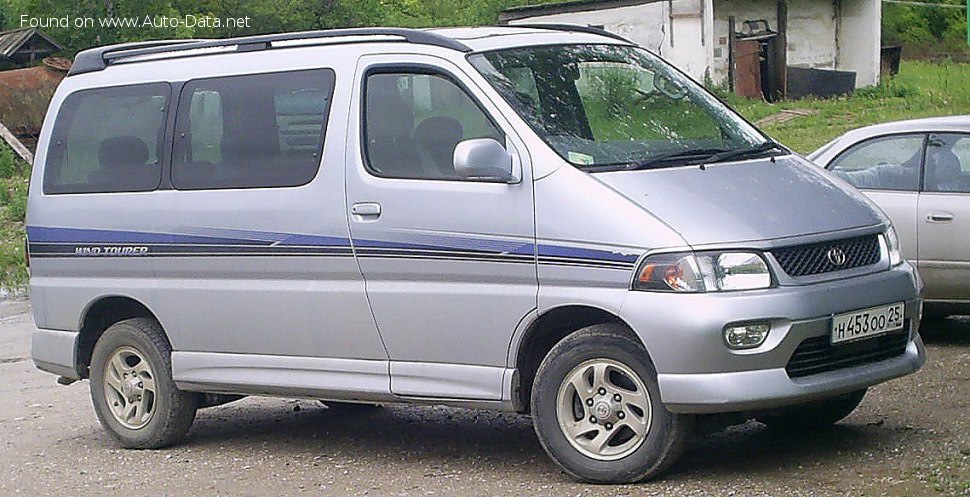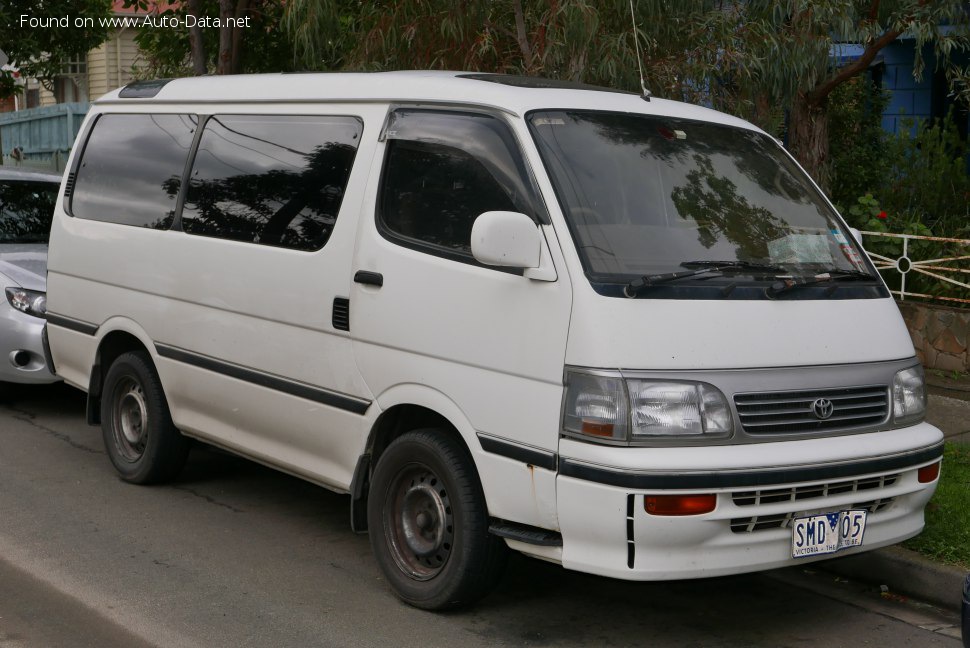
The Enduring Workhorse: Toyota HiAce IV (H100)
The Toyota HiAce IV, specifically the H100 generation, represents a pivotal chapter in the history of light commercial vehicles and people movers. Produced from 1990 to 2004, the Toyota HiAce IV (H100) established itself as a global benchmark for reliability, versatility, and sheer durability. While not a primary fixture in the North American passenger vehicle market in this specific guise, the HiAce IV dominated countless other regions, including Asia, Oceania, Africa, and parts of Europe, becoming an indispensable tool for businesses, families, and public transport operators alike. This detailed article focuses on the 2.0i (110 Hp) variant, a common and highly regarded powertrain option that underscored the vehicle’s reputation for dependable performance and cost-effective operation.
The H100 generation built upon the HiAce’s long-standing legacy, evolving its design and engineering to meet the demands of a new era. It retained the core philosophy of a highly practical, rear-wheel-drive platform, but introduced refinements in comfort, safety, and engine technology. The 2.0i (110 Hp) model, a four-door minivan capable of seating eight, was a testament to Toyota’s commitment to delivering a vehicle that could serve multiple purposes, from a family hauler to a commercial shuttle, with unwavering dependability.
Engine and Performance: The Heart of the Toyota HiAce IV (H100)
Underpinning the 2.0i (110 Hp) Toyota HiAce IV (H100) was the robust 1RZ-E engine, a naturally aspirated inline-four-cylinder gasoline unit. With an engine displacement of 1995 cm3 (121.74 cu. in.), this powertrain was engineered for longevity and consistent performance rather than outright speed. It delivered a respectable 110 horsepower at 5200 rpm, providing ample power for its intended utility roles. The torque output was equally significant for a vehicle of its class, producing 167 Nm (123.17 lb.-ft.) at a relatively low 2600 rpm. This low-end torque was crucial for urban driving, carrying heavy loads, and navigating challenging terrain, allowing the HiAce to pull away smoothly even when fully laden.
The 1RZ-E engine featured an Overhead Camshaft (OHC) valvetrain with two valves per cylinder, a proven and reliable configuration for commercial applications. Its fuel delivery system utilized single-point injection, a step forward from carburetion prevalent in earlier models, offering improved fuel efficiency and emissions control for its time. This design choice prioritized simplicity of maintenance and bulletproof reliability, traits highly valued in markets where the HiAce operated under demanding conditions.
In terms of fuel economy, the HiAce 2.0i offered practical figures for a vehicle of its size and era. Urban consumption was rated at 11.9 l/100 km (19.8 US mpg), while extra-urban driving saw a more economical 6.2 l/100 km (37.9 US mpg). These figures highlight the engine’s design for efficiency during long-distance travel, a common use case for the HiAce in many regions. The engine’s middle, longitudinal layout, driving the rear wheels, was a classic van configuration that provided excellent weight distribution, contributing to stable handling and maximizing interior space.
Design and Features: Form Follows Function
The design philosophy of the Toyota HiAce IV (H100) was unequivocally “form follows function.” Its minivan body type, characterized by a tall, boxy silhouette, was optimized for maximum interior volume and passenger comfort. With four doors and seating for eight occupants, the HiAce was an incredibly versatile platform. The sliding side door, a hallmark of vans, provided excellent access to the rear passenger compartment, a crucial feature for shuttle services and large families.
Measuring 4615 mm (181.69 in.) in length, 1690 mm (66.54 in.) in width, and 1935 mm (76.18 in.) in height, with a wheelbase of 2330 mm (91.73 in.), the HiAce IV offered a commanding road presence and a spacious interior. Its relatively compact footprint for an eight-seater made it maneuverable in crowded city environments, while the elevated driving position provided excellent visibility for the driver.
In terms of mechanical features, the Toyota HiAce IV (H100) was equipped with a robust rear-wheel-drive architecture, which is generally preferred for carrying heavy loads and for towing. The front brakes were ventilated discs, providing effective stopping power, complemented by drum brakes at the rear. For enhanced safety, the vehicle was equipped with an Anti-lock Braking System (ABS), a significant feature for a commercial vehicle of its time, improving control during emergency braking situations. The tires, sized 195/85 S R14, were chosen for their durability and load-carrying capacity, reflecting the vehicle’s utilitarian purpose.
Technical Specifications: Toyota HiAce IV (H100) 2.0i (110 Hp)
| Category | Specification |
|---|---|
| General Information | |
| Brand | Toyota |
| Model | HiAce |
| Generation | HiAce IV (H100) |
| Type (Engine) | 2.0i (110 Hp) |
| Production Start | 1990 year |
| Production End | 2004 year |
| Powertrain Architecture | Internal Combustion engine |
| Body type | Minivan |
| Seats | 8 |
| Doors | 4 |
| Performance Specs | |
| Fuel Consumption (Urban) | 11.9 l/100 km (19.8 US mpg) |
| Fuel Consumption (Extra Urban) | 6.2 l/100 km (37.9 US mpg) |
| Fuel Type | Petrol (Gasoline) |
| Engine Specs | |
| Power | 110 Hp @ 5200 rpm |
| Power per liter | 55.1 Hp/l |
| Torque | 167 Nm @ 2600 rpm (123.17 lb.-ft. @ 2600 rpm) |
| Engine Layout | Middle, Longitudinal |
| Engine Model/Code | 1RZ-E |
| Engine Displacement | 1995 cm3 (121.74 cu. in.) |
| Number of Cylinders | 4 |
| Engine Configuration | Inline |
| Valves per Cylinder | 2 |
| Fuel Injection System | Single-point injection |
| Engine Aspiration | Naturally aspirated engine |
| Valvetrain | OHC |
| Engine Oil Capacity | 4.1 l (4.33 US qt) |
| Coolant Capacity | 9 l (9.51 US qt) |
| Dimensions | |
| Length | 4615 mm (181.69 in.) |
| Width | 1690 mm (66.54 in.) |
| Height | 1935 mm (76.18 in.) |
| Wheelbase | 2330 mm (91.73 in.) |
| Drivetrain, Brakes & Suspension | |
| Drivetrain Architecture | Internal combustion engine drives the rear wheels. |
| Drive Wheel | Rear-wheel drive |
| Front Brakes | Ventilated discs |
| Rear Brakes | Drum |
| Assisting Systems | ABS (Anti-lock braking system) |
| Tires Size | 195/85 S R14 |
Legacy and Market Impact
The Toyota HiAce IV (H100) 2.0i (110 Hp) carved out an indelible legacy as one of the most dependable and versatile vehicles in its segment. Its reputation for bulletproof reliability and low running costs made it a favorite among small businesses, fleet operators, and families across continents. In markets like Australia, New Zealand, Southeast Asia, and parts of Europe, the HiAce was ubiquitous, serving as everything from airport shuttles and tour buses to delivery vans and camper conversions. Its robust construction and simple, yet effective, mechanicals meant it could withstand punishing conditions and prolonged use with minimal fuss.
Competitors in its primary markets included models such as the Nissan Caravan/Urvan, Mitsubishi L300/Delica, and the Ford Transit, depending on the specific region. However, the HiAce consistently held a competitive edge due to Toyota’s renowned quality control, extensive service network, and strong resale value. Its ability to perform reliably in diverse climates and terrains, from bustling urban centers to remote rural areas, solidified its position as a global workhorse.
The H100 generation’s longevity in production (1990-2004) is a testament to its successful design and engineering. Even years after its discontinuation, these vehicles remain a common sight on roads worldwide, often with hundreds of thousands of miles on the odometer, a true testament to their enduring quality. The 2.0i (110 Hp) variant, in particular, offered an optimal balance of power and economy for everyday tasks, contributing significantly to the HiAce’s overall success. Its impact extends beyond mere sales figures; it helped shape the light commercial vehicle landscape, setting high standards for durability, practicality, and operational efficiency that continue to influence vehicle design today. The Toyota HiAce IV (H100) remains a symbol of Toyota’s engineering prowess in delivering highly functional and reliable vehicles to the global market.