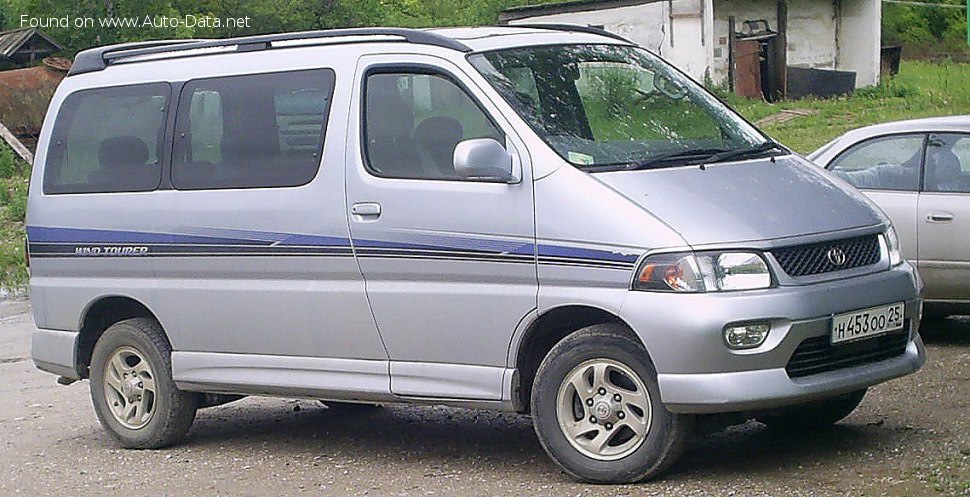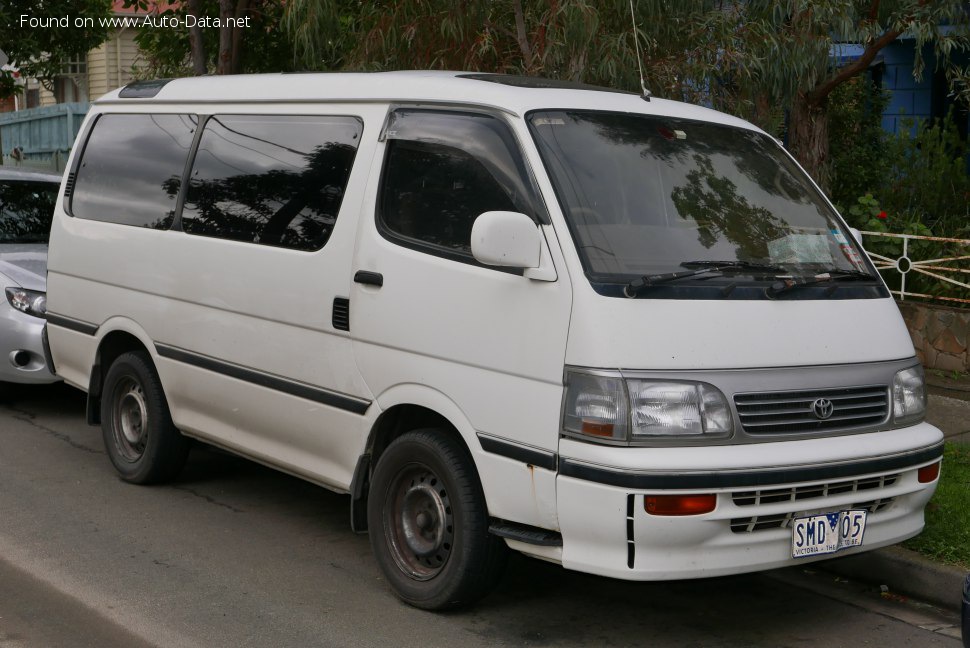
The Toyota HiAce IV (H100) 3.0 D (131 Hp): A Global Workhorse Defined
The Toyota HiAce IV (H100) 3.0 D (131 Hp) represents a significant chapter in the history of light commercial vehicles and people movers. Produced by the Japanese automotive giant Toyota from 1989 to 2004, the fourth generation HiAce solidified its reputation as an exceptionally reliable, versatile, and durable vehicle across numerous international markets, particularly in Asia, Australia, Europe, and Africa. While not a common sight in the United States, its impact globally as a commercial staple and family hauler is undeniable. This specific variant, powered by a robust 3.0-liter diesel engine, was a cornerstone of its success, offering a compelling blend of power, efficiency, and the legendary Toyota build quality that enabled it to endure demanding conditions and high mileage.
The HiAce IV (H100) was offered in various configurations, but the 8-seat minivan with four doors was among its most popular forms, demonstrating its adaptability for both passenger transport and cargo duties. Its longevity in production, spanning over a decade and a half, is a testament to its well-engineered design and the trust it garnered from countless operators and families worldwide. It was designed from the ground up to be a practical, no-nonsense vehicle, prioritizing functionality and longevity over luxury, a philosophy that resonated deeply with its target audience.
Engine and Performance: The Robust 1KZ-TE Diesel
At the heart of the Toyota HiAce IV (H100) 3.0 D (131 Hp) lies the highly regarded 1KZ-TE engine, a 2.982-liter (approximately 3.0-liter) inline-four turbocharged diesel powerplant. This engine was celebrated for its impressive durability and the ability to deliver consistent performance under varying loads and conditions. Producing 131 horsepower at 3600 rpm, the engine provided ample power for its intended commercial applications. More crucially for a workhorse vehicle, it delivered a substantial 295 Nm (217.58 lb.-ft.) of torque at a low 2000 rpm. This strong low-end torque was instrumental in enabling the HiAce to effortlessly carry heavy loads of cargo or a full complement of eight passengers, navigate challenging terrain, and maintain momentum on highways.
The 1KZ-TE engine featured an Overhead Camshaft (OHC) valvetrain and a precombustion chamber injection system, which was a common and reliable technology for diesel engines of its era. This design contributed to its reputation for longevity and ease of maintenance, critical factors for commercial fleet operators. The turbocharger significantly boosted the engine’s output, improving both power and efficiency compared to naturally aspirated alternatives.
Fuel economy, a vital metric for any commercial vehicle, was a strong suit for the HiAce 3.0 D. Toyota reported urban fuel consumption figures of approximately 19.8 US mpg (11.9 l/100 km) and an impressive extra-urban economy of around 37.9 US mpg (6.2 l/100 km). These figures underscored its economic operation, making it a cost-effective choice for businesses and individuals alike. The powertrain architecture featured a front-mounted, longitudinal engine layout driving the rear wheels, a classic and robust setup favored for its load-carrying capability, traction under acceleration, and straightforward maintenance. This rear-wheel-drive configuration further enhanced its utility in diverse environments.
Design and Features: Functionality and Adaptability
The design philosophy of the Toyota HiAce IV (H100) was rooted in practicality and maximum utility. As a minivan, its exterior styling was clean and functional, prioritizing interior volume and accessibility. With a length of 181.69 inches (4615 mm), a width of 66.54 inches (1690 mm), and a height of 76.18 inches (1935 mm), it offered a substantial footprint for its class, translating into generous interior space. The wheelbase, measuring 91.73 inches (2330 mm), contributed to a stable ride and allowed for efficient packaging of the cabin.
The four-door configuration, typically featuring sliding rear doors, provided excellent access for passengers and cargo. Inside, the 8-seat layout was versatile, often allowing for various seating configurations or the complete removal of rear seats to maximize cargo capacity. This adaptability made the HiAce an ideal choice for a wide array of uses, from family transport to shuttle services, and from delivery vans to mobile workshops.
While not adorned with luxury features, the HiAce IV (H100) did incorporate essential safety and convenience technologies appropriate for its time. An Anti-lock Braking System (ABS) was available, providing enhanced stopping power and control, especially under emergency braking conditions. The braking system itself comprised ventilated discs at the front for effective heat dissipation and drum brakes at the rear, a common and reliable setup for commercial vehicles of its era. The vehicle rode on 195/85 S R14 tires, a size indicative of its focus on load-carrying capacity and durability rather than high-performance handling. A generous 18.49 US gallon (70-liter) fuel tank capacity ensured a practical operating range, reducing the frequency of fuel stops, which is particularly beneficial for commercial applications.
Technical Specifications: Toyota HiAce IV (H100) 3.0 D (131 Hp)
| Category | Specification |
|---|---|
| Brand | Toyota |
| Model | HiAce |
| Generation | HiAce IV (H100) |
| Type (Engine) | 3.0 D (131 Hp) |
| Start of Production | 1989 year |
| End of Production | 2004 year |
| Powertrain Architecture | Internal Combustion engine |
| Body type | Minivan |
| Seats | 8 |
| Doors | 4 |
| Fuel Type | Diesel |
| Fuel consumption (economy) – urban | 11.9 l/100 km / 19.8 US mpg |
| Fuel consumption (economy) – extra urban | 6.2 l/100 km / 37.9 US mpg |
| Power | 131 Hp @ 3600 rpm |
| Power per liter | 43.9 Hp/l |
| Torque | 295 Nm @ 2000 rpm (217.58 lb.-ft. @ 2000 rpm) |
| Engine layout | Front, Longitudinal |
| Engine Model/Code | 1KZ-TE |
| Engine displacement | 2982 cm3 (181.97 cu. in.) |
| Number of cylinders | 4 |
| Engine configuration | Inline |
| Cylinder Bore | 96 mm (3.78 in.) |
| Piston Stroke | 103 mm (4.06 in.) |
| Compression ratio | 21.2:1 |
| Number of valves per cylinder | 2 |
| Fuel injection system | Precombustion chamber injection |
| Engine aspiration | Turbocharger |
| Valvetrain | OHC |
| Engine oil capacity | 7.3 l (7.71 US qt) |
| Coolant | 11 l (11.62 US qt) |
| Fuel tank capacity | 70 l (18.49 US gal) |
| Length | 4615 mm (181.69 in.) |
| Width | 1690 mm (66.54 in.) |
| Height | 1935 mm (76.18 in.) |
| Wheelbase | 2330 mm (91.73 in.) |
| Drivetrain Architecture | Rear wheel drive |
| Front brakes | Ventilated discs |
| Rear brakes | Drum |
| Assisting systems | ABS (Anti-lock braking system) |
| Tires size | 195/85 S R14 |
Legacy and Market Impact
The Toyota HiAce IV (H100) 3.0 D (131 Hp) carved out an indelible legacy as one of the most dependable and widely used commercial vehicles in the world. Its reputation for bulletproof reliability and exceptional durability made it a preferred choice for countless businesses, governments, and families across diverse global markets. In regions like Southeast Asia, Australia, and Africa, the HiAce was, and in many places still is, ubiquitous. It served as everything from a public transport minibus (often referred to as a “Jitney” or “Matatu”), a delivery van for small businesses, an ambulance, a school bus, to a rugged family vehicle capable of tackling challenging road conditions.
Its primary competitors varied by region but generally included other robust utility vans such as the Nissan Caravan/Urvan, Mitsubishi L300/Delica, and in some markets, the Ford Transit or Mercedes-Benz Sprinter (though the latter two often competed in a slightly larger segment). What set the HiAce apart was its consistent performance, low running costs, and the widespread availability of parts and service, reinforcing Toyota’s global image for quality, durability, and reliability (QDR).
The HiAce IV (H100)’s historical significance lies in its role as an economic enabler. It facilitated commerce, connected communities, and provided essential transport services in areas where road infrastructure might have been less developed. Its mechanical simplicity, combined with Toyota’s engineering prowess, meant these vehicles could often operate for hundreds of thousands of miles with minimal issues, making them incredibly valuable assets. Even years after the end of its production in 2004, many examples of the HiAce H100 generation remain in active service worldwide, a testament to its enduring design and construction. It truly embodies the spirit of a global workhorse, leaving a lasting impact on the automotive landscape beyond the familiar roads of North America.