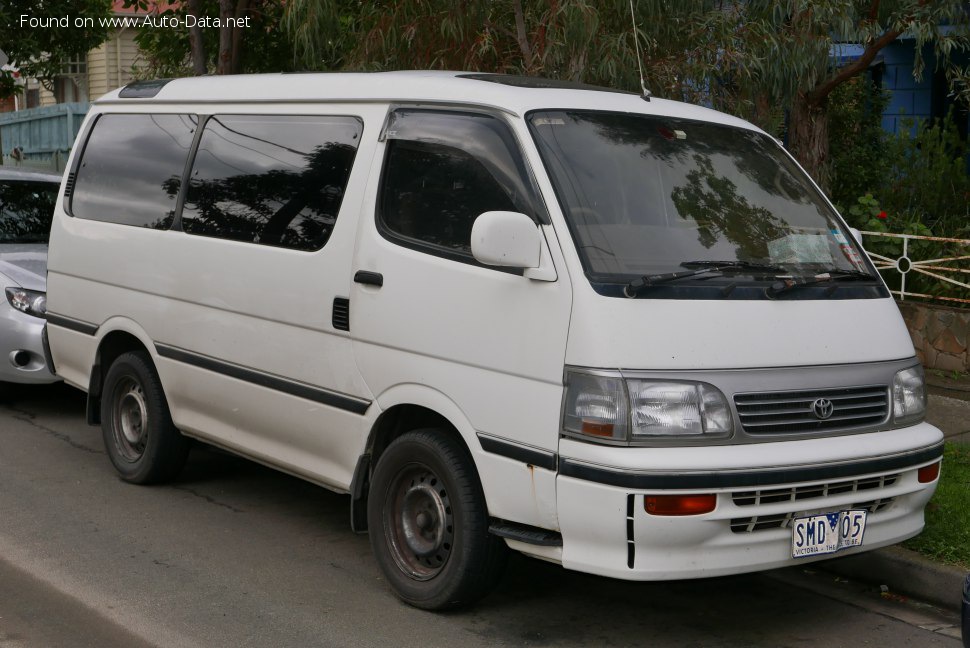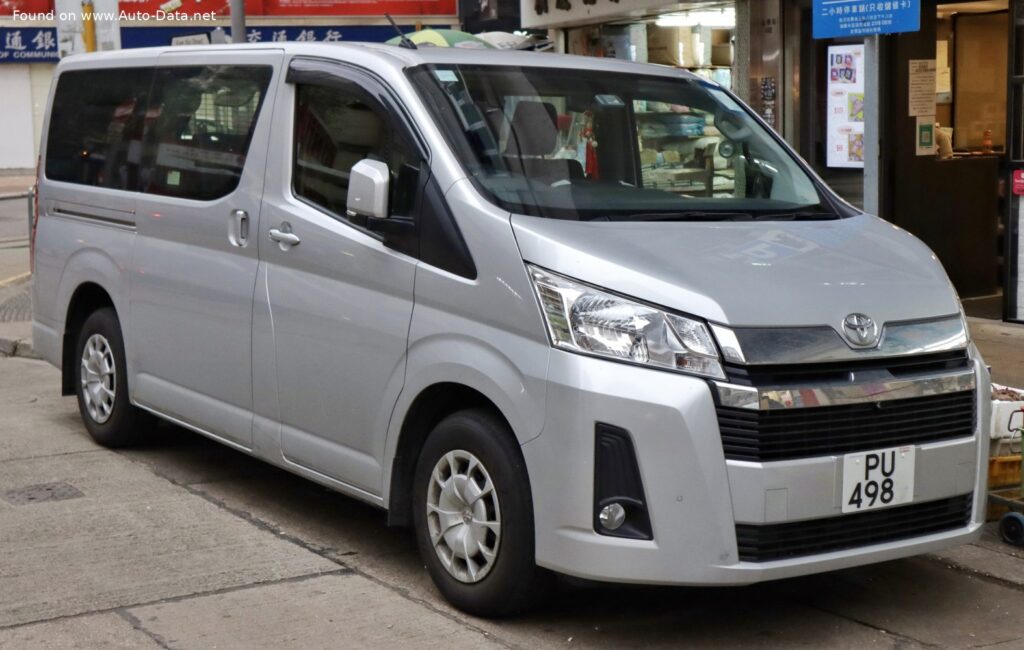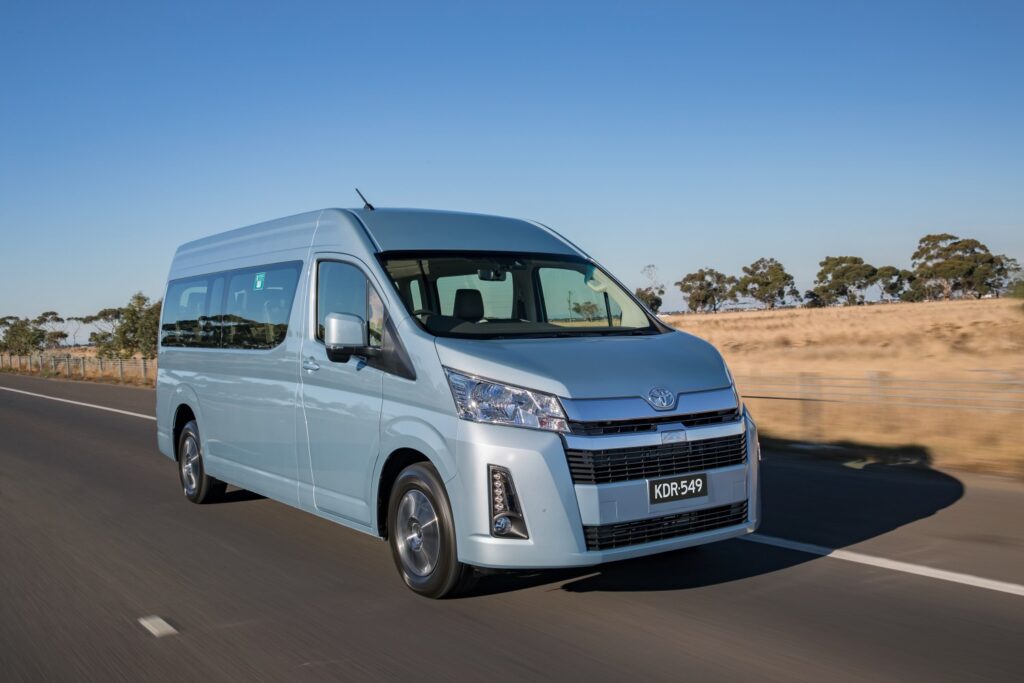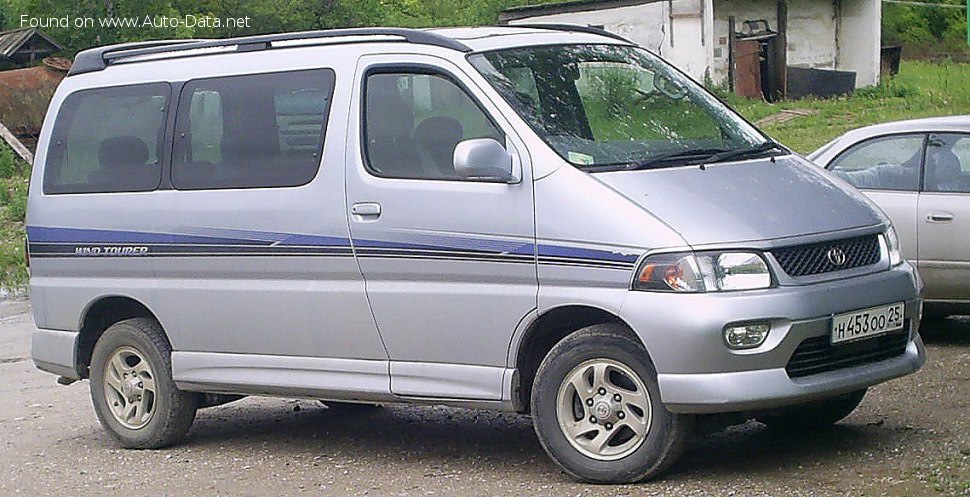
The Toyota HiAce Regius 2.7 i (145 Hp): A Versatile Minivan of the Early 2000s
The Toyota HiAce Regius 2.7 i (145 Hp) represents a specific iteration within Toyota’s globally renowned HiAce family, a nameplate synonymous with reliability and versatility in the commercial and passenger transport sectors. Produced between 2000 and 2002, this particular model was part of the HiAce Regius sub-generation, which aimed to offer a more refined and passenger-focused experience compared to the more utilitarian variants of the broader HiAce range. Positioned as a mid-sized minivan or multi-purpose vehicle (MPV), the HiAce Regius was primarily targeted at markets outside of North America, including Japan, parts of Asia, Australia, and select European countries, where its blend of seating capacity, compact dimensions, and robust engineering made it a popular choice for families and shuttle services alike.
While the HiAce name might evoke images of rugged workhorses in some regions, the Regius variant, especially with the 2.7-liter gasoline engine, carved out a niche as a comfortable and capable people mover. It offered seating for up to eight occupants within a relatively modest footprint, making it adept at navigating crowded urban environments while still providing ample interior space. The vehicle’s design and mechanical underpinnings reflected Toyota’s commitment to durability and low running costs, qualities that resonated strongly with its target demographic. This expert review delves into the specifics of the Toyota HiAce Regius 2.7 i (145 Hp), examining its powertrain, design, features, and its lasting impact on the automotive landscape of its primary markets.
Engine and Performance: The Heart of the Toyota HiAce Regius 2.7 i (145 Hp)
At the core of the Toyota HiAce Regius 2.7 i (145 Hp) lies a powertrain engineered for dependable performance and efficiency, particularly suited for its role as a passenger carrier. The vehicle is powered by Toyota’s robust 3RZ-FE engine, a 2.7-liter (2694 cm3 or 164.4 cu. in.) inline four-cylinder gasoline unit. This engine is well-regarded for its durability and has seen service in various Toyota vehicles worldwide, including some of the brand’s popular trucks and SUVs in the North American market, such as the Tacoma and 4Runner of the era. This shared heritage underscores its reputation for being a workhorse engine, designed for longevity and consistent output.
The 3RZ-FE engine features a double overhead camshaft (DOHC) valvetrain with four valves per cylinder, optimizing airflow for improved combustion. It employs a multi-port manifold injection fuel system, ensuring precise fuel delivery and contributing to its reliable operation. As a naturally aspirated engine, it delivers its power smoothly and predictably, without the added complexity of forced induction.
Performance figures for this configuration include a peak power output of 145 horsepower (Hp) achieved at 4800 revolutions per minute (rpm). This power output, combined with a specific power per liter of 53.8 Hp/l, is ample for a minivan of its size, providing sufficient acceleration for city driving and maintaining highway speeds even with a full complement of passengers and cargo. Torque is equally important for a vehicle designed to haul, and the HiAce Regius delivers 235 Nm (173.33 lb.-ft.) of torque at 4000 rpm. This healthy torque figure ensures good pulling power from lower engine speeds, making it responsive in stop-and-go traffic and capable on inclines.
The engine is mounted longitudinally at the front, driving the rear wheels, a traditional and robust drivetrain architecture often favored for commercial vehicles and those requiring strong towing or hauling capabilities. This rear-wheel-drive setup contributes to the vehicle’s stable handling characteristics, especially under load. The engine’s compression ratio of 9.5:1 is typical for a gasoline engine of its era, balancing performance with fuel efficiency and reliability. With an engine oil capacity of 5.5 liters (5.81 US quarts) and a coolant capacity of 10.9 liters (11.52 US quarts), the powertrain is designed for efficient thermal management and ease of maintenance, further reinforcing its reputation for dependability.
Design and Features
The design of the Toyota HiAce Regius 2.7 i (145 Hp) prioritizes functionality and passenger comfort, embodying the classic minivan silhouette of the early 2000s. Its body type is a traditional minivan, featuring four doors and a generous seating capacity for eight occupants, arranged to maximize interior space and flexibility.
In terms of dimensions, the HiAce Regius measures 4750 mm (187.01 in) in length, 1695 mm (66.73 in) in width, and 1960 mm (77.17 in) in height. These dimensions make it relatively compact for an 8-seater, especially when compared to larger American minivans of the same period, allowing for easier maneuverability and parking in tighter urban environments prevalent in its primary markets. The substantial wheelbase of 2985 mm (117.52 in) contributes significantly to a stable ride and a spacious cabin, ensuring comfort for all passengers. The front track of 1455 mm (57.28 in) and a rear track of 1435 mm (56.5 in) further enhance its road-holding capabilities.
The exterior design is characterized by its practical, boxy profile, which directly translates to maximum interior volume and excellent visibility for the driver and passengers. Large windows are a hallmark of its design, providing an airy cabin feel. While specific luxury features might vary by trim level, the Regius typically offered essentials like power windows, air conditioning, and a functional audio system. The emphasis was on utility and ease of use, with robust interior materials designed to withstand the rigors of family transport or commercial shuttle operations. Configurable seating arrangements were a key feature, allowing owners to adapt the interior for various combinations of passengers and cargo, a critical aspect for a versatile minivan.
For braking, the HiAce Regius was equipped with ventilated discs at the front and disc brakes at the rear, providing reliable stopping power for a vehicle of its size and weight. The standard tire size was 205/70 R15, a common specification that offered a good balance of ride comfort, grip, and tire availability. Safety features, while not extensively detailed in the provided data, would have included standard equipment for its time, such as anti-lock braking systems (ABS) and potentially front airbags, depending on the market and specific trim. The vehicle’s sturdy construction and the inherent safety benefits of a strong frame also contributed to occupant protection. The fuel tank capacity of 65 liters (17.17 US gallons) provided a decent range for extended journeys, reducing the frequency of fuel stops.
Technical Specifications
| General Information | |
|---|---|
| Brand | Toyota |
| Model | HiAce |
| Generation | HiAce Regius |
| Type (Engine) | 2.7 i (145 Hp) |
| Start of Production | 2000 year |
| End of Production | 2002 year |
| Powertrain Architecture | Internal Combustion engine |
| Body type | Minivan |
| Seats | 8 |
| Doors | 4 |
| Performance Specs | |
| Fuel Type | Petrol (Gasoline) |
| Power | 145 Hp @ 4800 rpm. |
| Power per liter | 53.8 Hp/l |
| Torque | 235 Nm @ 4000 rpm (173.33 lb.-ft. @ 4000 rpm) |
| Engine Specs | |
| Engine layout | Front, Longitudinal |
| Engine Model/Code | 3RZ-FE |
| Engine displacement | 2694 cm3 (2.7 liters / 164.4 cu. in.) |
| Number of cylinders | 4 |
| Engine configuration | Inline |
| Cylinder Bore | 95 mm (3.74 in) |
| Piston Stroke | 95 mm (3.74 in) |
| Compression ratio | 9.5:1 |
| Number of valves per cylinder | 4 |
| Fuel injection system | Multi-port manifold injection |
| Engine aspiration | Naturally aspirated engine |
| Valvetrain | DOHC |
| Engine oil capacity | 5.5 l (5.81 US qt) |
| Coolant | 10.9 l (11.52 US qt) |
| Space, Volume and Weights | |
| Fuel tank capacity | 65 l (17.17 US gal) |
| Dimensions | |
| Length | 4750 mm (187.01 in) |
| Width | 1695 mm (66.73 in) |
| Height | 1960 mm (77.17 in) |
| Wheelbase | 2985 mm (117.52 in) |
| Front track | 1455 mm (57.28 in) |
| Rear (Back) track | 1435 mm (56.5 in) |
| Drivetrain, Brakes and Suspension Specs | |
| Drivetrain Architecture | The Internal combustion engine (ICE) drives the rear wheels of the vehicle. |
| Drive wheel | Rear wheel drive |
| Front brakes | Ventilated discs |
| Rear brakes | Disc |
| Tires size | 205/70 R15 |
Legacy and Market Impact
The Toyota HiAce Regius 2.7 i (145 Hp), though a relatively short-lived specific model from 2000 to 2002, played a significant role in Toyota’s strategy for the global minivan market, particularly in Asia and parts of Europe and Oceania. It built upon the legendary reputation of the broader HiAce nameplate, which is globally recognized for its indestructible reliability, low running costs, and exceptional versatility. The Regius variant aimed to elevate the passenger experience, offering more comfort and refinement than the commercial-focused HiAce models, without sacrificing the underlying robustness.
In its primary markets, the HiAce Regius faced competition from other prominent Japanese minivans such as the Nissan Elgrand, Honda Elysion, and Mitsubishi Delica, as well as European offerings like the Volkswagen Transporter Caravelle/Multivan and Mercedes-Benz Vito passenger variants. What set the Regius apart was its strong emphasis on Toyota’s core values: unwavering dependability and practical design. Its 3RZ-FE engine, shared with rugged vehicles, further solidified its image as a durable workhorse capable of handling the demands of continuous passenger transport, whether for large families, hotel shuttles, or tour operators.
The decision not to market the HiAce Regius extensively in the United States was largely due to differing market preferences and regulatory requirements. American consumers typically favored larger, front-wheel-drive minivans like Toyota’s own Sienna, which offered a different packaging and driving dynamic. However, the influence of the HiAce Regius and its ilk can be seen in the global evolution of the minivan segment, demonstrating a demand for vehicles that could bridge the gap between pure commercial vans and more car-like passenger vehicles.
Its legacy is one of quiet competence. The HiAce Regius might not have been a trendsetter in terms of styling or groundbreaking technology, but it was a masterclass in execution for its intended purpose. It provided reliable, spacious, and efficient transport for thousands of families and businesses, contributing to Toyota’s reputation as a leader in dependable automotive solutions. Even today, many of these vehicles continue to operate in various parts of the world, a testament to their inherent quality and the enduring engineering principles applied by Toyota during their production. The HiAce Regius stands as an exemplar of the early 2000s Japanese minivan philosophy: practical, durable, and unfailingly reliable.