The Toyota HiAce VI (H300) Commuter L2H2: A Global Workhorse Redefined
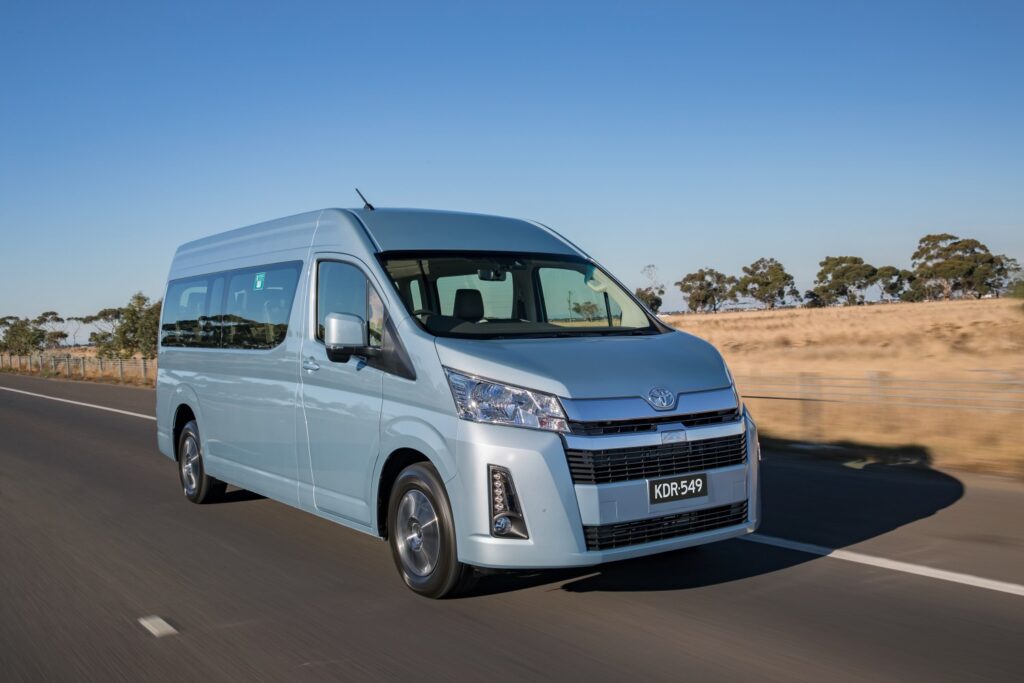
The Toyota HiAce VI (H300) Commuter L2H2 represents the sixth generation of Toyota’s globally renowned light commercial vehicle, a nameplate synonymous with durability and versatility since its inception in 1967. Launched in 2019, this iteration marks a significant departure from its predecessors, adopting a new semi-bonneted design for enhanced safety and comfort. While not sold in the United States, the HiAce is a cornerstone of commercial transport in numerous markets across Asia, Europe, Africa, Australia, and Latin America. The Commuter L2H2 variant, specifically, is engineered as a high-capacity passenger van, offering seating for 10 to 17 occupants, making it an indispensable asset for public transport, tourism, and large family or corporate shuttle services in its primary operating regions.
This sixth-generation HiAce, internally coded H300, was developed on an entirely new platform, moving away from the cab-over design that characterized earlier generations. This strategic shift primarily aims to improve frontal crash safety performance, driver ergonomics, and overall ride comfort. The L2H2 designation signifies a Long Wheelbase and High Roof configuration, maximizing interior volume for both passengers and their luggage. With its robust construction, advanced diesel powertrain, and a focus on practicality, the Toyota HiAce VI (H300) Commuter L2H2 continues Toyota’s legacy of delivering reliable and efficient commercial solutions worldwide.
Engine and Performance of the Toyota HiAce VI (H300) Commuter L2H2
At the heart of the Toyota HiAce VI (H300) Commuter L2H2 is the highly regarded 2.8-liter D-4D diesel engine, designated as the 1GD-FTV. This modern turbodiesel unit is a testament to Toyota’s engineering prowess, balancing robust power delivery with impressive fuel efficiency, crucial attributes for a vehicle designed for continuous commercial operation. The inline four-cylinder engine features a double overhead camshaft (DOHC) valvetrain and a common rail direct fuel injection system, optimized for precise fuel delivery and combustion.
This 2.8-liter powerplant generates a respectable 163 horsepower at 3600 rpm, providing ample thrust for highway cruising and navigating demanding urban environments, even when fully loaded. More critically for a commercial vehicle, it delivers a substantial 309.78 lb.-ft. of torque across a broad and accessible rev range, specifically from 1600 to 2200 rpm. This low-end torque is vital for confident acceleration from a standstill, seamless merging into traffic, and tackling inclines, all while carrying a full complement of passengers or cargo. The engine’s aspiration system includes a turbocharger and intercooler, ensuring efficient air intake and consistent power output across varying conditions.
Power is transmitted to the rear wheels via a smooth and responsive 6-speed automatic transmission. This rear-wheel-drive architecture is traditional for commercial vans of this size, providing excellent traction under heavy loads and contributing to the vehicle’s overall durability. The powertrain also incorporates modern efficiency and emissions control technologies, such as a Start & Stop System to conserve fuel during idle periods and a particulate filter to meet stringent emissions standards in its target markets. With an engine oil capacity of 7.5 US quarts and a coolant capacity of 10.25 US quarts, the 1GD-FTV is designed for ease of maintenance and long service intervals, further enhancing its appeal as a cost-effective commercial solution.
Design and Features
The design of the Toyota HiAce VI (H300) Commuter L2H2 is driven by functionality, safety, and passenger comfort. Its van body type, with four doors and seating for 10 to 17 individuals, clearly signals its role as a dedicated people mover. The L2H2 configuration denotes a generous length of 232.87 inches, a width of 76.77 inches, and a towering height of 89.76 inches, providing expansive interior space and comfortable headroom for all passengers, even in the rear rows. The substantial 151.97-inch wheelbase contributes to a stable and composed ride, essential for passenger comfort over long journeys.
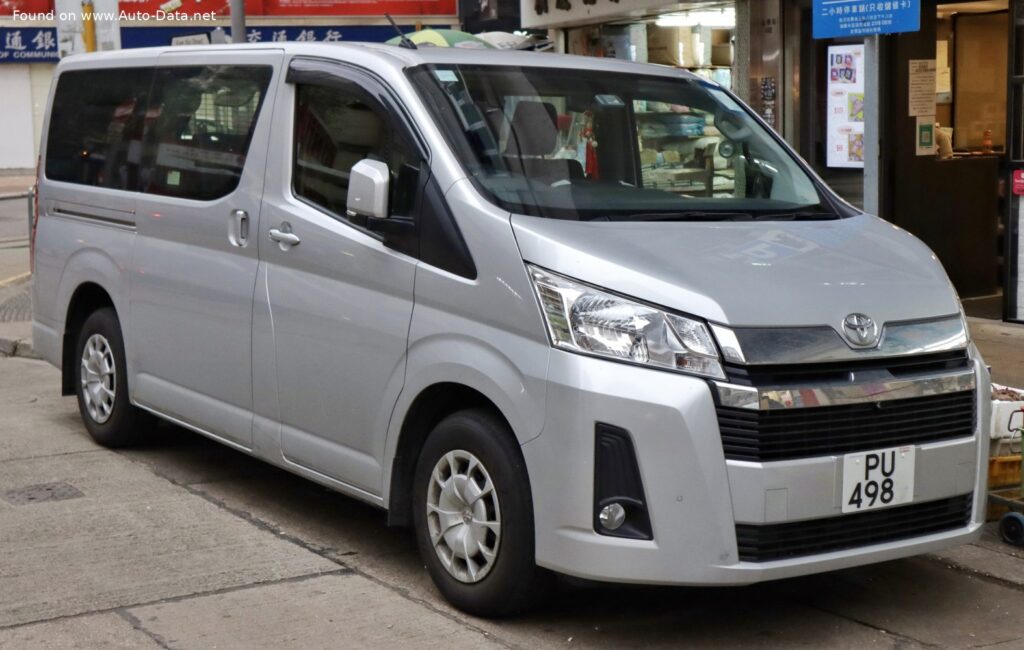
From an aesthetic standpoint, the HiAce VI adopts a more modern and aerodynamic profile compared to its predecessors. The shift to a semi-bonneted design not only improves crash safety by providing a crumple zone ahead of the cabin but also allows for better engine accessibility for servicing. The front fascia features a contemporary grille and headlight design, projecting a strong and purposeful presence. Large windows ensure excellent visibility for passengers and a bright, airy cabin environment.
Inside, the HiAce Commuter focuses on practicality and robustness. The seating arrangements are highly flexible, allowing operators to configure the interior to suit various needs, from shuttle services to tour buses. Durable materials are used throughout the cabin, designed to withstand the rigors of daily commercial use. While luxury features are not its primary focus, the HiAce offers essential conveniences and safety technologies. Standard features include hydraulic power steering for ease of maneuverability, especially in tight urban spaces, and an Anti-lock Braking System (ABS) to ensure stable stopping performance under various conditions. The suspension system comprises an independent McPherson strut setup with coil springs and an anti-roll bar at the front, providing a comfortable ride and responsive handling, while a rigid axle suspension with leaf springs at the rear is engineered to handle heavy loads with unwavering stability. Ventilated disc brakes on both the front (296 mm) and rear (320 mm) wheels provide strong and consistent braking power, crucial for a vehicle of its size and passenger capacity. The vehicle rides on 215/70 R16 tires mounted on 7J x 16 wheel rims, providing a good balance of load-carrying capability and ride comfort.
Technical Specifications
| Category | Specification |
|---|---|
| Brand | Toyota |
| Model | HiAce |
| Generation | HiAce VI (H300) Commuter L2H2 |
| Type (Engine) | 2.8 D-4D (163 Hp) Automatic |
| Start of Production | 2019 year |
| Powertrain Architecture | Internal Combustion engine |
| Body Type | Van |
| Seats | 10-17 |
| Doors | 4 |
| Performance Specs | |
| Fuel Type | Diesel |
| Weight-to-Power Ratio | 16 kg/Hp, 62.3 Hp/tonne |
| Weight-to-Torque Ratio | 6.2 kg/Nm, 160.6 Nm/tonne |
| Engine Specs | |
| Power | 163 Hp @ 3600 rpm |
| Power per Liter | 59.2 Hp/l |
| Torque | 420 Nm (309.78 lb.-ft.) @ 1600-2200 rpm |
| Engine Layout | Front, Longitudinal |
| Engine Model/Code | 1GD-FTV |
| Engine Displacement | 2755 cm3 (168.12 cu. in.) |
| Number of Cylinders | 4 |
| Engine Configuration | Inline |
| Cylinder Bore | 92 mm (3.62 in.) |
| Piston Stroke | 103.6 mm (4.08 in.) |
| Compression Ratio | 15.6:1 |
| Number of Valves per Cylinder | 4 |
| Fuel Injection System | Diesel Commonrail |
| Engine Aspiration | Turbocharger, Intercooler |
| Valvetrain | DOHC |
| Engine Oil Capacity | 7.1 l (7.5 US qt) |
| Coolant Capacity | 9.7 l (10.25 US qt) |
| Engine Systems | |
| Start & Stop System | Yes |
| Particulate Filter | Yes |
| Space, Volume, and Weights | |
| Kerb Weight | 2615-2680 kg (5765.09 – 5908.39 lbs.) |
| Max. Weight (GVWR) | 3710-3720 kg (8179.15 – 8201.2 lbs.) |
| Max Load | 1040-1095 kg (2292.81 – 2414.06 lbs.) |
| Fuel Tank Capacity | 70 l (18.49 US gal) |
| Permitted Trailer Load with Brakes (12%) | 1500 kg (3306.93 lbs.) |
| Permitted Trailer Load without Brakes | 400 kg (881.85 lbs.) |
| Permitted Towbar Download | 150 kg (330.69 lbs.) |
| Dimensions | |
| Length | 5915 mm (232.87 in.) |
| Width | 1950 mm (76.77 in.) |
| Height | 2280 mm (89.76 in.) |
| Wheelbase | 3860 mm (151.97 in.) |
| Front Track | 1670-1675 mm (65.75 – 65.94 in.) |
| Rear (Back) Track | 1670 mm (65.75 in.) |
| Front Overhang | 950 mm (37.4 in.) |
| Rear Overhang | 1105 mm (43.5 in.) |
| Minimum Turning Circle (Turning Diameter) | 12.8 m (41.99 ft.) |
| Drivetrain, Brakes, and Suspension Specs | |
| Drivetrain Architecture | Rear wheel drive. Internal Combustion engine. The Internal combustion engine (ICE) drives the rear wheels of the vehicle. |
| Drive Wheel | Rear wheel drive |
| Number of Gears and Type of Gearbox | 6 gears, automatic transmission |
| Front Suspension | Independent, type McPherson with coil spring and anti-roll bar |
| Rear Suspension | Rigid axle suspension, Leaf spring |
| Front Brakes | Ventilated discs, 296 mm |
| Rear Brakes | Ventilated discs, 320 mm |
| Assisting Systems | ABS (Anti-lock braking system) |
| Steering Type | Steering rack and pinion |
| Power Steering | Hydraulic Steering |
| Tires Size | 215/70 R16 |
| Wheel Rims Size | 7J x 16 |
Legacy and Market Impact
The Toyota HiAce VI (H300) Commuter L2H2 continues a legacy that began over half a century ago, solidifying Toyota’s reputation as a leader in commercial vehicle manufacturing. Its enduring success in markets outside North America is built upon a foundation of unparalleled reliability, low running costs, and exceptional durability, qualities that are paramount for commercial operators. The HiAce nameplate has become synonymous with a vehicle that simply “gets the job done,” regardless of the harsh operating conditions or demanding schedules it faces.
In its primary markets, the HiAce faces a diverse range of competitors, including the Mercedes-Benz Sprinter, Ford Transit, Hyundai H350, Nissan NV350 Caravan, and Volkswagen Crafter, among others. However, the HiAce consistently distinguishes itself through its robust build quality, strong resale value, and the extensive service network that Toyota commands globally. The VI generation’s move to a semi-bonneted design was a strategic response to evolving safety standards and consumer expectations, further enhancing its competitiveness and appeal in mature markets while maintaining its rugged character for developing regions.
The historical significance of the HiAce lies in its ability to adapt and evolve while retaining its core values. From its early utilitarian forms to the more refined and safer H300 series, it has consistently served as a vital tool for businesses, public services, and families. The Commuter L2H2 variant, in particular, plays a critical role in facilitating mass transit and tourism, especially in regions where reliable and spacious passenger vehicles are essential infrastructure. Its ability to comfortably and safely transport a large number of people over long distances, coupled with its proven diesel powertrain, makes it an invaluable asset for operators ranging from small shuttle companies to large tour groups.
Ultimately, the Toyota HiAce VI (H300) Commuter L2H2 is more than just a commercial van; it is a testament to Toyota’s commitment to building vehicles that are not only functional and efficient but also inherently dependable. Its presence on roads worldwide underscores its global impact and its continued importance as a cornerstone of commercial and passenger transport.