Introduction to the Toyota HiAce VI (H300) Panel Van L1H1 3.5 V6 (281 Hp) Automatic
The Toyota HiAce, a name synonymous with reliability and utility in commercial vehicle markets globally, entered its sixth generation (H300 series) in 2019, marking a significant evolution for the venerable workhorse. This specific variant, the Toyota HiAce VI (H300) Panel Van L1H1 3.5 V6 (281 Hp) Automatic, represents a modern interpretation of Toyota’s commitment to robust and efficient transport solutions. Unlike its predecessors, which often featured a “cab-over” design, the H300 generation adopts a semi-bonneted layout, enhancing safety, comfort, and serviceability. Primarily targeted at commercial fleets and businesses across Asia, Australia, and select European markets, where it serves as a vital tool for logistics, delivery, and passenger transport, this iteration of the HiAce continues its legacy of dependable performance. While not a mainstream offering in the North American passenger car market, its engineering and market role are crucial for understanding global automotive trends, particularly in the light commercial vehicle segment. This model, with its powerful 3.5-liter V6 engine and automatic transmission, is designed to offer a blend of substantial hauling capability and refined driving dynamics, a combination increasingly sought after in modern commercial operations.
Engine and Performance: The Heart of the Toyota HiAce VI (H300)
Underpinning the robust capabilities of the Toyota HiAce VI (H300) Panel Van L1H1 3.5 V6 (281 Hp) Automatic is a sophisticated 3.5-liter V6 gasoline engine, designated by the code 7GR-FKS. This naturally aspirated powerhouse delivers a formidable 281 horsepower at 6000 rpm, providing ample thrust for heavy loads and challenging driving conditions. Its maximum torque of 258.88 lb.-ft. (351 Nm) arrives at a practical 4600 rpm, ensuring strong pulling power across a usable rev range. The engine’s advanced design features a V-engine configuration with six cylinders, each equipped with four valves, totaling 24 valves, actuated by a Dual Overhead Camshaft (DOHC) system incorporating Toyota’s Variable Valve Timing with intelligence Wide (VVT-iW). This valvetrain technology optimizes valve overlap for improved fuel efficiency and power delivery across various engine speeds.
Fuel delivery is managed through a sophisticated system combining both direct injection and multi-port manifold injection, a strategy that enhances combustion efficiency and reduces emissions while maximizing power output. With a compression ratio of 11.8:1, the engine is tuned for optimal performance on regular gasoline. Power is channeled through a smooth 6-speed automatic transmission, which ensures effortless gear changes and contributes to a more relaxed driving experience, especially in urban environments or during long-haul journeys. The drivetrain architecture is traditional for a commercial van, featuring a rear-wheel-drive setup, which is ideal for load-carrying and traction when fully laden.
Performance figures for this HiAce variant are commendable for a vehicle of its class. It boasts a top speed of approximately 105.63 mph (170 km/h), more than adequate for commercial operations. Despite its substantial power, Toyota has engineered the HiAce for reasonable efficiency within its segment. The combined fuel economy is rated at 19.6 US mpg (12 l/100 km), with urban consumption at 14.3 US mpg (16.5 l/100 km) and extra-urban at 24.8 US mpg (9.5 l/100 km). These figures, while not comparable to smaller passenger cars, are respectable for a large V6-powered panel van designed for significant payloads. The CO2 emissions stand at 275 g/km, reflecting its commercial utility focus.
Design and Features: Utility Meets Modernity
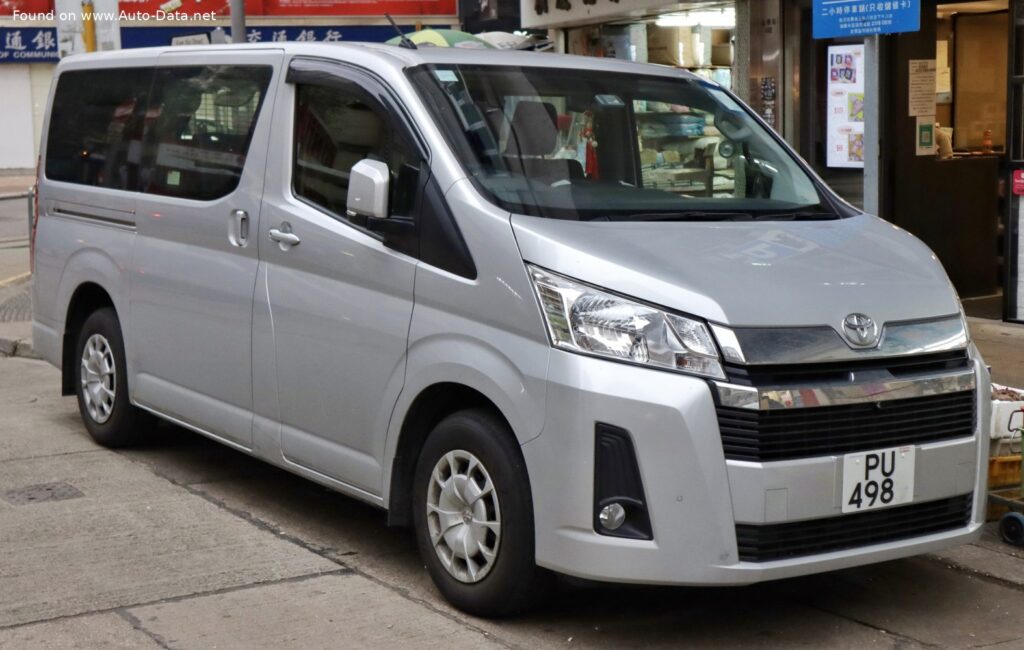
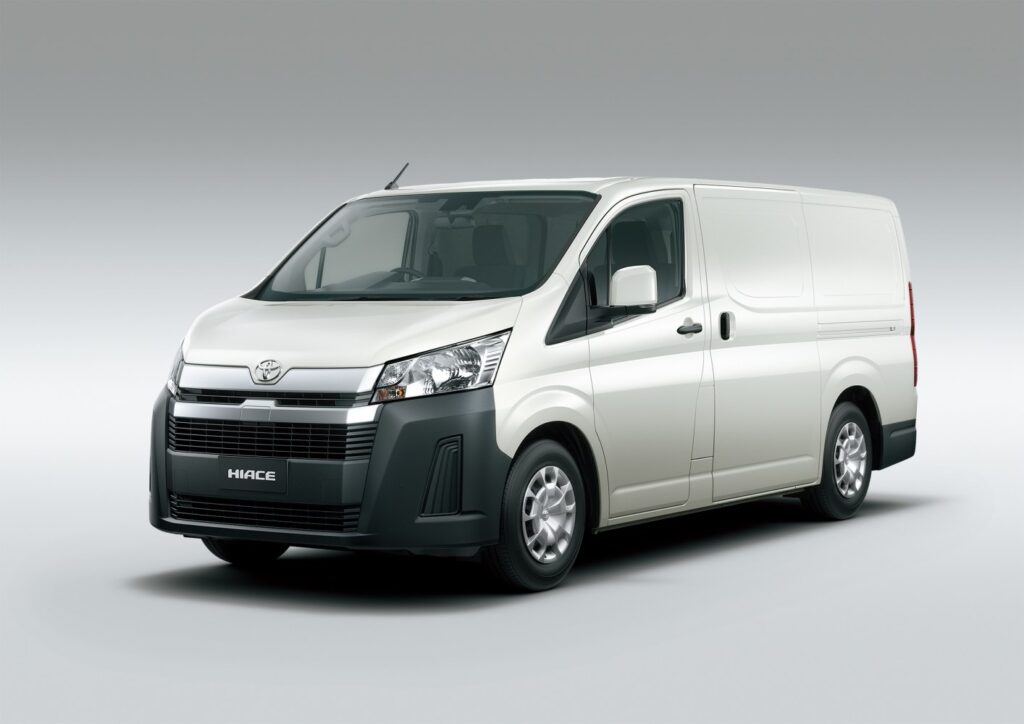
The Toyota HiAce VI (H300) Panel Van L1H1 represents a strategic shift in the design philosophy for Toyota’s popular commercial van. Moving away from the traditional cab-over design, the H300 adopts a semi-bonneted front end, which has profound implications for both safety and driver comfort. This design allows for a larger crumple zone, significantly enhancing occupant protection in frontal collisions, a critical improvement for a vehicle that spends much of its life on busy roads. The L1H1 designation indicates a short wheelbase (3210 mm / 126.38 in.) and standard roof height, offering a versatile platform for various commercial applications.
Measuring 207.28 inches (5265 mm) in length, 76.77 inches (1950 mm) in width, and 78.35 inches (1990 mm) in height, the HiAce H300 is a substantial vehicle, designed to maximize interior space for cargo. The panel van configuration means the rear passenger compartment is replaced with a vast, unobstructed cargo area, ideal for businesses needing to transport goods, tools, or equipment. With a maximum trunk (boot) space of 218.95 cubic feet (6200 liters), the HiAce offers impressive volumetric capacity. The practical design includes five doors, typically two front doors, two sliding side doors for easy access to the cargo area, and a large rear liftgate or barn doors, facilitating loading and unloading.
The interior is designed for durability and functionality, accommodating 2-3 occupants in the front cabin. Driver ergonomics are improved with the new layout, offering a more car-like driving position and enhanced visibility. Standard features include power steering (hydraulic steering rack and pinion), ensuring precise control even when fully loaded. The suspension system is engineered for stability and load-carrying capability: an independent McPherson strut setup with coil springs and an anti-roll bar at the front, paired with a robust rigid axle suspension with leaf springs at the rear. This combination provides a balance of ride comfort and the necessary strength to handle its maximum payload of 2380.99 lbs. (1080 kg) and a maximum gross weight of 7054.79 lbs. (3200 kg). Braking is handled by ventilated discs both front (296 mm) and rear (320 mm), complemented by an Anti-lock Braking System (ABS) for enhanced safety and control during emergency stops. The vehicle rides on 215/70 R16 tires mounted on 7J x 16 wheel rims, providing a good balance of load capacity and ride comfort.
Technical Specifications: Toyota HiAce VI (H300) Panel Van L1H1 3.5 V6 (281 Hp) Automatic
| Category | Specification | Value |
|---|---|---|
General Information |
||
| Brand | Toyota | |
| Model | HiAce | |
| Generation | HiAce VI (H300) Panel Van L1H1 | |
| Type (Engine) | 3.5 V6 (281 Hp) Automatic | |
| Start of production | 2019 year | |
| Powertrain Architecture | Internal Combustion engine | |
| Body type | Van | |
| Seats | 2-3 | |
| Doors | 5 | |
Performance Specifications |
||
| Fuel consumption (economy) – urban | 14.3 US mpg (16.5 l/100 km) | |
| Fuel consumption (economy) – extra urban | 24.8 US mpg (9.5 l/100 km) | |
| Fuel consumption (economy) – combined | 19.6 US mpg (12 l/100 km) | |
| CO2 emissions | 275 g/km | |
| Fuel Type | Petrol (Gasoline) | |
| Maximum speed | 105.63 mph (170 km/h) | |
| Weight-to-power ratio | 7.5 kg/Hp, 132.5 Hp/tonne | |
| Weight-to-torque ratio | 6 kg/Nm, 165.6 Nm/tonne | |
Engine Specifications |
||
| Power | 281 Hp @ 6000 rpm | |
| Power per liter | 81.3 Hp/l | |
| Torque | 258.88 lb.-ft. (351 Nm) @ 4600 rpm | |
| Engine layout | Front, Longitudinal | |
| Engine Model/Code | 7GR-FKS | |
| Engine displacement | 210.9 cu. in. (3456 cm3) | |
| Number of cylinders | 6 | |
| Engine configuration | V-engine | |
| Cylinder Bore | 3.7 in. (94 mm) | |
| Piston Stroke | 3.27 in. (83 mm) | |
| Compression ratio | 11.8:1 | |
| Number of valves per cylinder | 4 | |
| Fuel injection system | Direct injection and Multi-port manifold injection | |
| Engine aspiration | Naturally aspirated engine | |
| Valvetrain | DOHC, VVT-iW | |
| Engine oil capacity | 6.55 US qt (6.2 l) | |
| Coolant | 11.1 US qt (10.5 l) | |
Space, Volume and Weights |
||
| Kerb Weight | 4673.8 lbs. (2120 kg) | |
| Max. weight | 7054.79 lbs. (3200 kg) | |
| Max load | 2380.99 lbs. (1080 kg) | |
| Trunk (boot) space – maximum | 218.95 cu. ft. (6200 l) | |
| Fuel tank capacity | 18.49 US gal (70 l) | |
| Permitted trailer load with brakes (12%) | 3306.93 lbs. (1500 kg) | |
| Permitted trailer load without brakes | 881.85 lbs. (400 kg) | |
| Permitted towbar download | 330.69 lbs. (150 kg) | |
Dimensions |
||
| Length | 207.28 in. (5265 mm) | |
| Width | 76.77 in. (1950 mm) | |
| Height | 78.35 in. (1990 mm) | |
| Wheelbase | 126.38 in. (3210 mm) | |
| Front track | 65.75 – 65.94 in. (1670-1675 mm) | |
| Rear (Back) track | 65.75 in. (1670 mm) | |
| Front overhang | 37.4 in. (950 mm) | |
| Rear overhang | 43.5 in. (1105 mm) | |
| Minimum turning circle (turning diameter) | 36.09 ft. (11 m) | |
Drivetrain, Brakes and Suspension Specifications |
||
| Drivetrain Architecture | The Internal combustion engine (ICE) drives the rear wheels of the vehicle. | |
| Drive wheel | Rear wheel drive | |
| Number of gears and type of gearbox | 6 gears, automatic transmission | |
| Front suspension | Independent, type McPherson with coil spring and anti-roll bar | |
| Rear suspension | Rigid axle suspension, Leaf spring | |
| Front brakes | Ventilated discs, 296 mm | |
| Rear brakes | Ventilated discs, 320 mm | |
| Assisting systems | ABS (Anti-lock braking system) | |
| Steering type | Steering rack and pinion | |
| Power steering | Hydraulic Steering | |
| Tires size | 215/70 R16 | |
| Wheel rims size | 7J x 16 | |
Legacy and Market Impact of the Toyota HiAce VI (H300)
The Toyota HiAce series has cultivated an almost legendary reputation across many parts of the world, particularly in Asia, Australia, and Africa, for its unwavering reliability, durability, and low running costs. The introduction of the sixth-generation HiAce, specifically the Toyota HiAce VI (H300) Panel Van L1H1 3.5 V6 (281 Hp) Automatic, marked a pivotal moment in its illustrious history. By adopting a semi-bonneted design, Toyota addressed contemporary demands for enhanced safety standards and improved driver comfort, without sacrificing the core utility that has made the HiAce a global phenomenon. This strategic evolution ensured the HiAce remained competitive against a new wave of modern commercial vans.
In its primary markets, the HiAce H300 competes fiercely with a host of international and regional rivals. In Australia and New Zealand, it faces off against vehicles like the Hyundai Staria Load, Ford Transit Custom, and Mercedes-Benz Vito, all vying for a share of the burgeoning last-mile delivery and trade vehicle segments. In Asian markets, it contends with models such as the Nissan NV350 Caravan and various offerings from local manufacturers. The HiAce’s long-standing reputation for being a ‘bulletproof’ workhorse, capable of enduring demanding conditions and high mileage with minimal fuss, gives it a significant advantage. Its robust construction and the reliability of its 3.5-liter V6 engine and automatic transmission contribute to strong resale values, a crucial factor for commercial operators managing fleet costs.
The impact of the HiAce VI (H300) extends beyond just sales figures; it represents a benchmark for what a modern commercial van should offer. The powerful V6 engine, coupled with a smooth automatic transmission, allows it to handle substantial payloads and towing duties with relative ease, making it suitable for a wide array of businesses, from couriers and tradespeople to shuttle services and mobile workshops. The improved handling and ride comfort, a direct benefit of the new chassis and suspension setup, reduce driver fatigue on long shifts, contributing to overall operational efficiency and safety.
Furthermore, the H300 generation’s emphasis on active and passive safety features, including the fundamental shift to a semi-bonneted design, positions it as a leader in commercial vehicle safety in its segment. While specific safety ratings can vary by market, the structural enhancements alone represent a significant step forward. The HiAce’s ability to adapt to diverse global regulations and customer expectations, from the bustling streets of Tokyo to the rugged outback of Australia, underscores its engineering versatility and Toyota’s deep understanding of the global commercial vehicle landscape. The Toyota HiAce VI (H300) Panel Van L1H1 3.5 V6 (281 Hp) Automatic is not just a van; it’s a testament to Toyota’s enduring philosophy of building practical, durable, and increasingly refined vehicles that serve as the backbone of countless businesses worldwide. Its legacy is one of unwavering service, and the H300 continues to uphold that tradition with modern capabilities.