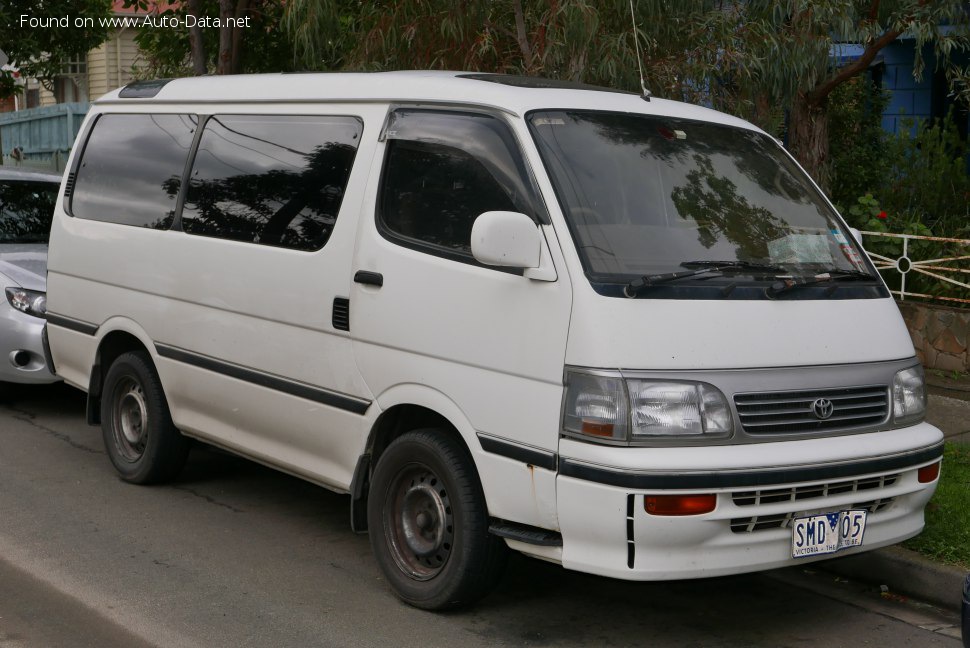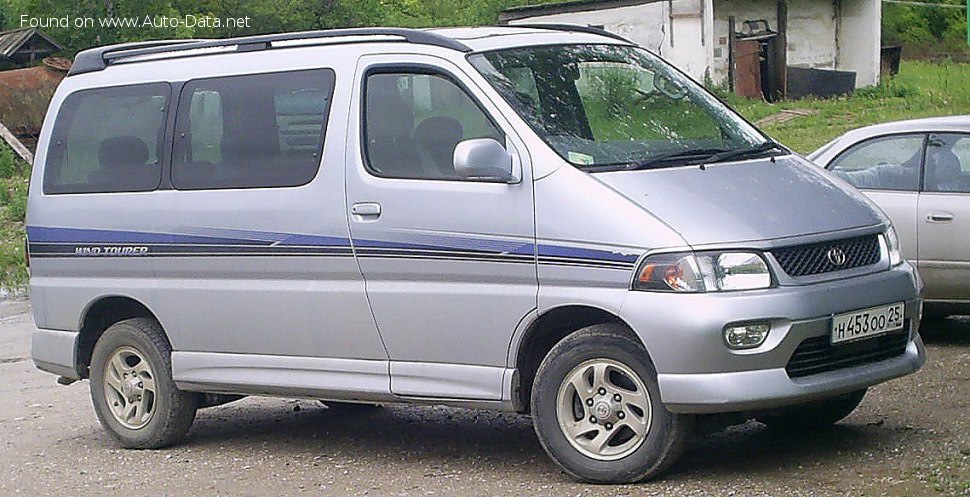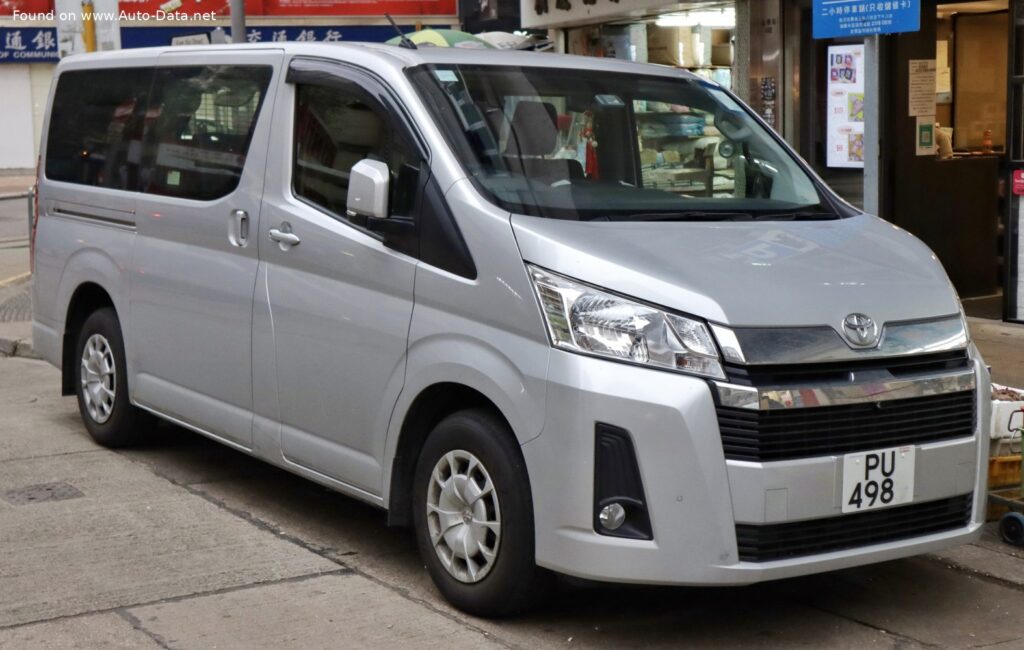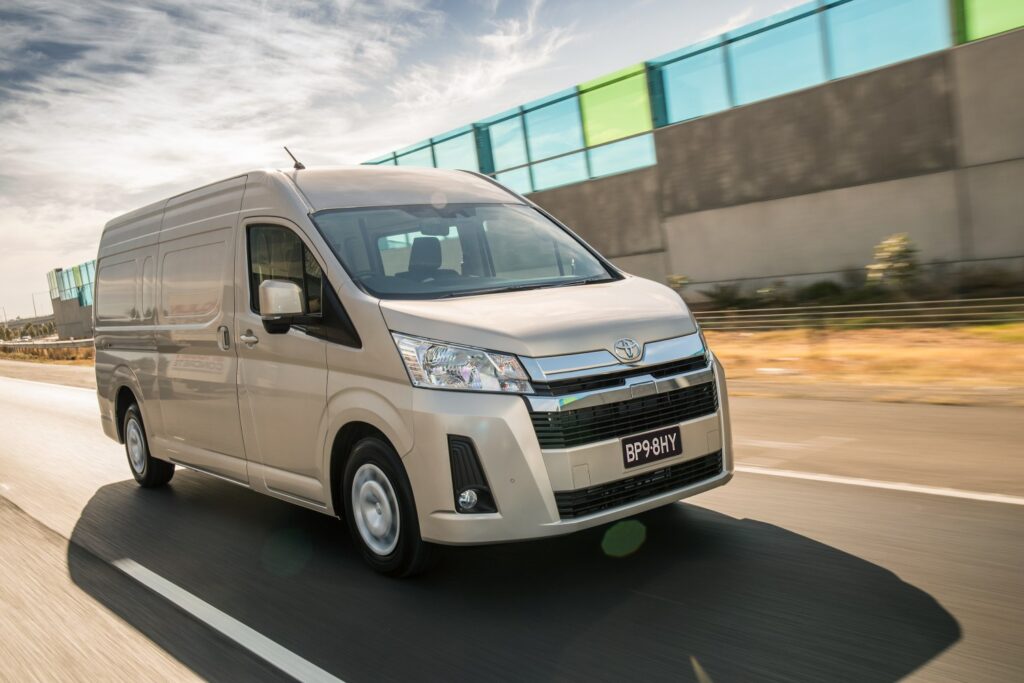
The Toyota HiAce VI (H300) Panel Van L2H2: A Global Workhorse with Modern Power
The Toyota HiAce, a name synonymous with reliability and utility across many parts of the world, entered its sixth generation (H300 series) in 2019, marking a significant evolution for this iconic commercial vehicle. While not a common sight on American roads, where Toyota offers models like the Sienna minivan or larger Tundra and Tacoma trucks for commercial duties, the Toyota HiAce VI (H300) Panel Van L2H2 serves as a backbone for businesses and public transport in markets across Asia, Oceania, Africa, Latin America, and parts of Europe. This particular variant, the L2H2 panel van, signifies a specific long-wheelbase and high-roof configuration, optimized for maximum cargo capacity. The introduction of a potent 3.5-liter V6 engine paired with an automatic transmission in this generation represents a move towards enhanced performance, efficiency, and driver comfort, catering to the demanding needs of modern commercial operations.
The H300 generation of the HiAce represents a departure from the traditional cab-over design that characterized its predecessors for decades. Instead, Toyota adopted a semi-bonneted layout, placing the engine further forward and behind the front axle. This design choice dramatically improves safety, crash performance, and driver ergonomics, offering a more car-like driving experience and reduced cabin noise. It also allows for easier engine access for maintenance. The HiAce continues to uphold its reputation as a durable, no-nonsense vehicle, but the H300 series elevates its appeal with contemporary styling, advanced powertrains, and a focus on both practicality and occupant well-being.
Engine & Performance of the Toyota HiAce VI (H300) Panel Van L2H2
Under the hood of the HiAce VI (H300) Panel Van L2H2, Toyota has introduced a robust 3.5-liter V6 gasoline engine, designated as the 7GR-FKS. This naturally aspirated powerplant is a testament to Toyota’s commitment to delivering reliable and capable performance for commercial applications. With a power output of 281 horsepower at 6000 rpm, this engine provides ample grunt for hauling heavy loads and navigating diverse driving conditions, whether urban delivery routes or highway stretches. Its power per liter stands at a respectable 81.3 Hp/l, indicating efficient power generation from its displacement.
The engine’s torque delivery is equally impressive, peaking at 351 Nm (258.88 lb.-ft.) at 4600 rpm. This substantial torque figure is crucial for a panel van, enabling confident acceleration even when fully loaded and facilitating easier merging into traffic. The V6 configuration, with its six cylinders, ensures smooth operation and a balanced power delivery, reducing vibrations typical of smaller, less refined engines. The engine features a sophisticated valvetrain with DOHC (Dual Overhead Camshaft) and Toyota’s VVT-iW (Variable Valve Timing-intelligent Wide) technology, which optimizes valve timing for both power and efficiency across the RPM range.
Further enhancing its modern credentials, the 7GR-FKS engine incorporates a dual fuel injection system, combining both direct injection and multi-port manifold injection. This advanced setup allows for precise fuel delivery, improving combustion efficiency, reducing emissions, and contributing to better fuel economy. Mated to this powerful V6 is a smooth-shifting 6-speed automatic transmission. This automatic gearbox is a significant upgrade for a commercial vehicle, offering ease of driving, especially in stop-and-go city traffic, and reducing driver fatigue over long shifts. The powertrain architecture is rear-wheel drive, a traditional and preferred setup for commercial vans due to its superior traction under load and robust towing capabilities. The HiAce’s weight-to-power ratio of 8 kg/Hp (124.3 Hp/tonne) and a weight-to-torque ratio of 6.4 kg/Nm (155.3 Nm/tonne) underscore its strong performance credentials relative to its size and utility purpose.
Design & Features: Utility and Modernity Combined
The Toyota HiAce VI (H300) Panel Van L2H2 is designed first and foremost for functionality and durability. Its “L2H2” designation specifically refers to its long-wheelbase and high-roof configuration, maximizing internal cargo volume. With an overall length of 232.87 inches (5915 mm), a width of 76.77 inches (1950 mm), and a towering height of 89.76 inches (2280 mm), this van offers an expansive cargo area. The maximum trunk (boot) space is an impressive 328.43 cubic feet (9300 liters), making it suitable for a wide range of commercial applications, from parcel delivery to mobile workshops.
The exterior design of the H300 generation is more contemporary and aerodynamic than its predecessors. The semi-bonneted front end not only enhances safety but also gives the HiAce a more integrated and less utilitarian appearance. The large headlights and prominent grille reflect Toyota’s modern design language. The panel van configuration means the rear and side windows are replaced with solid panels, offering both security for cargo and a large canvas for business livery. Access to the cargo area is facilitated by five doors, typically including large rear barn doors or a liftgate, and a sliding side door, ensuring easy loading and unloading from various angles.
Inside, the HiAce prioritizes practicality and robustness. While specific interior features can vary by market and trim, the focus is on durable materials that can withstand the rigors of commercial use. The cabin typically accommodates 2-3 seats, providing space for a driver and one or two crew members. The new semi-bonneted design significantly improves cabin comfort, offering more legroom and better noise insulation compared to the older cab-over models. Safety features are also enhanced in the H300 series. While the provided data specifically mentions ABS (Anti-lock Braking System), modern HiAce models in various markets often include a suite of active safety technologies like pre-collision systems, lane departure alerts, and road sign assist, reflecting Toyota’s commitment to driver and road user safety, even in commercial vehicles. The robust chassis, featuring independent McPherson struts with coil springs and an anti-roll bar at the front, and a rigid axle with leaf springs at the rear, is engineered to handle heavy loads while maintaining stability and ride comfort. Ventilated disc brakes on both the front (296 mm) and rear (320 mm) ensure strong stopping power, crucial for a vehicle of this size and capacity.
Technical Specifications
| Category | Specification |
|---|---|
| Brand | Toyota |
| Model | HiAce |
| Generation | HiAce VI (H300) Panel Van L2H2 |
| Type (Engine) | 3.5 V6 (281 Hp) Automatic |
| Start of Production | 2019 year |
| Powertrain Architecture | Internal Combustion engine |
| Body type | Van |
| Seats | 2-3 |
| Doors | 5 |
| Fuel consumption (economy) – urban | 16.5 l/100 km (14.3 US mpg) |
| Fuel consumption (economy) – extra urban | 9.5 l/100 km (24.8 US mpg) |
| Fuel consumption (economy) – combined | 12 l/100 km (19.6 US mpg) |
| CO2 emissions | 275 g/km |
| Fuel Type | Petrol (Gasoline) |
| Weight-to-power ratio | 8 kg/Hp (124.3 Hp/tonne) |
| Weight-to-torque ratio | 6.4 kg/Nm (155.3 Nm/tonne) |
| Power | 281 Hp @ 6000 rpm. |
| Power per liter | 81.3 Hp/l |
| Torque | 351 Nm @ 4600 rpm (258.88 lb.-ft. @ 4600 rpm) |
| Engine layout | Front, Longitudinal |
| Engine Model/Code | 7GR-FKS |
| Engine displacement | 3456 cm3 (210.9 cu. in.) |
| Number of cylinders | 6 |
| Engine configuration | V-engine |
| Cylinder Bore | 94 mm (3.7 in.) |
| Piston Stroke | 83 mm (3.27 in.) |
| Compression ratio | 11.8:1 |
| Number of valves per cylinder | 4 |
| Fuel injection system | Direct injection and Multi-port manifold injection |
| Engine aspiration | Naturally aspirated engine |
| Valvetrain | DOHC, VVT-iW |
| Engine oil capacity | 7.1 l (7.5 US qt) |
| Coolant | 10.5 l (11.1 US qt) |
| Kerb Weight | 2260 kg (4982.45 lbs.) |
| Max. weight (GVWR) | 3400 kg (7495.72 lbs.) |
| Max load | 1140 kg (2513.27 lbs.) |
| Trunk (boot) space – maximum | 9300 l (328.43 cu. ft.) |
| Fuel tank capacity | 70 l (18.49 US gal) |
| Permitted trailer load with brakes (12%) | 1500 kg (3306.93 lbs.) |
| Permitted trailer load without brakes | 400 kg (881.85 lbs.) |
| Permitted towbar download | 150 kg (330.69 lbs.) |
| Length | 5915 mm (232.87 in.) |
| Width | 1950 mm (76.77 in.) |
| Height | 2280 mm (89.76 in.) |
| Wheelbase | 3860 mm (151.97 in.) |
| Front track | 1670-1675 mm (65.75 – 65.94 in.) |
| Rear (Back) track | 1670 mm (65.75 in.) |
| Front overhang | 950 mm (37.4 in.) |
| Rear overhang | 1105 mm (43.5 in.) |
| Ride height (ground clearance) | 182 mm (7.17 in.) |
| Minimum turning circle (turning diameter) | 12.8 m (41.99 ft.) |
| Drivetrain Architecture | The Internal combustion engine (ICE) drives the rear wheels of the vehicle. |
| Drive wheel | Rear wheel drive |
| Number of gears and type of gearbox | 6 gears, automatic transmission |
| Front suspension | Independent, type McPherson with coil spring and anti-roll bar |
| Rear suspension | Rigid axle suspension, Leaf spring |
| Front brakes | Ventilated discs, 296 mm |
| Rear brakes | Ventilated discs, 320 mm |
| Assisting systems | ABS (Anti-lock braking system) |
| Steering type | Steering rack and pinion |
| Power steering | Hydraulic Steering |
| Tires size | 215/70 R16 |
| Wheel rims size | 7J x 16 |
Legacy & Market Impact of the Toyota HiAce
The Toyota HiAce boasts a formidable legacy, having been a global leader in the commercial van segment for over five decades. Its reputation for bulletproof reliability, low running costs, and exceptional durability has made it the default choice for countless businesses, government agencies, and public transport operators worldwide. In markets where it competes, such as Australia, Southeast Asia, the Middle East, and parts of Africa, the HiAce is not just a vehicle; it’s an indispensable tool that keeps economies moving. Its ability to withstand harsh conditions, carry heavy loads, and operate with minimal downtime has cemented its status as a true workhorse.
The introduction of the H300 generation with its semi-bonneted design and advanced powertrain, including the 3.5 V6, represents a strategic move by Toyota to modernize the HiAce while retaining its core values. This shift addresses growing demands for improved safety, driver comfort, and fuel efficiency, without compromising the HiAce’s legendary robustness. Competitors in its primary markets typically include models like the Ford Transit Custom (though the HiAce often sits in a slightly larger segment), Hyundai Starex/H-1, Mercedes-Benz Sprinter (for larger variants), and various local offerings. However, the HiAce often maintains a competitive edge due to its widespread service network, strong resale value, and unwavering reputation for longevity.
The HiAce’s historical significance lies in its role as a versatile platform. Beyond its panel van configuration, it’s widely used as a passenger van (often referred to as a “commuter” or “people mover”), an ambulance, a school bus, and a basis for various custom conversions. The H300 series continues this tradition, offering different body styles and configurations to meet diverse commercial needs. The 3.5 V6 L2H2 panel van specifically caters to businesses requiring significant cargo volume and the power to transport it efficiently. Its robust rear-wheel-drive architecture and leaf spring rear suspension are perfectly suited for heavy-duty applications, allowing for a substantial maximum load of 2513.27 lbs (1140 kg) and a braked trailer load of 3306.93 lbs (1500 kg). This combination of power, capacity, and reliability ensures that the Toyota HiAce will continue to be a cornerstone of commercial fleets around the globe for years to come.