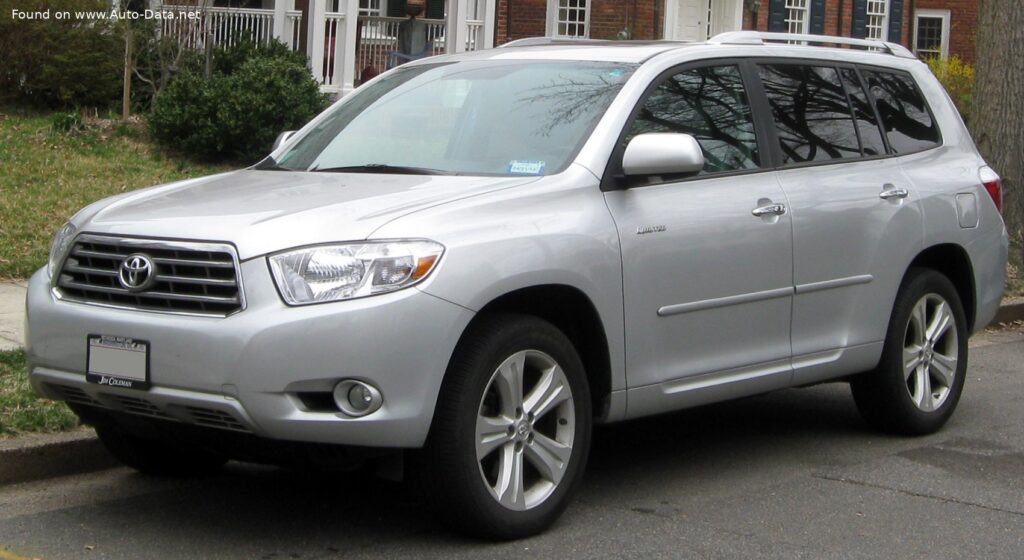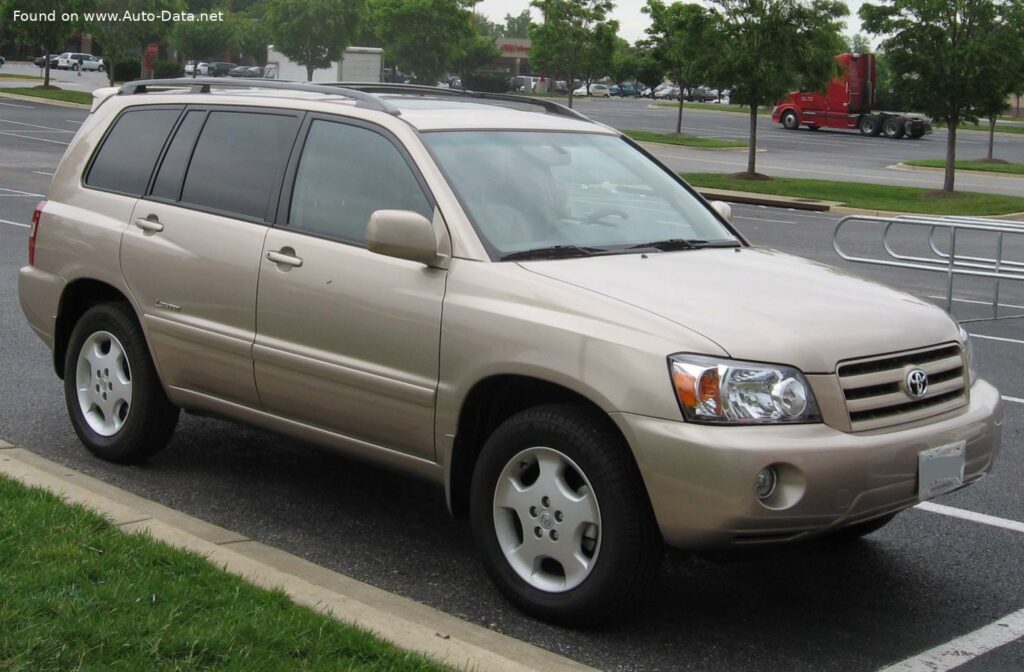
Toyota Highlander I 3.3 i V6 24V 4WD (218 Hp): A Pioneer in the Crossover SUV Segment
The Toyota Highlander, introduced in 2001, marked a significant shift in the automotive landscape, pioneering the unibody, car-based mid-size SUV segment that would soon dominate the American market. The first generation, produced from 2001 to 2007, quickly established itself as a versatile, reliable, and family-friendly alternative to traditional, truck-based sport utility vehicles. This detailed examination focuses on a prominent variant from its mid-cycle refresh: the Toyota Highlander I 3.3 i V6 24V 4WD (218 Hp), produced between 2003 and 2007. This specific model represented a sweet spot in the Highlander lineup, offering a compelling blend of power, all-weather capability, and the renowned Toyota build quality that consumers had come to expect. Positioned as a practical yet sophisticated vehicle, it carved out a substantial niche for itself, appealing to suburban families and individuals seeking a comfortable, capable, and efficient daily driver.
Unlike its rugged, body-on-frame counterparts like the Toyota 4Runner, the Highlander was built on a modified Camry platform, providing a more refined ride, superior handling, and improved fuel efficiency. This foundational difference was key to its success, offering consumers an SUV experience without the compromises often associated with truck-like dynamics. The 2003 model year introduced several enhancements, including the more potent 3.3-liter V6 engine, which further solidified the Highlander’s position as a leader in the burgeoning crossover segment.
Engine and Performance: The Heart of the Toyota Highlander I 3.3 i V6 24V 4WD
At the core of the Toyota Highlander I 3.3 i V6 24V 4WD‘s appeal was its robust and refined powertrain. This variant was equipped with the 3MZ-FE engine, a naturally aspirated 3.3-liter V6 unit featuring a DOHC (Dual Overhead Camshaft) valvetrain with 24 valves (four per cylinder). This sophisticated engine delivered a healthy 218 horsepower at 5600 rpm, providing ample power for daily driving, highway merging, and light towing duties. Torque output stood at a substantial 222.01 lb.-ft. at 3600 rpm, ensuring strong acceleration from a standstill and confident passing power. The engine’s transverse front-mounted layout was typical for a front-wheel-drive biased platform, optimizing interior space and weight distribution.
Power was seamlessly managed by a smooth-shifting 5-speed automatic transmission, a significant upgrade over earlier 4-speed units, contributing to both improved acceleration and better fuel economy. The “4WD” in its designation signified an all-wheel-drive system, which provided enhanced traction and stability in adverse weather conditions or on unpaved roads, without sacrificing the on-road refinement. This system automatically distributed power to all four wheels as needed, offering peace of mind to drivers in varied climates.
Despite its substantial size and all-wheel-drive capability, the Highlander 3.3 V6 demonstrated respectable fuel efficiency for its time. EPA estimates for the 4WD model were around 18 US mpg in urban driving and 24 US mpg on the highway, making it a practical choice for families concerned with running costs. Its maximum speed was electronically limited to 108.74 mph (175 km/h), a common practice for SUVs of this era, emphasizing practicality and safety over high-speed performance. The engine’s displacement of 3311 cm³ (202.05 cu. in.) and a compression ratio of 10.8:1 highlighted its modern design, balancing power with efficiency through multi-port manifold injection.
Design and Features: Practicality Meets Comfort
The first-generation Toyota Highlander embodied a design philosophy centered on practicality, comfort, and understated elegance. Its SUV body type, characterized by a five-door layout and seating for five (with an optional third row available in later model years of this generation), offered immense versatility. The exterior dimensions – a length of 184.45 inches, a width of 71.85 inches, and a height of 68.31 inches – struck a balance between a commanding road presence and maneuverability in urban environments. The design was clean and functional, with a focus on maximizing interior space and visibility.
Inside, the Highlander prioritized passenger comfort and cargo flexibility. The spacious cabin provided ample headroom and legroom for five occupants. A key feature was its impressive cargo capacity, ranging from 38.49 cubic feet (1090 liters) with the rear seats up to a cavernous 113.18 cubic feet (3205 liters) with the rear seats folded down. This made it an ideal vehicle for family road trips, grocery runs, or hauling sports equipment. The unibody construction, shared with passenger cars, contributed to a lower step-in height and a more car-like ride quality compared to traditional SUVs.
Standard features for the 2003-2007 Highlander models typically included power windows and locks, air conditioning, a CD player, and a comprehensive suite of safety features. The vehicle came equipped with ventilated disc brakes at the front and disc brakes at the rear, complemented by an Anti-lock Braking System (ABS) for enhanced stopping power and control. Hydraulic power steering with a rack and pinion setup ensured responsive and predictable handling. The independent suspension system, featuring spring struts at the front and coil springs at the rear, further contributed to its comfortable ride. The 225/65 R17 tires provided a good balance of comfort, grip, and durability.
Technical Specifications: Toyota Highlander I 3.3 i V6 24V 4WD (218 Hp)
| Category | Specification | Metric / US Units |
|---|---|---|
General Information |
||
| Brand | Toyota | |
| Model | Highlander | |
| Generation | Highlander I | |
| Type (Engine) | 3.3 i V6 24V 4WD (218 Hp) | |
| Start of Production | 2003 year | |
| End of Production | 2007 year | |
| Powertrain Architecture | Internal Combustion engine | |
| Body Type | SUV | |
| Seats | 5 | |
| Doors | 5 | |
Performance Specifications |
||
| Fuel Consumption (Urban) | 13.1 l/100 km | 18 US mpg |
| Fuel Consumption (Extra Urban) | 9.8 l/100 km | 24 US mpg |
| Fuel Type | Petrol (Gasoline) | |
| Maximum Speed | 175 km/h | 108.74 mph |
| Weight-to-Power Ratio | 8.2 kg/Hp | 122.1 Hp/tonne |
| Weight-to-Torque Ratio | 5.9 kg/Nm | 168.6 Nm/tonne |
Engine Specifications |
||
| Power | 218 Hp @ 5600 rpm | |
| Power per Liter | 65.8 Hp/l | |
| Torque | 301 Nm @ 3600 rpm | 222.01 lb.-ft. @ 3600 rpm |
| Engine Layout | Front, Transverse | |
| Engine Model/Code | 3MZ-FE | |
| Engine Displacement | 3311 cm³ | 3.3 liters / 202.05 cu. in. |
| Number of Cylinders | 6 | |
| Engine Configuration | V-engine | |
| Cylinder Bore | 92 mm | 3.62 in. |
| Piston Stroke | 83 mm | 3.27 in. |
| Compression Ratio | 10.8:1 | |
| Number of Valves per Cylinder | 4 | |
| Fuel Injection System | Multi-port manifold injection | |
| Engine Aspiration | Naturally aspirated engine | |
| Valvetrain | DOHC | |
| Engine Oil Capacity | 4.7 l | 4.97 US qt |
| Coolant Capacity | 9.4 l | 9.93 US qt |
Space, Volume and Weights |
||
| Kerb Weight | 1785 kg | 3935.25 lbs. |
| Max. Weight | 2432 kg | 5361.64 lbs. |
| Max Load | 647 kg | 1426.39 lbs. |
| Trunk (boot) Space – Minimum | 1090 l | 38.49 cu. ft. |
| Trunk (boot) Space – Maximum | 3205 l | 113.18 cu. ft. |
| Fuel Tank Capacity | 75 l | 19.81 US gal |
Dimensions |
||
| Length | 4685 mm | 184.45 in. |
| Width | 1825 mm | 71.85 in. |
| Height | 1735 mm | 68.31 in. |
| Wheelbase | 2715 mm | 106.89 in. |
| Front Track | 1580 mm | 62.2 in. |
| Rear (Back) Track | 1565 mm | 61.61 in. |
Drivetrain, Brakes and Suspension Specifications |
||
| Drive Wheel | All wheel drive (4×4) | |
| Number of Gears and Type of Gearbox | 5 gears, automatic transmission | |
| Front Suspension | Spring Strut | |
| Rear Suspension | Coil spring | |
| Front Brakes | Ventilated discs | |
| Rear Brakes | Disc | |
| Assisting Systems | ABS (Anti-lock braking system) | |
| Steering Type | Steering rack and pinion | |
| Power Steering | Hydraulic Steering | |
| Tires Size | 225/65 R17 | |
Legacy and Market Impact: The Enduring Appeal of the First-Generation Highlander
The first-generation Toyota Highlander, particularly the V6 4WD variants like the Toyota Highlander I 3.3 i V6 24V 4WD (218 Hp), left an indelible mark on the automotive market. It arrived at a time when consumers were increasingly seeking the utility of an SUV combined with the driving dynamics and comfort of a sedan. By leveraging its unibody architecture derived from the Camry and Lexus RX, the Highlander offered a compelling value proposition that resonated with a broad audience. It successfully bridged the gap between traditional, rugged SUVs and minivans, creating a new segment that prioritized ride comfort, fuel efficiency, and safety for families.
The Highlander’s main competitors during its production run included the Honda Pilot, Nissan Murano, and later, the Ford Explorer, which transitioned to a more car-like platform in subsequent generations. However, the Highlander consistently stood out due to Toyota’s legendary reputation for reliability, durability, and high resale values. Its robust V6 engine, smooth automatic transmission, and available all-wheel-drive system made it a capable and dependable vehicle in various conditions.
Its historical significance lies in its role as a pivotal model that helped popularize the mid-size crossover SUV. It demonstrated that consumers didn’t need a truck-based chassis to get SUV functionality, paving the way for the dominance of crossovers in today’s market. Even years after its production ended, the first-generation Highlander remains a highly sought-after used vehicle, testament to its enduring quality and practicality. Its straightforward design, proven mechanicals, and comfortable interior continue to offer a reliable and affordable option for those seeking a dependable family hauler. The 3.3-liter V6, in particular, is often praised for its longevity and smooth power delivery, cementing the first-gen Highlander’s legacy as a true pioneer and a benchmark in its class.