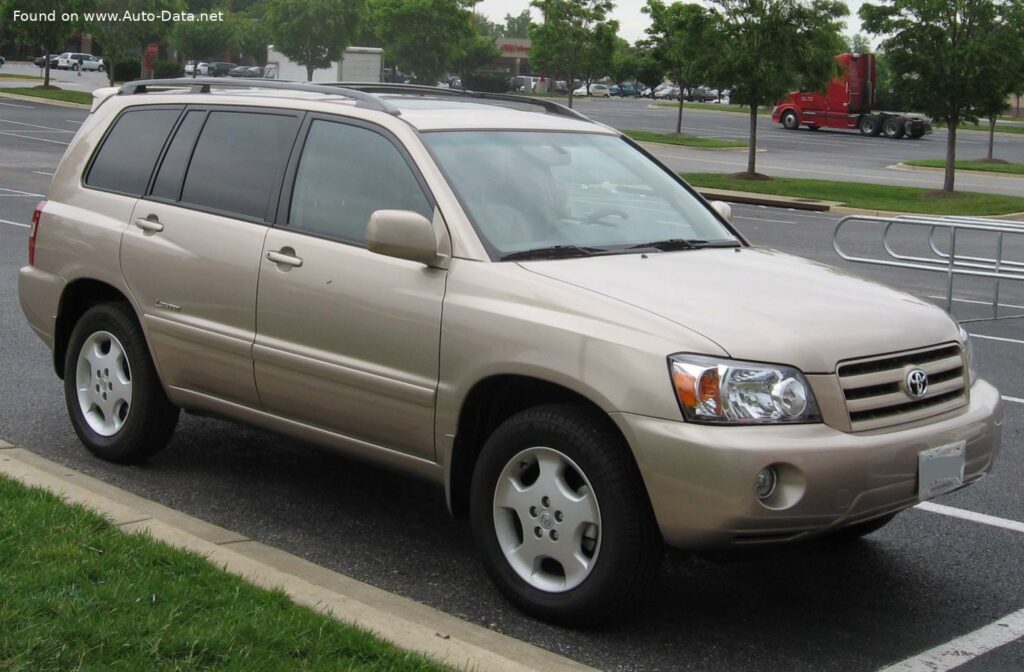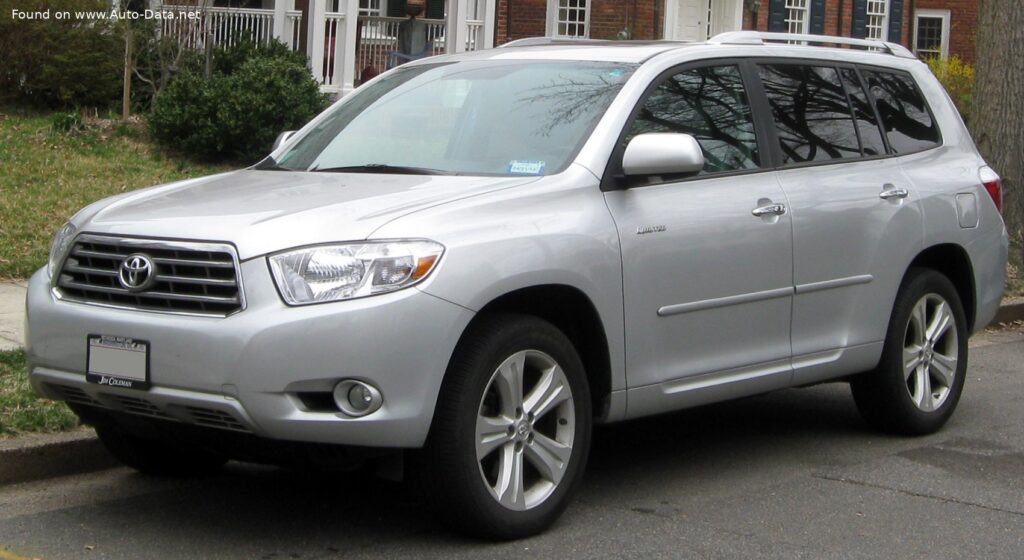
Toyota Highlander II 2.7 (189 Hp) Automatic: A Detailed Overview
The Toyota Highlander, a prominent nameplate in the mid-size crossover SUV segment, introduced its second generation (XU40) for the 2008 model year, building upon the success of its predecessor. Produced from 2007 to 2013, this generation solidified the Highlander’s reputation as a reliable, family-friendly vehicle offering a comfortable ride and versatile interior space. This particular variant, the Toyota Highlander II 2.7 (189 Hp) Automatic, represented a significant entry point into the Highlander lineup, offering a balance of efficiency and practicality for consumers seeking a spacious SUV without the larger V6 engine. Primarily aimed at the North American market, where it competed fiercely, the Highlander II became a go-to choice for suburban families valuing Toyota’s hallmark dependability and resale value.
The second-generation Highlander grew in size, offering a more robust presence and increased interior volume, including the highly sought-after third-row seating option as standard on many trims, including this 7-seater configuration. This evolution cemented its position as a strong contender against rivals, providing an appealing blend of SUV utility with car-like driving dynamics. Its development reflected a growing consumer demand for more refined, fuel-efficient, and safety-conscious family haulers, moving away from traditional, body-on-frame SUVs.
Engine and Performance of the Toyota Highlander II 2.7 (189 Hp) Automatic
Under the hood, the Toyota Highlander II 2.7 (189 Hp) Automatic was equipped with Toyota’s 1AR-FE engine. This naturally aspirated, inline four-cylinder gasoline engine featured a displacement of 2672 cubic centimeters (163.06 cu. in.), making it a 2.7-liter unit. Engineered for efficiency and smooth operation, the 1AR-FE utilized a DOHC (Dual Overhead Camshaft) valvetrain with 4 valves per cylinder, optimizing airflow for better power delivery and fuel economy. Its multi-port manifold injection system ensured precise fuel delivery across the engine’s operating range.
This powerplant generated a respectable 189 horsepower at 5800 rpm, providing ample thrust for daily driving and highway cruising. Torque output stood at 252 Nm (185.87 lb.-ft.) at 4100 rpm, delivering responsive acceleration from a standstill and sufficient capability for merging onto freeways. Paired with a 4-speed automatic transmission, the powertrain was designed for seamless shifts and a comfortable driving experience. While a 4-speed automatic might seem dated by modern standards, it was a common and reliable choice for this segment during its production years, contributing to the vehicle’s overall durability.
Performance figures for this variant included an acceleration time from 0 to 60 mph in approximately 9.3 seconds, with 0 to 100 km/h achieved in 9.8 seconds. The maximum speed was electronically limited to 175 km/h (108.74 mph), which was more than adequate for its intended purpose as a family SUV. Fuel economy was competitive for its class, with an estimated combined rating of 9.8 liters per 100 kilometers (24 US mpg). Urban driving yielded around 13.1 l/100 km (18 US mpg), while extra-urban (highway) driving improved to 8.7 l/100 km (27 US mpg), showcasing its efficiency on longer trips. The engine complied with Euro 4 emission standards, reflecting its commitment to environmental responsibility during its era.
Design and Features
The second-generation Toyota Highlander sported a more contemporary and aerodynamic design compared to its predecessor. As a five-door SUV, it offered practical access to its spacious cabin, which was configured to comfortably seat seven occupants. The exterior dimensions were substantial, with a length of 4785 mm (188.39 in.), a width of 1910 mm (75.2 in.), and a height of 1760 mm (69.29 in.). A generous wheelbase of 2790 mm (109.84 in.) contributed significantly to interior roominess and ride comfort.
Inside, the Highlander II prioritized functionality and comfort. The 7-seat configuration was a key selling point, offering flexibility for larger families or those needing occasional extra passenger capacity. The third row could typically fold flat, expanding the cargo area dramatically. With all seats in place, the minimum trunk space was 292 liters (10.31 cu. ft.), which expanded to an impressive 2282 liters (80.59 cu. ft.) with the rear seats folded down, making it highly capable for hauling luggage, groceries, or sports equipment.
The vehicle’s architecture featured a front, transverse engine layout driving the front wheels, a common setup for unibody crossovers that enhances interior space and fuel efficiency. The suspension system comprised an independent McPherson strut setup with coil springs and an anti-roll bar at the front, paired with an independent coil spring rear suspension. This configuration provided a smooth, car-like ride quality, superior to many truck-based SUVs. Braking was handled by disc brakes on both the front and rear wheels, ensuring confident stopping power. Standard tire size was 225/70 R16, mounted on 16-inch wheel rims, providing a good balance of comfort and traction.
Technical Specifications
| Category | Specification | US Equivalent |
|---|---|---|
| General Information | ||
| Brand | Toyota | |
| Model | Highlander | |
| Generation | Highlander II | |
| Type (Engine) | 2.7 (189 Hp) Automatic | |
| Start of Production | 2007 year | |
| End of Production | 2013 year | |
| Powertrain Architecture | Internal Combustion engine | |
| Body type | SUV | |
| Seats | 7 | |
| Doors | 5 | |
| Performance Specs | ||
| Fuel consumption (economy) – urban | 13.1 l/100 km | 18 US mpg |
| Fuel consumption (economy) – extra urban | 8.7 l/100 km | 27 US mpg |
| Fuel consumption (economy) – combined | 9.8 l/100 km | 24 US mpg |
| Fuel Type | Petrol (Gasoline) | |
| Acceleration 0 – 60 mph | 9.3 sec | |
| Maximum speed | 175 km/h | 108.74 mph |
| Emission standard | Euro 4 | |
| Weight-to-power ratio | 8.6 kg/Hp | 19.0 lbs/Hp |
| Engine Specs | ||
| Power | 189 Hp @ 5800 rpm | |
| Torque | 252 Nm @ 4100 rpm | 185.87 lb.-ft. @ 4100 rpm |
| Engine layout | Front, Transverse | |
| Engine Model/Code | 1AR-FE | |
| Engine displacement | 2672 cm3 | 163.06 cu. in. |
| Number of cylinders | 4 | |
| Engine configuration | Inline | |
| Cylinder Bore | 90 mm | 3.54 in. |
| Piston Stroke | 105 mm | 4.13 in. |
| Compression ratio | 10:1 | |
| Number of valves per cylinder | 4 | |
| Fuel injection system | Multi-port manifold injection | |
| Engine aspiration | Naturally aspirated engine | |
| Valvetrain | DOHC | |
| Engine oil capacity | 4.4 l | 4.65 US qt |
| Coolant | 6.9 l | 7.29 US qt |
| Space, Volume and Weights | ||
| Kerb Weight | 1620 kg | 3571.49 lbs. |
| Max. weight (GVWR) | 2432 kg | 5361.64 lbs. |
| Max load | 812 kg | 1790.15 lbs. |
| Trunk (boot) space – minimum | 292 l | 10.31 cu. ft. |
| Trunk (boot) space – maximum | 2282 l | 80.59 cu. ft. |
| Fuel tank capacity | 73 l | 19.28 US gal |
| Dimensions | ||
| Length | 4785 mm | 188.39 in. |
| Width | 1910 mm | 75.2 in. |
| Height | 1760 mm | 69.29 in. |
| Wheelbase | 2790 mm | 109.84 in. |
| Front track | 1625 mm | 63.98 in. |
| Rear (Back) track | 1625 mm | 63.98 in. |
| Drivetrain, Brakes and Suspension Specs | ||
| Drivetrain Architecture | ICE drives front wheels | |
| Drive wheel | Front wheel drive | |
| Number of gears and type of gearbox | 4 gears, automatic transmission | |
| Front suspension | Independent, McPherson with coil spring and anti-roll bar | |
| Rear suspension | Independent coil spring | |
| Front brakes | Disc | |
| Rear brakes | Disc | |
| Tires size | 225/70 R16 | |
| Wheel rims size | 16 |
Legacy and Market Impact
The Toyota Highlander II, particularly the 2.7-liter automatic variant, played a crucial role in Toyota’s strategy for the burgeoning North American crossover SUV market. It carved out a significant niche as a highly dependable and practical family vehicle, appealing to buyers who needed the utility of an SUV but preferred the driving experience and fuel efficiency closer to that of a sedan. Its unibody construction, car-like independent suspension, and front-wheel-drive architecture (with all-wheel-drive available on other variants) positioned it firmly in the crossover segment, distinct from traditional, truck-based SUVs.
In the highly competitive US market, the Highlander II went head-to-head with formidable rivals such as the Honda Pilot, Ford Explorer, Nissan Murano, and Chevrolet Traverse. What set the Highlander apart was its unwavering reputation for reliability, low maintenance costs, and strong resale value—hallmarks of the Toyota brand. While the 2.7-liter engine offered less power than the V6 options available in the Highlander lineup and its competitors, it provided a more fuel-efficient alternative, which became increasingly important during periods of fluctuating gasoline prices. This made it an attractive option for budget-conscious families.
The Highlander II’s emphasis on safety was also a significant factor in its success. It consistently earned high safety ratings from organizations like the IIHS (Insurance Institute for Highway Safety) and NHTSA (National Highway Traffic Safety Administration), reassuring parents that their families were well-protected. Standard safety features for the era typically included multiple airbags, anti-lock brakes (ABS), electronic stability control (ESC), and traction control.
Its legacy is one of quiet competence and enduring appeal. The second-generation Highlander, and the 2.7-liter model specifically, exemplified the shift in consumer preferences towards versatile, comfortable, and efficient family vehicles. It demonstrated that a mid-size SUV could offer robust utility, seating for seven, and a pleasant driving experience without necessarily needing a large, powerful engine. This generation helped solidify the Highlander’s position as a segment leader and laid the groundwork for its continued success in subsequent iterations, making it one of the most recognizable and trusted family SUVs on American roads. Its impact is still felt today, as many Highlander II models remain on the road, a testament to Toyota’s engineering and build quality.