Toyota Highlander II 3.5 V6 (273 Hp) 4×4 Automatic: A Comprehensive Overview
The Toyota Highlander, a stalwart in the competitive mid-size crossover SUV segment, received a significant overhaul for its second generation, which debuted in 2007. This iteration, produced until 2013, cemented the Highlander’s reputation as a practical, reliable, and family-friendly vehicle, offering a compelling blend of car-like comfort with SUV versatility. The particular variant under scrutiny, the Toyota Highlander II 3.5 V6 (273 Hp) 4×4 Automatic, represented the pinnacle of performance and capability within the lineup for many markets, including its primary stronghold in North America. Designed to appeal to a broad demographic, from suburban families to those seeking a comfortable long-distance cruiser, the second-generation Highlander improved upon its predecessor in nearly every measurable way, offering more space, enhanced safety features, and a potent powertrain.
Positioned above the RAV4 but below the larger Sequoia and Land Cruiser, the Highlander II carved out a niche for itself as a sensible, three-row crossover that prioritized ride comfort and passenger accommodation. Its unibody construction, shared with the Toyota Camry and Lexus RX, ensured a refined driving experience, distinguishing it from more truck-like SUVs. The 3.5-liter V6 engine, paired with an automatic transmission and an all-wheel-drive (4×4) system, offered robust performance and confident handling in various driving conditions, making it a popular choice for consumers demanding both power and peace of mind.
Engine and Performance: The Heart of the Toyota Highlander II
At the core of the Toyota Highlander II 3.5 V6 (273 Hp) 4×4 Automatic lies Toyota’s renowned 2GR-FE engine. This 3.5-liter (3456 cm3 or 210.9 cu. in.) V6 powerplant is a testament to Toyota’s engineering prowess, known for its smooth operation, impressive power output, and bulletproof reliability. Featuring a DOHC (Double Overhead Camshaft) valvetrain with four valves per cylinder and a multi-port manifold injection system, the naturally aspirated engine delivers a robust 273 horsepower at 6200 rpm. This substantial power output is complemented by a healthy 248.56 lb.-ft. of torque, peaking at 4700 rpm, providing ample thrust for acceleration, merging onto highways, and towing light loads.
The engine’s generous power translates into spirited performance for a vehicle of its size. The Highlander II 3.5 V6 is capable of accelerating from 0 to 60 mph in a swift 7.8 seconds, an impressive figure for a family-oriented SUV weighing over 4,500 pounds. Its top speed is electronically limited to 111.85 mph (180 km/h), a common practice for this class of vehicle to ensure safety and efficiency. Power is routed through a smooth-shifting 5-speed automatic transmission to an all-wheel-drive (4×4) system, providing enhanced traction and stability, particularly beneficial in adverse weather conditions or light off-road excursions.
Despite its powerful V6, the Highlander II 3.5 V6 offered respectable fuel economy for its era and segment. The combined fuel economy is rated at 19 US mpg (12.4 l/100 km), with urban consumption at 17 US mpg (13.8 l/100 km) and extra-urban at 22 US mpg (10.7 l/100 km). Meeting Euro 4 emission standards, it reflected a conscious effort towards environmental responsibility, a growing concern even in the late 2000s. The engine’s layout is front, transverse, contributing to the vehicle’s efficient packaging and favorable weight distribution.
Design and Features: Practicality Meets Refinement
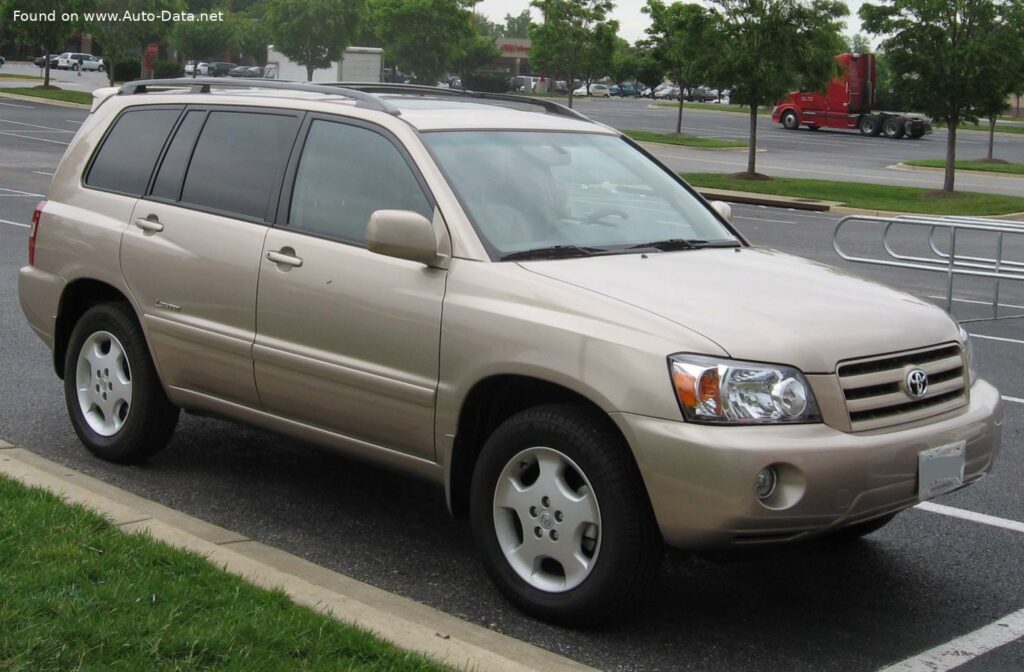
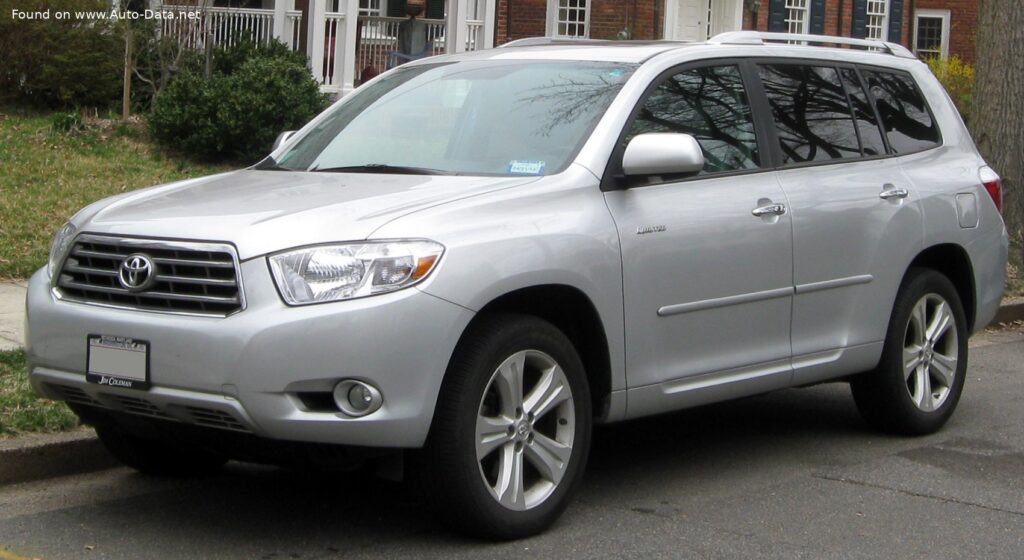
The second-generation Toyota Highlander adopted a more substantial and assertive design than its predecessor, aligning with the growing trend for larger, more commanding SUVs. As a five-door SUV, it offered seating for up to seven occupants across three rows, making it a highly attractive option for larger families or those requiring occasional extra passenger capacity. The exterior design was characterized by a clean, contemporary aesthetic, featuring a prominent grille, well-integrated headlights, and a muscular stance. Its dimensions—188.39 inches (4785 mm) in length, 75.2 inches (1910 mm) in width, and 69.29 inches (1760 mm) in height—contributed to a commanding road presence while remaining maneuverable in urban environments. A wheelbase of 109.84 inches (2790 mm) provided a stable ride and maximized interior volume.
Inside, the Highlander II prioritized comfort and functionality. The cabin was thoughtfully designed with high-quality materials and intuitive controls, typical of Toyota’s focus on ergonomics and user experience. The flexible seating arrangement allowed for various configurations, enabling owners to optimize between passenger and cargo space. With all three rows in use, the trunk offered a minimum of 10.31 cu. ft. (292 liters) of cargo volume, expanding significantly to an impressive 80.59 cu. ft. (2282 liters) with the second and third rows folded flat, making it exceptionally versatile for hauling luggage, groceries, or sports equipment.
The Highlander II featured an independent suspension system both front and rear, utilizing McPherson struts with coil springs and an anti-roll bar at the front, and an independent coil spring setup at the rear. This sophisticated suspension design contributed significantly to its car-like ride quality, effectively absorbing road imperfections and providing a comfortable, composed journey. Braking performance was handled by disc brakes on all four wheels, ensuring strong and consistent stopping power. The vehicle rode on 245/55 R19 tires, mounted on 19-inch wheel rims, providing a good balance of grip and ride comfort. With a ground clearance of 8.11 inches (206 mm), the Highlander offered enough capability to tackle light off-road trails or navigate snowy conditions without concern.
Technical Specifications: Toyota Highlander II 3.5 V6 (273 Hp) 4×4 Automatic
| Category | Specification | US Equivalent (Approx.) |
|---|---|---|
| General Information | ||
| Brand | Toyota | |
| Model | Highlander | |
| Generation | Highlander II | |
| Type (Engine) | 3.5 V6 (273 Hp) 4×4 Automatic | |
| Start of Production | 2007 year | |
| End of Production | 2013 year | |
| Powertrain Architecture | Internal Combustion Engine | |
| Body Type | SUV | |
| Seats | 7 | |
| Doors | 5 | |
| Performance Specs | ||
| Fuel Consumption (Urban) | 13.8 l/100 km | 17 US mpg |
| Fuel Consumption (Extra Urban) | 10.7 l/100 km | 22 US mpg |
| Fuel Consumption (Combined) | 12.4 l/100 km | 19 US mpg |
| Fuel Type | Petrol (Gasoline) | |
| Acceleration 0 – 60 mph | 7.8 sec | |
| Maximum Speed | 180 km/h | 111.85 mph |
| Emission Standard | Euro 4 | |
| Weight-to-Power Ratio | 7.6 kg/Hp | 16.76 lbs/Hp |
| Weight-to-Torque Ratio | 6.2 kg/Nm | 13.67 lbs/Nm |
| Engine Specs | ||
| Power | 273 Hp @ 6200 rpm | |
| Power per liter | 79 Hp/l | |
| Torque | 337 Nm @ 4700 rpm | 248.56 lb.-ft. @ 4700 rpm |
| Engine Layout | Front, Transverse | |
| Engine Model/Code | 2GR-FE | |
| Engine Displacement | 3456 cm3 | 210.9 cu. in. |
| Number of Cylinders | 6 | |
| Engine Configuration | V-engine | |
| Cylinder Bore | 94 mm | 3.7 in. |
| Piston Stroke | 83 mm | 3.27 in. |
| Compression Ratio | 10.8:1 | |
| Number of Valves per Cylinder | 4 | |
| Fuel Injection System | Multi-port manifold injection | |
| Engine Aspiration | Naturally aspirated engine | |
| Valvetrain | DOHC | |
| Engine Oil Capacity | 6.1 l | 6.45 US qt |
| Engine Oil Specification | Not specified in data | |
| Coolant Capacity | 8.8 l | 9.3 US qt |
| Space, Volume and Weights | ||
| Kerb Weight | 2075 kg | 4574.59 lbs. |
| Max. Weight | 2720 kg | 5996.57 lbs. |
| Max Load | 645 kg | 1421.98 lbs. |
| Trunk (Boot) Space – Minimum | 292 l | 10.31 cu. ft. |
| Trunk (Boot) Space – Maximum | 2282 l | 80.59 cu. ft. |
| Fuel Tank Capacity | 73 l | 19.28 US gal |
| Dimensions | ||
| Length | 4785 mm | 188.39 in. |
| Width | 1910 mm | 75.2 in. |
| Height | 1760 mm | 69.29 in. |
| Wheelbase | 2790 mm | 109.84 in. |
| Front Track | 1625 mm | 63.98 in. |
| Rear (Back) Track | 1625 mm | 63.98 in. |
| Ride Height (Ground Clearance) | 206 mm | 8.11 in. |
| Drivetrain, Brakes and Suspension Specs | ||
| Drive Wheel | All-wheel drive (4×4) | |
| Number of Gears and Type of Gearbox | 5 gears, automatic transmission | |
| Front Suspension | Independent, type McPherson with coil spring and anti-roll bar | |
| Rear Suspension | Independent coil spring | |
| Front Brakes | Disc | |
| Rear Brakes | Disc | |
| Tires Size | 245/55 R19 | |
| Wheel Rims Size | 19 | |
Legacy and Market Impact
The Toyota Highlander II, particularly the potent 3.5 V6 (273 Hp) 4×4 Automatic variant, played a pivotal role in solidifying Toyota’s dominance in the mid-size crossover SUV market. Its blend of reliability, practicality, and comfortable driving dynamics resonated strongly with North American consumers. The Highlander’s reputation for trouble-free ownership and strong resale values became a significant selling point, distinguishing it from many competitors.
In its segment, the Highlander II faced stiff competition from rivals such as the Honda Pilot, known for its spacious interior and VTM-4 all-wheel-drive system; the Ford Edge, which emphasized style and technology; and the Nissan Murano, offering a more car-like driving experience and distinctive design. Other contenders included the Chevrolet Traverse, Hyundai Santa Fe, and Kia Sorento, all vying for a share of the burgeoning family SUV market. Despite the crowded field, the Highlander consistently ranked among the top sellers, largely due to Toyota’s brand loyalty and the model’s proven track record.
The Highlander II’s success was a testament to its strategic positioning: a vehicle that offered the utility of an SUV without the truck-like compromises in ride and handling. It provided a comfortable, quiet cabin, ample power for daily driving and highway cruising, and the added confidence of all-wheel drive. Its seven-seat configuration, though the third row was best suited for children or short trips, provided invaluable flexibility for families. The second generation’s focus on refinement, safety, and efficiency set the stage for subsequent Highlander models, which continued to evolve the formula with hybrid powertrains and even more advanced technology.
Today, the second-generation Toyota Highlander remains a highly sought-after used vehicle, a testament to its enduring quality and the robust engineering of the 2GR-FE engine. Its legacy is one of unwavering dependability, practical design, and a comfortable driving experience, solidifying its place as one of the most successful and influential crossovers in recent automotive history.