
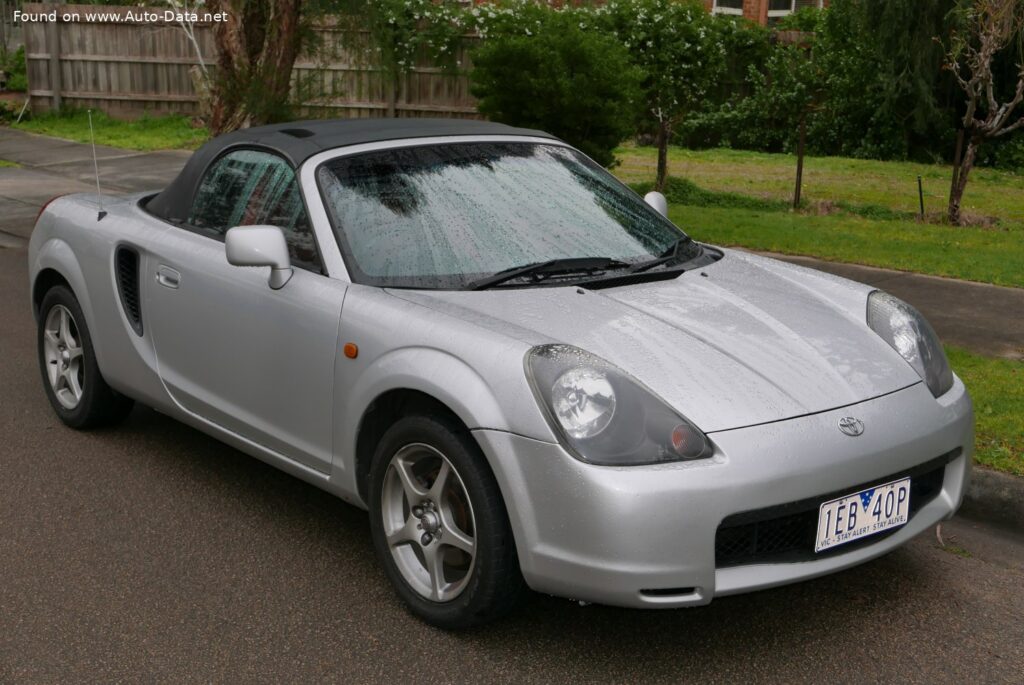
Introduction: The Toyota MR2 (W3) 1.8 16V VT-i (140 Hp)
The Toyota MR2 (W3), often affectionately referred to as the MR2 Spyder in North America and the MR-S in Japan, represents the third and final generation of Toyota’s groundbreaking mid-engine, rear-wheel-drive sports car. Launched in October 1999, this iteration marked a significant departure from its predecessors, embracing a pure roadster philosophy focused on lightweight agility and an open-top driving experience. The specific variant, the 1.8 16V VT-i (140 Hp), was a cornerstone of the W3 generation, offering a compelling blend of performance, efficiency, and Toyota’s renowned reliability, making it a popular choice in its primary markets across Europe, Asia, and North America until its production ceased in July 2007. This generation aimed to capture the essence of a true driver’s car, emphasizing a direct connection between the road and the driver, a hallmark of classic lightweight sports cars.
Engineering and Performance of the Toyota MR2 (W3)
Powertrain and Dynamics
At the heart of the Toyota MR2 (W3) 1.8 16V VT-i (140 Hp) lies a naturally aspirated, 1.8-liter (1794 cm3) inline four-cylinder engine, designated as the 1ZZ-FE. This powerplant, equipped with Toyota’s Variable Valve Timing with intelligence (VVT-i) system, was strategically mounted transversely in a mid-engine configuration, directly behind the driver and passenger. This layout is crucial to the MR2’s dynamic character, providing exceptional weight distribution and a low polar moment of inertia, which translates to incredibly nimble handling.
The engine delivers a respectable 140 horsepower at 6400 revolutions per minute (rpm), making for an enthusiastic power delivery, especially given the car’s svelte curb weight. Torque peaks at 126.86 lb.-ft. (172 Nm) at 4400 rpm, providing ample thrust for spirited driving through winding roads. With a compression ratio of 10:1 and a DOHC (Double Overhead Camshaft) valvetrain with 4 valves per cylinder, the engine is both responsive and efficient, utilizing a multi-port manifold injection system for precise fuel delivery.
Mated to a standard 5-speed manual transmission, the power is sent directly to the rear wheels, reinforcing its pure sports car credentials. This drivetrain architecture, combined with its lightweight construction, allows the MR2 (W3) to accelerate from 0 to 60 mph in a brisk 7.5 seconds (0-100 km/h in 7.9 seconds). The top speed is an impressive 130.49 mph (210 km/h), demonstrating its capability beyond urban sprints. The car’s weight-to-power ratio stands at a favorable 7.5 kg/Hp (133.3 Hp/tonne), underscoring its performance potential for its class.
Despite its performance focus, the MR2 (W3) also offered reasonable fuel economy for its era, with urban consumption rated at 22.4 US mpg (10.5 l/100 km) and extra-urban consumption at 34.1 US mpg (6.9 l/100 km) on gasoline (petrol). This blend of performance and efficiency made it an attractive proposition for enthusiasts seeking an engaging daily driver or weekend toy.
Design and Features
The design of the Toyota MR2 (W3) was a significant departure from its more angular predecessors, adopting a sleek, minimalist, and distinctly modern roadster aesthetic. Its primary body type is a two-door, two-seat cabriolet, designed from the outset to be an open-top vehicle. The compact dimensions – a length of 152.95 inches (3885 mm), a width of 66.73 inches (1695 mm), and a low height of 48.82 inches (1240 mm) – contribute to its agile appearance and handling characteristics. The wheelbase measures 96.46 inches (2450 mm), providing a stable platform without sacrificing maneuverability.
The exterior features a clean, uncluttered design, with short overhangs and an aggressive stance. The front and rear tracks, at 58.07 inches (1475 mm) and 57.48 inches (1460 mm) respectively, ensure a wide footprint for enhanced stability. The choice of tires, 185/55 R15 at the front and wider 205/50 R15 at the rear, further emphasizes its rear-wheel-drive nature and performance-oriented setup.
Inside, the MR2 (W3) maintains its minimalist philosophy. As a dedicated two-seater, the cabin is driver-focused, with controls ergonomically placed. While trunk space is limited to a modest 3.18 cu. ft. (90 liters) – split between front and rear compartments due to the mid-engine layout – it’s adequate for weekend getaways or daily essentials. The fuel tank capacity is 12.68 US gallons (48 liters), offering a decent range.
In terms of chassis and safety, the MR2 (W3) was well-equipped for its time. It features a wishbone front suspension and a coil spring rear suspension, meticulously tuned to provide a balanced ride quality and exceptional handling. Braking is handled by ventilated discs both front and rear, offering strong and consistent stopping power, augmented by an Anti-lock Braking System (ABS) for enhanced safety during emergency maneuvers. The hydraulic rack and pinion steering system delivers precise feedback, contributing to the car’s engaging driving experience.
Technical Specifications: Toyota MR2 (W3) 1.8 16V VT-i (140 Hp)
| Category | Specification | Value |
|---|---|---|
| General Information | ||
| Brand | Toyota | MR2 |
| Generation | MR2 (W3) | |
| Type (Engine) | 1.8 16V VT-i (140 Hp) | |
| Start of Production | October, 1999 | |
| End of Production | July, 2007 | |
| Powertrain Architecture | Internal Combustion engine | |
| Body type | Cabriolet | |
| Seats | 2 | |
| Doors | 2 | |
| Performance Specifications | ||
| Fuel consumption (urban) | 10.5 l/100 km (22.4 US mpg) | |
| Fuel consumption (extra urban) | 6.9 l/100 km (34.1 US mpg) | |
| Fuel Type | Petrol (Gasoline) | |
| Acceleration 0 – 60 mph | 7.5 sec | |
| Acceleration 0 – 100 km/h | 7.9 sec | |
| Maximum speed | 130.49 mph (210 km/h) | |
| Weight-to-power ratio | 7.5 kg/Hp, 133.3 Hp/tonne | |
| Weight-to-torque ratio | 6.1 kg/Nm, 163.8 Nm/tonne | |
| Engine Specifications | ||
| Power | 140 Hp @ 6400 rpm | |
| Power per liter | 78 Hp/l | |
| Torque | 126.86 lb.-ft. (172 Nm) @ 4400 rpm | |
| Engine layout | Rear, Transverse | |
| Engine displacement | 1.8 l (1794 cm3, 109.48 cu. in.) | |
| Number of cylinders | 4 | |
| Engine configuration | Inline | |
| Cylinder Bore | 3.11 in. (79 mm) | |
| Piston Stroke | 3.6 in. (91.5 mm) | |
| Compression ratio | 10:1 | |
| Number of valves per cylinder | 4 | |
| Fuel injection system | Multi-port manifold injection | |
| Engine aspiration | Naturally aspirated engine | |
| Valvetrain | DOHC | |
| Space, Volume and Weights | ||
| Kerb Weight | 2314.85 lbs. (1050 kg) | |
| Max. weight | 2700.66 lbs. (1225 kg) | |
| Max load | 385.81 lbs. (175 kg) | |
| Trunk (boot) space – minimum | 3.18 cu. ft. (90 l) | |
| Fuel tank capacity | 12.68 US gal (48 l) | |
| Dimensions | ||
| Length | 152.95 in. (3885 mm) | |
| Width | 66.73 in. (1695 mm) | |
| Height | 48.82 in. (1240 mm) | |
| Wheelbase | 96.46 in. (2450 mm) | |
| Front track | 58.07 in. (1475 mm) | |
| Rear (Back) track | 57.48 in. (1460 mm) | |
| Minimum turning circle (diameter) | 32.15 ft. (9.8 m) | |
| Drivetrain, Brakes and Suspension Specifications | ||
| Drivetrain Architecture | The Internal combustion engine (ICE) drives the rear wheels of the vehicle. | |
| Drive wheel | Rear wheel drive | |
| Number of gears and type of gearbox | 5 gears, manual transmission | |
| Front suspension | Wishbone | |
| Rear suspension | Coil spring | |
| Front brakes | Ventilated discs | |
| Rear brakes | Ventilated discs | |
| Assisting systems | ABS (Anti-lock braking system) | |
| Steering type | Steering rack and pinion | |
| Power steering | Hydraulic Steering | |
| Tires size | 185/55 R15; 205/50 R15 | |
Legacy and Market Impact of the Toyota MR2 (W3)
The Toyota MR2 (W3) carved out a unique niche in the global sports car market. Unlike its more aggressively styled and often turbocharged predecessors, the W3 generation, with its “Spyder” or “Roadster” moniker, directly challenged the highly successful Mazda Miata (MX-5) in the affordable, lightweight roadster segment. While the Miata offered a front-engine, rear-wheel-drive layout, the MR2 (W3)’s mid-engine configuration provided a distinct driving dynamic, often praised for its superior balance and responsiveness at the limit.
In its primary markets, particularly Europe and Japan, the MR2 (W3) was celebrated for its pure driving experience. Its light weight and mid-engine layout made it an incredibly engaging car on twisty roads, offering a level of handling precision often associated with more expensive European sports cars like the Lotus Elise, but at a fraction of the cost. Its reputation for Toyota’s bulletproof reliability further enhanced its appeal, making it a practical choice for enthusiasts.
Despite its critical acclaim for driving dynamics, the MR2 (W3) faced challenges in sales, particularly in North America where some buyers found its styling less aggressive than previous generations and its limited cargo space a minor drawback. However, its unique mid-engine layout for an accessible price point ensured it maintained a loyal following. Over its production run from 1999 to 2007, the MR2 (W3) continued to evolve with minor updates, but its core philosophy of a lightweight, fun-to-drive roadster remained unchanged.
Today, the Toyota MR2 (W3) is recognized as a modern classic, particularly appreciated by enthusiasts who value its exceptional handling, unique configuration, and Toyota’s build quality. It stands as a testament to Toyota’s willingness to produce enthusiast-focused vehicles and remains a compelling choice for those seeking an affordable, reliable, and genuinely exciting mid-engine sports car. Its legacy is one of a pure, uncompromised roadster that delivered a thrilling driving experience without the complexities or high costs often associated with its more exotic mid-engine counterparts.


