
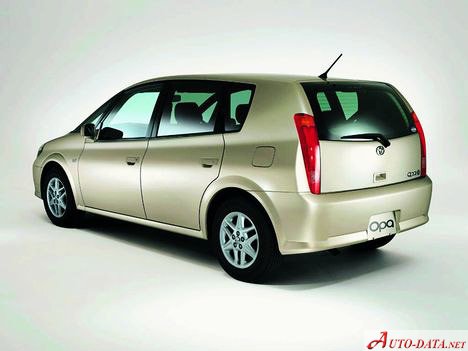
Introduction to the Toyota Opa 1.8 i 16V (136 Hp)
The Toyota Opa, a distinctive and innovative vehicle, emerged in the Japanese domestic market (JDM) in 2000, representing Toyota’s foray into a unique segment that blended the practicality of a station wagon with the enhanced interior space of a compact minivan. Produced until 2005, the Opa (a name derived from Portuguese, meaning “Oh, wow!” or “Surprise!”) was designed to offer exceptional versatility and user-friendliness in a compact footprint, tailored specifically for the urban landscapes and varied needs of Japanese consumers. This article delves into the specifics of the Toyota Opa 1.8 i 16V (136 Hp), examining its engineering, design, and market impact, providing context for a vehicle that remained a curious and highly functional offering outside of North American markets.
Positioned as a “tall wagon” or a compact multi-purpose vehicle (MPV), the Opa aimed to provide an alternative to traditional sedans and wagons without the larger dimensions of full-sized minivans. It shared its platform with other successful Toyota models of the era, such as the first-generation Toyota Wish and the Toyota Allion/Premio, ensuring a foundation of proven reliability and engineering. The 1.8 i 16V variant, with its 136 horsepower engine, represented a popular choice within the Opa lineup, balancing performance with fuel efficiency, a critical factor for its target audience.
Exploring the Toyota Opa 1.8 i 16V (136 Hp): A JDM Vision of Versatility
Engine and Performance
At the heart of the Toyota Opa 1.8 i 16V (136 Hp) lies the venerable 1ZZ-FE engine, a 1.8-liter (1794 cm³ or 109.48 cu. in.) inline four-cylinder powerplant. This engine, renowned for its robustness and efficiency, was a staple across many Toyota models globally during its production era. Featuring a DOHC (Double Overhead Camshaft) valvetrain with four valves per cylinder, it was designed for smooth operation and responsive power delivery. The naturally aspirated engine utilized a multi-port manifold injection system, a common and reliable fuel delivery method for its time, contributing to its consistent performance characteristics.
The 1ZZ-FE in the Opa delivered a respectable 136 horsepower at 6000 rpm, providing ample power for urban commuting and highway cruising. Torque output stood at 126.12 lb.-ft. (171 Nm) at 4200 rpm, ensuring decent pulling power across the mid-range. Power was routed to the front wheels via a 4-speed automatic transmission, a common and durable setup for vehicles in this class, prioritizing smooth shifts and ease of driving over outright sportiness. This powertrain architecture, driving the front wheels, contributed to efficient packaging and interior space.
Performance figures for the Opa were competitive for its segment. It boasted a top speed of 118.06 mph (190 km/h), making it perfectly capable of handling Japanese expressways. Fuel economy was a strong suit, with an urban consumption rate of approximately 19.6 US mpg and an extra-urban (highway) rating of about 33.6 US mpg. These figures highlighted the Opa’s design as an economical daily driver, especially crucial in a market where fuel prices are a significant consideration. The vehicle’s curb weight of 2667.59 lbs. (1210 kg) contributed to its favorable weight-to-power ratio of 8.9 kg/Hp, indicating a well-balanced power-to-weight dynamic for its intended purpose.
Design and Features
The Toyota Opa’s design was a clear departure from conventional styling, aiming for a distinctive yet highly functional aesthetic. Categorized as a 5-door station wagon (estate) with seating for five, its body type blurred the lines between a traditional wagon and a mini-MPV. Its exterior dimensions were compact, measuring 167.32 inches (4250 mm) in length, 66.73 inches (1695 mm) in width, and 60.24 inches (1530 mm) in height. A generous wheelbase of 106.3 inches (2700 mm) was a key factor in maximizing interior volume, a hallmark of its design philosophy. The relatively short front and rear overhangs further contributed to its efficient use of space.
The interior of the Opa was designed with practicality and adaptability in mind. While specific interior features like seating configurations are not detailed in the provided data, JDM vehicles of this type typically offered flexible seating arrangements, ample storage compartments, and user-friendly controls. The “tall wagon” design provided excellent headroom and a commanding view of the road, enhancing passenger comfort and ease of entry/exit.
In terms of chassis and safety, the Opa was equipped with a robust set of features for its time. The front suspension utilized a Spring Strut system, a common and effective setup for front-wheel-drive vehicles, offering a good balance of ride comfort and handling. The rear featured a suspension with traction connecting levers, designed to maintain stability and ride quality. Braking duties were handled by ventilated discs at the front and drum brakes at the rear, augmented by an Anti-lock Braking System (ABS) for enhanced safety during emergency stops. Steering was a rack-and-pinion type with hydraulic power steering, providing a direct and assisted feel to the driver. The vehicle rode on 195/65 R15 tires, offering a comfortable ride and adequate grip for its class.
Technical Specifications: Toyota Opa 1.8 i 16V (136 Hp)
| Category | Specification | Value |
|---|---|---|
General Information |
||
| Brand | Toyota | |
| Model | Opa | |
| Generation | Opa | |
| Type (Engine) | 1.8 i 16V (136 Hp) | |
| Start of Production | 2000 year | |
| End of Production | 2005 year | |
| Powertrain Architecture | Internal Combustion engine | |
| Body type | Station wagon (estate) | |
| Seats | 5 | |
| Doors | 5 | |
Performance Specifications |
||
| Fuel consumption (economy) – urban | 19.6 US mpg | |
| Fuel consumption (economy) – extra urban | 33.6 US mpg | |
| Fuel Type | Petrol (Gasoline) | |
| Maximum speed | 118.06 mph (190 km/h) | |
| Weight-to-power ratio | 8.9 kg/Hp, 112.4 Hp/tonne | |
| Weight-to-torque ratio | 7.1 kg/Nm, 141.3 Nm/tonne | |
Engine Specifications |
||
| Power | 136 Hp @ 6000 rpm | |
| Power per liter | 75.8 Hp/l | |
| Torque | 126.12 lb.-ft. (171 Nm) @ 4200 rpm | |
| Engine layout | Front, Transverse | |
| Engine Model/Code | 1ZZ-FE | |
| Engine displacement | 1.8 l (1794 cm³ / 109.48 cu. in.) | |
| Number of cylinders | 4 | |
| Engine configuration | Inline | |
| Cylinder Bore | 3.11 in. (79 mm) | |
| Piston Stroke | 3.6 in. (91.5 mm) | |
| Compression ratio | 10:1 | |
| Number of valves per cylinder | 4 | |
| Fuel injection system | Multi-port manifold injection | |
| Engine aspiration | Naturally aspirated engine | |
| Valvetrain | DOHC | |
| Engine oil capacity | 3.91 US qt (3.7 l) | |
| Coolant | 6.45 US qt (6.1 l) | |
Space, Volume and Weights |
||
| Kerb Weight | 2667.59 lbs. (1210 kg) | |
| Fuel tank capacity | 15.85 US gal (60 l) | |
Dimensions |
||
| Length | 167.32 in. (4250 mm) | |
| Width | 66.73 in. (1695 mm) | |
| Height | 60.24 in. (1530 mm) | |
| Wheelbase | 106.3 in. (2700 mm) | |
| Front track | 58.07 in. (1475 mm) | |
| Rear (Back) track | 57.48 in. (1460 mm) | |
Drivetrain, Brakes and Suspension Specifications |
||
| Drivetrain Architecture | The Internal combustion engine (ICE) drives the front wheels of the vehicle. | |
| Drive wheel | Front wheel drive | |
| Number of gears and type of gearbox | 4 gears, automatic transmission | |
| Front suspension | Spring Strut | |
| Rear suspension | Suspension with traction connecting levers | |
| Front brakes | Ventilated discs | |
| Rear brakes | ||
| Assisting systems | ABS (Anti-lock braking system) | |
| Steering type | Steering rack and pinion | |
| Power steering | Hydraulic Steering | |
| Tires size | 195/65 R15 | |
Legacy and Market Impact
The Toyota Opa, particularly the Toyota Opa 1.8 i 16V (136 Hp) model, carved out a distinct niche in the highly competitive Japanese automotive market during its production run from 2000 to 2005. It was a clear example of Toyota’s strategy to offer a diverse range of vehicles tailored to specific consumer demands, even if those demands were unique to Japan. Its primary competitors included other compact MPVs and tall wagons popular in the JDM, such as the Honda Stream, Nissan Wingroad (later AD Van), and even some variants of its stablemate, the Toyota Wish.
The Opa’s reputation was built on typical Toyota strengths: unwavering reliability, excellent build quality, and impressive fuel efficiency for its class. Its unique styling, which some found unconventional, was instrumental in differentiating it from more traditional offerings. The emphasis on interior space, ease of access, and adaptability made it an ideal choice for urban families, small businesses, or individuals seeking a versatile daily driver. The 1.8-liter engine provided a good balance of power for both city driving and occasional longer trips, while the automatic transmission ensured a comfortable and stress-free driving experience in congested traffic.
Despite its innovative approach and practical attributes, the Toyota Opa had a relatively short production life. This might suggest that while it fulfilled a specific market need, it did not achieve the widespread, long-term success of some of Toyota’s more mainstream models. Its niche positioning, perhaps too specific for broader appeal, eventually led to its discontinuation. However, its legacy lies in showcasing Toyota’s willingness to experiment with vehicle forms and functions, anticipating evolving consumer preferences for flexible, space-efficient vehicles.
Globally, the Toyota Opa remained largely unknown outside of its primary market. It was never officially imported or sold in the United States, primarily due to differing market preferences, regulatory requirements, and the strong presence of other Toyota models that better suited American tastes (such as the larger Sienna minivan or the RAV4 SUV). Nevertheless, for enthusiasts of JDM vehicles and those who appreciate clever packaging and engineering, the Opa stands as an interesting footnote in Toyota’s rich history, embodying a period of creative design and functional innovation aimed at a particular segment of the automotive world.

