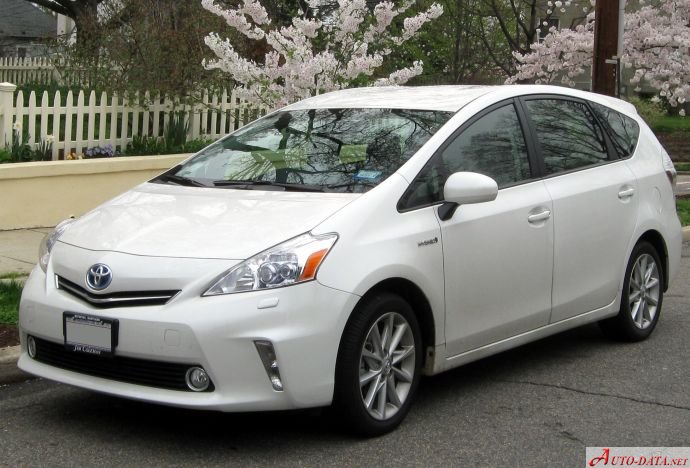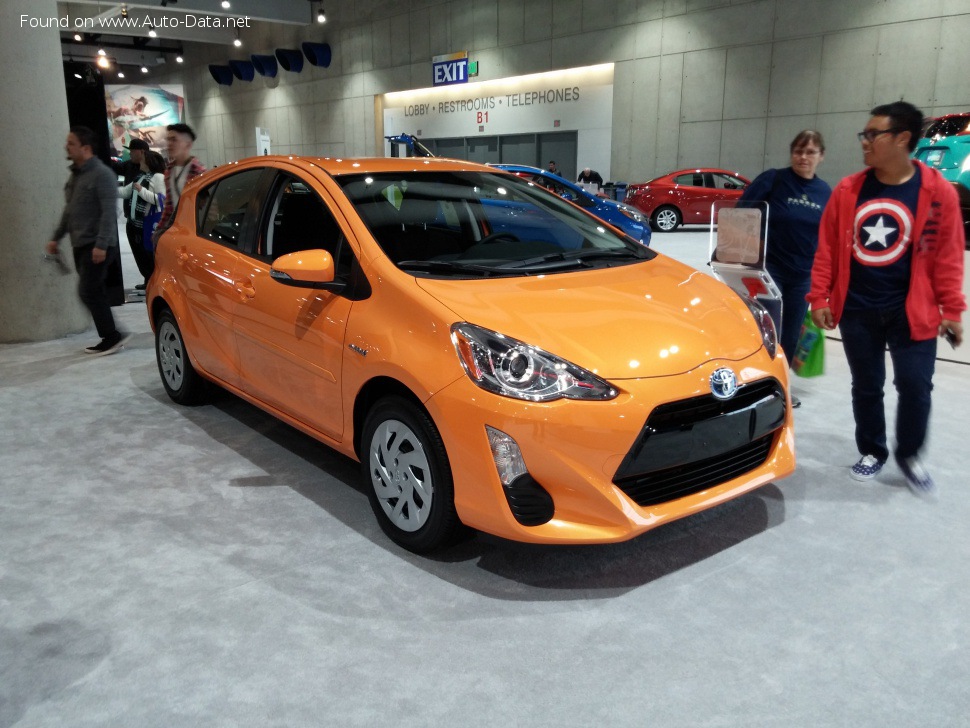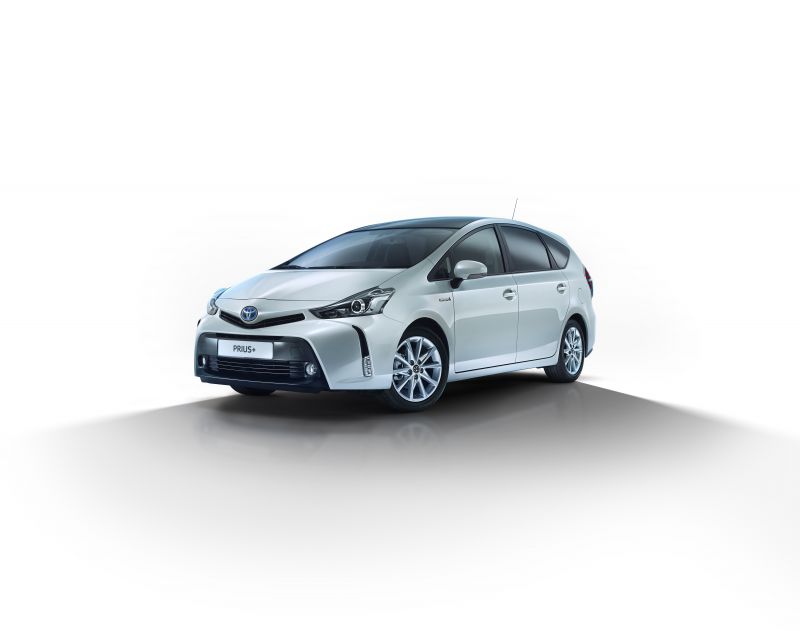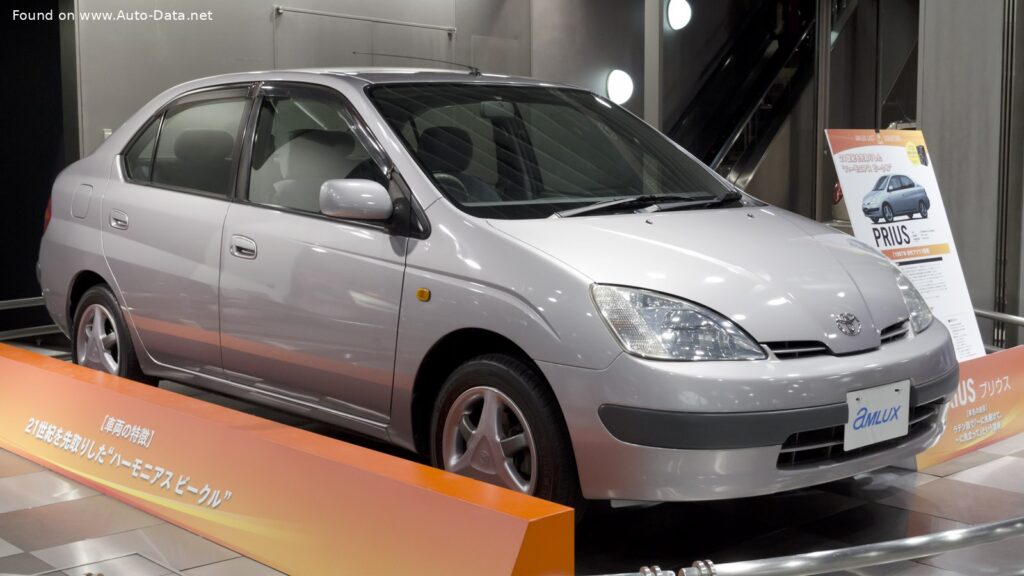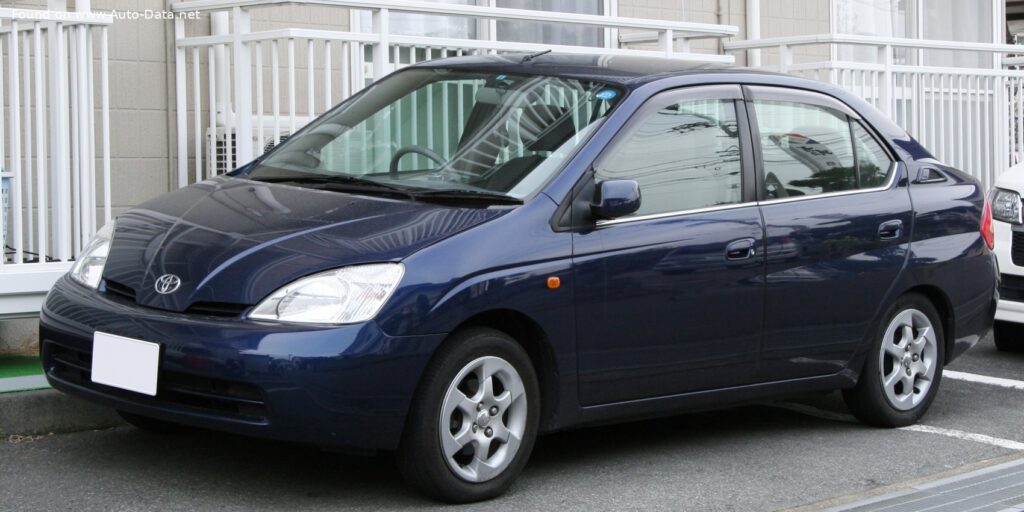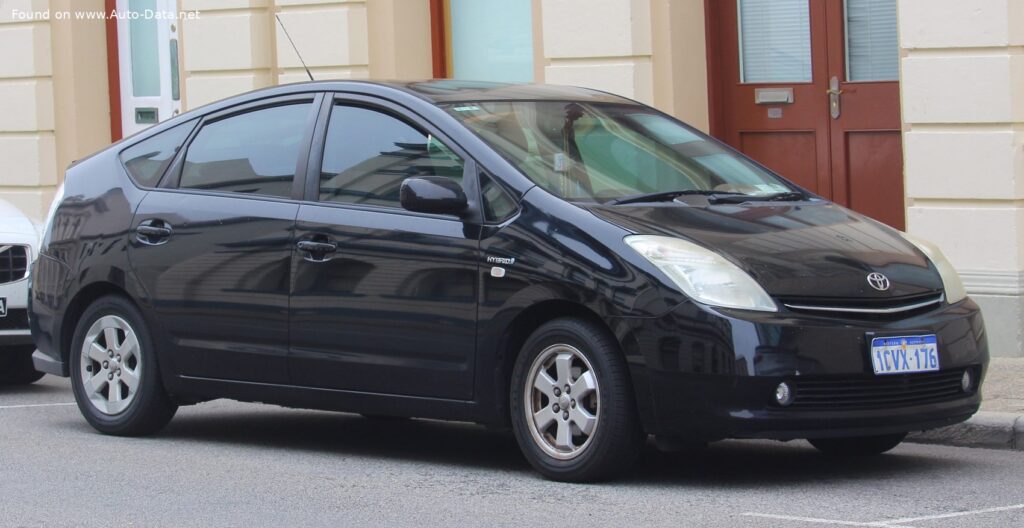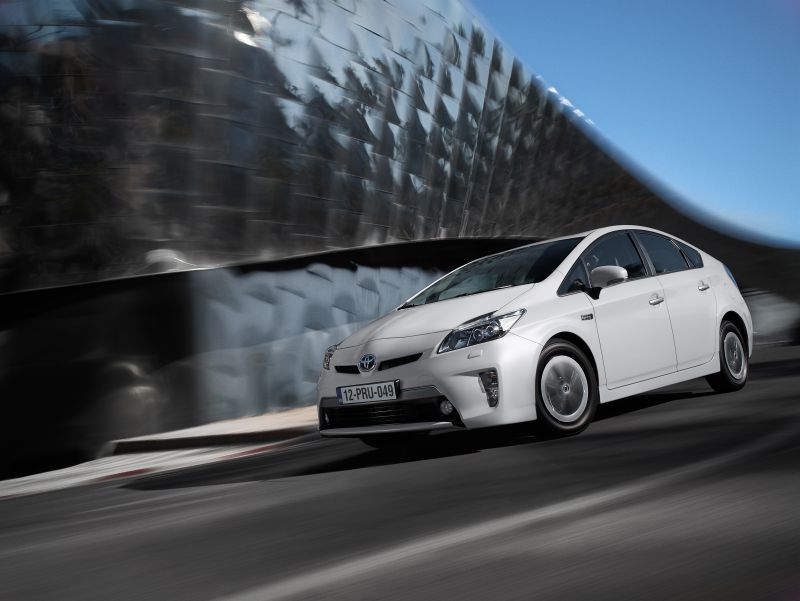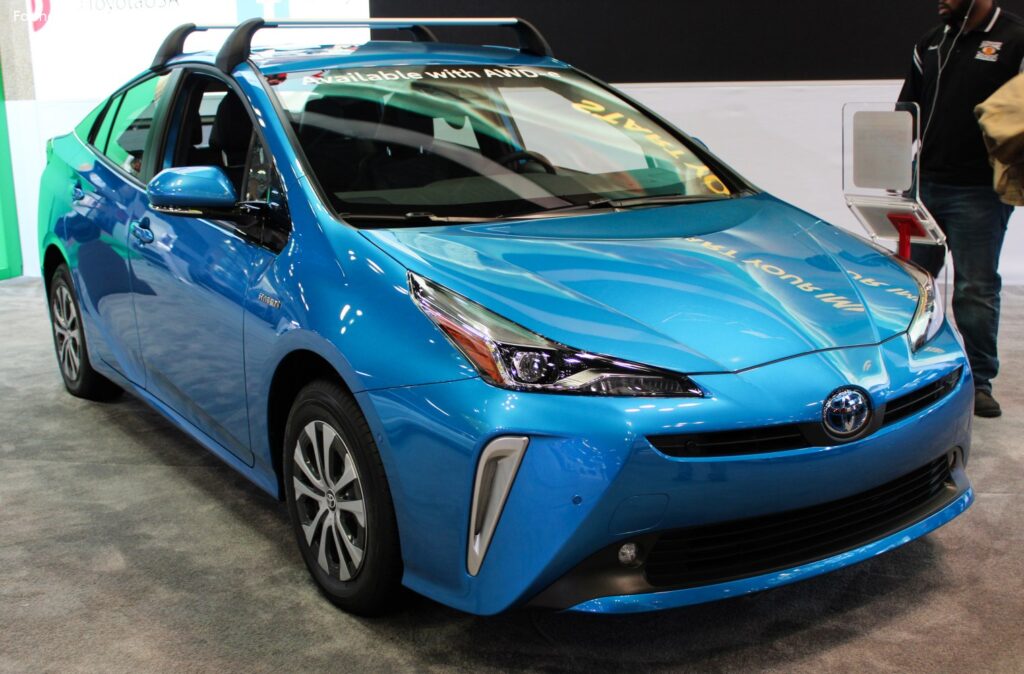
The Toyota Prius IV, specifically the XW50 generation with its 2018 facelift, represents a pivotal moment in the evolution of mass-market hybrid vehicles. This particular iteration, the Toyota Prius IV (XW50, facelift 2018) 1.8 (122 Hp) Hybrid e-CVT, continued Toyota’s legacy of pioneering fuel efficiency and environmental responsibility. Introduced in 2018 and produced through 2022, this model solidified the Prius’s position as a practical and economical choice in the compact liftback segment. It arrived in a market increasingly aware of environmental concerns and rising fuel costs, offering a compelling solution that blended conventional gasoline power with advanced electric propulsion. As a full hybrid electric vehicle (FHEV), it was designed to maximize efficiency across various driving conditions, from urban commuting to highway cruising, while providing the reliability for which Toyota is renowned. The XW50 generation, building on its predecessors, pushed the boundaries of aerodynamic design and hybrid powertrain refinement, making it a benchmark for efficiency in its class and a key player in the global shift towards more sustainable automotive technologies.
Powertrain and Performance of the Toyota Prius IV (XW50, facelift 2018) 1.8 (122 Hp) Hybrid e-CVT
At the heart of the Toyota Prius IV (XW50, facelift 2018) 1.8 (122 Hp) Hybrid e-CVT lies a sophisticated Full Hybrid Electric Vehicle (FHEV) powertrain architecture, meticulously engineered to deliver exceptional fuel economy and reduced emissions. This system integrates a 1.8-liter, naturally aspirated inline-four gasoline engine (code 2ZR-FXE) with an advanced electric motor. The internal combustion engine, mounted transversely at the front, produces 97 horsepower at 5200 rpm and 104.73 lb.-ft. of torque at 3600 rpm. Its design features a 13:1 compression ratio, DOHC valvetrain with VVT-i (Variable Valve Timing-intelligent), and multi-port manifold injection, all optimized for efficiency within the hybrid system. With an engine displacement of 1798 cubic centimeters (109.72 cubic inches), it achieves a power per liter rating of 53.9 Hp/l.
Complementing the gasoline engine is a potent electric motor, delivering 72 horsepower and a robust 120.22 lb.-ft. of torque. This synchronous electric motor is ingeniously integrated into the transmission, enabling a seamless transition between electric-only, gasoline-only, and combined hybrid driving modes. The entire system culminates in a combined output of 122 horsepower, providing adequate power for daily driving needs while prioritizing fuel conservation. Power is transmitted to the front wheels through an electronically controlled Continuously Variable Transmission (e-CVT), which intelligently manages the power flow between the engine, electric motor, and wheels, ensuring optimal efficiency and smooth acceleration without traditional gear shifts. This drivetrain architecture allows the vehicle to operate in full electric mode at lower speeds or under light loads, significantly reducing fuel consumption and emissions in urban environments.
Performance figures for the Prius IV reflect its efficiency-first design philosophy. The vehicle accelerates from 0 to 60 mph in a respectable 10.3 seconds, with a 0-100 km/h time of 10.8 seconds, and achieves a top speed of 111.85 mph (180 km/h). These metrics underscore its capability as a practical daily driver rather than a performance-oriented machine. The fuel economy is where the Prius truly shines, boasting impressive WLTP combined figures of 4.1-4.7 liters per 100 km, which translates to an outstanding 57.4 to 50 US miles per gallon. CO2 emissions are remarkably low, ranging from 94 to 107 g/km, classifying it under the stringent Euro 6 AG emission standard. The hybrid system is powered by a 1.3 kWh Lithium-ion battery, operating at 207.2 volts, strategically located under the rear seats to maintain a low center of gravity and optimize interior space. This model also incorporates a Start & Stop System and a particulate filter, further enhancing its environmental credentials and operational efficiency.
Design and Ergonomics of the Toyota Prius IV (XW50, facelift 2018)
The design of the Toyota Prius IV (XW50, facelift 2018) 1.8 (122 Hp) Hybrid e-CVT is a direct reflection of its core mission: maximizing aerodynamic efficiency and passenger comfort. This generation maintains the distinctive liftback body type, a design choice that not only contributes to its unique aesthetic but also plays a crucial role in its exceptional fuel economy. With five doors and seating for five occupants, the Prius offers practical utility for families and individuals alike. The exterior styling, particularly after the 2018 facelift, presented a more refined and less polarizing look compared to its initial XW50 release, featuring updated front and rear fascias that smoothed out some of the more angular elements, appealing to a broader audience while retaining its futuristic identity. Its sleek profile and carefully sculpted lines contribute to an impressively low drag coefficient (Cd) of just 0.24, a figure typically found in high-performance sports cars, directly aiding in reducing wind resistance and improving fuel efficiency at higher speeds.
Dimensionally, the Prius IV measures 180.12 inches in length, 69.29 inches in width, and 57.87 inches in height, with a generous wheelbase of 106.3 inches. These dimensions contribute to a surprisingly spacious interior, particularly for rear-seat passengers. The liftback configuration is a significant ergonomic advantage, providing versatile cargo space. The trunk offers a minimum volume of 17.69 cubic feet (501 liters), which expands dramatically to a cavernous 57.67 cubic feet (1633 liters) with the rear seats folded down, making it highly practical for hauling groceries, luggage, or even larger items. The strategic placement of the Lithium-ion battery under the rear seats ensures that cargo capacity is not compromised. The vehicle’s curb weight is 3031.36 lbs (1375 kg), with a maximum gross weight of 3946.27 lbs (1790 kg), allowing for a substantial maximum load of 914.92 lbs (415 kg).
Underneath its aerodynamic skin, the Prius IV employs a sophisticated chassis setup designed for a comfortable and composed ride. The front suspension utilizes an independent McPherson strut system, known for its balance of comfort and handling precision. At the rear, a double wishbone suspension provides superior ride quality and stability, particularly when traversing uneven surfaces or during dynamic maneuvers. The drivetrain architecture is front-wheel drive, ensuring predictable handling characteristics. Braking performance is handled by ventilated discs at the front and solid discs at the rear, complemented by an Anti-lock Braking System (ABS) for enhanced safety and control during emergency stops. Steering is managed by an electric power-assisted rack and pinion system, offering light effort at low speeds for easy parking and more feedback at higher speeds. The vehicle rides on 195/65 R15 tires mounted on 6J x 15 wheel rims, a combination chosen for its balance of comfort, grip, and low rolling resistance to further aid fuel economy. With a minimum turning circle of 33.46 feet (10.2 meters), the Prius is surprisingly maneuverable in urban environments, underscoring its thoughtful design for everyday usability.
Technical Specifications
| Brand | Toyota |
| Model | Prius |
| Generation | Prius IV (XW50, facelift 2018) |
| Type (Engine) | 1.8 (122 Hp) Hybrid e-CVT |
| Start of production | 2018 year |
| End of production | 2022 year |
| Powertrain Architecture | FHEV (Full Hybrid Electric Vehicle) |
| Body type | Liftback |
| Seats | 5 |
| Doors | 5 |
| Fuel consumption at Low speed (WLTP) | 3.7-4.3 l/100 km (63.6 – 54.7 US mpg) |
| Fuel consumption at Medium speed (WLTP) | 3.6-4.2 l/100 km (65.3 – 56 US mpg) |
| Fuel consumption at high speed (WLTP) | 3.7-4.2 l/100 km (63.6 – 56 US mpg) |
| Fuel consumption at very high speed (WLTP) | 5-5.7 l/100 km (47 – 41.3 US mpg) |
| Combined fuel consumption (WLTP) | 4.1-4.7 l/100 km (57.4 – 50 US mpg) |
| CO2 emissions (WLTP) | 94-107 g/km |
| Fuel Type | Petrol (Gasoline) |
| Acceleration 0 – 60 mph | 10.3 sec |
| Acceleration 0 – 100 km/h | 10.8 sec |
| Maximum speed | 111.85 mph (180 km/h) |
| Emission standard | Euro 6 AG |
| Weight-to-power ratio | 11.3 kg/Hp, 88.7 Hp/tonne |
| Weight-to-torque ratio | 9.7 kg/Nm, 103.3 Nm/tonne |
| Gross battery capacity | 1.3 kWh |
| Battery voltage | 207.2 V |
| Battery technology | Lithium-ion (Li-Ion) |
| Battery location | Under the rear seats |
| Electric motor power | 72 Hp |
| Electric motor Torque | 120.22 lb.-ft. (163 Nm) |
| Electric motor location | Integrated into the transmission |
| Electric motor type | Synchronous |
| System power | 122 Hp |
| Engine power | 97 Hp @ 5200 rpm. |
| Power per liter | 53.9 Hp/l |
| Engine Torque | 104.73 lb.-ft. @ 3600 rpm. (142 Nm @ 3600 rpm) |
| Engine layout | Front, Transverse |
| Engine Model/Code | 2ZR-FXE |
| Engine displacement | 109.72 cu. in. (1798 cm3) |
| Number of cylinders | 4 |
| Engine configuration | Inline |
| Cylinder Bore | 3.17 in. (80.5 mm) |
| Piston Stroke | 3.48 in. (88.3 mm) |
| Compression ratio | 13:1 |
| Number of valves per cylinder | 4 |
| Fuel injection system | Multi-port manifold injection |
| Engine aspiration | Naturally aspirated engine |
| Valvetrain | DOHC, VVT-i |
| Engine oil capacity | 4.44 US qt (4.2 l) |
| Coolant | 6.34 US qt (6 l) |
| Engine systems | Start & Stop System, Particulate filter |
| Kerb Weight | 3031.36 lbs (1375 kg) |
| Max. weight | 3946.27 lbs (1790 kg) |
| Max load | 914.92 lbs (415 kg) |
| Trunk (boot) space – minimum | 17.69 cu. ft. (501 l) |
| Trunk (boot) space – maximum | 57.67 cu. ft. (1633 l) |
| Fuel tank capacity | 11.36 US gal (43 l) |
| Max. roof load | 165.35 lbs (75 kg) |
| Permitted trailer load with brakes (12%) | 1598.35 lbs (725 kg) |
| Permitted trailer load without brakes | 1598.35 lbs (725 kg) |
| Length | 180.12 in. (4575 mm) |
| Width | 69.29 in. (1760 mm) |
| Height | 57.87 in. (1470 mm) |
| Wheelbase | 106.3 in. (2700 mm) |
| Front track | 60.24 in. (1530 mm) |
| Rear (Back) track | 60.63 in. (1540 mm) |
| Front overhang | 37.8 in. (960 mm) |
| Rear overhang | 36.02 in. (915 mm) |
| Ride height (ground clearance) | 5.12 in. (130 mm) |
| Drag coefficient (Cd) | 0.24 |
| Minimum turning circle (turning diameter) | 33.46 ft. (10.2 m) |
| Drivetrain Architecture | The Internal combustion engine (ICE) and electric motor drive the front wheels of the car with the ability to work in full electric or mixed mode. |
| Drive wheel | Front wheel drive |
| Number of gears and type of gearbox | automatic transmission e-CVT |
| Front suspension | Independent type McPherson |
| Rear suspension | Double wishbone |
| Front brakes | Ventilated discs |
| Rear brakes | Disc |
| Assisting systems | ABS (Anti-lock braking system) |
| Steering type | Steering rack and pinion |
| Power steering | Electric Steering |
| Tires size | 195/65 R15 |
| Wheel rims size | 6J x 15 |