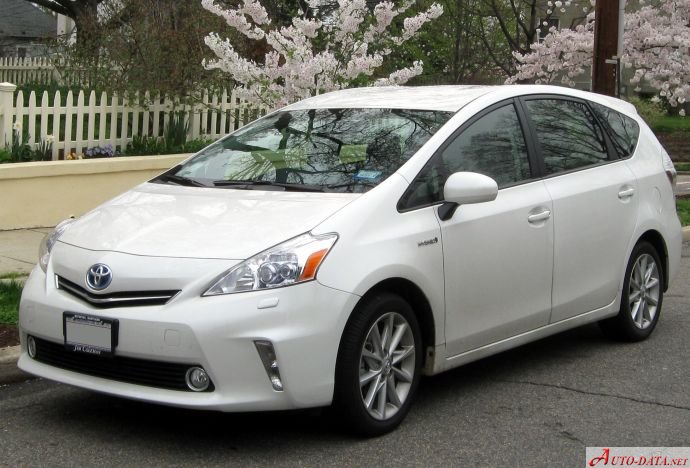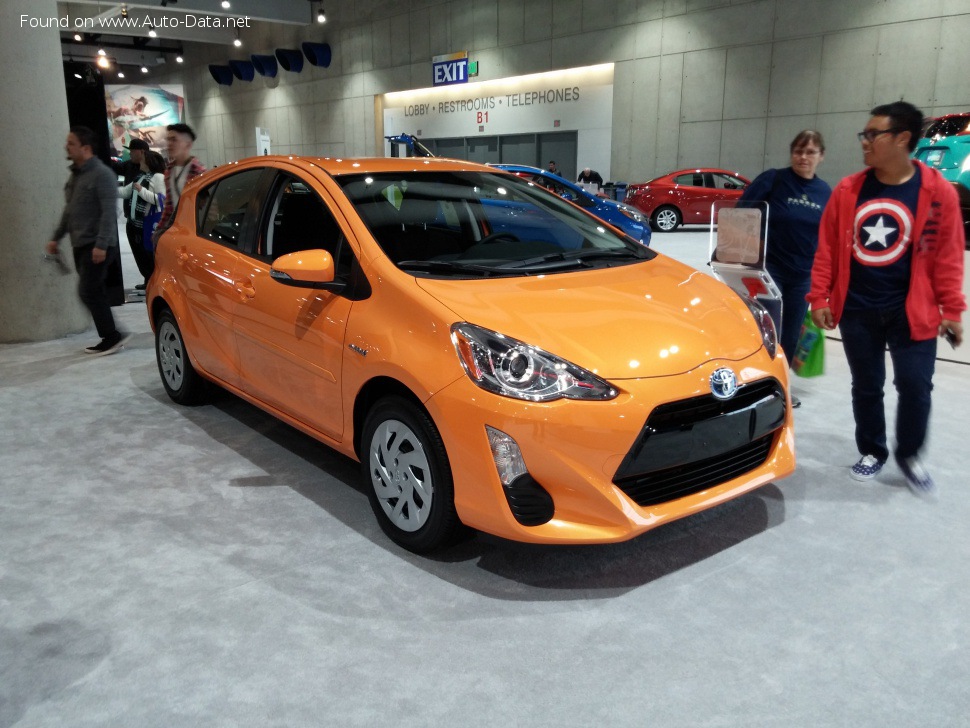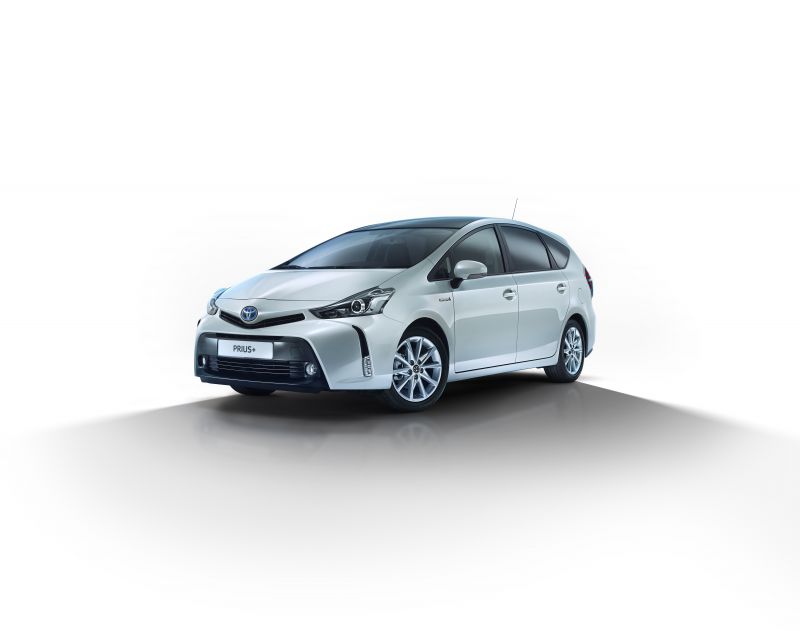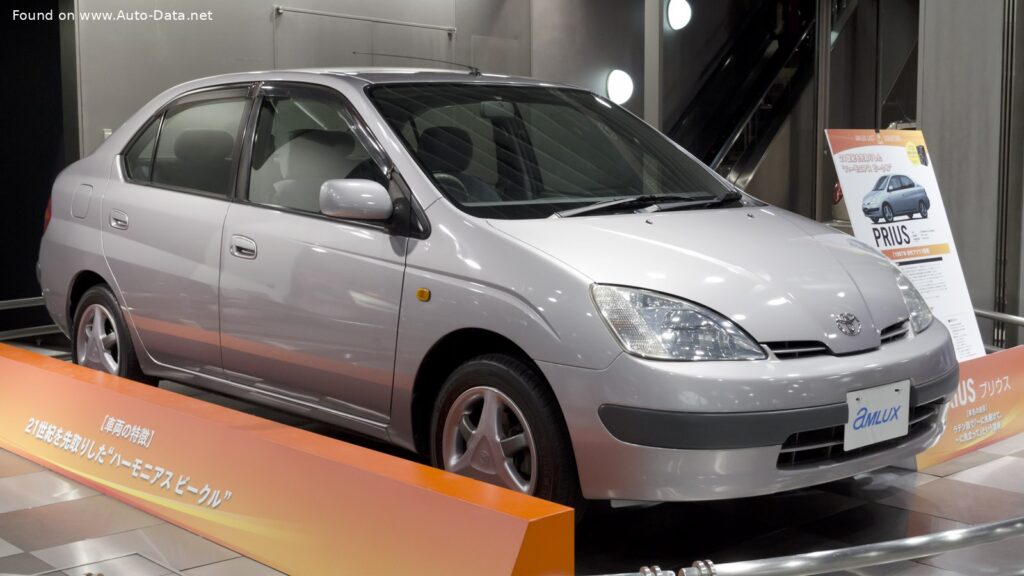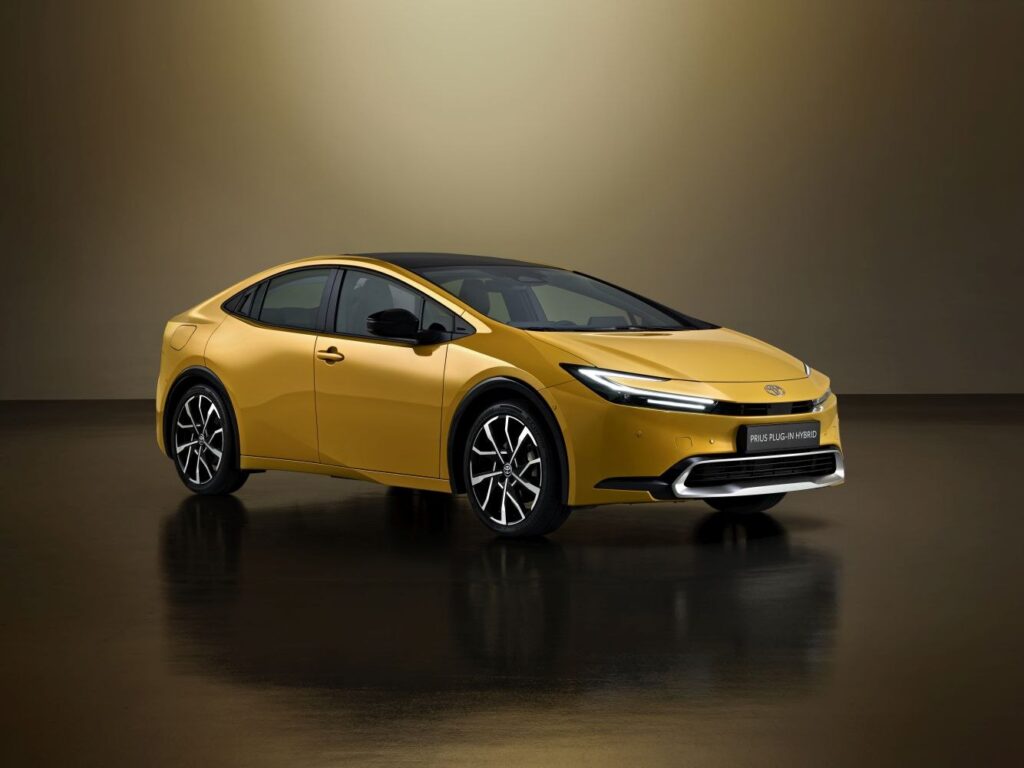
The Toyota Prius has long been synonymous with hybrid technology, pioneering the segment and continually evolving to set new benchmarks in efficiency and environmental performance. The latest iteration, identified here as the Toyota Prius V (XW60) 2.0 (199 Hp) Hybrid E-Four e-CVT, represents the fifth generation of this iconic vehicle. While the “Prius V” designation has historically been associated with a larger wagon variant in the North American market, this particular model, belonging to the XW60 generation, is a sleek liftback, showcasing a radical departure in design from its predecessors while retaining its core commitment to advanced hybrid engineering. Launched in January 2023, this model elevates the Prius’s appeal by combining a more potent powertrain with an advanced all-wheel-drive system, positioning it as a highly efficient and capable contender in the global compact and mid-size vehicle segments. It is a full hybrid electric vehicle (FHEV), meticulously engineered to optimize fuel economy and reduce emissions without compromising on driving dynamics or practicality, making it a pivotal model for Toyota’s continued leadership in sustainable mobility.
Engine & Performance of the Toyota Prius V (XW60)
At the heart of the Toyota Prius V (XW60) 2.0 (199 Hp) Hybrid E-Four e-CVT lies a sophisticated full hybrid electric vehicle (FHEV) powertrain, meticulously designed for both efficiency and responsive performance. This system integrates a 2.0-liter M20A-FXS inline four-cylinder internal combustion engine with two electric motors, delivering a combined system output of 199 horsepower. The gasoline engine, positioned transversely at the front, produces 152 Hp at 6000 rpm and a robust 138.66 lb.-ft. of torque between 4400-5200 rpm. It features a naturally aspirated design with VVT (Variable Valve Timing) and a dual fuel injection system, combining both direct injection and multi-port manifold injection to optimize fuel delivery and combustion efficiency across various operating conditions. This engine boasts a displacement of 1986 cm3 (121.19 cu. in.) with a bore of 3.17 inches and a stroke of 3.84 inches, employing 4 valves per cylinder for enhanced breathing.
The hybrid system is further augmented by two synchronous electric motors. The primary electric motor (model 1VM), integrated into the e-CVT transmission, provides 113 Hp and 151.94 lb.-ft. of torque to the front wheels. A second, smaller electric motor (model 1WM) is uniquely positioned on the rear axle, delivering an additional 41 Hp and 61.96 lb.-ft. of torque. This configuration enables the advanced E-Four all-wheel-drive system, allowing the vehicle to operate in front-wheel drive, all-wheel drive, or a full electric mode, depending on driving conditions and driver input. The seamless integration of these power sources via an electronic continuously variable transmission (e-CVT) ensures smooth acceleration and optimal power delivery, contributing to the vehicle’s impressive weight-to-power ratio of 7.3 kg/Hp (136.3 Hp/tonne) and a weight-to-torque ratio of 7.8 kg/Nm (128.8 Nm/tonne).
Fuel economy is a hallmark of the Toyota Prius V (XW60), achieving remarkable figures thanks to its FHEV architecture and efficient powertrain management. According to WLTC standards, the combined fuel consumption is an outstanding 3.7 l/100 km, translating to approximately 63.6 US mpg. In urban driving, it manages 4.3 l/100 km (54.7 US mpg), while extra-urban cycles see it achieve an even more impressive 3.4 l/100 km (69.2 US mpg). These figures underscore the Prius’s commitment to efficiency, making it an incredibly economical choice for daily commuting and longer journeys. The system is powered by a Lithium-ion (Li-Ion) battery, which offers a balance of energy density and durability, crucial for a full hybrid system. The inclusion of a Start & Stop System further aids in fuel conservation by shutting down the engine during idle periods.
Design & Features: The Modern Toyota Prius V (XW60) Liftback
The design philosophy of the Toyota Prius V (XW60) represents a significant evolution for the model, moving towards a sportier, more dynamic aesthetic while retaining its characteristic aerodynamic profile. As a liftback with five doors and seating for five occupants, it blends the practicality of a hatchback with the sleek lines often associated with coupes. Its dimensions contribute to a commanding road presence and a spacious interior: measuring 181.1 inches in length, 70.08 inches in width, and 56.3 inches in height, with a generous 108.27-inch wheelbase. This longer wheelbase, compared to previous generations, not only enhances interior roominess but also contributes to improved ride comfort and stability.
The chassis and suspension components are engineered to provide a balanced ride quality and confident handling. The front suspension utilizes an independent McPherson strut setup with coil springs and an anti-roll bar, a tried-and-true design known for its effectiveness in absorbing road imperfections and maintaining control. At the rear, a double wishbone suspension with a transverse stabilizer ensures precise wheel control and stability, particularly beneficial for an all-wheel-drive vehicle. Braking performance is handled by ventilated discs at the front and solid discs at the rear, complemented by an Anti-lock Braking System (ABS) for enhanced safety during emergency stops. The steering system is a rack and pinion type with electric power steering, offering light effort at low speeds for easy maneuvering and a more weighted feel at higher speeds for greater control. The minimum turning circle of 35.43 feet further aids in urban agility.
Practicality is a cornerstone of the Toyota Prius V (XW60). With a kerb weight ranging from 3218.75 to 3262.84 lbs. and a maximum gross weight of 3869.11 lbs., the vehicle offers a substantial payload capacity. The fuel tank capacity of 11.36 US gallons, combined with its exceptional fuel efficiency, provides an impressive driving range, minimizing stops at the pump. The ground clearance of 5.91 inches is typical for its segment, offering sufficient clearance for most urban and light rural driving conditions. The vehicle is equipped with tire size options of 195/60 R17 or 195/50 R19, paired with corresponding 6.5J x 17 or 6.5J x 19 wheel rims, allowing for a choice between comfort-oriented and sportier aesthetics. Overall, the design and features of this Prius variant reflect a mature and refined approach, blending cutting-edge hybrid technology with appealing aesthetics and practical functionality for the modern driver.
Technical Specifications
| Brand | Toyota |
| Model | Prius |
| Generation | Prius V (XW60) |
| Type (Engine) | 2.0 (199 Hp) Hybrid E-Four e-CVT |
| Start of production | January, 2023 year |
| Powertrain Architecture | FHEV (Full Hybrid Electric Vehicle) |
| Body type | Liftback |
| Seats | 5 |
| Doors | 5 |
| Fuel consumption (economy) – urban (WLTC) | 4.3 l/100 km (54.7 US mpg) |
| Fuel consumption (economy) – extra urban (WLTC) | 3.4 l/100 km (69.2 US mpg) |
| Fuel consumption (economy) – combined (WLTC) | 3.7 l/100 km (63.6 US mpg) |
| Fuel Type | Petrol (Gasoline) |
| Weight-to-power ratio | 7.3 kg/Hp (136.3 Hp/tonne) |
| Weight-to-torque ratio | 7.8 kg/Nm (128.8 Nm/tonne) |
| Battery technology | Lithium-ion (Li-Ion) |
| Electric motor 1 power | 113 Hp |
| Electric motor 1 Torque | 206 Nm (151.94 lb.-ft.) |
| Electric motor 1 model/code | 1VM |
| Electric motor 1 location | Integrated into the transmission |
| Electric motor 1 type | Synchronous |
| Electric motor 2 power | 41 Hp |
| Electric motor 2 Torque | 84 Nm (61.96 lb.-ft.) |
| Electric motor 2 model/code | 1WM |
| Electric motor 2 location | Rear axle, Transverse |
| Electric motor 2 type | Synchronous |
| System power | 199 Hp |
| Internal Combustion Engine Power | 152 Hp @ 6000 rpm. |
| Power per liter | 76.5 Hp/l |
| Internal Combustion Engine Torque | 188 Nm @ 4400-5200 rpm (138.66 lb.-ft. @ 4400-5200 rpm) |
| Engine layout | Front, Transverse |
| Engine Model/Code | M20A-FXS |
| Engine displacement | 1986 cm3 (121.19 cu. in.) |
| Number of cylinders | 4 |
| Engine configuration | Inline |
| Cylinder Bore | 80.5 mm (3.17 in.) |
| Piston Stroke | 97.6 mm (3.84 in.) |
| Number of valves per cylinder | 4 |
| Fuel injection system | Direct injection and Multi-port manifold injection |
| Engine aspiration | Naturally aspirated engine |
| Valvetrain | VVT |
| Engine oil capacity | 4.2 l (4.44 US qt) |
| Engine oil specification | Log in to see. |
| Coolant | 6.1 l (6.45 US qt) |
| Engine systems | Start & Stop System |
| Kerb Weight | 1460-1480 kg (3218.75 – 3262.84 lbs.) |
| Max. weight | 1755 kg (3869.11 lbs.) |
| Max load | 275-295 kg (606.27 – 650.36 lbs.) |
| Fuel tank capacity | 43 l (11.36 US gal) |
| Length | 4600 mm (181.1 in.) |
| Width | 1780 mm (70.08 in.) |
| Height | 1430 mm (56.3 in.) |
| Wheelbase | 2750 mm (108.27 in.) |
| Front track | 1560 mm (61.42 in.) |
| Rear (Back) track | 1570 mm (61.81 in.) |
| Ride height (ground clearance) | 150 mm (5.91 in.) |
| Minimum turning circle (turning diameter) | 10.8 m (35.43 ft.) |
| Drivetrain Architecture | An Internal combustion engine (ICE) drives the front wheels, one electric motor drives the front wheels, one electric motor drives the rear wheels. There is an ability for running in full electric or mixed mode. |
| Drive wheel | All wheel drive (4×4) |
| Number of gears and type of gearbox | automatic transmission eCVT |
| Front suspension | Independent, type McPherson with coil spring and anti-roll bar |
| Rear suspension | Double wishbone, Transverse stabilizer |
| Front brakes | Ventilated discs |
| Rear brakes | Disc |
| Assisting systems | ABS (Anti-lock braking system) |
| Steering type | Steering rack and pinion |
| Power steering | Electric Steering |
| Tires size | 195/60 R17; 195/50 R19 |
| Wheel rims size | 6.5J x 17; 6.5J x 19 |