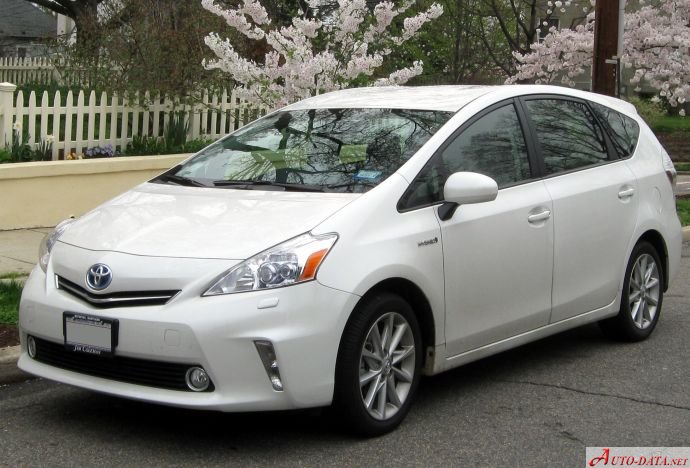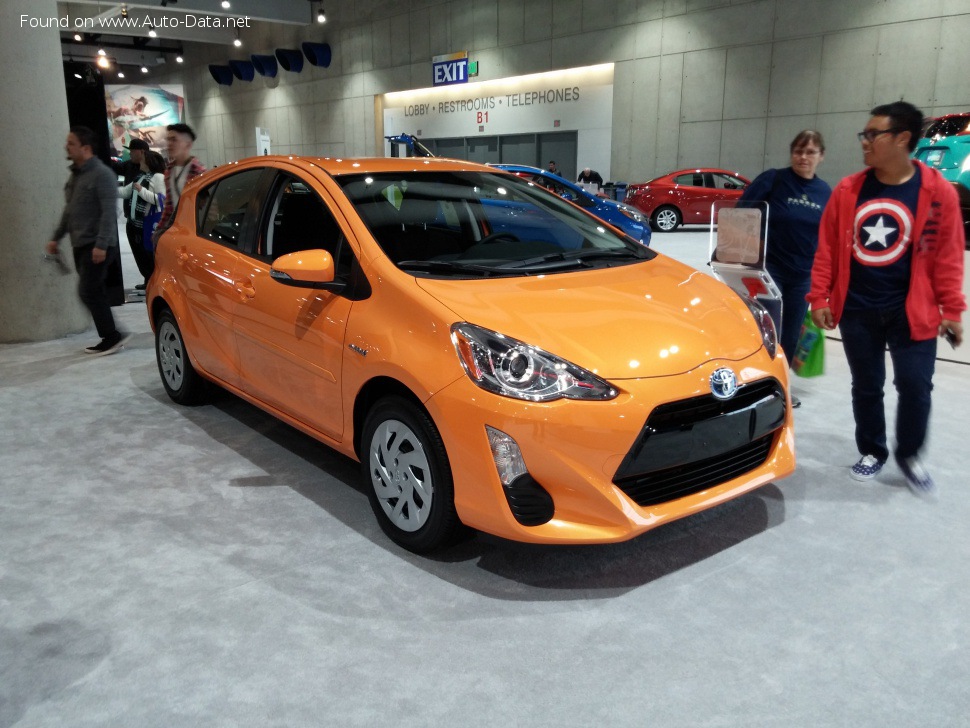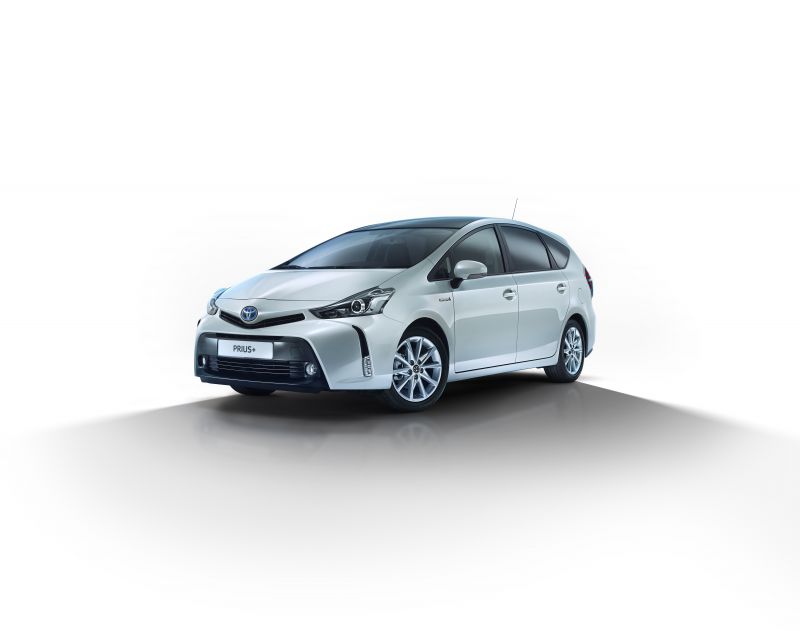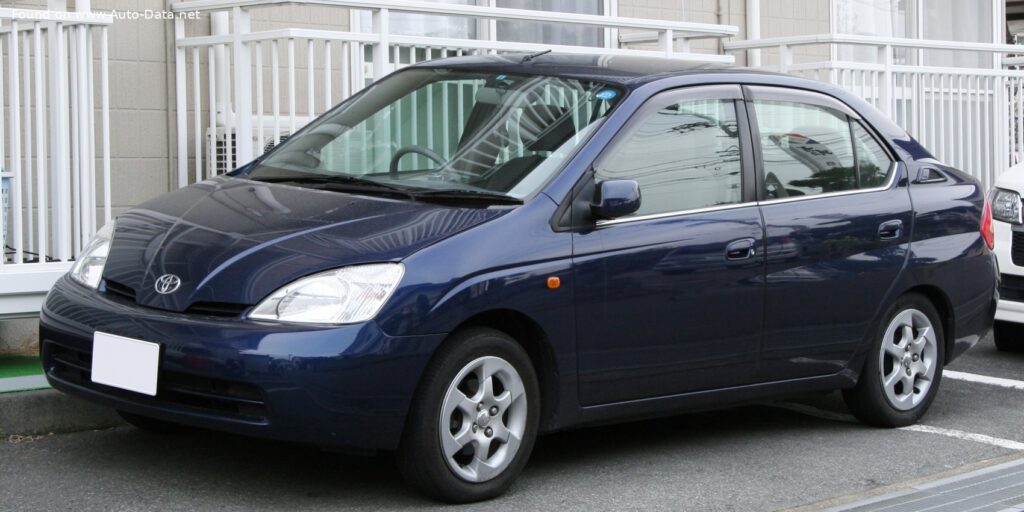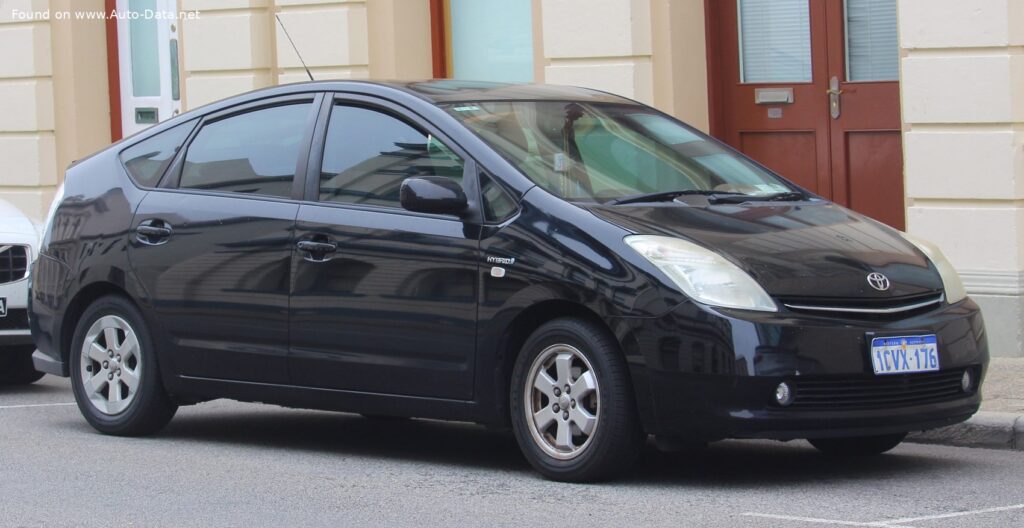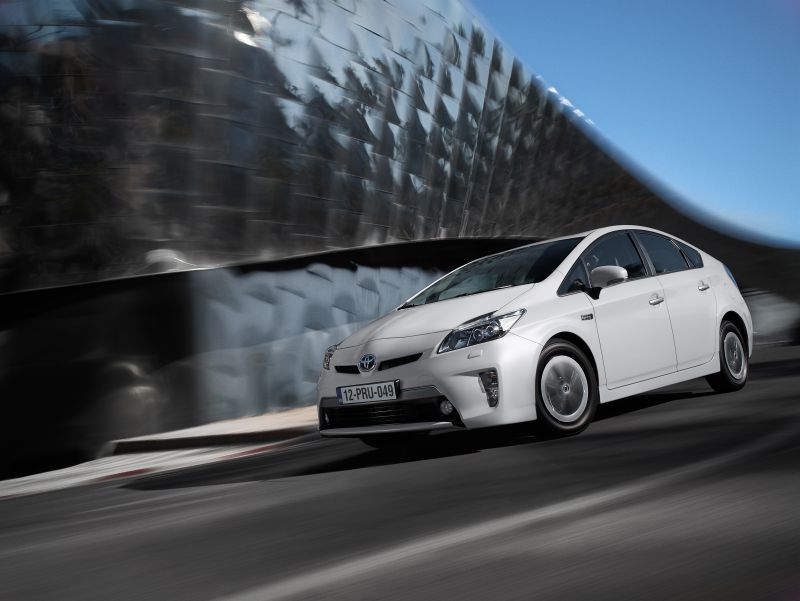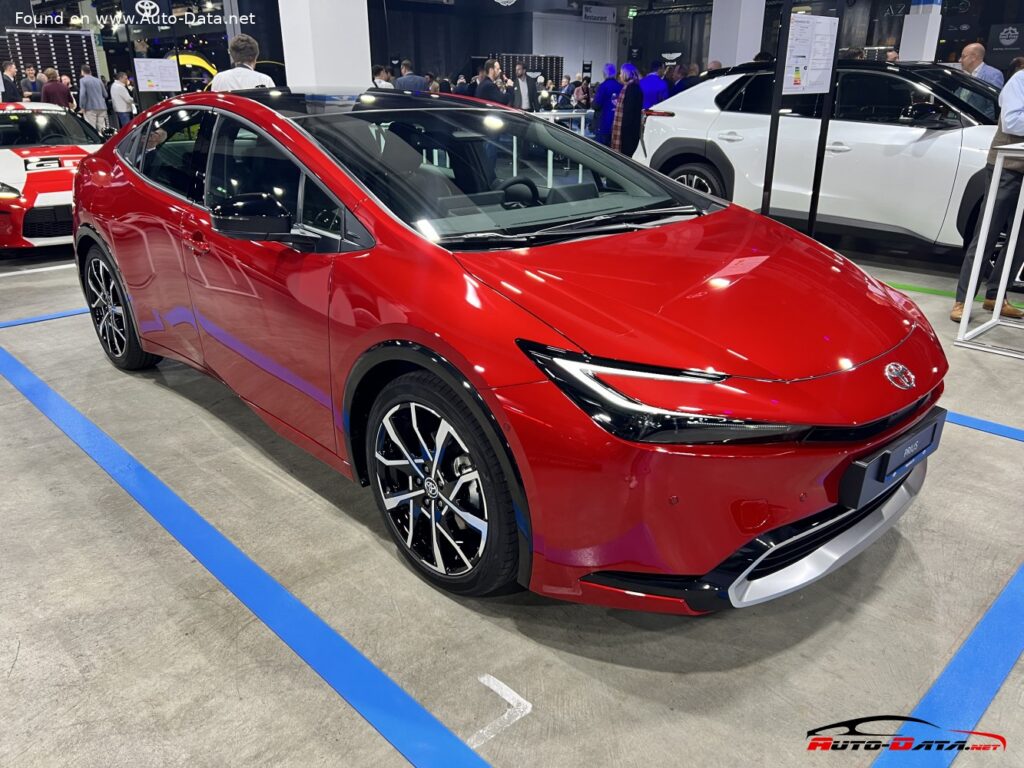
The Toyota Prius V (XW60) 2.0 (223 Hp) Plug-in Hybrid e-CVT represents the latest evolution in Toyota’s pioneering hybrid lineage, specifically a member of the fifth-generation Prius family, designated XW60. Launched in July 2023, this contemporary liftback redefines the segment with its sophisticated plug-in hybrid electric vehicle (PHEV) architecture, blending exceptional fuel efficiency with a significant all-electric driving range. Positioned as a versatile and environmentally conscious choice, the Prius V (XW60) caters to drivers seeking a practical, five-door, five-seat vehicle that excels in both urban environments and longer journeys, all while minimizing its carbon footprint. It continues the Prius legacy of innovation, offering a compelling package of advanced technology, refined performance, and striking design, firmly establishing its relevance in today’s increasingly electrified automotive market.
Engine & Performance of the Toyota Prius V (XW60)
At the heart of the Toyota Prius V (XW60) 2.0 (223 Hp) Plug-in Hybrid e-CVT lies a meticulously engineered powertrain designed for optimal efficiency and dynamic response. This advanced PHEV system combines a robust internal combustion engine with a powerful electric motor, delivering a seamless driving experience. The internal combustion component is a 2.0-liter M20A-FXS inline 4-cylinder engine, transversely mounted at the front. This naturally aspirated unit features both direct injection and multi-port manifold injection, a configuration designed to optimize fuel delivery across the entire RPM range, enhancing both power and efficiency. With a bore of 80.5 mm and a stroke of 97.6 mm, the engine produces a commendable 151 horsepower at 6000 rpm and 138.66 lb.-ft. of torque between 4400-5200 rpm. Its Valvetrain (VVT) system further refines engine breathing and performance, contributing to a power per liter rating of 76 Hp/l. An integrated Start & Stop System further aids in fuel conservation during idle periods.
Complementing the gasoline engine is a high-output electric motor, model 1VM, strategically integrated into the transmission. This synchronous electric motor alone generates an impressive 163 horsepower and 153.41 lb.-ft. of torque, providing instant acceleration and robust performance, particularly beneficial for all-electric driving and augmenting power during hybrid operation. The synergistic combination of these two power sources results in a substantial total system output of 223 horsepower, offering a lively and responsive driving character for the Toyota Prius V (XW60). Power is efficiently managed by an electronic continuously variable transmission (e-CVT), which ensures smooth power delivery to the front wheels, optimizing performance and fuel economy across all driving conditions.
The PHEV architecture is supported by a 13.6 kWh gross capacity Lithium-ion battery, intelligently located below the floor and under the rear seats to maintain a low center of gravity and maximize interior space. This substantial battery capacity allows the Prius V (XW60) to achieve an impressive all-electric range of 54.06 miles (WLTC cycle), making it highly practical for daily commutes and reducing reliance on the gasoline engine. When operating in pure electric mode, the vehicle boasts an average energy consumption of 13.4 kWh/100 km, or 21.57 kWh/100 mi, translating to an outstanding 156 MPGe. In combined hybrid operation, the fuel economy is equally remarkable, achieving 61.9 US mpg (3.8 l/100 km) on the WLTC cycle, with urban consumption at 56 US mpg and extra-urban at 67.2 US mpg. These figures underscore the vehicle’s commitment to class-leading efficiency and environmental responsibility. The vehicle’s kerb weight of 3461.26 lbs results in a favorable weight-to-power ratio of 7 kg/Hp (142 Hp/tonne) and a weight-to-torque ratio of 8.4 kg/Nm (119.7 Nm/tonne), contributing to its agile feel and efficient performance.
Design & Features
The Toyota Prius V (XW60) adopts a sleek and modern liftback body type, a design choice that not only enhances its aerodynamic profile but also provides exceptional practicality. With five doors and seating for five occupants, the XW60 generation Prius balances a sporty aesthetic with the functional demands of a contemporary family vehicle. Its exterior dimensions contribute to a commanding yet agile presence: a length of 181.1 inches, a width of 70.08 inches, and a height of 56.3 inches. The generous wheelbase of 108.27 inches ensures a spacious cabin and contributes to a stable ride, while the modest 5.91-inch ground clearance maintains a low center of gravity for improved handling dynamics. The front track measures 61.42 inches, complemented by a rear track of 61.81 inches, further enhancing stability and road presence. A minimum turning circle of 35.43 feet provides excellent maneuverability in urban settings.
Underneath its contemporary skin, the Toyota Prius V (XW60) is engineered with a focus on ride comfort, handling precision, and safety. The suspension system features an independent McPherson strut setup with coil springs and an anti-roll bar at the front, offering a balance of responsiveness and comfort. The rear suspension employs a sophisticated double wishbone design with a transverse stabilizer, which is crucial for maintaining tire contact and stability, especially during spirited driving or when encountering uneven road surfaces. Braking performance is handled by ventilated discs at the front and solid discs at the rear, ensuring confident stopping power. These are augmented by an Anti-lock Braking System (ABS), a fundamental safety feature that prevents wheel lock-up during hard braking, allowing the driver to maintain steering control. Steering is managed by an electric power steering system, utilizing a rack and pinion setup, which provides precise control and reduces driver fatigue, particularly at lower speeds.
The Toyota Prius V (XW60) is equipped with tire sizes that balance grip and efficiency, offering choices between 195/60 R17 and 195/50 R19, mounted on 6.5J x 17 and 6.5J x 19 wheel rims, respectively. These choices allow for a degree of customization in terms of ride comfort versus handling sharpness. The vehicle’s design ethos extends to its practical aspects, with a fuel tank capacity of 10.57 US gallons, providing an extended range when combining gasoline and electric power. The maximum weight capacity stands at 4067.53 lbs, with a maximum load of 606.27 lbs, highlighting its capability as a versatile transporter for passengers and cargo. Overall, the design and features of the Prius V (XW60) underscore its role as a forward-thinking vehicle that prioritizes efficiency, safety, and a refined driving experience, all wrapped in a visually appealing and functional package.
Technical Specifications: Toyota Prius V (XW60) 2.0 (223 Hp) Plug-in Hybrid e-CVT
| Brand | Toyota |
| Model | Prius |
| Generation | Prius V (XW60) |
| Type (Engine) | 2.0 (223 Hp) Plug-in Hybrid e-CVT |
| Start of Production | July, 2023 year |
| Powertrain Architecture | PHEV (Plug-in Hybrid Electric Vehicle) |
| Body Type | Liftback |
| Seats | 5 |
| Doors | 5 |
| Fuel Consumption (economy) – urban (WLTC) | 4.2 l/100 km (56 US mpg) |
| Fuel Consumption (economy) – extra urban (WLTC) | 3.5 l/100 km (67.2 US mpg) |
| Fuel Consumption (economy) – combined (WLTC) | 3.8 l/100 km (61.9 US mpg) |
| Fuel Type | Petrol / electricity |
| Weight-to-Power Ratio | 7 kg/Hp (142 Hp/tonne) |
| Weight-to-Torque Ratio | 8.4 kg/Nm (119.7 Nm/tonne) |
| Gross Battery Capacity | 13.6 kWh |
| Battery Technology | Lithium-ion (Li-Ion) |
| Battery Location | Below the floor, under the rear seats |
| All-electric Range (WLTC) | 87 km (54.06 mi) |
| Average Energy Consumption (WLTC) | 13.4 kWh/100 km (21.57 kWh/100 mi, 156 MPGe) |
| Electric Motor Power | 163 Hp |
| Electric Motor Torque | 208 Nm (153.41 lb.-ft.) |
| Electric Motor Model/Code | 1VM |
| Electric Motor Location | Integrated into the transmission |
| Electric Motor Type | Synchronous |
| System Power | 223 Hp |
| Internal Combustion Engine Power | 151 Hp @ 6000 rpm |
| Power per Liter | 76 Hp/l |
| Internal Combustion Engine Torque | 188 Nm @ 4400-5200 rpm (138.66 lb.-ft. @ 4400-5200 rpm) |
| Engine Layout | Front, Transverse |
| Engine Model/Code | M20A-FXS |
| Engine Displacement | 1986 cm3 (2.0 liters / 121.19 cu. in.) |
| Number of Cylinders | 4 |
| Engine Configuration | Inline |
| Cylinder Bore | 80.5 mm (3.17 in.) |
| Piston Stroke | 97.6 mm (3.84 in.) |
| Number of Valves per Cylinder | 4 |
| Fuel Injection System | Direct injection and Multi-port manifold injection |
| Engine Aspiration | Naturally aspirated engine |
| Valvetrain | VVT |
| Engine Oil Capacity | 4.2 l (4.44 US qt) |
| Coolant | 6.1 l (6.45 US qt) |
| Engine Systems | Start & Stop System |
| Kerb Weight | 1570 kg (3461.26 lbs) |
| Max. Weight | 1845 kg (4067.53 lbs) |
| Max Load | 275 kg (606.27 lbs) |
| Fuel Tank Capacity | 40 l (10.57 US gal) |
| Length | 4600 mm (181.1 in.) |
| Width | 1780 mm (70.08 in.) |
| Height | 1430 mm (56.3 in.) |
| Wheelbase | 2750 mm (108.27 in.) |
| Front Track | 1560 mm (61.42 in.) |
| Rear (Back) Track | 1570 mm (61.81 in.) |
| Ride Height (Ground Clearance) | 150 mm (5.91 in.) |
| Minimum Turning Circle (Turning Diameter) | 10.8 m (35.43 ft.) |
| Drivetrain Architecture | The Internal combustion engine (ICE) and electric motor drive the front wheels of the car with the ability to work in full electric or mixed mode. |
| Drive Wheel | Front wheel drive |
| Number of Gears and Type of Gearbox | Automatic transmission e-CVT |
| Front Suspension | Independent, type McPherson with coil spring and anti-roll bar |
| Rear Suspension | Double wishbone, Transverse stabilizer |
| Front Brakes | Ventilated discs |
| Rear Brakes | Disc |
| Assisting Systems | ABS (Anti-lock braking system) |
| Steering Type | Steering rack and pinion |
| Power Steering | Electric Steering |
| Tires Size | 195/60 R17; 195/50 R19 |
| Wheel Rims Size | 6.5J x 17; 6.5J x 19 |