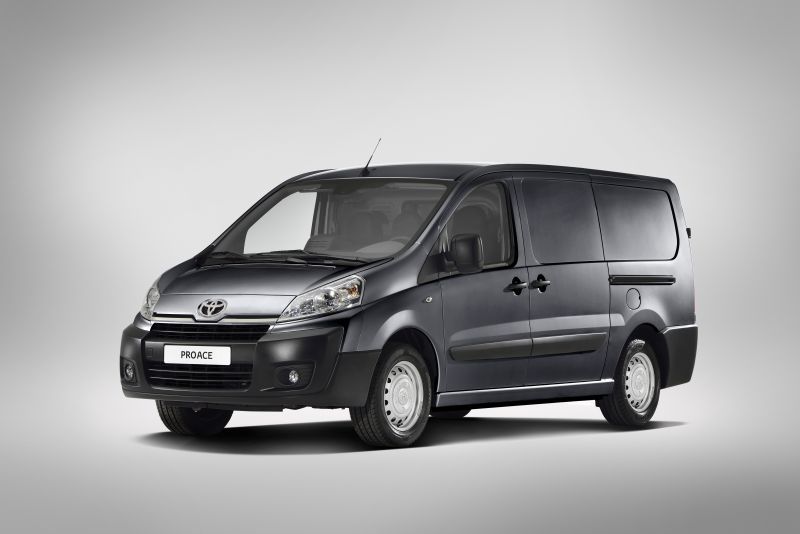
The Toyota Proace 1.6 D4-D (90 Hp) L1H1: A European Utility Player
The Toyota Proace, particularly the 1.6 D4-D (90 Hp) L1H1 variant from its first generation, represented Toyota’s strategic entry into the highly competitive European light commercial vehicle (LCV) and passenger minivan segment. Produced from 2013 to 2016, this model was a result of a collaboration with PSA Peugeot Citroën, sharing its platform with the Citroën Jumpy and Peugeot Expert. The Proace was designed to offer European businesses and families a robust, practical, and efficient transport solution, embodying Toyota’s renowned reliability within a versatile and functional package tailored for the continent’s diverse needs. The L1H1 designation specifically referred to its short wheelbase (Length 1) and standard roof height (Height 1) configuration, making it particularly agile and suitable for urban environments while still offering significant cargo or passenger capacity.
Powertrain and Performance Characteristics of the Toyota Proace
At the heart of the Toyota Proace 1.6 D4-D (90 Hp) L1H1 was its efficient 1.6-liter D4-D (Diesel 4-cylinder Direct injection) engine. This inline-four, front-transverse mounted diesel unit was engineered for economy and dependable performance, rather than outright speed. It delivered a modest 90 horsepower at 4000 rpm, which, while not groundbreaking, was perfectly adequate for the vehicle’s intended purpose of hauling goods or passengers. More crucial for a utility vehicle was its torque output, peaking at 132.76 lb.-ft. (180 Nm) at a low 1500 rpm. This low-end torque was essential for easy starts with heavy loads and for maintaining momentum in various driving conditions, from city traffic to highway cruising.
The engine featured a common rail fuel injection system, a turbocharger, and an intercooler, all contributing to its efficient combustion and responsiveness. These technologies were vital for meeting the Euro 5 emission standards prevalent during its production years, further enhanced by the inclusion of a particulate filter. Power was transmitted to the front wheels via a durable 5-speed manual transmission, a common and reliable choice for commercial vehicles of this era. While acceleration from 0 to 60 mph took approximately 15.7 seconds, and the top speed was limited to 90.1 mph, these figures were well within expectations for a vehicle prioritized for utility, fuel economy, and operational cost-effectiveness. The combined fuel economy for the 1.6 D4-D L1H1 was rated at an impressive 35.1 US mpg (6.7 l/100 km), underscoring its economical nature for businesses keeping a close eye on running costs.
Design, Utility, and Driver Amenities
The Toyota Proace 1.6 D4-D (90 Hp) L1H1 was designed as a practical and robust minivan, though its platform was highly adaptable for various commercial applications, including panel vans and combi versions for mixed passenger/cargo use. The L1H1 configuration, measuring 189.49 inches (4813 mm) in length, 74.61 inches (1895 mm) in width, and 77.95 inches (1980 mm) in height, offered a sensible balance between maneuverability and interior space. Its 118.11-inch (3000 mm) wheelbase contributed to a stable ride and a surprisingly tight turning circle of 40.03 feet (12.2 m), a significant advantage for navigating congested urban streets and tight loading docks.
Inside, the Proace provided seating for three occupants in its standard configuration, emphasizing functionality and durability. The cabin was designed with the working driver in mind, featuring straightforward controls and robust materials built to withstand the rigors of daily commercial use. Depending on the specific trim and market, features focused on practicality, such as ample storage compartments and resilient upholstery. Safety features included an Anti-lock Braking System (ABS) as standard, complemented by ventilated disc brakes at the front and disc brakes at the rear, ensuring reliable stopping power even under load. The electric power steering system offered light and precise control, reducing driver fatigue during long hours or in challenging urban conditions. The vehicle rode on 215/60 R16 tires mounted on 7J x 16-inch wheels, providing a comfortable ride and adequate grip.
Load capacity was a key selling point for the Proace. With a kerb weight ranging from 3827.22 to 4074.14 lbs (1736-1848 kg), it could accommodate a substantial maximum load of 2233.28 to 2480.2 lbs (1013-1125 kg), leading to a gross vehicle weight of 6307.43 lbs (2861 kg). Its towing capabilities were also respectable, allowing for a permitted trailer load with brakes of 3245.2 lbs (1472 kg) and without brakes of 1653.47 lbs (750 kg), further enhancing its utility for various business applications.
Technical Specifications of the Toyota Proace 1.6 D4-D (90 Hp) L1H1
| Category | Specification | Value |
|---|---|---|
| General Information | ||
| Brand | Toyota | |
| Model | Proace | |
| Generation | Proace | |
| Type (Engine) | 1.6 D4-D (90 Hp) L1H1 | |
| Start of Production | 2013 year | |
| End of Production | 2016 year | |
| Powertrain Architecture | Internal Combustion engine | |
| Body type | Minivan | |
| Seats | 3 | |
| Doors | 5 | |
| Performance Specifications | ||
| Fuel consumption (economy) – urban | 29.8 US mpg (7.9 l/100 km) | |
| Fuel consumption (economy) – extra urban | 37.9 US mpg (6.2 l/100 km) | |
| Fuel consumption (economy) – combined | 35.1 US mpg (6.7 l/100 km) | |
| CO2 emissions | 177 g/km | |
| Fuel Type | Diesel | |
| Acceleration 0 – 60 mph | 15.7 sec | |
| Maximum speed | 90.1 mph (145 km/h) | |
| Emission standard | Euro 5 | |
| Weight-to-power ratio | 19.3 kg/Hp (51.8 Hp/tonne) | |
| Weight-to-torque ratio | 9.6 kg/Nm (103.7 Nm/tonne) | |
| Engine Specifications | ||
| Power | 90 Hp @ 4000 rpm | |
| Power per liter | 57.7 Hp/l | |
| Torque | 132.76 lb.-ft. @ 1500 rpm (180 Nm) | |
| Engine layout | Front, Transverse | |
| Engine Model/Code | 3WZ-TV | |
| Engine displacement | 95.2 cu. in. (1560 cm3) | |
| Number of cylinders | 4 | |
| Engine configuration | Inline | |
| Cylinder Bore | 2.95 in. (75 mm) | |
| Piston Stroke | 3.48 in. (88.3 mm) | |
| Compression ratio | 16:1 | |
| Fuel injection system | Diesel Commonrail | |
| Engine aspiration | Turbocharger, Intercooler | |
| Valvetrain | OHC | |
| Engine oil capacity | 5.28 US qt (5 l) | |
| Engine systems | Particulate filter | |
| Space, Volume and Weights | ||
| Kerb Weight | 3827.22 – 4074.14 lbs (1736-1848 kg) | |
| Max. weight (Gross Vehicle Weight) | 6307.43 lbs (2861 kg) | |
| Max load | 2233.28 – 2480.2 lbs (1013-1125 kg) | |
| Fuel tank capacity | 21.13 US gal (80 l) | |
| Max. roof load | 374.79 lbs (170 kg) | |
| Permitted trailer load with brakes (12%) | 3245.2 lbs (1472 kg) | |
| Permitted trailer load without brakes | 1653.47 lbs (750 kg) | |
| Permitted towbar download | 132.28 lbs (60 kg) | |
| Dimensions | ||
| Length | 189.49 in. (4813 mm) | |
| Width | 74.61 in. (1895 mm) | |
| Height | 77.95 in. (1980 mm) | |
| Wheelbase | 118.11 in. (3000 mm) | |
| Front track | 61.81 in. (1570 mm) | |
| Rear (Back) track | 63.15 in. (1604 mm) | |
| Minimum turning circle (turning diameter) | 40.03 ft. (12.2 m) | |
| Drivetrain, Brakes and Suspension Specifications | ||
| Drivetrain Architecture | Internal combustion engine drives front wheels | |
| Drive wheel | Front wheel drive | |
| Number of gears and type of gearbox | 5 gears, manual transmission | |
| Front suspension | Double wishbone | |
| Rear suspension | Semi-independent, coil spring | |
| Front brakes | Ventilated discs | |
| Rear brakes | Disc | |
| Assisting systems | ABS (Anti-lock braking system) | |
| Steering type | Steering rack and pinion | |
| Power steering | Electric Steering | |
| Tires size | 215/60 R16 | |
| Wheel rims size | 7J x 16 | |
Market Position and Lasting Impact
The first-generation Toyota Proace, and specifically the 1.6 D4-D (90 Hp) L1H1, played a crucial role in expanding Toyota’s presence in the European commercial vehicle sector. Prior to its introduction, Toyota had a less prominent offering in the highly competitive van market, which was dominated by established players like the Volkswagen Transporter, Ford Transit Custom, Mercedes-Benz Vito, and Renault Trafic, as well as its platform siblings, the Peugeot Expert and Citroën Jumpy. The Proace allowed Toyota to leverage the proven engineering of its PSA partners, while infusing it with its own reputation for exceptional reliability and customer service.
Targeted primarily at small to medium-sized businesses, tradespeople, and delivery services, the Proace offered a compelling package of practicality, efficiency, and low running costs. Its compact L1H1 dimensions made it particularly appealing for urban operations where maneuverability and ease of parking were paramount, without sacrificing essential cargo volume. For families requiring more space than a typical passenger car, the minivan variants offered a flexible solution for transporting multiple passengers and their luggage.
The Proace’s legacy is defined by its ability to deliver a no-nonsense, dependable utility vehicle that adhered to strict European emissions standards (Euro 5) while remaining economical to operate. It successfully established Toyota as a credible contender in a segment where durability and efficiency are key to commercial success. This first generation laid the groundwork for subsequent Proace models, which continued to evolve the partnership with PSA and further solidify Toyota’s position in the European LCV market, proving that even a platform-shared vehicle could uphold the brand’s core values.