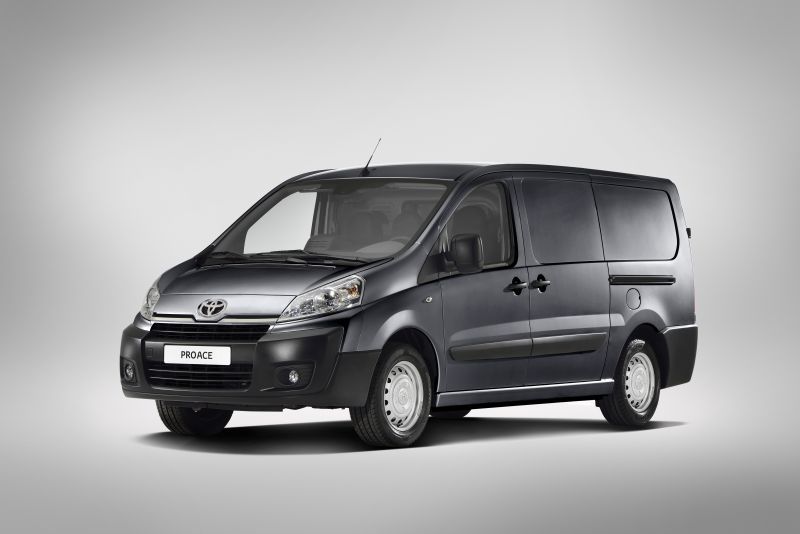
Introduction to the Toyota Proace 1.6 D4-D (90 Hp) L2H2
The Toyota Proace represents a significant entry for the Japanese automaker into the highly competitive European light commercial vehicle (LCV) market. The first generation of the Proace, produced from 2013 to 2016, was born out of a strategic partnership with PSA Peugeot Citroën, specifically a rebadged version of the Citroën Jumpy and Peugeot Expert vans. This collaboration allowed Toyota to offer a robust and versatile commercial van to its European clientele without the immense development costs of an entirely new platform. The focus of this article is on the Toyota Proace 1.6 D4-D (90 Hp) L2H2 variant, a practical and efficient option designed to cater to a wide array of business needs, from urban deliveries to light-duty cargo transport.
The Proace, particularly in its L2H2 configuration (Long wheelbase, High roof), was engineered to maximize cargo volume and utility, making it an ideal workhorse for tradespeople and delivery services across Europe. While never officially sold in the United States, its design principles and mechanical underpinnings reflect global trends in commercial vehicle development: a strong emphasis on fuel efficiency, reliability, and adaptable cargo solutions. The 1.6-liter D4-D diesel engine, a staple in many European commercial vehicles, provided a balance of adequate power and impressive fuel economy, crucial for operating costs in its target market.
Engine and Performance of the Toyota Proace 1.6 D4-D (90 Hp) L2H2
Under the hood, the Toyota Proace 1.6 D4-D (90 Hp) L2H2 was powered by a 1.6-liter (1560 cm3 or 95.2 cu. in.) inline four-cylinder diesel engine, designated with the model code 3WZ-TV. This powerplant featured a common rail fuel injection system, overhead camshaft (OHC) valvetrain, and was equipped with both a turbocharger and an intercooler. These technologies were crucial for extracting respectable power and torque from a relatively small displacement engine, while also adhering to the Euro 5 emission standards prevalent during its production years.
The engine produced a modest but functional 90 horsepower (Hp) at 3750 revolutions per minute (rpm), making it suitable for its primary role as a utility vehicle. More critically for a commercial van, it delivered a robust 132.76 lb.-ft. (180 Nm) of torque, available at a low 1500 rpm. This low-end torque was essential for pulling heavy loads from a standstill and maintaining momentum without excessive downshifting, especially in urban environments or on inclines. Power was sent to the front wheels via a durable five-speed manual transmission, a common and cost-effective choice for commercial applications.
Performance figures for the 1.6 D4-D Proace were pragmatic rather than exhilarating. It accelerated from 0 to 60 mph in an estimated 15.7 seconds, with a top speed of 90.1 mph (145 km/h). These numbers clearly indicate that the vehicle was not designed for speed but for consistent, reliable operation. Fuel efficiency was a key selling point, with a combined economy rating of 35.1 US miles per gallon (mpg), translating to 6.7 liters per 100 kilometers. Urban driving saw consumption at 29.8 US mpg (7.9 l/100 km), while extra-urban conditions improved to 37.9 US mpg (6.2 l/100 km). With CO2 emissions of 177 g/km, the Proace aimed to provide an economical solution for businesses conscious of both fuel costs and environmental impact. The engine also included a particulate filter, further enhancing its environmental credentials for the European market.
Design and Features
Body Type and Ergonomics
The Toyota Proace 1.6 D4-D (90 Hp) L2H2 was categorized as a minivan, though in the commercial context, it is more accurately described as a panel van. Its design prioritized functionality and cargo capacity. The L2H2 designation indicated a ‘Long’ wheelbase and a ‘High’ roof, providing a substantial internal volume for cargo. With an overall length of 202.48 inches (5143 mm), a width of 74.61 inches (1895 mm), and a height of 77.95 inches (1980 mm), the Proace offered ample space while remaining maneuverable enough for city driving. The wheelbase measured 122.91 inches (3122 mm), contributing to a stable ride and generous cargo area.
Access to the cargo area was facilitated by five doors, typically including sliding side doors and rear barn doors, making loading and unloading efficient from various angles. The cabin was designed to accommodate three occupants, with a focus on durability and driver comfort for long working hours. The interior, while utilitarian, was built to withstand the rigors of commercial use. The steering system was a rack and pinion type with electric power steering, ensuring ease of maneuverability, especially important in tight urban spaces, evidenced by its minimum turning circle of 41.34 feet (12.6 meters).
Payload and Towing Capabilities
A core strength of the Proace was its impressive load-carrying capacity. With a kerb weight ranging from 3869.11 to 4116.03 lbs (1755-1867 kg), the vehicle had a maximum permissible weight of 6349.31 lbs (2880 kg). This allowed for a substantial maximum payload of 2233.28 to 2480.2 lbs (1013-1125 kg), depending on the specific configuration. The roof load capacity was also generous at 374.79 lbs (170 kg), enabling the transport of longer items or additional equipment.
For businesses requiring towing capabilities, the Proace was well-equipped. It could tow a braked trailer weighing up to 3203.32 lbs (1453 kg) and an unbraked trailer of up to 1653.47 lbs (750 kg). A permitted towbar download of 176.37 lbs (80 kg) further underscored its utility.
Chassis and Safety
The Proace featured a robust chassis designed for commercial demands. The front suspension utilized a double wishbone setup, providing a good balance of ride comfort and load support, while the rear employed a semi-independent, coil spring arrangement, which is effective for carrying varying loads. Braking performance was handled by ventilated discs at the front and disc brakes at the rear, complemented by an Anti-lock Braking System (ABS) as standard, ensuring reliable stopping power under various conditions. The vehicle rode on 215/60 R16 tires mounted on 7J x 16-inch wheel rims, providing a stable footprint and adequate traction.
Technical Specifications: Toyota Proace 1.6 D4-D (90 Hp) L2H2
| Category | Specification | Value |
|---|---|---|
| General Information | Brand | Toyota |
| Model | Proace | |
| Generation | Proace (First Generation) | |
| Type (Engine) | 1.6 D4-D (90 Hp) L2H2 | |
| Production Start | 2013 year | |
| Production End | 2016 year | |
| Powertrain Architecture | Internal Combustion Engine | |
| Body Type | Minivan (Panel Van) | |
| Seats | 3 | |
| Doors | 5 | |
| Performance Specs | Fuel Economy – Urban | 29.8 US mpg (7.9 l/100 km) |
| Fuel Economy – Extra Urban | 37.9 US mpg (6.2 l/100 km) | |
| Fuel Economy – Combined | 35.1 US mpg (6.7 l/100 km) | |
| CO2 Emissions | 177 g/km | |
| Fuel Type | Diesel | |
| Acceleration 0-60 mph | 15.7 sec | |
| Maximum Speed | 90.1 mph (145 km/h) | |
| Emission Standard | Euro 5 | |
| Weight-to-Power Ratio | 19.5 kg/Hp (51.3 Hp/tonne) | |
| Weight-to-Torque Ratio | 9.8 kg/Nm (102.6 Nm/tonne) | |
| Engine Specs | Power | 90 Hp @ 3750 rpm |
| Power per Liter | 57.7 Hp/l | |
| Torque | 132.76 lb.-ft. (180 Nm) @ 1500 rpm | |
| Engine Layout | Front, Transverse | |
| Engine Model/Code | 3WZ-TV | |
| Engine Displacement | 1.6 Liters (1560 cm3 / 95.2 cu. in.) | |
| Number of Cylinders | 4 | |
| Engine Configuration | Inline | |
| Cylinder Bore | 2.95 in. (75 mm) | |
| Piston Stroke | 3.48 in. (88.3 mm) | |
| Compression Ratio | 16:1 | |
| Fuel Injection System | Diesel Commonrail | |
| Engine Aspiration | Turbocharger, Intercooler | |
| Valvetrain | OHC | |
| Engine Oil Capacity | 5.28 US qt (5 liters) | |
| Engine Systems | Particulate filter | |
| Space, Volume & Weights | Kerb Weight | 3869.11 – 4116.03 lbs (1755-1867 kg) |
| Max. Weight (GVWR) | 6349.31 lbs (2880 kg) | |
| Max. Load (Payload) | 2233.28 – 2480.2 lbs (1013-1125 kg) | |
| Fuel Tank Capacity | 21.13 US gal (80 liters) | |
| Max. Roof Load | 374.79 lbs (170 kg) | |
| Permitted Trailer Load with Brakes (12%) | 3203.32 lbs (1453 kg) | |
| Permitted Trailer Load without Brakes | 1653.47 lbs (750 kg) | |
| Permitted Towbar Download | 176.37 lbs (80 kg) | |
| Dimensions | Length | 202.48 in. (5143 mm) |
| Width | 74.61 in. (1895 mm) | |
| Height | 77.95 in. (1980 mm) | |
| Wheelbase | 122.91 in. (3122 mm) | |
| Front Track | 61.81 in. (1570 mm) | |
| Rear (Back) Track | 63.15 in. (1604 mm) | |
| Minimum Turning Circle | 41.34 ft. (12.6 m) | |
| Drivetrain, Brakes & Suspension | Drivetrain Architecture | Front-wheel drive (ICE drives front wheels) |
| Drive Wheel | Front-wheel drive | |
| Number of Gears & Type of Gearbox | 5 gears, Manual Transmission | |
| Front Suspension | Double wishbone | |
| Rear Suspension | Semi-independent, coil spring | |
| Front Brakes | Ventilated discs | |
| Rear Brakes | Disc | |
| Assisting Systems | ABS (Anti-lock Braking System) | |
| Steering Type | Steering rack and pinion | |
| Power Steering | Electric Steering | |
| Tire Size | 215/60 R16 | |
| Wheel Rims Size | 7J x 16 |
Legacy and Market Impact
The Toyota Proace, specifically the 2013-2016 generation including the 1.6 D4-D (90 Hp) L2H2, carved out a significant niche in the European light commercial vehicle market. Its existence was a direct result of the Sevel Nord joint venture, a collaboration initially between PSA Peugeot Citroën and Fiat, which later saw Toyota join the partnership. This strategic alliance allowed Toyota to quickly and efficiently enter the highly competitive LCV segment with a proven, reliable platform, saving substantial research and development costs. For Toyota, it meant offering a full range of commercial vehicles in Europe, complementing its smaller Hilux pickup and larger Hino trucks.
In its primary market, the Proace competed against a formidable array of rivals. These included the Ford Transit Custom, Volkswagen Transporter, Mercedes-Benz Vito, Renault Trafic, and its platform siblings, the Citroën Jumpy and Peugeot Expert. The Proace’s appeal stemmed from its combination of practical design, robust construction, and the perception of Toyota’s renowned reliability, even though the core engineering was from PSA. This ‘Toyota badge’ provided an extra layer of confidence for many European businesses.
The 1.6 D4-D (90 Hp) L2H2 variant was particularly important as it represented an economical entry point into the Proace range. Its efficient diesel engine and substantial cargo capacity made it an attractive option for small to medium-sized enterprises, delivery companies, and tradespeople who required a reliable, cost-effective vehicle for daily operations. The L2H2 configuration offered a compromise between maximum cargo volume and manageable dimensions for urban environments, making it versatile for various logistical challenges.
While not a groundbreaking vehicle in terms of innovation, the first-generation Proace was a commercially astute move for Toyota. It demonstrated the effectiveness of platform sharing in expanding a brand’s market presence and provided a solid foundation for future generations. The success of this initial Proace laid the groundwork for the subsequent, even more successful, second-generation model, which continued the partnership with PSA (and later Stellantis), solidifying Toyota’s position as a serious contender in the European commercial vehicle sector. Its legacy is one of pragmatic engineering, market adaptability, and a testament to the power of strategic alliances in the global automotive industry.