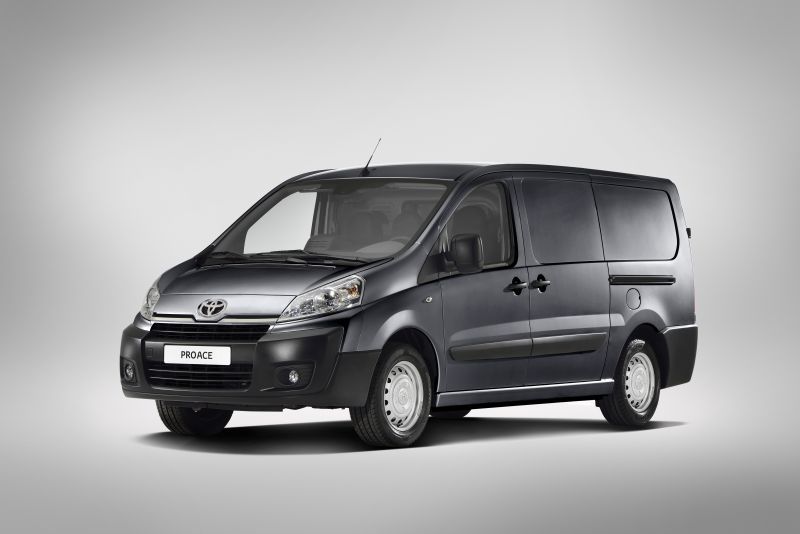
Toyota Proace City LWB 50 kWh (136 Hp) Electric: A Detailed Overview
The Toyota Proace City LWB 50 kWh (136 Hp) Electric represents a significant entry into the rapidly expanding electric light commercial vehicle (LCV) segment, particularly within the European market. Launched in April 2022, this long-wheelbase (LWB) variant is a battery-electric vehicle (BEV) designed to offer businesses a zero-emission solution for urban deliveries and various commercial applications. While not sold in the United States, the Proace City Electric plays a crucial role in Toyota’s global electrification strategy and its commitment to reducing fleet emissions in regions with stringent environmental regulations. It is part of a broader collaboration, sharing its fundamental platform and electric powertrain with a family of popular compact electric vans, making it a competitive and practical choice for its target demographic.
Engine and Performance of the Toyota Proace City LWB Electric
At the heart of the Toyota Proace City LWB 50 kWh (136 Hp) Electric is a robust and efficient electric powertrain. The vehicle is propelled by a single electric motor, code-named ZK01, strategically mounted on the front axle in a transverse orientation, driving the front wheels. This synchronous electric motor delivers a respectable 136 horsepower (Hp), providing ample power for urban and regional operations. More critically for a commercial vehicle, it produces a substantial 260 Newton-meters (Nm) of torque, equivalent to 191.77 pound-feet (lb.-ft.), available instantly from a standstill. This characteristic of electric motors—delivering maximum torque at zero RPM—is particularly advantageous for city driving, enabling brisk acceleration from traffic lights and effortless hauling of goods.
Powering the electric motor is a 50 kWh gross capacity lithium-ion (Li-Ion) battery pack, intelligently positioned beneath the floor of the vehicle. This placement not only optimizes the vehicle’s center of gravity for improved handling and stability but also ensures that the cargo area remains unimpeded, maximizing usable space. The battery technology contributes to a practical all-electric range (WLTP) of 278 kilometers, or approximately 172.74 miles, making it well-suited for daily delivery routes and service calls without range anxiety for most urban operators.
Performance figures reflect its utilitarian purpose rather than outright speed. The Proace City LWB Electric has a maximum speed of 135 km/h (83.89 mph), which is more than adequate for its intended operating environment. Energy consumption, according to WLTP standards, ranges from 19.9 to 20.4 kWh per 100 kilometers (32.03 to 32.83 kWh per 100 miles), translating to an impressive fuel economy equivalent of 105 to 103 MPGe. This efficiency underscores its cost-effectiveness for businesses, significantly reducing operational expenses compared to internal combustion engine (ICE) alternatives. The drivetrain architecture is straightforward and reliable, featuring a single-speed automatic transmission that simplifies driving and contributes to smooth power delivery.
Design and Features of the Proace City LWB
The Toyota Proace City LWB is fundamentally a utilitarian minivan, though in the European context, it functions predominantly as a compact light commercial van. Its design prioritizes practicality, durability, and cargo capacity. With five doors and seating for 2-3 occupants, the vehicle is configured to carry goods efficiently. The LWB designation is crucial, as it indicates an extended wheelbase, contributing to its impressive internal volume.
Dimensionally, the Proace City LWB Electric measures 4753 mm (187.13 inches) in length, 1848 mm (72.76 inches) in width (excluding mirrors), and has a height ranging from 1812-1860 mm (71.34-73.23 inches). Its substantial 2975 mm (117.13 inches) wheelbase is a key factor in its stable ride and generous cargo area. The turning circle of 11.5 meters (37.73 feet) is commendable for a vehicle of its size, aiding maneuverability in tight urban environments.
The true highlight for commercial users is its cargo capacity. The minimum trunk (boot) space stands at a cavernous 3900 liters (137.73 cubic feet), expanding to a maximum of 4300 liters (151.85 cubic feet) when configured for maximum load. This expansive volume, combined with a maximum payload of 648 kg (1428.6 lbs), makes it highly versatile for various business needs, from parcel delivery to artisan services. It also boasts a permitted trailer load with brakes of 750 kg (1653.47 lbs) and a maximum roof load of 150 kg (330.69 lbs), further enhancing its utility.
Underneath, the Proace City LWB features an independent McPherson-type front suspension and a robust torsion beam rear suspension, a common and effective setup for LCVs, balancing ride comfort with load-carrying capability. Braking is handled by ventilated discs at the front and disc brakes at the rear, complemented by an Anti-lock Braking System (ABS) for enhanced safety. Electric power steering with a rack and pinion system ensures light and responsive handling, reducing driver fatigue during long working hours. The vehicle rides on 215/65 R16 102H tires mounted on 6.5J x 16-inch wheel rims, providing a good balance of durability and ride quality.
Technical Specifications
| Category | Specification | Value |
|---|---|---|
| General Information | ||
| Brand | Toyota | |
| Model | Proace City | |
| Generation | Proace City LWB | |
| Type (Engine) | Electric | 50 kWh (136 Hp) |
| Start of Production | April, 2022 | |
| Powertrain Architecture | BEV (Electric Vehicle) | |
| Body Type | Minivan | |
| Seats | 2-3 | |
| Doors | 5 | |
| Performance Specifications | ||
| Fuel Type | Electricity | |
| Maximum Speed | 135 km/h (83.89 mph) | |
| Weight-to-Power Ratio | 13 kg/Hp (77.2 Hp/tonne) | |
| Weight-to-Torque Ratio | 6.8 kg/Nm (147.6 Nm/tonne) | |
| Electric Car & Hybrid Specifications | ||
| Gross Battery Capacity | 50 kWh | |
| Battery Technology | Lithium-ion (Li-Ion) | |
| Battery Location | Below the floor | |
| All-Electric Range (WLTP) | 278 km (172.74 mi) | |
| Average Energy Consumption (WLTP) | 19.9-20.4 kWh/100 km (32.03-32.83 kWh/100 mi, 105-103 MPGe) | |
| Electric Motor Power | 136 Hp | |
| Electric Motor Torque | 260 Nm (191.77 lb.-ft.) | |
| Electric Motor Model/Code | ZK01 | |
| Electric Motor Location | Front axle, Transverse | |
| Electric Motor Type | Synchronous | |
| System Power | 136 Hp | |
| System Torque | 260 Nm (191.77 lb.-ft.) | |
| Space, Volume, and Weights | ||
| Kerb Weight | 1762 kg (3884.55 lbs) | |
| Max. Weight | 2410 kg (5313.14 lbs) | |
| Max Load | 648 kg (1428.6 lbs) | |
| Trunk (Boot) Space – Minimum | 3900 l (137.73 cu. ft.) | |
| Trunk (Boot) Space – Maximum | 4300 l (151.85 cu. ft.) | |
| Max. Roof Load | 150 kg (330.69 lbs) | |
| Permitted Trailer Load with Brakes (12%) | 750 kg (1653.47 lbs) | |
| Permitted Towbar Download | 50 kg (110.23 lbs) | |
| Dimensions | ||
| Length | 4753 mm (187.13 in.) | |
| Width | 1848 mm (72.76 in.) | |
| Width with Mirrors Folded | 1921 mm (75.63 in.) | |
| Width Including Mirrors | 2107 mm (82.95 in.) | |
| Height | 1812-1860 mm (71.34-73.23 in.) | |
| Wheelbase | 2975 mm (117.13 in.) | |
| Front Track | 1553 mm (61.14 in.) | |
| Rear (Back) Track | 1549-1568 mm (60.98-61.73 in.) | |
| Front Overhang | 892 mm (35.12 in.) | |
| Rear Overhang | 886 mm (34.88 in.) | |
| Ride Height (Ground Clearance) | 160-175 mm (6.3-6.89 in.) | |
| Minimum Turning Circle (Turning Diameter) | 11.5 m (37.73 ft.) | |
| Drivetrain, Brakes, and Suspension | ||
| Drivetrain Architecture | One electric motor drives the front wheels. | |
| Drive Wheel | Front-wheel drive | |
| Number of Gears and Type of Gearbox | 1 gear, automatic transmission | |
| Front Suspension | Independent type McPherson | |
| Rear Suspension | Torsion | |
| Front Brakes | Ventilated discs | |
| Rear Brakes | Disc | |
| Assisting Systems | ABS (Anti-lock braking system) | |
| Steering Type | Steering rack and pinion | |
| Power Steering | Electric Steering | |
| Tires Size | 215/65 R16 102H | |
| Wheel Rims Size | 6.5J x 16 | |
Legacy and Market Impact of the Toyota Proace City LWB Electric
The Toyota Proace City LWB 50 kWh (136 Hp) Electric has carved out a significant niche in the European light commercial vehicle market, particularly as urban areas increasingly adopt low-emission zones and businesses seek sustainable logistics solutions. Its introduction as a BEV variant aligns perfectly with the growing demand for electric vans for last-mile delivery, municipal services, and various trade professions.
Toyota’s strategy in this segment is notable for its collaborative approach. The Proace City Electric is a product of a successful partnership with Stellantis (formerly PSA Group), sharing its underlying platform and electric powertrain components with popular models such as the Peugeot e-Partner, Citroën ë-Berlingo Van, and Opel/Vauxhall Combo-e. This badge-engineering strategy allows Toyota to quickly and efficiently offer a competitive electric LCV without the need for extensive independent development, leveraging proven technology and widespread parts availability across Europe.
In terms of market impact, the Proace City LWB Electric competes directly with these Stellantis siblings, as well as other electric vans like the Renault Kangoo E-Tech Electric and the Mercedes-Benz eCitan. Its reputation is built on Toyota’s well-regarded brand image for reliability and durability, combined with the inherent benefits of an electric powertrain: lower running costs due to cheaper electricity compared to diesel, reduced maintenance thanks to fewer moving parts, and zero tailpipe emissions. These factors make it an attractive proposition for fleets aiming to meet corporate sustainability goals and comply with tightening environmental regulations.
The vehicle’s generous cargo volume, long-wheelbase configuration, and practical range contribute to its appeal for businesses that require substantial carrying capacity without sacrificing maneuverability or efficiency. Its quiet operation is an added benefit for drivers and urban residents alike, particularly during early morning or late-night deliveries. By offering a robust, efficient, and environmentally friendly commercial vehicle, the Toyota Proace City LWB Electric reinforces Toyota’s presence in the European LCV sector and plays a vital role in the ongoing transition towards electrified transportation. Its legacy will be defined by its contribution to cleaner urban logistics and its embodiment of practical, accessible electric commercial mobility.