The Toyota Proace City SWB 1.2 Turbo (110 Hp): A Versatile Compact Van for European Markets
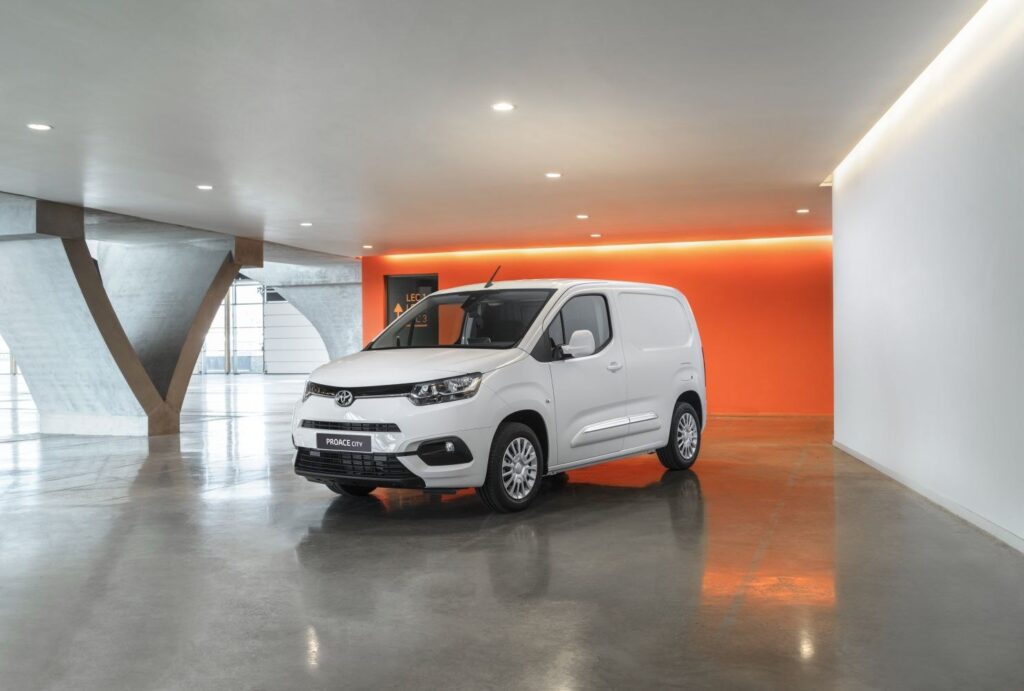
The Toyota Proace City SWB 1.2 Turbo (110 Hp) represents Toyota’s strategic entry into the highly competitive compact light commercial vehicle (LCV) and multi-purpose vehicle (MPV) segment, primarily targeting European and select Asian markets. Launched in April 2020, this vehicle is a testament to modern automotive collaboration, being part of a platform-sharing agreement with what is now Stellantis (formerly PSA Group). As such, it shares its underpinnings with popular models like the Citroën Berlingo, Peugeot Rifter/Partner, and Opel/Vauxhall Combo Life. This specific variant, the Short Wheelbase (SWB) with a 1.2-liter turbocharged gasoline engine producing 110 horsepower, is designed to offer a compelling blend of practicality, efficiency, and maneuverability for urban and suburban environments. While not offered in the United States, the Proace City fulfills a crucial role for Toyota in diversifying its commercial vehicle lineup and appealing to businesses and families seeking a compact, high-capacity solution.
Engineering and Performance of the Toyota Proace City SWB
Under the hood, the Toyota Proace City SWB 1.2 Turbo (110 Hp) features a modern and efficient powertrain designed for economy and respectable performance. The heart of this variant is a 1.2-liter (1199 cm3 or 73.17 cu. in.) inline three-cylinder gasoline engine, designated as the HN05 model. This compact powerplant benefits from a turbocharger and intercooler, enhancing its output and ensuring a broad torque band, which is crucial for a vehicle often tasked with carrying significant loads.
The engine delivers a peak power of 110 horsepower (HP) at 5500 revolutions per minute (rpm), translating to a power-per-liter ratio of 91.7 HP/liter. More critically for a utility vehicle, it produces a robust 151.2 lb-ft (205 Nm) of torque, available from a low 1750 rpm. This early availability of torque ensures responsive acceleration and confident pulling power, even when the vehicle is laden. Power is sent to the front wheels through a precise 6-speed manual transmission, offering drivers direct control and contributing to the vehicle’s overall efficiency. The drivetrain architecture is straightforward: the internal combustion engine is mounted transversely at the front, driving the front wheels.
In terms of fuel economy, the Proace City SWB 1.2 Turbo (110 Hp) is commendably efficient for its class. According to NEDC (New European Driving Cycle) figures, it achieves 37.9 – 37.3 US mpg in urban conditions, 49 – 47 US mpg on the extra-urban cycle, and a combined average of 44.4 – 42.8 US mpg. These figures underscore its design philosophy of balancing utility with economical operation. With CO2 emissions ranging from 121-125 g/km, it meets the stringent Euro 6d-ISC-FCM emission standard, reflecting its commitment to environmental responsibility. The inclusion of a Start & Stop System and a particulate filter further aids in reducing fuel consumption and emissions, especially in stop-and-go city traffic.
Design, Features, and Practicality
The Toyota Proace City SWB adopts a practical and functional minivan body type, optimized for maximum interior space and ease of use. With four doors, including typically large sliding rear doors (common for this segment), and seating for 2-3 occupants in its commercial configuration, it prioritizes cargo capacity and accessibility. Its exterior dimensions are compact yet capable: a length of 173.35 inches (4403 mm), a width of 72.76 inches (1848 mm) without mirrors (82.95 inches or 2107 mm including mirrors), and a height ranging from 70.71 to 73.23 inches (1796-1860 mm). A wheelbase of 109.65 inches (2785 mm) contributes to a stable ride while maintaining a tight turning circle of 35.43 feet (10.8 m), making it highly maneuverable in urban settings.
Inside, the Proace City SWB excels in versatility. It offers a substantial minimum trunk space of 116.54 cubic feet (3300 liters), expanding to an impressive 134.2 cubic feet (3800 liters) with the rear seats folded or removed, depending on configuration. This vast cargo volume is a key selling point for businesses requiring ample hauling capability. The maximum payload ranges from 1576.31 to 1655.67 pounds (715-751 kg), and it boasts a respectable towing capacity of 2645.55 pounds (1200 kg) with brakes, further enhancing its utility.
The vehicle’s suspension system features an independent McPherson strut setup at the front and a robust torsion beam at the rear, a common and effective choice for balancing ride comfort with load-carrying capability. Braking is handled by ventilated discs at the front and disc brakes at the rear, complemented by an Anti-lock Braking System (ABS) for enhanced safety. Electric power steering provides light and precise control, reducing driver fatigue. Various tire and wheel options, including 195/65 R15, 215/65 R16, and 205/60 R16, ensure appropriate grip and load ratings for diverse applications.
Technical Specifications
| Category | Specification |
|---|---|
| Brand | Toyota |
| Model | Proace City |
| Generation | Proace City SWB |
| Type (Engine) | 1.2 Turbo (110 Hp) |
| Start of Production | April, 2020 |
| Powertrain Architecture | Internal Combustion engine |
| Body Type | Minivan |
| Seats | 2-3 |
| Doors | 4 |
| Performance Specs | |
| Fuel Consumption (Urban, NEDC) | 37.9 – 37.3 US mpg (6.2-6.3 l/100 km) |
| Fuel Consumption (Extra Urban, NEDC) | 49 – 47 US mpg (4.8-5.0 l/100 km) |
| Fuel Consumption (Combined, NEDC) | 44.4 – 42.8 US mpg (5.3-5.5 l/100 km) |
| CO2 Emissions (NEDC) | 121-125 g/km |
| Fuel Type | Petrol (Gasoline) |
| Emission Standard | Euro 6d-ISC-FCM |
| Weight-to-Power Ratio | 11 kg/Hp, 91 Hp/tonne |
| Weight-to-Torque Ratio | 5.9 kg/Nm, 169.6 Nm/tonne |
| Engine Specs | |
| Power | 110 Hp @ 5500 rpm |
| Power per Liter | 91.7 Hp/l |
| Torque | 151.2 lb-ft (205 Nm) @ 1750 rpm |
| Engine Layout | Front, Transverse |
| Engine Model/Code | HN05 |
| Engine Displacement | 1.2 liters (1199 cm3 / 73.17 cu. in.) |
| Number of Cylinders | 3 |
| Engine Configuration | Inline |
| Number of Valves per Cylinder | 4 |
| Fuel Injection System | Direct injection |
| Engine Aspiration | Turbocharger, Intercooler |
| Valvetrain | OHC |
| Engine Oil Capacity | 3.7 US qt (3.5 l) |
| Engine Systems | Start & Stop System, Particulate filter |
| Space, Volume and Weights | |
| Curb Weight | 2665.39 – 2744.76 lbs (1209-1245 kg) |
| Max. Weight (Gross Vehicle Weight) | 4321.06 lbs (1960 kg) |
| Max Load (Payload) | 1576.31 – 1655.67 lbs (715-751 kg) |
| Trunk Space (Minimum) | 116.54 cu. ft. (3300 l) |
| Trunk Space (Maximum) | 134.2 cu. ft. (3800 l) |
| Max. Roof Load | 330.69 lbs (150 kg) |
| Permitted Trailer Load with Brakes (12%) | 2645.55 lbs (1200 kg) |
| Permitted Trailer Load without Brakes | 1521.19 lbs (690 kg) |
| Permitted Towbar Download | 163.14 lbs (74 kg) |
| Dimensions | |
| Length | 173.35 in (4403 mm) |
| Width | 72.76 in (1848 mm) |
| Width with Mirrors Folded | 75.63 in (1921 mm) |
| Width Including Mirrors | 82.95 in (2107 mm) |
| Height | 70.71 – 73.23 in (1796-1860 mm) |
| Wheelbase | 109.65 in (2785 mm) |
| Front Track | 60.94 – 61.54 in (1548-1563 mm) |
| Rear Track | 61.73 – 62.09 in (1568-1577 mm) |
| Front Overhang | 35.12 in (892 mm) |
| Rear Overhang | 28.58 in (726 mm) |
| Ride Height (Ground Clearance) | 5.71 – 7.17 in (145-182 mm) |
| Minimum Turning Circle (Turning Diameter) | 35.43 ft (10.8 m) |
| Drivetrain, Brakes and Suspension Specs | |
| Drivetrain Architecture | Front wheel drive, Internal Combustion engine |
| Drive Wheel | Front wheel drive |
| Number of Gears and Type of Gearbox | 6 gears, manual transmission |
| Front Suspension | Independent type McPherson |
| Rear Suspension | Torsion |
| Front Brakes | Ventilated discs |
| Rear Brakes | Disc |
| Assisting Systems | ABS (Anti-lock braking system) |
| Steering Type | Steering rack and pinion |
| Power Steering | Electric Steering |
| Tires Size | 195/65 R15 91H; 215/65 R16 98H; 205/60 R16 96H |
| Wheel Rims Size | 6.5J x 15; 6.5J x 16 |
Legacy and Market Impact
The Toyota Proace City, including the SWB 1.2 Turbo (110 Hp) variant, holds significant importance for Toyota’s global strategy, particularly in regions where compact commercial and passenger vans are highly popular. Its existence is a direct result of a strategic alliance between Toyota Motor Corporation and what was then PSA Group (now Stellantis), mirroring Toyota’s larger Proace van which is based on the Peugeot Expert/Citroën Jumpy platform. This partnership allowed Toyota to quickly and efficiently enter a segment without the immense investment of developing an entirely new platform, leveraging the proven engineering and market acceptance of its French counterparts.
In Europe, the Toyota Proace City SWB competes in a fiercely contested segment against rivals such as the Renault Kangoo, Volkswagen Caddy, Ford Transit Connect, and its platform siblings. Its reputation benefits from Toyota’s renowned reliability and extensive dealer network, combined with the practical design and efficient powertrains developed by Stellantis. For customers, the Proace City offers a compelling value proposition, providing robust utility, modern safety features (including ABS as standard), and economical running costs.
The vehicle’s impact lies in strengthening Toyota’s presence in the light commercial vehicle sector, offering a full range from compact vans to larger panel vans, and extending its appeal to small businesses, delivery services, and even families seeking a highly flexible and spacious vehicle. While the Proace City may not have the same brand recognition as Toyota’s passenger car lineup, its strategic importance in expanding market share and offering tailored solutions for diverse regional needs cannot be overstated. It underscores a trend in the automotive industry where strategic alliances allow manufacturers to optimize resources and offer competitive products across various segments and geographies, even in markets where specific models are not directly sold under the brand’s original nameplate.