Toyota Proace City SWB 1.5 D-4D (130 Hp): A Comprehensive Overview
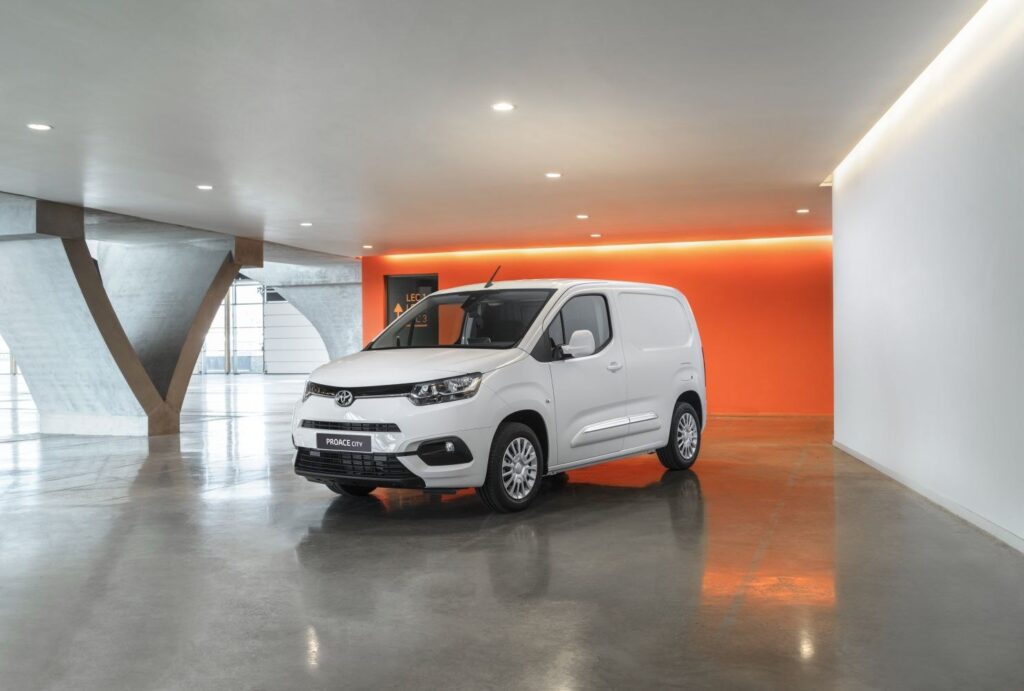
The Toyota Proace City SWB 1.5 D-4D (130 Hp) represents a compelling entry in the compact light commercial vehicle (LCV) and passenger minivan segment, primarily targeting the European and other international markets. Introduced in April 2020, this vehicle is part of Toyota’s strategy to offer a full range of commercial vehicles, leveraging strategic partnerships to efficiently expand its portfolio. The Proace City, specifically the Short Wheelbase (SWB) variant with the potent 1.5-liter D-4D diesel engine producing 130 horsepower, is designed to deliver a blend of efficiency, versatility, and practicality for urban businesses and families alike. While models of this type, particularly diesel-powered compact vans, are not typically sold in the United States market due to differing consumer preferences and regulatory landscapes, the Proace City plays a crucial role in its primary markets by offering a robust and economical solution for diverse transport needs.
Engine and Performance of the Toyota Proace City SWB
At the heart of the Toyota Proace City SWB 1.5 D-4D (130 Hp) lies a modern and highly efficient 1.5-liter (1499 cm3 or 91.47 cu. in.) inline four-cylinder diesel engine, designated with the internal code YH01. This powertrain architecture features a front, transverse layout, driving the front wheels, which is a common and efficient setup for vehicles in this class. The engine utilizes a sophisticated Diesel Commonrail fuel injection system and benefits from a turbocharger with an intercooler, ensuring strong performance across the rev range. With 130 horsepower delivered at 3750 rpm, the engine offers a commendable power-to-liter ratio of 86.7 Hp/l, indicating its advanced engineering.
Perhaps more critical for a vehicle often tasked with hauling goods or passengers, the engine produces a substantial 300 Nm (221.27 lb.-ft.) of torque at a remarkably low 1750 rpm. This broad torque band is essential for effortless acceleration, strong pulling power, and efficient operation, especially under load, making it well-suited for urban delivery cycles and highway cruising. The power is managed by a precise 6-speed manual transmission, offering drivers direct control and contributing to the vehicle’s overall fuel efficiency. The powertrain adheres to the stringent Euro 6d-ISC-FCM emission standard, reflecting its commitment to environmental performance, further aided by a Start & Stop System and a Particulate filter.
Fuel economy figures are impressive for its class, with a combined (NEDC) consumption ranging from 4.4 to 4.6 liters per 100 km (53.5 to 51.1 US mpg). Urban driving sees consumption around 5.1 l/100 km (46.1 US mpg), while extra-urban cycles can achieve 4.0 to 4.3 l/100 km (58.8 to 54.7 US mpg). These figures highlight the diesel engine’s inherent efficiency, especially for long-distance driving or frequent stop-and-go operations where diesel engines often outperform their gasoline counterparts. The vehicle’s CO2 emissions are also low, ranging from 117-121 g/km, underscoring its eco-conscious design.
Design and Features: The Toyota Proace City SWB
The Toyota Proace City SWB is configured as a practical minivan, designed with functionality and versatility at its core. It features a 4-door body type, facilitating easy access to both the passenger cabin and the cargo area. The seating arrangement typically accommodates 2 to 3 individuals, catering to either a dedicated cargo setup with a single passenger or a small work crew. Its Short Wheelbase (SWB) designation implies a more compact footprint, making it agile and easy to maneuver in congested urban environments, a significant advantage for delivery services or navigating tight city streets.
In terms of dimensions, the Proace City SWB measures 4403 mm (173.35 inches) in length, 1848 mm (72.76 inches) in width (2107 mm or 82.95 inches including mirrors), and stands between 1796-1860 mm (70.71-73.23 inches) tall. The wheelbase is a substantial 2785 mm (109.65 inches), contributing to a stable ride despite its compact overall length. With a minimum turning circle of 10.8 meters (35.43 feet), it demonstrates excellent maneuverability. The ground clearance ranges from 145-182 mm (5.71-7.17 inches), offering decent clearance for various road conditions.
Practicality extends to its cargo capabilities. The Proace City SWB boasts an impressive minimum trunk (boot) space of 3300 liters (116.54 cu. ft.), which can expand to a maximum of 3800 liters (134.2 cu. ft.) with reconfigurable seating or folding passenger seats. This generous volume makes it highly suitable for transporting a wide array of goods. The vehicle has a kerb weight of 1287 kg (2837.35 lbs.) and a maximum permissible weight of 2020 kg (4453.34 lbs.), allowing for a substantial maximum payload of 733 kg (1615.99 lbs.). Furthermore, it is capable of towing up to 1200 kg (2645.55 lbs.) with brakes and 710 kg (1565.28 lbs.) without, adding to its utility.
The suspension system is engineered for a balance of comfort and load-carrying capability, featuring an independent McPherson type at the front and a robust torsion beam at the rear. Braking is handled by ventilated discs at the front and disc brakes at the rear, complemented by an Anti-lock Braking System (ABS) for enhanced safety. The steering system is a rack and pinion type with electric power steering, providing ease of control and responsiveness. Standard tire sizes include 215/65 R16 98H or 205/60 R16 96H, mounted on 6.5J x 16 wheel rims.
Technical Specifications
| Category | Specification | US Equivalent / Notes |
|---|---|---|
| General Information | ||
| Brand | Toyota | |
| Model | Proace City | |
| Generation | Proace City SWB | |
| Type (Engine) | 1.5 D-4D (130 Hp) | |
| Start of Production | April, 2020 | |
| Powertrain Architecture | Internal Combustion engine | |
| Body type | Minivan | |
| Seats | 2-3 | |
| Doors | 4 | |
| Performance Specs | ||
| Fuel Consumption (Urban, NEDC) | 5.1 l/100 km | 46.1 US mpg |
| Fuel Consumption (Extra Urban, NEDC) | 4-4.3 l/100 km | 58.8 – 54.7 US mpg |
| Fuel Consumption (Combined, NEDC) | 4.4-4.6 l/100 km | 53.5 – 51.1 US mpg |
| CO2 Emissions (NEDC) | 117-121 g/km | |
| Fuel Type | Diesel | |
| Emission Standard | Euro 6d-ISC-FCM | |
| Weight-to-Power Ratio | 9.9 kg/Hp | 101 Hp/tonne |
| Weight-to-Torque Ratio | 4.3 kg/Nm | 233.1 Nm/tonne |
| Engine Specs | ||
| Power | 130 Hp @ 3750 rpm | |
| Power per liter | 86.7 Hp/l | |
| Torque | 300 Nm @ 1750 rpm | 221.27 lb.-ft. @ 1750 rpm |
| Engine Layout | Front, Transverse | |
| Engine Model/Code | YH01 | |
| Engine Displacement | 1499 cm3 | 1.5 liters / 91.47 cu. in. |
| Number of Cylinders | 4 | |
| Engine Configuration | Inline | |
| Number of Valves per Cylinder | 4 | |
| Fuel Injection System | Diesel Commonrail | |
| Engine Aspiration | Turbocharger, Intercooler | |
| Valvetrain | OHC | |
| Engine Oil Capacity | 4 l | 4.23 US qt |
| Engine Systems | Start & Stop System, Particulate filter | |
| Space, Volume and Weights | ||
| Kerb Weight | 1287 kg | 2837.35 lbs. |
| Max. Weight | 2020 kg | 4453.34 lbs. |
| Max Load | 733 kg | 1615.99 lbs. |
| Trunk (boot) Space – Minimum | 3300 l | 116.54 cu. ft. |
| Trunk (boot) Space – Maximum | 3800 l | 134.2 cu. ft. |
| Fuel Tank Capacity | 50 l | 13.21 US gal |
| AdBlue Tank | 17 l | 4.49 US gal |
| Max. Roof Load | 150 kg | 330.69 lbs. |
| Permitted Trailer Load with Brakes (12%) | 1200 kg | 2645.55 lbs. |
| Permitted Trailer Load without Brakes | 710 kg | 1565.28 lbs. |
| Permitted Towbar Download | 74 kg | 163.14 lbs. |
| Dimensions | ||
| Length | 4403 mm | 173.35 in. |
| Width | 1848 mm | 72.76 in. |
| Width with Mirrors Folded | 1921 mm | 75.63 in. |
| Width Including Mirrors | 2107 mm | 82.95 in. |
| Height | 1796-1860 mm | 70.71 – 73.23 in. |
| Wheelbase | 2785 mm | 109.65 in. |
| Front Track | 1548-1563 mm | 60.94 – 61.54 in. |
| Rear (Back) Track | 1568-1577 mm | 61.73 – 62.09 in. |
| Front Overhang | 892 mm | 35.12 in. |
| Rear Overhang | 726 mm | 28.58 in. |
| Ride Height (Ground Clearance) | 145-182 mm | 5.71 – 7.17 in. |
| Minimum Turning Circle (Turning Diameter) | 10.8 m | 35.43 ft. |
| Drivetrain, Brakes and Suspension Specs | ||
| Drivetrain Architecture | The Internal combustion engine (ICE) drives the front wheels of the vehicle. | Front-wheel drive |
| Drive Wheel | Front wheel drive | |
| Number of Gears and Type of Gearbox | 6 gears, manual transmission | |
| Front Suspension | Independent type McPherson | |
| Rear Suspension | Torsion | |
| Front Brakes | Ventilated discs | |
| Rear Brakes | Disc | |
| Assisting Systems | ABS (Anti-lock braking system) | |
| Steering Type | Steering rack and pinion | |
| Power Steering | Electric Steering | |
| Tires Size | 215/65 R16 98H; 205/60 R16 96H | |
| Wheel Rims Size | 6.5J x 16 |
Legacy and Market Impact
The Toyota Proace City SWB 1.5 D-4D (130 Hp) has carved out a significant niche in the highly competitive European and international compact van market. As part of a joint venture with Stellantis (formerly PSA Group), the Proace City shares its platform and many components with popular models such as the Citroën Berlingo, Peugeot Partner/Rifter, Opel Combo, and Fiat Doblò. This collaboration allows Toyota to offer a cost-effective, proven, and reliable product in a segment where economies of scale are crucial.
Its reputation is built on Toyota’s renowned reliability combined with the robust engineering of its platform partners. For small businesses, delivery services, and tradespeople, the Proace City SWB offers an attractive package: an efficient diesel engine with strong torque for hauling, a highly versatile cargo area, and compact dimensions ideal for urban operations. Its impressive fuel economy and adherence to strict Euro 6d emissions standards make it an environmentally responsible choice, helping businesses manage operational costs and meet regulatory requirements.
Competitors in its primary markets include its platform siblings, as well as rivals like the Renault Kangoo, Ford Transit Connect (though not sold in the US with this exact configuration), and Volkswagen Caddy. The Proace City stands out with its competitive pricing, extensive dealer network, and the peace of mind associated with the Toyota brand. Its ability to serve as both a dedicated commercial vehicle and a practical passenger minivan (depending on trim and configuration) further broadens its appeal. For families requiring a versatile vehicle that can handle large cargo, school runs, or weekend adventures, the passenger variants offer a compelling alternative to larger, less fuel-efficient SUVs.
Historically, compact vans and minivans have been indispensable tools for European commerce and family transport. The Proace City continues this legacy, adapting to modern demands for efficiency, connectivity, and safety. Its mechanical impact is rooted in providing accessible, durable, and economical transportation solutions, contributing to the backbone of local economies. While its presence is minimal to non-existent in the North American market, its role in supporting diverse mobility needs across Europe and beyond solidifies the Toyota Proace City SWB 1.5 D-4D (130 Hp) as a significant and impactful vehicle in its segment.