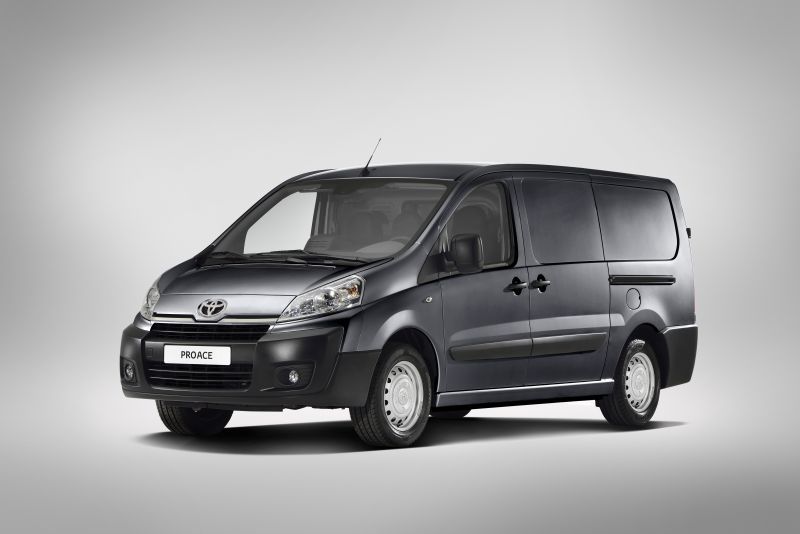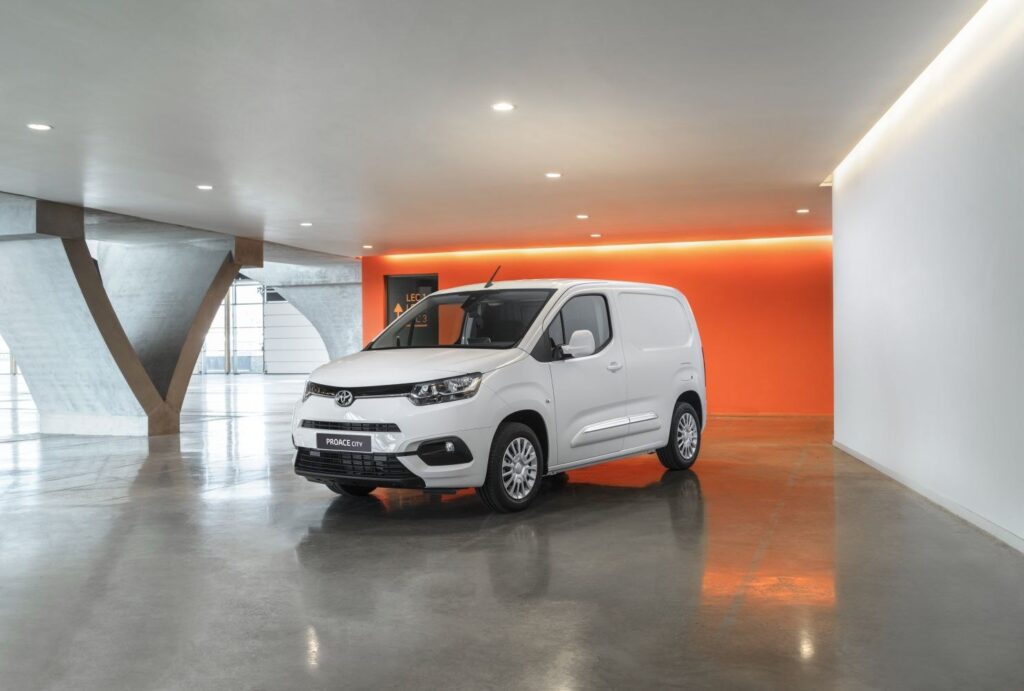
The Toyota Proace City SWB 1.5 D-4D (130 Hp) Automatic: A European Utility Powerhouse
The Toyota Proace City SWB 1.5 D-4D (130 Hp) Automatic represents Toyota’s strategic entry and strong presence in the highly competitive compact light commercial vehicle (LCV) segment within the European market. Launched in April 2020, this specific short-wheelbase (SWB) variant, equipped with a potent 1.5-liter D-4D turbodiesel engine and an advanced 8-speed automatic transmission, is a testament to modern efficiency and practicality. While not offered in the North American market, the Proace City is a crucial player in its primary European and Asian markets, serving as a versatile workhorse for small businesses, delivery fleets, and individuals requiring substantial cargo capacity in a compact footprint. This model is a result of a collaborative venture, leveraging a proven platform to deliver Toyota’s renowned reliability and service network to the LCV sector.
Engine and Performance: The Heart of the Toyota Proace City SWB 1.5 D-4D (130 Hp) Automatic
Underpinning the robust capabilities of the Proace City SWB is its highly efficient 1.5-liter (1499 cm³ or 91.47 cu. in.) D-4D inline-four turbodiesel engine, identified by the engine code YH01. This powerplant is engineered to deliver a compelling blend of power, torque, and fuel economy, essential attributes for any commercial vehicle. It produces a healthy 130 horsepower (HP) at 3750 revolutions per minute (rpm), providing ample thrust for urban deliveries and highway cruising alike. More critically for its utility role, the engine generates a substantial 300 Newton-meters (Nm), or 221.27 pound-feet (lb.-ft.), of torque available from a low 1750 rpm. This low-end torque is vital for hauling heavy loads, navigating stop-and-go city traffic, and ensuring responsive acceleration even when fully laden.
The engine utilizes a sophisticated Diesel Commonrail fuel injection system, paired with a turbocharger and intercooler, to optimize combustion and maximize efficiency. With four valves per cylinder and an OHC (Overhead Camshaft) valvetrain, the engine is designed for smooth operation and durability. Power is seamlessly delivered to the front wheels via an advanced 8-speed automatic transmission, which contributes significantly to driver comfort, especially during long working hours or in congested environments, while also aiding in fuel efficiency by keeping the engine in its optimal operating range. The vehicle’s powertrain architecture is front-transverse, driving the front wheels, a common and effective setup for compact vans prioritizing interior space and traction.
Fuel economy figures for the Toyota Proace City SWB 1.5 D-4D (130 Hp) Automatic are impressive, reflecting its modern diesel technology and the efficient transmission. According to NEDC standards, combined fuel consumption ranges from 4.4-4.6 liters per 100 kilometers, translating to an excellent 53.5 – 51.1 US miles per gallon. Urban consumption is rated at 4.7-4.8 l/100 km (50 – 49 US mpg), and extra-urban at 4.3-4.4 l/100 km (54.7 – 53.5 US mpg). These figures underscore its cost-effectiveness for businesses. Furthermore, with CO2 emissions between 117-121 g/km and compliance with the stringent Euro 6d-ISC-FCM emission standard, the Proace City demonstrates a strong commitment to environmental responsibility, an increasingly important factor in European urban centers.
Design and Features: Practicality Meets Modernity
The Toyota Proace City SWB, designated as a minivan in its general classification, leans heavily into its utility vehicle roots. With a robust body type featuring four doors and a flexible 2-3 seat configuration, it is primarily designed as a compact cargo van, often referred to as a panel van or a crew van, with the capacity to serve as a basic passenger mover. Its short-wheelbase designation indicates a focus on maneuverability in tight urban spaces, making it ideal for city deliveries and tradespeople.
Measuring 173.35 inches (4403 mm) in length, 72.76 inches (1848 mm) in width (82.95 inches or 2107 mm including mirrors), and standing between 70.71 to 73.23 inches (1796-1860 mm) tall, the Proace City SWB strikes a balance between compact exterior dimensions and maximized interior volume. The wheelbase of 109.65 inches (2785 mm) contributes to a stable ride while maintaining a tight minimum turning circle of 35.43 feet (10.8 m), a crucial asset for navigating congested city streets and parking lots. Ground clearance ranges from 5.71 to 7.17 inches (145-182 mm), offering decent clearance for varied road conditions.
One of the most compelling features of the Proace City SWB is its remarkable cargo capacity. With a minimum trunk space of 116.54 cubic feet (3300 liters) and a maximum of 134.2 cubic feet (3800 liters), it offers substantial room for goods, tools, or equipment. This is complemented by a maximum payload capacity of 2292.81 lbs. (1040 kg) and a maximum roof load of 330.69 lbs. (150 kg), highlighting its capability as a serious work vehicle. It also boasts towing capabilities, with a permitted trailer load with brakes (12%) of 2204.62 lbs. (1000 kg) and 1609.37 lbs. (730 kg) without brakes.
In terms of driver assistance and chassis technology, the Proace City SWB is well-equipped for its segment. It features an ABS (Anti-lock Braking System) for enhanced safety, ventilated disc brakes at the front, and disc brakes at the rear for confident stopping power. The suspension system comprises an independent McPherson type at the front and a durable torsion beam at the rear, a proven setup for commercial vehicles that balances ride comfort with the ability to handle heavy loads. Electric power steering (EPS) provides effortless maneuverability, while features like a Start & Stop System and a Particulate Filter enhance efficiency and reduce emissions, respectively. The vehicle rides on 205/60 R16 96H tires mounted on 6.5J x 16 wheel rims.
Technical Specifications
| Category | Specification |
|---|---|
| Brand | Toyota |
| Model | Proace City SWB 1.5 D-4D (130 Hp) Automatic |
| Generation | Proace City SWB |
| Start of Production | April, 2020 |
| Body Type | Minivan (Compact Cargo Van) |
| Seats | 2-3 |
| Doors | 4 |
| Performance Specs | |
| Fuel Consumption (Urban, NEDC) | 4.7-4.8 l/100 km (50-49 US mpg) |
| Fuel Consumption (Extra Urban, NEDC) | 4.3-4.4 l/100 km (54.7-53.5 US mpg) |
| Fuel Consumption (Combined, NEDC) | 4.4-4.6 l/100 km (53.5-51.1 US mpg) |
| CO2 Emissions (NEDC) | 117-121 g/km |
| Fuel Type | Diesel |
| Emission Standard | Euro 6d-ISC-FCM |
| Weight-to-Power Ratio | 10.2 kg/Hp (98.5 Hp/tonne) |
| Weight-to-Torque Ratio | 4.4 kg/Nm (227.3 Nm/tonne) |
| Engine Specs | |
| Power | 130 Hp @ 3750 rpm |
| Power per Liter | 86.7 Hp/l |
| Torque | 300 Nm (221.27 lb.-ft.) @ 1750 rpm |
| Engine Layout | Front, Transverse |
| Engine Model/Code | YH01 |
| Engine Displacement | 1499 cm³ (1.5 L / 91.47 cu. in.) |
| Number of Cylinders | 4 |
| Engine Configuration | Inline |
| Number of Valves per Cylinder | 4 |
| Fuel Injection System | Diesel Commonrail |
| Engine Aspiration | Turbocharger, Intercooler |
| Valvetrain | OHC |
| Engine Oil Capacity | 4 l (4.23 US qt) |
| Engine Systems | Start & Stop System, Particulate filter |
| Space, Volume and Weights | |
| Kerb Weight | 1320 kg (2910.1 lbs.) |
| Max. Weight (GVWR) | 2360 kg (5202.91 lbs.) |
| Max Load (Payload) | 1040 kg (2292.81 lbs.) |
| Trunk (Boot) Space – Minimum | 3300 l (116.54 cu. ft.) |
| Trunk (Boot) Space – Maximum | 3800 l (134.2 cu. ft.) |
| Fuel Tank Capacity | 50 l (13.21 US gal) |
| AdBlue Tank Capacity | 17 l (4.49 US gal) |
| Max. Roof Load | 150 kg (330.69 lbs.) |
| Permitted Trailer Load with Brakes (12%) | 1000 kg (2204.62 lbs.) |
| Permitted Trailer Load without Brakes | 730 kg (1609.37 lbs.) |
| Permitted Towbar Download | 74 kg (163.14 lbs.) |
| Dimensions | |
| Length | 4403 mm (173.35 in.) |
| Width | 1848 mm (72.76 in.) |
| Width with Mirrors Folded | 1921 mm (75.63 in.) |
| Width Including Mirrors | 2107 mm (82.95 in.) |
| Height | 1796-1860 mm (70.71-73.23 in.) |
| Wheelbase | 2785 mm (109.65 in.) |
| Front Track | 1548-1563 mm (60.94-61.54 in.) |
| Rear (Back) Track | 1568-1577 mm (61.73-62.09 in.) |
| Front Overhang | 892 mm (35.12 in.) |
| Rear Overhang | 726 mm (28.58 in.) |
| Ride Height (Ground Clearance) | 145-182 mm (5.71-7.17 in.) |
| Minimum Turning Circle (Turning Diameter) | 10.8 m (35.43 ft.) |
| Drivetrain, Brakes and Suspension Specs | |
| Drivetrain Architecture | Internal Combustion engine drives the front wheels. |
| Drive Wheel | Front-wheel drive |
| Number of Gears and Type of Gearbox | 8 gears, automatic transmission |
| Front Suspension | Independent type McPherson |
| Rear Suspension | Torsion |
| Front Brakes | Ventilated discs |
| Rear Brakes | Disc |
| Assisting Systems | ABS (Anti-lock braking system) |
| Steering Type | Steering rack and pinion |
| Power Steering | Electric Steering |
| Tires Size | 205/60 R16 96H |
| Wheel Rims Size | 6.5J x 16 |
Legacy and Market Impact in the European LCV Segment
The Toyota Proace City, particularly the SWB 1.5 D-4D (130 Hp) Automatic variant, has carved out a significant niche in the European light commercial vehicle market since its introduction. Its legacy is deeply intertwined with a strategic collaboration between Toyota and Stellantis (formerly PSA Group), where it shares its fundamental platform and many components with highly successful European vans like the Citroën Berlingo, Peugeot Partner/Rifter, and Opel/Vauxhall Combo. This badge-engineering approach allowed Toyota to rapidly enter and compete effectively in a segment where it previously had limited offerings, leveraging the established expertise of its partners in compact van development while imbuing the vehicles with Toyota’s reputation for quality, durability, and reliability.
In its primary markets, the Proace City is highly regarded for its blend of practicality, efficiency, and driving comfort. Its compact dimensions, combined with a surprisingly vast and versatile cargo area, make it an indispensable tool for urban logistics, tradespeople, and small to medium-sized enterprises. The powerful yet economical 1.5-liter diesel engine, paired with the smooth 8-speed automatic transmission, offers a compelling package for businesses looking to minimize operational costs while ensuring driver satisfaction. The vehicle’s compliance with strict Euro 6d emissions standards further solidifies its future-proofing in increasingly regulated city environments.
The Proace City’s competitors in the European market are numerous and formidable, including its platform siblings mentioned above, as well as the Ford Transit Connect, Volkswagen Caddy, and Renault Kangoo. Against this backdrop, the Toyota Proace City distinguishes itself through its comprehensive warranty, extensive dealer network, and the promise of Toyota’s customer service experience. It has quickly become a popular choice for fleet managers and individual business owners who value dependable transportation with low running costs.
Its market impact extends beyond mere sales figures; it signifies Toyota’s adaptability and commitment to offering tailored solutions for diverse global markets. By embracing collaboration, Toyota has efficiently expanded its LCV portfolio, offering a modern, efficient, and highly capable vehicle that meets the specific demands of European businesses. The Proace City SWB 1.5 D-4D Automatic stands as a prime example of a modern utility vehicle that successfully blends European design and engineering with Japanese reliability standards, ensuring its continued relevance and strong legacy in the commercial vehicle landscape.