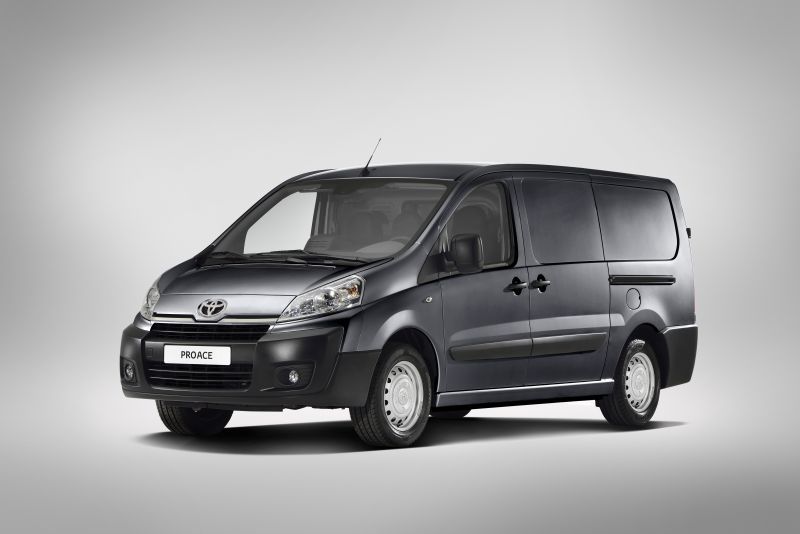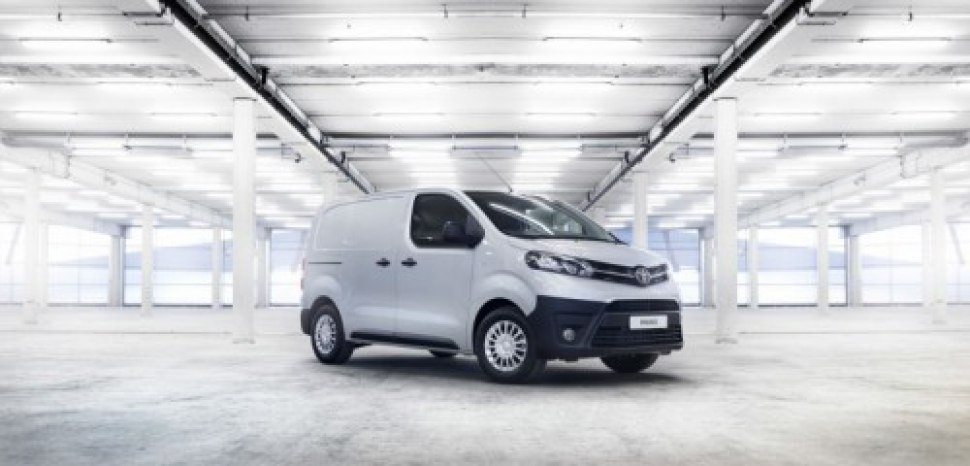
The Toyota Proace Compact II 2.0 D-4D (150 Hp): A European Workhorse
The Toyota Proace Compact II 2.0 D-4D (150 Hp) represents a crucial offering in the competitive European light commercial vehicle (LCV) segment. Introduced in September 2016 and produced until October 2021, this second-generation Proace, specifically in its “Compact” variant, was a testament to Toyota’s strategic partnership with PSA Group (now Stellantis). While not directly sold in the United States, the Proace Compact played a vital role in expanding Toyota’s footprint in Europe’s bustling commercial vehicle market, offering businesses a highly versatile, efficient, and reliable solution for urban deliveries and various trade applications. This particular iteration, powered by a robust 2.0-liter D-4D diesel engine delivering 150 horsepower, was engineered to provide an optimal balance of power, economy, and practicality within a maneuverable, city-friendly package.
Designed as a modern minivan or compact panel van, depending on its configuration, the Proace Compact II targeted small to medium-sized enterprises requiring a vehicle that could navigate tight city streets with ease while still offering substantial cargo capacity. Its architecture, shared with the Citroën Jumpy/Dispatch and Peugeot Expert/Traveller, allowed Toyota to leverage proven platforms and diesel powertrain technologies, ensuring competitive performance and operational costs. The 2.0 D-4D (150 Hp) variant stood out as a strong performer within the lineup, providing ample power for hauling goods or passengers, making it a popular choice among its target demographic.
Engine & Performance: Powering the Toyota Proace Compact II 2.0 D-4D (150 Hp)
At the heart of the Toyota Proace Compact II 2.0 D-4D (150 Hp) lies a sophisticated 2.0-liter (1997 cm³, 121.86 cu. in.) inline-four diesel engine, designated with the model code 4WZ-FTV. This powerplant is a hallmark of modern diesel engineering, featuring a common rail fuel injection system, a turbocharger, and an intercooler. These technologies work in concert to deliver a compelling blend of power and efficiency, which is paramount for commercial vehicles.
The engine produces a healthy 150 horsepower, translating to 75.1 horsepower per liter, indicating a high level of tuning for a utility vehicle. More critically for its intended use, it generates a substantial 272.9 lb.-ft. (370 Nm) of torque, available at a low 2000 rpm. This low-end torque is crucial for a commercial vehicle, providing excellent pulling power for heavy loads and ensuring responsive acceleration even when fully laden. The powertrain architecture is front-wheel drive, with the engine driving the front wheels, a common and efficient layout for this segment.
Power is managed by a precise 6-speed manual transmission, offering drivers full control over the engine’s output and contributing to the vehicle’s impressive fuel economy. The Proace Compact II 2.0 D-4D (150 Hp) boasts combined fuel consumption figures ranging from 41.3 to 43.6 US miles per gallon (5.4-5.7 l/100 km). Urban driving yields 36.2 to 38.6 US mpg (6.1-6.5 l/100 km), while extra-urban cycles can achieve 44.4 to 47 US mpg (5.0-5.3 l/100 km). These figures highlight the engine’s efficiency, a key factor in reducing operating costs for businesses. Furthermore, the engine complies with the stringent Euro 6 emission standard, with CO2 emissions ranging from 142-151 g/km, thanks in part to its integrated particulate filter system. The engine oil capacity is 6 liters (6.34 US quarts), ensuring proper lubrication for demanding commercial use.
Design & Features: Practicality Meets Modern Utility
The Toyota Proace Compact II is characterized by its practical and functional design, tailored to meet the demands of urban commercial operations. As a minivan body type, it features four doors and a standard three-seat configuration, typical for a compact commercial van prioritizing cargo space. Its compact dimensions are a defining feature: a length of 181.46 inches (4609 mm), a width of 75.59 inches (1920 mm), and a height of 75 inches (1905 mm). These measurements, combined with a wheelbase of 115.16 inches (2925 mm), make it exceptionally agile and easy to maneuver in congested city environments and tight loading docks, a significant advantage over larger commercial vans.
Despite its compact exterior, the Proace Compact II offers impressive cargo versatility. The minimum trunk (boot) space starts at 57.67 cubic feet (1633 liters), expandable to a generous 119.96 cubic feet (3397 liters) with the rear seats folded or removed, depending on the specific configuration. This flexibility allows businesses to transport a wide array of goods, tools, or equipment. The vehicle also boasts a substantial permitted trailer load with brakes of 5070.63 lbs. (2300 kg), and 1653.47 lbs. (750 kg) without brakes, further enhancing its utility. A maximum roof load of 308.65 to 374.79 lbs. (140-170 kg) adds to its cargo-carrying capabilities.
For safety and driving dynamics, the Proace Compact II is equipped with disc brakes on both the front and rear axles, complemented by an Anti-lock Braking System (ABS) for enhanced stopping power and control. The suspension system features an independent McPherson type at the front and a robust Wishbone setup at the rear, providing a balanced ride quality and stable handling, even under load. Steering is handled by an electric power-assisted rack and pinion system, offering light and precise control, which is beneficial for urban driving and parking. The vehicle comes with tire sizes including 215/65 R16 or 225/55 R17, mounted on 16-inch or 17-inch wheel rims, providing good grip and stability.
Technical Specifications: Toyota Proace Compact II 2.0 D-4D (150 Hp)
| Category | Specification |
|---|---|
| Brand | Toyota |
| Model | Proace |
| Generation | Proace Compact II |
| Type (Engine) | 2.0 D-4D (150 Hp) |
| Production Start | September, 2016 |
| Production End | October, 2021 |
| Powertrain Architecture | Internal Combustion engine |
| Body Type | Minivan |
| Seats | 3 |
| Doors | 4 |
| Fuel Consumption (Urban) | 36.2 – 38.6 US mpg (6.1-6.5 l/100 km) |
| Fuel Consumption (Extra Urban) | 44.4 – 47 US mpg (5.0-5.3 l/100 km) |
| Fuel Consumption (Combined) | 41.3 – 43.6 US mpg (5.4-5.7 l/100 km) |
| CO2 Emissions | 142-151 g/km |
| Fuel Type | Diesel |
| Emission Standard | Euro 6 |
| Power | 150 Hp |
| Power per liter | 75.1 Hp/l |
| Torque | 272.9 lb.-ft. (370 Nm) @ 2000 rpm |
| Engine Model/Code | 4WZ-FTV |
| Engine Displacement | 121.86 cu. in. (1997 cm³) |
| Number of Cylinders | 4 |
| Engine Configuration | Inline |
| Valves per Cylinder | 4 |
| Fuel Injection System | Diesel Commonrail |
| Engine Aspiration | Turbocharger, Intercooler |
| Engine Oil Capacity | 6.34 US qt (6 l) |
| Engine Systems | Particulate filter |
| Trunk (Boot) Space – Minimum | 57.67 cu. ft. (1633 l) |
| Trunk (Boot) Space – Maximum | 119.96 cu. ft. (3397 l) |
| Fuel Tank Capacity | 18.23 US gal (69 l) |
| Max. Roof Load | 308.65 – 374.79 lbs. (140-170 kg) |
| Permitted Trailer Load with Brakes (12%) | 5070.63 lbs. (2300 kg) |
| Permitted Trailer Load without Brakes | 1653.47 lbs. (750 kg) |
| Permitted Towbar Download | 202.83 lbs. (92 kg) |
| Length | 181.46 in. (4609 mm) |
| Width | 75.59 in. (1920 mm) |
| Height | 75 in. (1905 mm) |
| Wheelbase | 115.16 in. (2925 mm) |
| Front Track | 64.06 in. (1627 mm) |
| Rear (Back) Track | 62.99 in. (1600 mm) |
| Drivetrain Architecture | The Internal combustion engine (ICE) drives the front wheels of the vehicle. |
| Drive Wheel | Front wheel drive |
| Number of Gears & Gearbox Type | 6 gears, manual transmission |
| Front Suspension | Independent type McPherson |
| Rear Suspension | Wishbone |
| Front Brakes | Disc |
| Rear Brakes | Disc |
| Assisting Systems | ABS (Anti-lock braking system) |
| Steering Type | Steering rack and pinion |
| Power Steering | Electric Steering |
| Tires Size | 215/65 R16; 225/55 R17 |
| Wheel Rims Size | 16; 17 |
Legacy & Market Impact in the European Commercial Landscape
The Toyota Proace Compact II, particularly the 2.0 D-4D (150 Hp) variant, carved out a significant niche for itself within the highly competitive European light commercial vehicle market. Its primary impact stemmed from its role as a key product in Toyota’s strategy to bolster its presence in the LCV segment, traditionally dominated by European manufacturers. By leveraging a joint venture with PSA Group, Toyota was able to offer a vehicle that combined renowned Toyota reliability and customer service with a proven, efficient, and versatile platform.
The reputation of the Proace Compact II was built on its practicality, robust diesel engine performance, and excellent fuel efficiency. For small businesses, tradespeople, and delivery services across Europe, the Proace Compact offered a compelling proposition: a vehicle that was agile enough for urban environments, powerful enough to handle loads, and economical to run. Its compact dimensions made it a favorite for navigating narrow city streets and fitting into smaller parking spaces, a critical advantage in many European cities.
In terms of competition, the Proace Compact II faced formidable rivals. Key competitors included its platform siblings, the Citroën Jumpy/Dispatch and Peugeot Expert/Traveller, which offered similar capabilities. Beyond these, it competed directly with established players like the Volkswagen Transporter, Ford Transit Custom, Mercedes-Benz Vito, Renault Trafic, and Opel Vivaro. Despite the stiff competition, the Proace distinguished itself through Toyota’s reputation for durability and low ownership costs, often appealing to customers prioritizing long-term reliability and strong resale values.
The 2.0 D-4D (150 Hp) engine variant was particularly well-regarded for its strong torque delivery, making it suitable for a wide range of applications, from transporting heavy tools for construction workers to serving as a rapid delivery vehicle. Its Euro 6 compliance also ensured it met the increasingly strict emission regulations in European cities, future-proofing it for businesses operating in areas with environmental zones. While the Proace Compact II 2.0 D-4D (150 Hp) may not be a household name in the American automotive landscape, its contribution to the efficiency and mobility of countless European businesses underscores its historical significance as a reliable and impactful workhorse in its primary market.