The Toyota Proace Verso II LWB: A European People Mover for the Modern Era
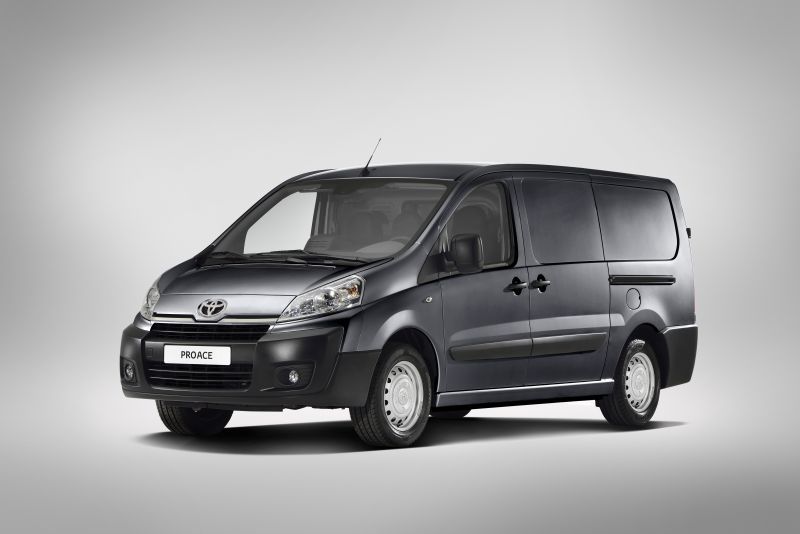
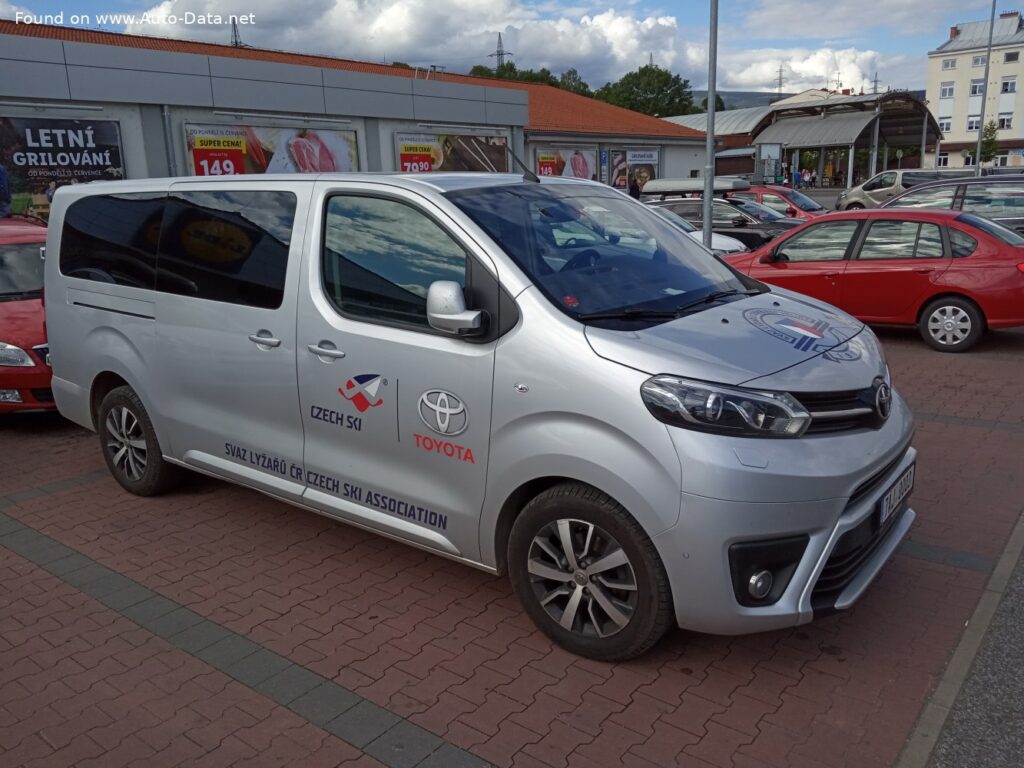
The Toyota Proace Verso II LWB, specifically the 2.0 D-4D (144 Hp) Automatic variant, represents a significant offering in the European large minivan and shuttle bus segment. Launched in April 2020, this second-generation Proace Verso, in its Long Wheelbase (LWB) configuration, is a testament to Toyota’s strategic collaboration with Stellantis (formerly PSA Group). While not officially sold in the North American market, where large minivans are less common outside of commercial applications, the Proace Verso is a crucial player in Europe, offering a blend of passenger comfort, cargo versatility, and diesel efficiency. Designed to cater to large families, executive shuttles, and tourism operators, it leverages a robust platform shared with its French counterparts, providing a practical and well-equipped solution for multi-passenger transport needs.
Powertrain and Performance of the Toyota Proace Verso II LWB
At the heart of the Toyota Proace Verso II LWB 2.0 D-4D lies a highly efficient and capable 2.0-liter (1997 cm³, or 121.86 cubic inches) inline four-cylinder diesel engine, designated with the model code AH01. This powerplant is engineered for strong torque delivery and impressive fuel economy, characteristics highly valued in the European market. Equipped with a turbocharger and intercooler, along with a modern common rail fuel injection system, it generates a robust 144 horsepower at 4000 revolutions per minute. More critically for a vehicle of this size and purpose, it produces a substantial 370 Newton-meters (272.9 lb-ft) of torque, peaking at a low 2000 rpm. This ensures ample pulling power for acceleration, hauling passengers, and even towing, making it well-suited for its intended roles.
Power is efficiently managed by a smooth-shifting 8-speed automatic transmission, driving the front wheels. This combination not only enhances driving comfort, particularly in urban environments and during long journeys, but also optimizes fuel consumption. The Proace Verso II LWB demonstrates commendable fuel efficiency for its class, with a combined NEDC cycle rating of 5.0-5.1 liters per 100 kilometers, translating to an impressive 47 to 46.1 US miles per gallon. Urban consumption is rated at 5.5 l/100 km (42.8 US mpg), while extra-urban driving can achieve 4.8 l/100 km (49 US mpg). These figures underscore Toyota’s commitment to efficiency and lower running costs, crucial for both private owners and commercial fleets. Furthermore, the engine meets the stringent Euro 6d-ISC-FCM emission standard, emitting 133-134 grams of CO2 per kilometer, thanks in part to its Start & Stop System and a particulate filter. Its weight-to-power ratio stands at 14.4 kg/Hp (69.4 Hp/tonne), and a weight-to-torque ratio of 5.6 kg/Nm (178.4 Nm/tonne) highlights its strong low-end grunt.
Design, Features, and Practicality
The Toyota Proace Verso II LWB adopts a classic minivan body style, prioritizing interior space and passenger comfort. Measuring 209.02 inches (5309 mm) in length, 75.59 inches (1920 mm) in width, and 74.41 inches (1890 mm) in height, with a generous 128.94-inch (3275 mm) wheelbase, the LWB variant offers an expansive cabin. This allows for flexible seating configurations, typically accommodating 8 to 9 passengers across its 5 doors. The design is functional and modern, with a clear focus on utility without sacrificing a contemporary aesthetic.
Inside, the Proace Verso is designed for versatility. The minimum trunk (boot) space starts at a respectable 32.21 cubic feet (912 liters), even with all seats in place. When the rear seats are removed or folded, this expands dramatically to a cavernous 160.82 cubic feet (4554 liters), transforming the minivan into a capable cargo hauler. This adaptability is a key selling point for a vehicle that often serves dual roles for families and businesses. The kerb weight of the vehicle is 4572.39 pounds (2074 kg), with a maximum permissible weight of 6283.17 pounds (2850 kg), allowing for a substantial maximum load of 1710.79 pounds (776 kg).
Chassis and suspension components are designed for comfort and stability. It features an independent McPherson type front suspension and a wishbone rear suspension, providing a balanced ride quality. Braking is handled by disc brakes at both the front and rear, complemented by an Anti-lock Braking System (ABS) for enhanced safety. Steering is managed by a rack and pinion system with electric power steering, offering ease of maneuverability. The vehicle rides on 225/55 R17 tires mounted on 17-inch wheel rims, providing a good balance of ride comfort and handling characteristics. Practical features extend to a 18.23 US gallon (69 liter) fuel tank, offering a considerable range, and impressive towing capacities: 4188.78 pounds (1900 kg) with brakes and 1653.47 pounds (750 kg) without brakes.
Technical Specifications: Toyota Proace Verso II LWB 2.0 D-4D (144 Hp) Automatic
| Category | Specification |
|---|---|
| General Information | |
| Brand | Toyota |
| Model | Proace Verso II LWB |
| Type (Engine) | 2.0 D-4D (144 Hp) Automatic |
| Start of Production | April, 2020 |
| Powertrain Architecture | Internal Combustion engine |
| Body Type | Minivan |
| Seats | 8-9 |
| Doors | 5 |
| Performance Specs | |
| Fuel Consumption (Urban NEDC) | 5.5 l/100 km (42.8 US mpg) |
| Fuel Consumption (Extra Urban NEDC) | 4.8 l/100 km (49 US mpg) |
| Fuel Consumption (Combined NEDC) | 5.0-5.1 l/100 km (47 – 46.1 US mpg) |
| CO2 Emissions (NEDC) | 133-134 g/km |
| Fuel Type | Diesel |
| Emission Standard | Euro 6d-ISC-FCM |
| Weight-to-Power Ratio | 14.4 kg/Hp (69.4 Hp/tonne) |
| Weight-to-Torque Ratio | 5.6 kg/Nm (178.4 Nm/tonne) |
| Engine Specs | |
| Power | 144 Hp @ 4000 rpm |
| Power per Liter | 72.1 Hp/l |
| Torque | 370 Nm @ 2000 rpm (272.9 lb.-ft. @ 2000 rpm) |
| Engine Layout | Front, Transverse |
| Engine Model/Code | AH01 |
| Engine Displacement | 1997 cm³ (2.0 Liters / 121.86 cu. in.) |
| Number of Cylinders | 4 |
| Engine Configuration | Inline |
| Number of Valves per Cylinder | 4 |
| Fuel Injection System | Diesel Commonrail |
| Engine Aspiration | Turbocharger, Intercooler |
| Valvetrain | OHC |
| Engine Oil Capacity | 6.1 l (6.45 US qt) |
| Engine Oil Specification | Not specified in provided data |
| Engine Systems | Start & Stop System, Particulate filter |
| Space, Volume and Weights | |
| Kerb Weight | 2074 kg (4572.39 lbs) |
| Max. Weight | 2850 kg (6283.17 lbs) |
| Max Load | 776 kg (1710.79 lbs) |
| Trunk (boot) Space – Minimum | 912 l (32.21 cu. ft.) |
| Trunk (boot) Space – Maximum | 4554 l (160.82 cu. ft.) |
| Fuel Tank Capacity | 69 l (18.23 US gal) |
| Permitted Trailer Load with Brakes (12%) | 1900 kg (4188.78 lbs) |
| Permitted Trailer Load without Brakes | 750 kg (1653.47 lbs) |
| Permitted Towbar Download | 84 kg (185.19 lbs) |
| Dimensions | |
| Length | 5309 mm (209.02 in.) |
| Width | 1920 mm (75.59 in.) |
| Height | 1890 mm (74.41 in.) |
| Wheelbase | 3275 mm (128.94 in.) |
| Front Track | 1627 mm (64.06 in.) |
| Rear (Back) Track | 1600 mm (62.99 in.) |
| Drivetrain, Brakes and Suspension Specs | |
| Drivetrain Architecture | The Internal combustion engine (ICE) drives the front wheels of the vehicle. |
| Drive Wheel | Front wheel drive |
| Number of Gears and Type of Gearbox | 8 gears, automatic transmission |
| Front Suspension | Independent type McPherson |
| Rear Suspension | Wishbone |
| Front Brakes | Disc |
| Rear Brakes | Disc |
| Assisting Systems | ABS (Anti-lock braking system) |
| Steering Type | Steering rack and pinion |
| Power Steering | Electric Steering |
| Tires Size | 225/55 R17 |
| Wheel Rims Size | 17 inches |
Legacy and Market Impact in Europe
The Toyota Proace Verso II LWB, along with its standard wheelbase counterpart, plays a vital role in Toyota’s European lineup, filling a segment where the brand might otherwise lack a dedicated offering. Its existence is a direct result of a successful joint venture, initially with PSA Peugeot Citroën and now with Stellantis, which includes the Peugeot Traveller, Citroën Spacetourer, and Opel Zafira Life (formerly Vivaro Life). This collaboration allows Toyota to offer a competitive product without the prohibitive costs of developing an entirely new platform for a niche market segment.
In the highly competitive European minivan and light commercial vehicle (LCV) segment, the Proace Verso competes against established players such as the Volkswagen Transporter (Multivan/Caravelle), Mercedes-Benz V-Class, and Ford Transit Custom (Tourneo Custom). Toyota differentiates itself through its renowned reputation for reliability and after-sales service, a significant draw for both private buyers and fleet operators. While the core mechanicals and body structure are shared, Toyota applies its own styling cues, trim levels, and often specific tuning to the suspension and steering to align with its brand identity.
The Proace Verso’s impact is primarily felt in its ability to provide a practical, comfortable, and efficient solution for multi-passenger transport. Its long wheelbase configuration is particularly popular for airport shuttles, hotel transfers, and large families needing maximum space for both passengers and luggage. The 2.0 D-4D engine, with its balance of power and exceptional fuel economy, is perfectly suited to the demands of European driving cycles, including long-distance highway cruising and navigating dense city traffic while adhering to strict emissions regulations.
Its legacy is one of smart collaboration and strategic market positioning. By leveraging a proven platform, Toyota has successfully broadened its appeal in Europe, offering a vehicle that embodies the brand’s core values of quality, durability, and reliability within a segment dominated by European manufacturers. The Proace Verso II LWB continues to be a strong contender, celebrated for its versatility, passenger comfort, and economical operation, cementing its place as a cornerstone of modern European mobility.