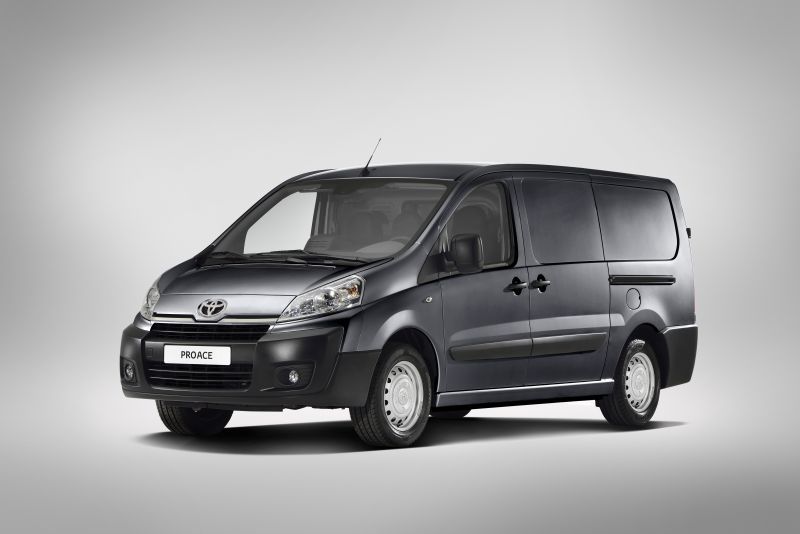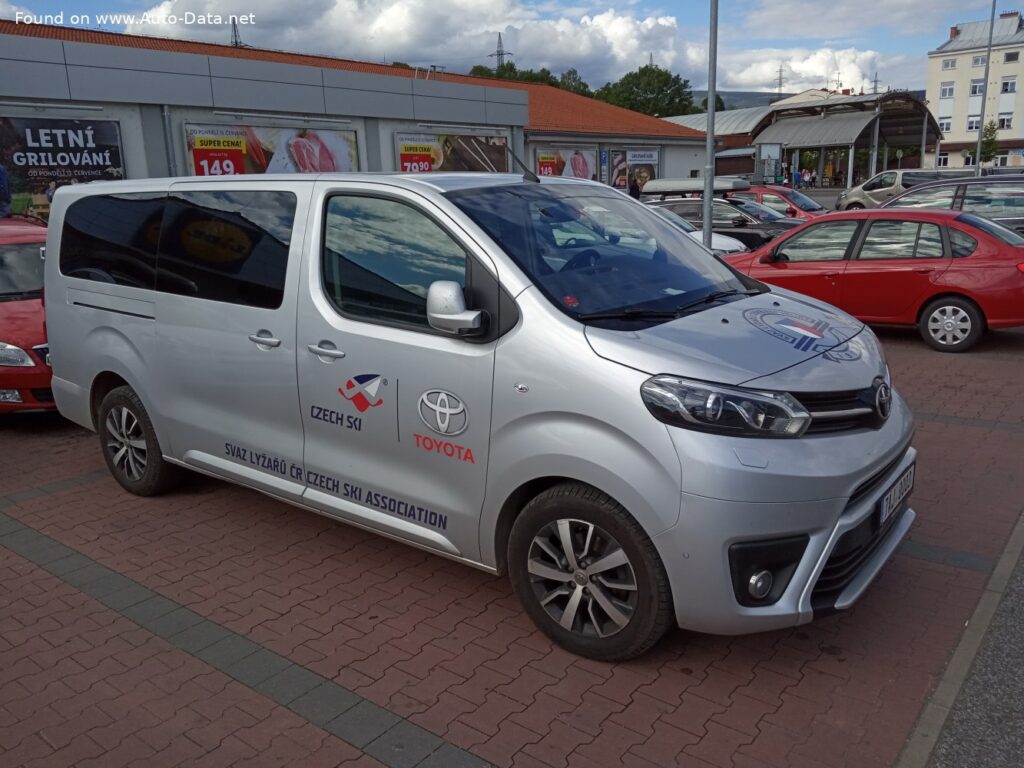
The Toyota Proace Verso II LWB: An Electric People Mover for the Modern Age
The Toyota Proace Verso II LWB 75 kWh (136 Hp) Electric represents a significant step for Toyota in the burgeoning electric vehicle (EV) segment, particularly within the passenger minivan and shuttle vehicle market. Launched in April 2021, this second-generation Proace Verso variant specifically targets the demand for zero-emission transportation solutions for families, businesses, and public services across Europe and other international markets where such versatile vans are highly popular. As a Battery Electric Vehicle (BEV), it combines the practicality and spaciousness expected of a long-wheelbase minivan with the environmental benefits and operational efficiencies of an all-electric powertrain.
While the Proace Verso model line is a product of a collaborative venture, primarily with the former PSA Group (now Stellantis), Toyota’s iteration brings its renowned reputation for reliability and customer service to the platform. The “Verso” designation traditionally denotes passenger-oriented variants within Toyota’s light commercial vehicle lineup, distinguishing it from the cargo-focused Proace Van. The LWB (Long Wheelbase) configuration further enhances its appeal, offering maximum interior volume for up to nine occupants or substantial cargo, making the Toyota Proace Verso II LWB a compelling option for those seeking a practical, sustainable, and capacious electric vehicle.
Engine and Performance: Silent Efficiency for the Road
At the heart of the Toyota Proace Verso II LWB Electric is an advanced all-electric powertrain, engineered for smooth, quiet operation and immediate torque delivery – hallmarks of modern EVs. The vehicle is propelled by a single electric motor, strategically positioned on the front axle in a transverse orientation, driving the front wheels. This synchronous electric motor generates a respectable 136 horsepower (Hp), providing ample power for urban and highway driving, particularly given its primary role as a people mover or cargo transporter.
Instantaneous torque is a significant advantage of electric vehicles, and the Proace Verso II LWB Electric delivers a robust 260 Nm (191.77 lb.-ft.) of system torque. This ensures strong acceleration from a standstill, facilitating confident maneuvers in traffic and effortless merging onto highways. Power is managed through a single-speed automatic transmission, simplifying the driving experience and contributing to the powertrain’s overall efficiency by eliminating traditional gear changes.
Energy storage is handled by a substantial 75 kWh gross capacity lithium-ion battery pack, cleverly integrated below the floor. This placement not only optimizes interior space but also contributes to a lower center of gravity, enhancing stability and handling. The battery technology allows for an impressive all-electric range (WLTP) of 314 kilometers, or approximately 195.11 miles, making it suitable for a wide array of daily commutes, family trips, and commercial routes without frequent recharging.
Efficiency is a key metric for any EV, and the Proace Verso II LWB Electric demonstrates competitive energy consumption figures. Its average energy consumption (WLTP) ranges from 26.9 to 28 kWh per 100 kilometers (43.29 – 45.06 kWh per 100 miles), translating to an impressive 78 to 75 MPGe (Miles Per Gallon equivalent). This efficiency, coupled with a top speed electronically limited to 130 km/h (80.78 mph), underscores its design for practical, economical, and environmentally conscious operation rather than high-performance thrills. The vehicle’s weight-to-power ratio stands at 17 kg/Hp (58.8 Hp/tonne), with a weight-to-torque ratio of 8.9 kg/Nm (112.4 Nm/tonne), reflecting a balanced approach to its utility-focused mission.
Design and Features of the Toyota Proace Verso II LWB
The design philosophy behind the Toyota Proace Verso II LWB is one of utilitarian elegance, prioritizing functionality, space, and passenger comfort. As a minivan, its exterior styling is characterized by clean lines and a commanding presence, typical of vehicles designed to maximize interior volume. The long-wheelbase variant stretches to an overall length of 5309 mm (209.02 inches), with a width of 1920 mm (75.59 inches) and a height of 1890 mm (74.41 inches). This generous footprint, supported by a substantial 3275 mm (128.94 inches) wheelbase, ensures a remarkably spacious cabin and a stable ride.
The Proace Verso II LWB features a practical 5-door body type, with large sliding rear doors (typically on both sides) for easy access to the second and third rows, a crucial feature for passenger loading and unloading in various settings. Depending on the configuration, the interior can comfortably accommodate between 8 and 9 occupants, making it an ideal choice for large families, hotel shuttles, taxi services, or corporate transport.
Interior versatility is a cornerstone of the Proace Verso II LWB’s appeal. The modular seating arrangements allow for various configurations, prioritizing either passenger capacity or cargo space. With all seats in place, the minimum trunk (boot) space is a generous 989 liters (34.93 cubic feet). When rear seats are removed or folded, this expands dramatically to a cavernous 4554 liters (160.82 cubic feet), transforming the minivan into a highly capable cargo hauler. This adaptability makes it suitable for diverse applications, from family road trips to transporting sports equipment or business supplies.
The chassis and suspension are engineered for comfort and stability, even when fully loaded. It features an independent McPherson-type front suspension, known for its robust and space-efficient design, paired with a wishbone rear suspension, which provides a good balance of ride comfort and handling capability. Braking is handled by disc brakes on both the front and rear axles, complemented by an Anti-lock Braking System (ABS) for enhanced safety during emergency stops. Steering is managed by an electric power-assisted rack and pinion system, offering light and precise control, particularly beneficial in urban environments and for parking maneuvers. The vehicle rides on 225/55 R17 tires mounted on 17-inch wheel rims, providing a good compromise between ride comfort and handling.
Technical Specifications: Toyota Proace Verso II LWB 75 kWh (136 Hp) Electric
| Category | Specification | US Equivalent |
|---|---|---|
| General Information | ||
| Brand | Toyota | |
| Model | Proace Verso II LWB | |
| Type (Engine) | 75 kWh (136 Hp) Electric | |
| Start of Production | April, 2021 | |
| Powertrain Architecture | BEV (Battery Electric Vehicle) | |
| Body Type | Minivan | |
| Seats | 8-9 | |
| Doors | 5 | |
| Performance Specifications | ||
| Fuel Type | Electricity | |
| Maximum Speed | 130 km/h | 80.78 mph |
| Weight-to-Power Ratio | 17 kg/Hp | 58.8 Hp/tonne |
| Weight-to-Torque Ratio | 8.9 kg/Nm | 112.4 Nm/tonne |
| Electric Car & Hybrid Specifications | ||
| Gross Battery Capacity | 75 kWh | |
| Battery Technology | Lithium-ion (Li-Ion) | |
| Battery Location | Below the floor | |
| All-electric Range (WLTP) | 314 km | 195.11 miles |
| Average Energy Consumption (WLTP) | 26.9-28 kWh/100 km | 43.29 – 45.06 kWh/100 miles (78 – 75 MPGe) |
| Electric Motor Power | 136 Hp | |
| Electric Motor Torque | 260 Nm | 191.77 lb.-ft. |
| Electric Motor Model/Code | ZK01 | |
| Electric Motor Location | Front axle, Transverse | |
| Electric Motor Type | Synchronous | |
| System Power | 136 Hp | |
| System Torque | 260 Nm | 191.77 lb.-ft. |
| Space, Volume, and Weights | ||
| Kerb Weight | 2314 kg | 5101.5 lbs. |
| Max. Weight (GVWR) | 3100 kg | 6834.33 lbs. |
| Max Load | 786 kg | 1732.83 lbs. |
| Trunk (boot) Space – Minimum | 989 l | 34.93 cu. ft. |
| Trunk (boot) Space – Maximum | 4554 l | 160.82 cu. ft. |
| Permitted Trailer Load with Brakes (12%) | 1000 kg | 2204.62 lbs. |
| Permitted Towbar Download | 60 kg | 132.28 lbs. |
| Dimensions | ||
| Length | 5309 mm | 209.02 in. |
| Width | 1920 mm | 75.59 in. |
| Height | 1890 mm | 74.41 in. |
| Wheelbase | 3275 mm | 128.94 in. |
| Front Track | 1627 mm | 64.06 in. |
| Rear (Back) Track | 1600 mm | 62.99 in. |
| Drivetrain, Brakes, and Suspension | ||
| Drivetrain Architecture | One electric motor drives the front wheels. | |
| Drive Wheel | Front-wheel drive | |
| Number of Gears and Type of Gearbox | 1 gear, automatic transmission | |
| Front Suspension | Independent type McPherson | |
| Rear Suspension | Wishbone | |
| Front Brakes | Disc | |
| Rear Brakes | Disc | |
| Assisting Systems | ABS (Anti-lock braking system) | |
| Steering Type | Steering rack and pinion | |
| Power Steering | Electric Steering | |
| Tires Size | 225/55 R17 | |
| Wheel Rims Size | 17 inches |
Legacy and Market Impact
The Toyota Proace Verso II LWB 75 kWh (136 Hp) Electric plays a crucial role in Toyota’s broader strategy for electrification, particularly in markets outside the United States where large, versatile minivans and light commercial vehicles are integral to both private and commercial transport. While not typically sold in North America under this specific badge, the Proace Verso family, including its electric variant, is a significant competitor in the European, Asian, and other global markets.
Its primary market impact stems from its ability to offer a zero-emission alternative in a segment traditionally dominated by diesel engines. For businesses, including taxi fleets, shuttle services, and delivery companies, the electric Proace Verso provides a pathway to meeting increasingly stringent urban emission regulations and corporate sustainability goals. The lower running costs associated with electricity compared to fossil fuels, coupled with potential government incentives for EV adoption, make it an economically attractive proposition over its lifecycle.
In the passenger segment, it caters to large families or those requiring substantial cargo capacity who are also committed to environmental responsibility. Its comfortable ride, quiet electric powertrain, and ample space enhance the travel experience for all occupants, making long journeys more pleasant.
The competitive landscape for the Proace Verso II LWB Electric is robust, particularly within Europe. Its closest rivals often come from its platform siblings, such as the Peugeot e-Traveller, Citroën ë-SpaceTourer, and Opel/Vauxhall Zafira-e Life, all sharing the same core electric powertrain and chassis. Other competitors include the Mercedes-Benz EQV, Volkswagen ID. Buzz (in its passenger variants), and various electric panel vans converted for passenger use. The Toyota distinguishes itself by leveraging Toyota’s reputation for quality and extensive dealer network, offering a familiar badge of reliability in a relatively new powertrain format for this segment.
Historically, Toyota has been a pioneer in hybrid technology, but its move into full battery electric vehicles for commercial and passenger vans like the Proace Verso II LWB demonstrates a pragmatic approach to electrification. By collaborating with other manufacturers, Toyota can rapidly expand its EV offerings across different segments, meeting diverse market demands without always developing every component in-house. This strategic partnership allows Toyota to maintain its competitive edge and accelerate the transition towards a more sustainable automotive future, solidifying the Proace Verso II LWB Electric’s legacy as a practical, efficient, and environmentally conscious choice in its class.