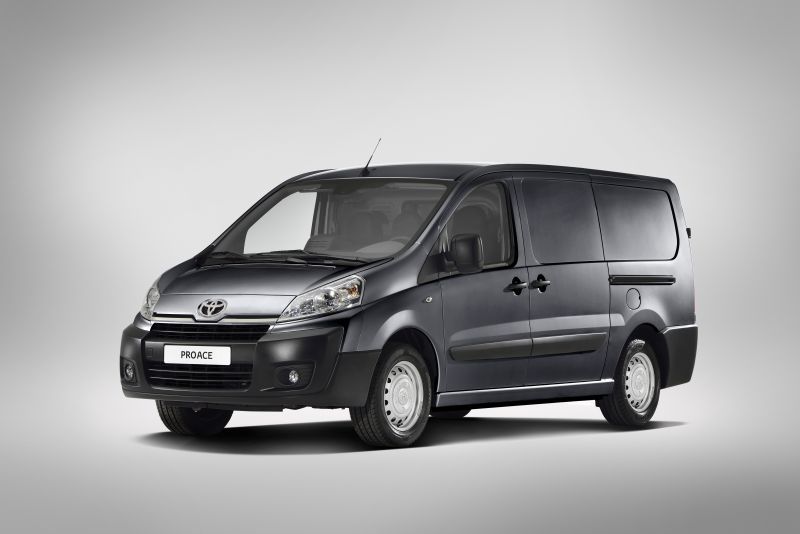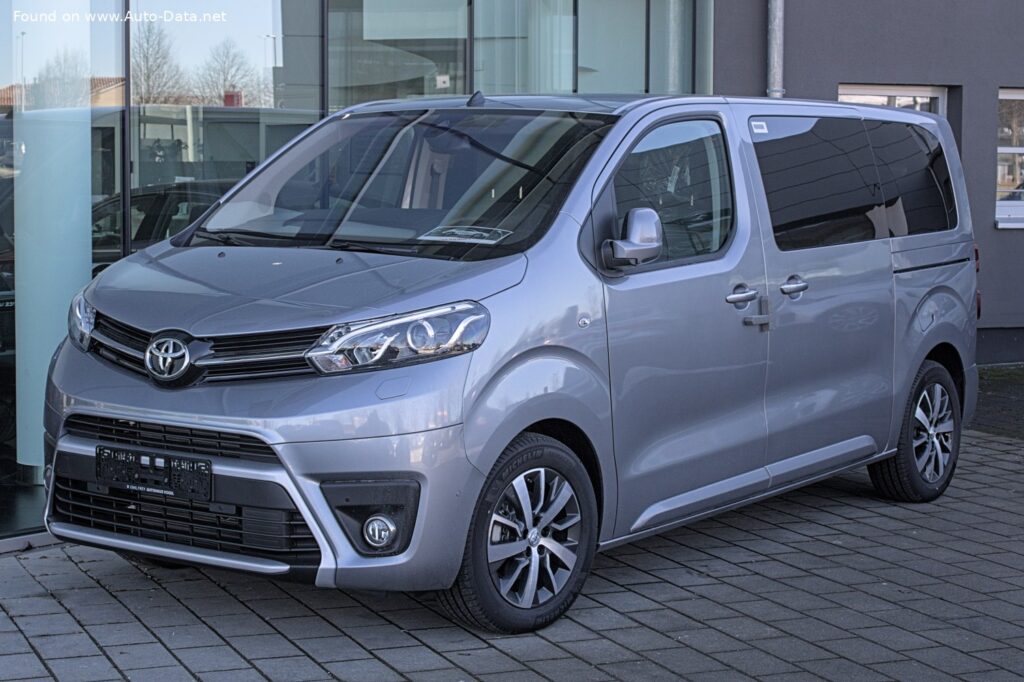
Introduction to the Toyota Proace Verso II SWB 2.0 D-4D (150 Hp)
The Toyota Proace Verso II SWB represents the second generation of Toyota’s versatile and practical minivan, designed primarily for the European market where it serves a crucial role in passenger transport, shuttle services, and family mobility. Launched in September 2016 and produced until October 2021, this model is a testament to Toyota’s commitment to offering a comprehensive lineup, even in segments not traditionally dominated by the brand in certain regions. The “SWB” designation signifies its Short Wheelbase configuration, balancing interior space with maneuverability. While not sold in the United States, the Proace Verso became a significant player in Europe’s competitive multi-purpose vehicle (MPV) segment, providing a compelling option for those seeking a spacious, efficient, and reliable vehicle. This particular variant, the Toyota Proace Verso II SWB 2.0 D-4D (150 Hp), highlights a robust diesel powertrain focused on delivering a blend of performance and fuel economy essential for its target demographic.
Engineering and Performance of the Toyota Proace Verso II SWB 2.0 D-4D (150 Hp)
Powertrain Architecture and Efficiency
Underpinning the capabilities of the Toyota Proace Verso II SWB 2.0 D-4D (150 Hp) is a highly efficient and robust powertrain. The vehicle is driven by a 2.0-liter (1997 cm³ or 121.86 cu. in.) D-4D inline four-cylinder diesel engine, designated with the model code 4WZ-FTV. This engine is a cornerstone of its performance, delivering a respectable 150 horsepower (Hp), which translates to a power output of 75.1 Hp per liter. Crucially for a vehicle of its size and purpose, the engine generates a substantial 370 Nm (272.9 lb.-ft.) of torque, available at a low 2000 revolutions per minute (rpm). This strong torque output ensures excellent pulling power, whether fully loaded with passengers or towing a trailer, making it highly capable for both urban and long-distance travel.
The engine’s advanced design incorporates a common rail diesel fuel injection system, which precisely controls fuel delivery for optimal combustion and efficiency. Further enhancing its performance and environmental credentials are a turbocharger and intercooler, which work in tandem to boost power output and improve fuel economy by providing a denser air charge to the engine. The powertrain architecture is front-wheel drive, with the internal combustion engine directly driving the front wheels, a common and effective setup for this segment, balancing traction and packaging efficiency. Power is channeled through a precise 6-speed manual transmission, offering drivers direct control and contributing to the vehicle’s overall efficiency.
Environmental considerations are paramount in modern vehicle design, and the Proace Verso II SWB 2.0 D-4D (150 Hp) meets the stringent Euro 6 emission standard. This is achieved through the integration of an advanced particulate filter system, which significantly reduces harmful emissions. Fuel efficiency figures are impressive for a vehicle of its class:
- Urban: 6.1-6.5 l/100 km (36.2-38.6 US mpg)
- Extra-urban: 5.0-5.3 l/100 km (44.4-47 US mpg)
- Combined: 5.4-5.7 l/100 km (41.3-43.6 US mpg)
These figures underscore the vehicle’s economic operation, making it an attractive option for both private owners and commercial operators where running costs are a significant factor. CO2 emissions range from 142-151 g/km, reflecting its compliance with contemporary environmental regulations.
Design, Features, and Practicality
The Toyota Proace Verso II SWB is designed as a highly functional and adaptable minivan, prioritizing passenger comfort and cargo versatility. Its body type is a 5-door minivan, offering easy access to both front and rear seating areas. The “Verso” designation specifically indicates its passenger-oriented configuration, distinct from its commercial van counterpart. With seating for 8 to 9 occupants, depending on the interior configuration, it caters effectively to large families, shuttle services, and tour operators.
Dimensionally, the Short Wheelbase (SWB) model measures 4959 mm (195.24 in.) in length, 1920 mm (75.59 in.) in width, and 1890 mm (74.41 in.) in height. Its wheelbase of 3275 mm (128.94 in.) provides a stable ride and contributes to generous interior space without making the vehicle unwieldy in urban environments. The front track is 1627 mm (64.06 in.) and the rear track is 1600 mm (62.99 in.), ensuring a confident stance on the road.
For ride comfort and handling, the Proace Verso employs an independent McPherson strut system for the front suspension, a proven design known for its balance of comfort and control. The rear suspension utilizes a wishbone setup, which further enhances stability and load-carrying capability. Braking performance is handled by disc brakes on both the front and rear axles, complemented by an Anti-lock Braking System (ABS) for enhanced safety during emergency stops. Steering is managed by a rack and pinion system with electric power steering, offering light and precise control, particularly beneficial during low-speed maneuvering and parking. The vehicle is typically fitted with tires sized 215/65 R16 or 225/55 R17, mounted on 16 or 17-inch wheel rims, providing a good balance of grip and ride comfort.
Practicality is a hallmark of the Proace Verso. It boasts a minimum trunk space of 655 liters (23.13 cu. ft.), expandable to a cavernous 3968 liters (140.13 cu. ft.) with the rear seats folded or removed, making it exceptionally versatile for carrying luggage, sports equipment, or goods. The fuel tank capacity of 69 liters (18.23 US gal) provides a substantial range between fill-ups, especially considering its impressive fuel economy. Furthermore, the vehicle is capable of towing a substantial 2300 kg (5070.63 lbs.) with brakes and 750 kg (1653.47 lbs.) without brakes, underscoring its utility for various applications. A maximum roof load of 140-170 kg (308.65-374.79 lbs.) adds to its cargo-carrying flexibility.
Technical Specifications: Toyota Proace Verso II SWB 2.0 D-4D (150 Hp)
| Category | Specification |
|---|---|
| Brand | Toyota |
| Model | Proace Verso |
| Generation | Proace Verso II SWB |
| Type (Engine) | 2.0 D-4D (150 Hp) |
| Start of Production | September, 2016 |
| End of Production | October, 2021 |
| Powertrain Architecture | Internal Combustion engine |
| Body type | Minivan |
| Seats | 8-9 |
| Doors | 5 |
| Fuel Consumption (Urban) | 6.1-6.5 l/100 km (36.2 – 38.6 US mpg) |
| Fuel Consumption (Extra Urban) | 5.0-5.3 l/100 km (44.4 – 47 US mpg) |
| Fuel Consumption (Combined) | 5.4-5.7 l/100 km (41.3 – 43.6 US mpg) |
| CO2 Emissions | 142-151 g/km |
| Fuel Type | Diesel |
| Emission Standard | Euro 6 |
| Power | 150 Hp |
| Power per liter | 75.1 Hp/l |
| Torque | 370 Nm @ 2000 rpm (272.9 lb.-ft. @ 2000 rpm) |
| Engine Model/Code | 4WZ-FTV |
| Engine Displacement | 1997 cm³ (121.86 cu. in.) |
| Number of Cylinders | 4 |
| Engine Configuration | Inline |
| Number of Valves per Cylinder | 4 |
| Fuel Injection System | Diesel Commonrail |
| Engine Aspiration | Turbocharger, Intercooler |
| Engine Oil Capacity | 6 l (6.34 US qt) |
| Engine Oil Specification | Not provided in public data |
| Engine Systems | Particulate filter |
| Trunk (Boot) Space – minimum | 655 l (23.13 cu. ft.) |
| Trunk (Boot) Space – maximum | 3968 l (140.13 cu. ft.) |
| Fuel Tank Capacity | 69 l (18.23 US gal) |
| Max. Roof Load | 140-170 kg (308.65 – 374.79 lbs.) |
| Permitted Trailer Load with Brakes (12%) | 2300 kg (5070.63 lbs.) |
| Permitted Trailer Load without Brakes | 750 kg (1653.47 lbs.) |
| Permitted Towbar Download | 92 kg (202.83 lbs.) |
| Length | 4959 mm (195.24 in.) |
| Width | 1920 mm (75.59 in.) |
| Height | 1890 mm (74.41 in.) |
| Wheelbase | 3275 mm (128.94 in.) |
| Front Track | 1627 mm (64.06 in.) |
| Rear (Back) Track | 1600 mm (62.99 in.) |
| Drivetrain Architecture | The Internal combustion engine (ICE) drives the front wheels of the vehicle. |
| Drive Wheel | Front wheel drive |
| Number of Gears and Type of Gearbox | 6 gears, manual transmission |
| Front Suspension | Independent type McPherson |
| Rear Suspension | Wishbone |
| Front Brakes | Disc |
| Rear Brakes | Disc |
| Assisting Systems | ABS (Anti-lock braking system) |
| Steering Type | Steering rack and pinion |
| Power Steering | Electric Steering |
| Tires Size | 215/65 R16; 225/55 R17 |
| Wheel Rims Size | 16; 17 |
Legacy and Market Impact in Europe
The Toyota Proace Verso II SWB 2.0 D-4D (150 Hp) played a significant role in Toyota’s European market strategy during its production run from 2016 to 2021. As a collaborative effort with the PSA Group (now part of Stellantis), the Proace Verso is essentially a rebadged version of the Citroën Spacetourer, Peugeot Traveller, and Opel/Vauxhall Vivaro Life. This partnership allowed Toyota to efficiently enter and compete in the highly competitive European minivan segment without the substantial R&D costs of developing an entirely new platform.
In its primary market, the Proace Verso was positioned as a reliable, practical, and fuel-efficient alternative to established rivals such as the Volkswagen Multivan, Mercedes-Benz V-Class, and Ford Transit Custom Tourneo. Its appeal lay in its flexible seating configurations, generous cargo capacity, and the renowned reliability associated with the Toyota brand, even on a platform shared with other manufacturers. The 2.0 D-4D (150 Hp) engine was particularly popular, striking an excellent balance between performance for highway cruising and economy for daily urban use, while adhering to strict European emission standards.
The Proace Verso found favor with a diverse clientele. For families, it offered ample space, comfortable seating for up to nine, and the versatility to handle everything from school runs to extended road trips. For businesses, including hotels, taxi companies, and shuttle services, its robust build, efficient diesel engine, and significant passenger and cargo capacity made it an ideal workhorse. Its relatively compact SWB dimensions, combined with electric power steering, also made it surprisingly agile for city driving, a crucial factor in many European urban centers.
Ultimately, the Toyota Proace Verso II SWB reinforced Toyota’s presence in the light commercial vehicle and passenger van segments in Europe. It demonstrated Toyota’s strategic adaptability in leveraging partnerships to offer competitive products in markets where specific vehicle types are highly valued. Its legacy is one of practical utility, economic operation, and a reliable solution for multifaceted transport needs, solidifying its place as a respected option within the European MPV landscape.