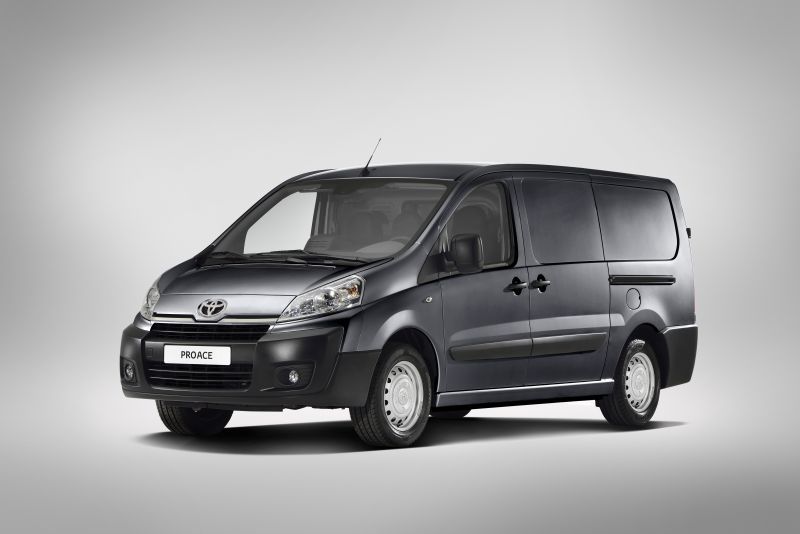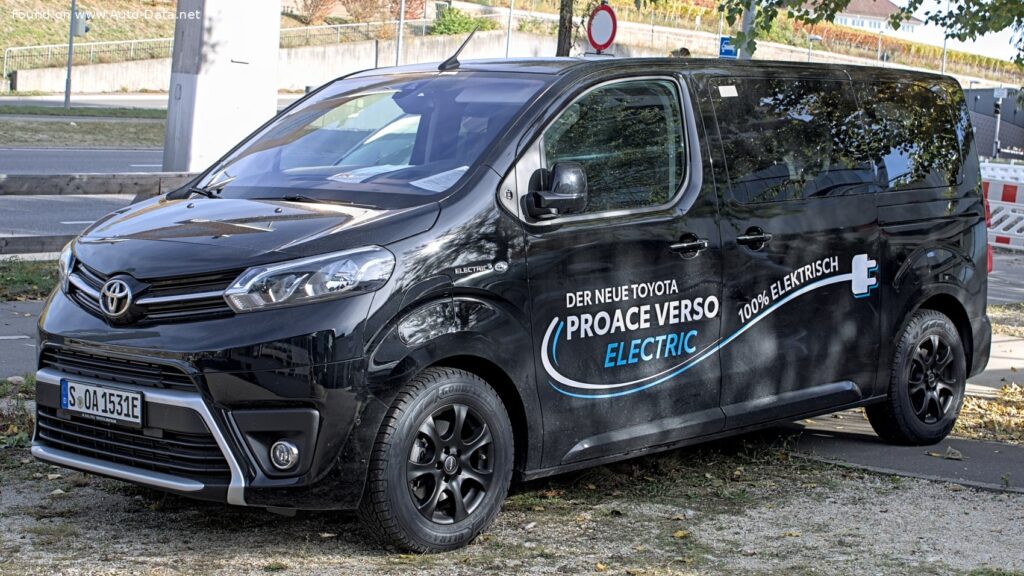
Toyota Proace Verso II SWB 50 kWh (136 Hp) Electric: An Overview of Toyota’s European Electric Minivan
The Toyota Proace Verso II SWB 50 kWh (136 Hp) Electric represents a significant stride in Toyota’s electrification strategy within the European market. Launched in April 2021 and produced until August 2022, this second-generation Proace Verso, in its short-wheelbase (SWB) electric variant, serves as a versatile and environmentally conscious minivan, catering to both family and commercial transport needs. Unlike many of Toyota’s internally developed models, the Proace Verso is a result of a collaborative venture, being a rebadged variant of a platform shared with Stellantis (formerly PSA Group) vehicles, including the Peugeot e-Traveller, Citroën ë-Spacetourer, and Opel Zafira-e Life. This strategic partnership allowed Toyota to quickly introduce a competitive electric vehicle into the burgeoning European light commercial vehicle (LCV) and multi-purpose vehicle (MPV) segments, where electrification is rapidly gaining traction due to stringent emissions regulations and growing consumer demand for sustainable mobility solutions. While not sold in the United States, its role in Europe underscores Toyota’s global commitment to expanding its electric vehicle portfolio, offering practical, zero-emission transportation.
Powertrain and Performance of the Toyota Proace Verso II SWB
At the heart of the Toyota Proace Verso II SWB 50 kWh (136 Hp) Electric lies a robust and efficient battery-electric powertrain. This BEV (Battery Electric Vehicle) architecture is designed to deliver smooth, quiet, and emissions-free operation, making it an ideal choice for urban environments and longer journeys alike. The electric motor, designated ZK01, is transversely mounted on the front axle, providing power directly to the front wheels. It generates a respectable 136 horsepower (Hp) and an instant 191.77 lb.-ft. of torque. This immediate torque delivery is a characteristic advantage of electric vehicles, offering brisk acceleration from a standstill, which is particularly beneficial for navigating city traffic or merging onto highways.
Powering the electric motor is a 50 kWh gross capacity lithium-ion (Li-Ion) battery pack, strategically located below the floor to optimize weight distribution and maintain a low center of gravity. This placement not only enhances the vehicle’s stability and handling but also ensures that interior space remains uncompromised. The battery provides an all-electric range (WLTP) of approximately 136.08 miles, which is suitable for daily commutes and regional travel. Energy consumption figures range from 40.72 to 42.81 kWh per 100 miles, translating to an impressive 79-83 MPGe (Miles Per Gallon equivalent), highlighting its energy efficiency. The vehicle’s top speed is electronically limited to 80.78 mph, a common practice for electric vans and minivans, prioritizing range and efficiency over outright speed. The drivetrain features a simple yet effective 1-gear automatic transmission, characteristic of most electric vehicles, providing a seamless and intuitive driving experience without the need for traditional gear shifts.
Design and Features: Practicality Meets Modernity
The Toyota Proace Verso II SWB 50 kWh (136 Hp) Electric adopts a functional and contemporary design, typical of modern minivans, emphasizing practicality and passenger comfort. As a minivan with five doors, it offers excellent accessibility, especially with its sliding rear doors, making entry and exit easy for passengers in tight parking spaces. The vehicle is designed to accommodate 8 to 9 seats, providing flexible seating arrangements to suit various needs, whether for large families, shuttle services, or group transport. With a length of 195.24 inches, a width of 75.59 inches, and a height of 74.41 inches, the Proace Verso SWB strikes a balance between maneuverability and interior spaciousness. The generous 128.94-inch wheelbase contributes to a stable ride and ample legroom for all occupants.
Inside, the Proace Verso offers impressive cargo versatility. The trunk space ranges from a minimum of 21.29 cubic feet with all seats in place, expanding dramatically to a maximum of 140.13 cubic feet when the rear seats are folded or removed, transforming it into a highly capable cargo carrier. This flexibility makes it a compelling option for a wide array of uses. The vehicle’s robust construction allows for a maximum load of 2019.43 lbs. and a permitted trailer load with brakes of 2204.62 lbs., further extending its utility.
Mechanically, the Proace Verso II SWB features an independent McPherson strut front suspension and a wishbone rear suspension, engineered to provide a comfortable ride and stable handling, even when fully loaded. All four wheels are equipped with disc brakes, complemented by an Anti-lock Braking System (ABS) for enhanced stopping power and safety. The electric power steering system ensures light and responsive steering, facilitating easy maneuvering in urban settings. It rides on 225/55 R17 tires mounted on 17-inch wheel rims, providing a good balance of grip, comfort, and efficiency.
Technical Specifications
| Category | Specification |
|---|---|
| Brand | Toyota |
| Model | Proace Verso II SWB |
| Type (Engine) | 50 kWh (136 Hp) Electric |
| Start of Production | April, 2021 |
| End of Production | August, 2022 |
| Powertrain Architecture | BEV (Electric Vehicle) |
| Body Type | Minivan |
| Seats | 8-9 |
| Doors | 5 |
| Performance Specs | |
| Fuel Type | Electricity |
| Maximum Speed | 80.78 mph (130 km/h) |
| Weight-to-Power Ratio | 13.9 kg/Hp, 71.8 Hp/tonne |
| Weight-to-Torque Ratio | 7.3 kg/Nm, 137.3 Nm/tonne |
| Electric Cars and Hybrids Specs | |
| Gross Battery Capacity | 50 kWh |
| Battery Technology | Lithium-ion (Li-Ion) |
| Battery Location | Below the floor |
| All-Electric Range (WLTP) | 136.08 mi (219 km) |
| Average Energy Consumption (WLTP) | 40.72 – 42.81 kWh/100 mi (25.3-26.6 kWh/100 km) |
| MPGe Equivalent | 83 – 79 MPGe |
| Electric Motor Power | 136 Hp |
| Electric Motor Torque | 191.77 lb.-ft. (260 Nm) |
| Electric Motor Model/Code | ZK01 |
| Electric Motor Location | Front axle, Transverse |
| Electric Motor Type | Synchronous |
| System Power | 136 Hp |
| System Torque | 191.77 lb.-ft. (260 Nm) |
| Space, Volume, and Weights | |
| Kerb Weight | 4175.56 lbs. (1894 kg) |
| Max. Weight | 6194.99 lbs. (2810 kg) |
| Max Load | 2019.43 lbs. (916 kg) |
| Trunk (Boot) Space – Minimum | 21.29 cu. ft. (603 l) |
| Trunk (Boot) Space – Maximum | 140.13 cu. ft. (3968 l) |
| Permitted Trailer Load with Brakes (12%) | 2204.62 lbs. (1000 kg) |
| Permitted Towbar Download | 132.28 lbs. (60 kg) |
| Dimensions | |
| Length | 195.24 in. (4959 mm) |
| Width | 75.59 in. (1920 mm) |
| Height | 74.41 in. (1890 mm) |
| Wheelbase | 128.94 in. (3275 mm) |
| Front Track | 64.06 in. (1627 mm) |
| Rear (Back) Track | 62.99 in. (1600 mm) |
| Drivetrain, Brakes, and Suspension Specs | |
| Drivetrain Architecture | One electric motor drives the front wheels. |
| Drive Wheel | Front wheel drive |
| Number of Gears and Type of Gearbox | 1 gear, automatic transmission |
| Front Suspension | Independent type McPherson |
| Rear Suspension | Wishbone |
| Front Brakes | Disc |
| Rear Brakes | Disc |
| Assisting Systems | ABS (Anti-lock braking system) |
| Steering Type | Steering rack and pinion |
| Power Steering | Electric Steering |
| Tires Size | 225/55 R17 |
| Wheel Rims Size | 17 inches |
Legacy and Market Impact in Europe
The Toyota Proace Verso II SWB 50 kWh (136 Hp) Electric plays a crucial role in Toyota’s strategy to electrify its commercial and passenger vehicle lineup in Europe. As part of a collaborative effort, it shares its platform with several key players in the European market, including the Peugeot e-Traveller, Citroën ë-Spacetourer, Opel Zafira-e Life, and more recently, the Fiat E-Ulysse. This multi-brand approach to a single platform, originally developed by PSA Group, has allowed each manufacturer to offer a competitive electric minivan without incurring the full development costs individually. For Toyota, it provided a quick entry into the electric minivan segment, complementing its existing hybrid and fuel-cell vehicle offerings.
In the European market, the Proace Verso Electric competes against a growing number of electric vans and minivans, including its platform siblings, as well as offerings from Mercedes-Benz (e-Vito Tourer, EQV) and Volkswagen (ID. Buzz Cargo/Pro). Its reputation is built on Toyota’s renowned reliability and customer service, combined with the practical design and efficiency of its shared platform. It appeals strongly to businesses seeking to reduce their carbon footprint for shuttle services, delivery fleets, or corporate transport, as well as large families looking for an eco-friendly and spacious vehicle for long-distance travel within range limitations or daily chores.
The introduction of the electric Proace Verso underscored the increasing demand for zero-emission alternatives in the LCV and MPV sectors, driven by stricter urban emissions zones and rising fuel costs. While its production run from April 2021 to August 2022 was relatively short, it effectively demonstrated Toyota’s capability to offer a fully electric solution in this segment and paved the way for future iterations or replacements that will continue to evolve with battery technology and charging infrastructure. Its impact lies in its contribution to diversifying the electric vehicle options available to European consumers and businesses, reinforcing the shift towards sustainable transportation solutions across the continent.