
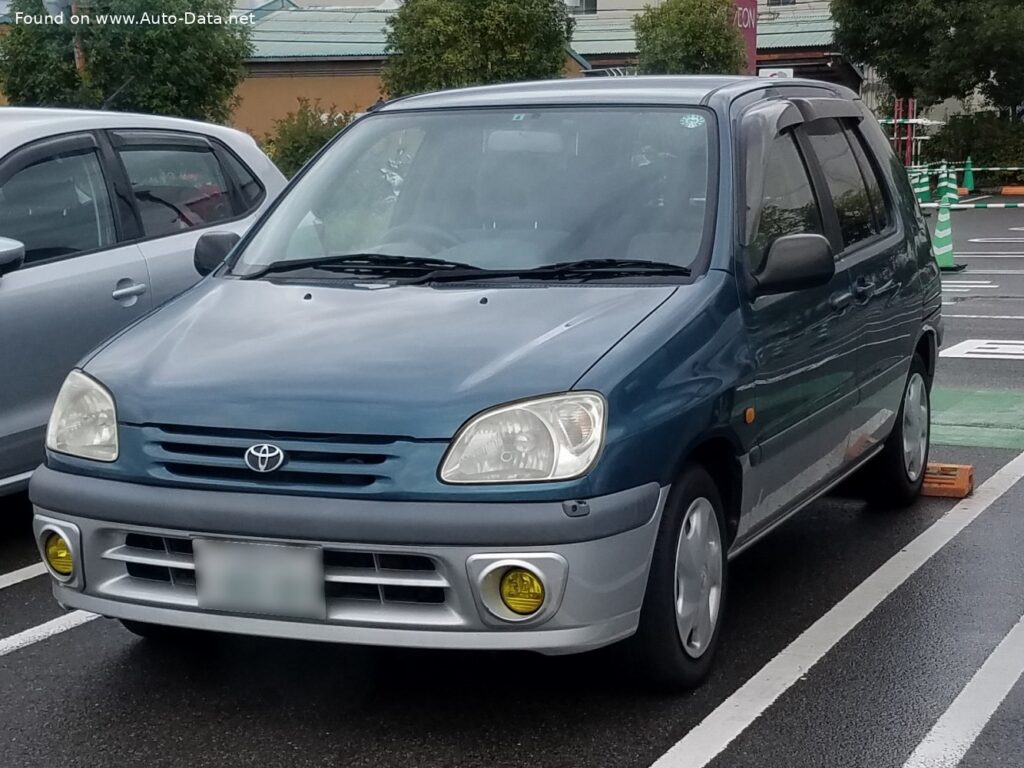
The Toyota Raum: A Compact Minivan for the Japanese Domestic Market
The Toyota Raum, a name derived from the German word for “space,” was a compact multi-purpose vehicle (MPV) produced by the Japanese automaker Toyota. This particular generation, spanning from 1997 to 2003, represented Toyota’s answer to the burgeoning demand for highly practical, fuel-efficient, and maneuverable family vehicles in its domestic market. Designed primarily for urban environments and small families, the Raum prioritized interior volume and user-friendliness within a remarkably compact footprint. The variant under review, the 1.5 i 16V (91 Hp) 4WD, offered an additional layer of versatility with its all-wheel-drive capability, making it a compelling choice for those navigating varied road conditions or seeking enhanced traction. Though never officially imported to the United States, the Raum exemplifies a significant segment of the Japanese automotive landscape, showcasing Toyota’s mastery in creating highly functional and reliable vehicles tailored to specific regional needs.
Engineering and Performance of the Toyota Raum
At the heart of the 1997-2003 Toyota Raum 1.5 i 16V (91 Hp) 4WD lies a dependable 1.5-liter (1497 cubic centimeters or 91.35 cubic inches) inline four-cylinder engine. This powerplant, designated as an internal combustion engine, was engineered for efficiency and smooth operation rather than outright speed. It utilized a Double Overhead Camshaft (DOHC) valvetrain with four valves per cylinder, a configuration that was advanced for its time and contributed to better breathing and overall engine efficiency. Fuel delivery was handled by a multi-port manifold injection system, ensuring precise fuel metering for optimal combustion. As a naturally aspirated engine, it delivered its power linearly and predictably.
The engine produced a respectable 91 horsepower at 5400 revolutions per minute (rpm), translating to a power-per-liter output of 60.8 horsepower per liter. Torque figures stood at 95.88 pound-feet (130 Newton-meters) at 4400 rpm, providing adequate pulling power for city driving and light loads. Power was transmitted to all four wheels via a four-speed automatic transmission, a common and reliable choice for compact vehicles of this era. The all-wheel-drive (4WD) system was a key differentiator for this particular Raum variant, offering enhanced stability and grip, especially beneficial in regions with challenging weather or unpaved roads.
In terms of performance, the Toyota Raum 1.5 i 16V (91 Hp) 4WD achieved a maximum speed of approximately 105.63 miles per hour (170 kilometers per hour). Fuel economy was a strong suit for this compact minivan, with urban consumption rated at 21.4 US miles per gallon (11 liters per 100 kilometers) and extra-urban consumption reaching 33.6 US miles per gallon (7 liters per 100 kilometers). These figures underscored its economical nature, a crucial factor for Japanese consumers. The vehicle’s weight-to-power ratio was 13.1 kilograms per horsepower (76.5 horsepower per tonne), and its weight-to-torque ratio was 9.2 kilograms per Newton-meter (109.2 Newton-meters per tonne), indicating a balanced approach to performance and efficiency for its segment.
Design, Features, and Practicality
The design philosophy of the Toyota Raum was dictated by its purpose: to maximize interior space within minimal exterior dimensions. Classified as a minivan, or more accurately, a compact MPV, it featured a tall, boxy silhouette characteristic of vehicles designed for high utility. With five doors and seating for five occupants, the Raum offered easy access and versatile seating arrangements, a hallmark of its segment. Its dimensions were remarkably compact, measuring 159.25 inches (4045 mm) in length, 66.34 inches (1685 mm) in width, and 61.02 inches (1550 mm) in height. The relatively long wheelbase of 99.21 inches (2520 mm) for its overall length contributed to a stable ride and generous interior room.
The exterior styling was functional and understated, reflecting Toyota’s pragmatic approach to design during this period. Large glass areas ensured excellent visibility, a boon in congested urban environments. Inside, the cabin was designed for practicality and durability, with materials chosen to withstand the rigors of family use. While specific interior features beyond seating capacity are not detailed, compact MPVs of this era typically offered clever storage solutions, flat-folding rear seats, and other amenities to enhance versatility.
For safety and driving dynamics, the Raum was equipped with an Anti-lock Braking System (ABS) as a standard assisting system, providing improved control during emergency braking. The steering system utilized a hydraulic rack and pinion setup, offering responsive and light steering, which was particularly advantageous for parking and maneuvering in tight spaces. The suspension system featured wishbones at the front and coil springs at the rear, a configuration aimed at providing a comfortable and compliant ride, suitable for daily commuting. Braking duties were handled by ventilated discs at the front and traditional drum brakes at the rear. The vehicle rode on 175/65 R14 tires, a common size for compact cars, prioritizing comfort, fuel efficiency, and a quiet ride. The fuel tank capacity was 11.89 US gallons (45 liters), providing a decent range given its economical fuel consumption.
Technical Specifications: Toyota Raum 1.5 i 16V (91 Hp) 4WD
| Category | Specification | US/Imperial Equivalent |
|---|---|---|
| General Information | ||
| Brand | Toyota | |
| Model | Raum | |
| Generation | Raum (First Generation) | |
| Type (Engine) | 1.5 i 16V (91 Hp) 4WD | |
| Start of Production | 1997 year | |
| End of Production | 2003 year | |
| Powertrain Architecture | Internal Combustion engine | |
| Body type | Minivan | |
| Seats | 5 | |
| Doors | 5 | |
| Performance Specs | ||
| Fuel Consumption (Urban) | 11 l/100 km | 21.4 US mpg |
| Fuel Consumption (Extra Urban) | 7 l/100 km | 33.6 US mpg |
| Fuel Type | Petrol (Gasoline) | |
| Maximum Speed | 170 km/h | 105.63 mph |
| Weight-to-Power Ratio | 13.1 kg/Hp | 76.5 Hp/tonne |
| Weight-to-Torque Ratio | 9.2 kg/Nm | 109.2 Nm/tonne |
| Engine Specs | ||
| Power | 91 Hp @ 5400 rpm | 91 Hp @ 5400 rpm |
| Power per liter | 60.8 Hp/l | |
| Torque | 130 Nm @ 4400 rpm | 95.88 lb.-ft. @ 4400 rpm |
| Engine Layout | Front, Transverse | |
| Engine Displacement | 1497 cm³ | 91.35 cu. in. (1.5 liters) |
| Number of Cylinders | 4 | |
| Engine Configuration | Inline | |
| Cylinder Bore | 74 mm | 2.91 in. |
| Piston Stroke | 87 mm | 3.43 in. |
| Compression Ratio | 9.8:1 | |
| Number of Valves per Cylinder | 4 | |
| Fuel Injection System | Multi-port manifold injection | |
| Engine Aspiration | Naturally aspirated engine | |
| Valvetrain | DOHC | |
| Space, Volume and Weights | ||
| Kerb Weight | 1190 kg | 2623.5 lbs. |
| Fuel Tank Capacity | 45 l | 11.89 US gal |
| Dimensions | ||
| Length | 4045 mm | 159.25 in. |
| Width | 1685 mm | 66.34 in. |
| Height | 1550 mm | 61.02 in. |
| Wheelbase | 2520 mm | 99.21 in. |
| Front Track | 1400 mm | 55.12 in. |
| Rear (Back) Track | 1395 mm | 54.92 in. |
| Drivetrain, Brakes and Suspension Specs | ||
| Drive Wheel | All wheel drive (4×4) | |
| Number of Gears and Type of Gearbox | 4 gears, automatic transmission | |
| Front Suspension | Wishbone | |
| Rear Suspension | Coil spring | |
| Front Brakes | Ventilated discs | |
| Rear Brakes | Drum | |
| Assisting Systems | ABS (Anti-lock braking system) | |
| Steering Type | Steering rack and pinion | |
| Power Steering | Hydraulic Steering | |
| Tires Size | 175/65 R14 |
Legacy and Market Impact of the Toyota Raum
The Toyota Raum, particularly this first-generation model (1997-2003), carved out a significant niche in the highly competitive Japanese domestic market. Its primary impact stemmed from its ability to deliver exceptional practicality and reliability in a compact, urban-friendly package. In a country where space is at a premium and fuel efficiency is paramount, the Raum perfectly addressed the needs of young families, urban dwellers, and anyone requiring a versatile daily driver. Its compact dimensions made it easy to park and navigate through narrow city streets, while its generous interior volume, facilitated by its tall design and clever packaging, made it a surprisingly capable hauler for passengers and cargo alike.
Competitors in its segment included other Japanese compact MPVs and minivans, such as the Honda Capa, Nissan Cube, and potentially smaller variants of the Mazda Demio (Mazda2). What set the Raum apart, especially this 4WD variant, was its combination of Toyota’s renowned reliability, sensible engineering, and the added traction provided by its all-wheel-drive system. While not designed for serious off-roading, the 4WD capability offered peace of mind in snowy conditions, on gravel roads, or during heavy rain, making it a more versatile option for families outside of purely metropolitan areas.
The Raum’s legacy is one of quiet competence. It wasn’t a groundbreaking vehicle in terms of styling or performance, but it was a masterclass in fulfilling a specific market need with unwavering dependability. It reinforced Toyota’s reputation for producing rational, well-engineered vehicles that simply worked, day in and day out. While it never achieved global recognition like some of Toyota’s larger models, its success in Japan demonstrated the company’s ability to segment its offerings effectively and cater to diverse consumer demands. The Raum’s emphasis on maximizing interior space and ease of use within a small footprint foreshadowed future trends in compact vehicle design and contributed to the evolution of the compact MPV segment in Japan, influencing subsequent models that continued to prioritize intelligent packaging and urban practicality. Its enduring presence on Japanese roads long after its production ceased is a testament to its robust build quality and the lasting value it offered to its owners.

