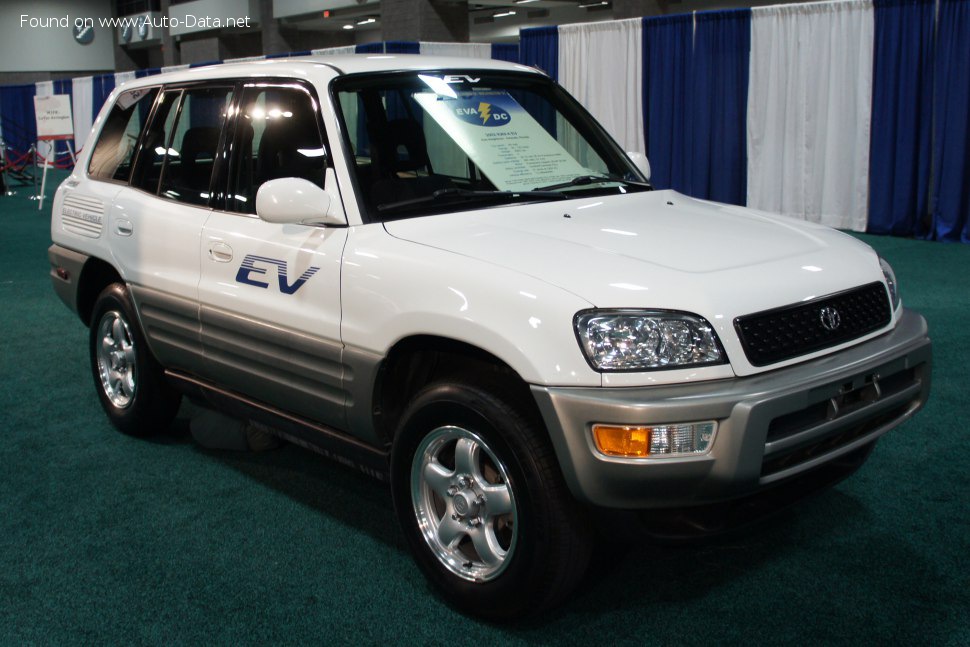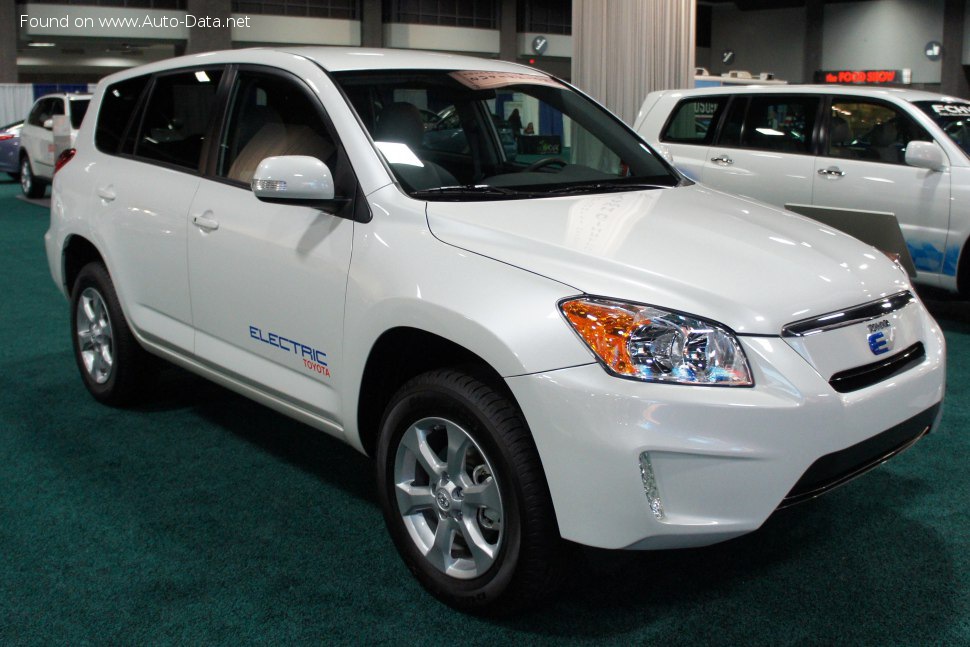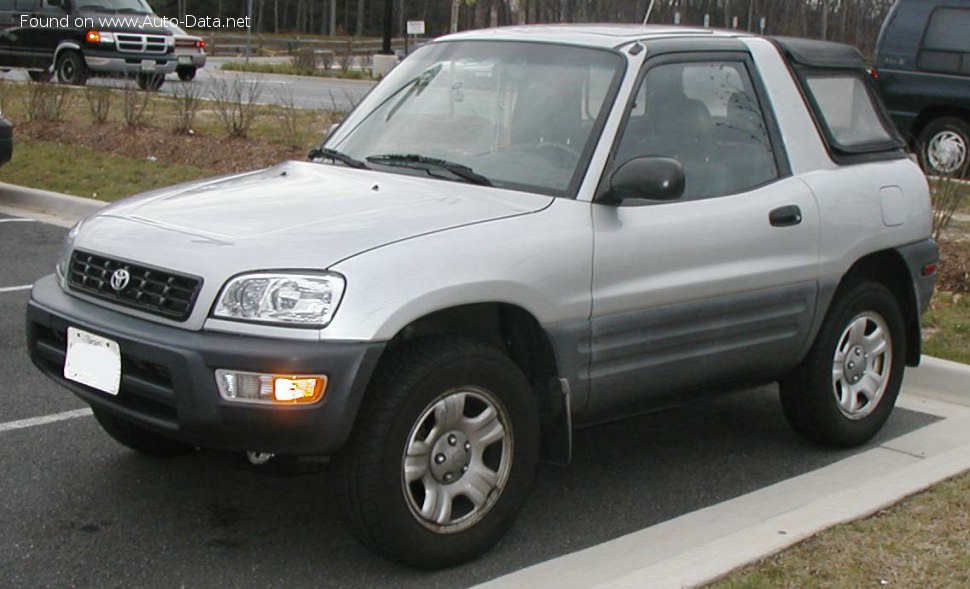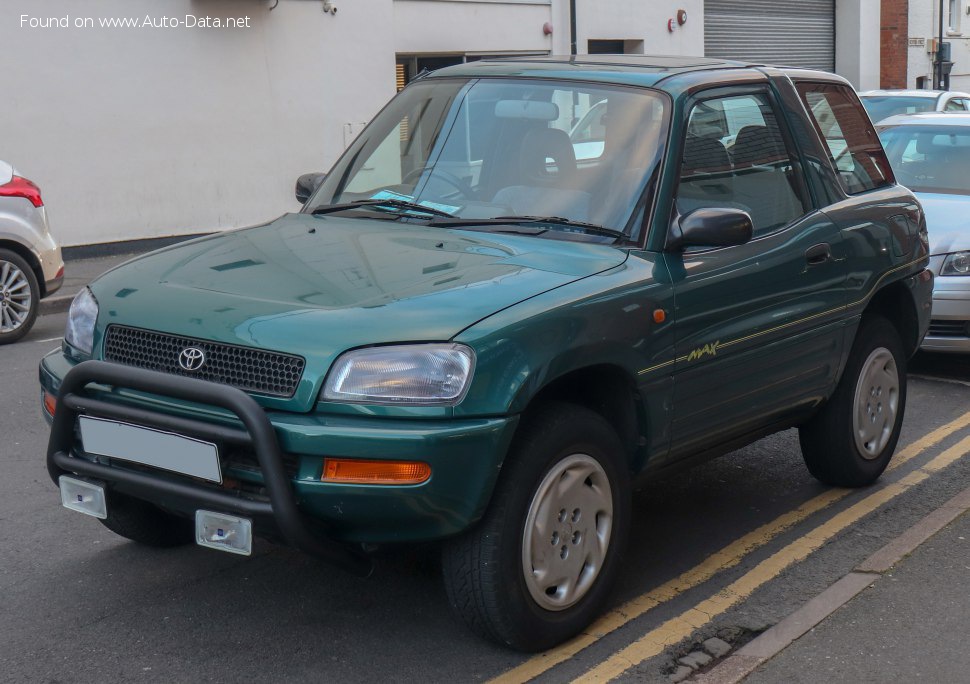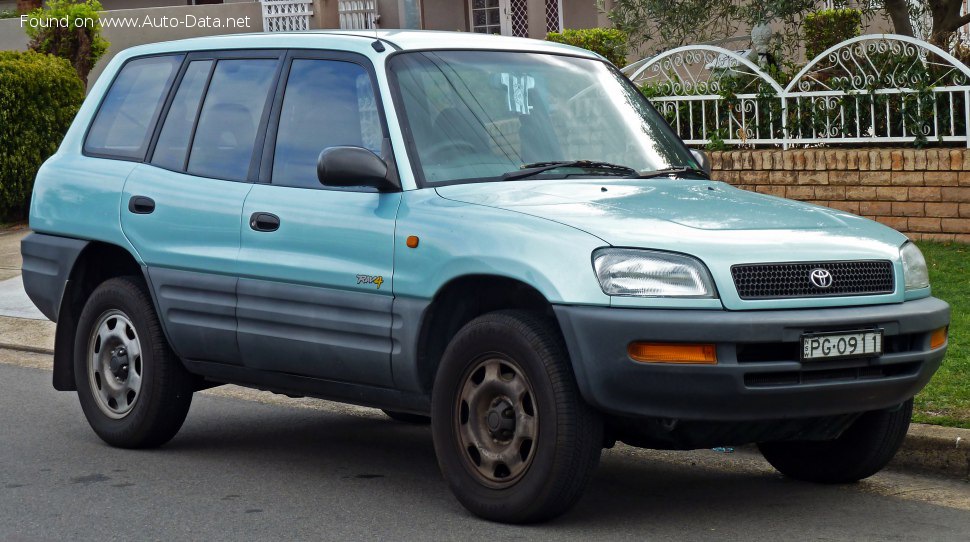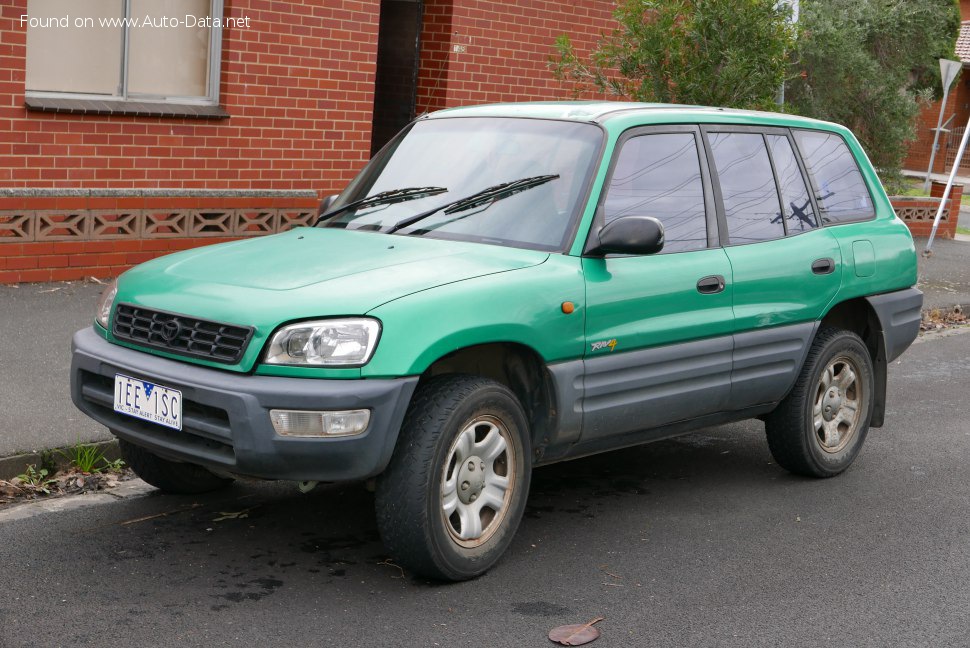
The 1997 Toyota RAV4 I (XA10, facelift 1997) 5-door: A Pioneer in the Compact SUV Segment
The Toyota RAV4, an acronym for “Recreational Activity Vehicle: 4-wheel drive,” debuted in 1994, marking a pivotal moment in automotive history. It was among the first vehicles to successfully blend the practicality and elevated driving position of an SUV with the fuel efficiency and car-like driving dynamics of a compact sedan. The first generation, internally designated XA10, quickly established a new market segment: the compact crossover SUV. The model under scrutiny here is the Toyota RAV4 I (XA10, facelift 1997) 5-door, specifically the 2.0i 16V (126 Hp) 4WD Automatic variant, produced from January 1997 until 2000. This facelifted version refined an already successful formula, bringing subtle enhancements to its design and features while retaining its core appeal as a versatile and reliable family vehicle.
Positioned as a more maneuverable and economical alternative to traditional, truck-based SUVs, the RAV4 appealed to a broad demographic, from young urban professionals to small families seeking adventure without sacrificing everyday usability. Its unibody construction, four-wheel independent suspension, and full-time all-wheel-drive system set it apart from many larger, more rugged SUVs of the era, which often utilized body-on-frame architectures and part-time 4WD systems. The 1997 facelift ensured its continued competitiveness in a rapidly evolving market, solidifying its reputation as a segment leader and a trendsetter for future compact crossovers.
Engine and Performance of the Toyota RAV4 I (XA10, facelift 1997) 5-door
At the heart of the 1997 Toyota RAV4 I (XA10, facelift 1997) 5-door 2.0i 16V Automatic model was Toyota’s venerable 3S-FE engine. This naturally aspirated, inline four-cylinder powerplant, boasting a 16-valve DOHC (Double Overhead Camshaft) configuration, displaced 1998 cm3 (121.93 cu. in.). Known for its robust construction and impressive longevity, the 3S-FE was a workhorse engine that delivered a balanced blend of power and efficiency suitable for the RAV4’s intended purpose.
The engine produced a respectable 126 horsepower at 5400 rpm, paired with 178 Nm (131.29 lb.-ft.) of torque peaking at 4400 rpm. This output provided adequate acceleration and cruising capability for the vehicle, which weighed in at 1270 kg (2799.87 lbs.) curb weight. The power-to-weight ratio stood at 10.1 kg/Hp (99.2 Hp/tonne), indicating a lively, if not outright sporty, driving experience for its class. Power was routed to all four wheels via a conventional, yet reliable, 4-speed automatic transmission. This full-time all-wheel-drive (4WD) system provided enhanced traction and stability, particularly in adverse weather conditions or on light off-road trails, without requiring driver intervention.
Performance figures included a top speed of 170 km/h (105.63 mph). Fuel economy, a key consideration for the compact SUV segment, was competitive for the time. The combined fuel consumption was rated at 9.8 l/100 km (24 US mpg, 28.8 UK mpg), with urban consumption at 12.6 l/100 km (18.7 US mpg) and extra-urban at 8.1 l/100 km (29 US mpg). These figures, achieved with multi-port manifold injection and a 9.8:1 compression ratio, underscored the RAV4’s practical design, balancing performance with everyday running costs.
Design and Features
The 1997 Toyota RAV4 I (XA10) 5-door presented a distinctive and appealing aesthetic that helped define the compact SUV genre. Its body type was a classic SUV, but with a more rounded, less utilitarian silhouette than traditional off-roaders. Measuring 4115 mm (162.01 in.) in length, 1695 mm (66.73 in.) in width, and 1660 mm (65.35 in.) in height, with a wheelbase of 2410 mm (94.88 in.), the RAV4 struck an ideal balance between exterior compactness and interior spaciousness. The five-door configuration provided easy access to both front and rear seating, accommodating five occupants comfortably.
From a design perspective, the 1997 facelift introduced subtle refinements, including updated front and rear fascias, contributing to a slightly more modern appearance. Its high ground clearance and short overhangs hinted at its capability beyond paved roads, while the spare tire mounted on the rear tailgate became an iconic design cue for the segment. The interior was characterized by its practical layout and durable materials. The 409 liters (14.44 cu. ft.) of minimum trunk space could be expanded to a generous 645 liters (22.78 cu. ft.) with the rear seats folded, offering considerable versatility for cargo. The 58-liter (15.32 US gal) fuel tank provided a decent cruising range.
Underneath, the RAV4 was engineered for a comfortable and predictable ride. It featured an independent McPherson strut suspension at the front and a double wishbone setup at the rear, a configuration more commonly found in passenger cars, contributing significantly to its car-like handling. Braking duties were handled by ventilated discs at the front and drum brakes at the rear, providing reliable stopping power. The hydraulic rack and pinion steering system offered precise control and good feedback, enhancing the driving experience. The vehicle rode on 215/70 R16 tires mounted on 6.0J x 16 wheel rims, providing a good balance of grip and ride comfort. Safety features, standard for the late 1990s, included robust body construction and, in many markets, dual front airbags, making it a secure option for families.
Technical Specifications
| Category | Specification | Metric Value | US/Imperial Equivalent |
|---|---|---|---|
| General Information | |||
| Brand | Toyota | ||
| Model | RAV4 | ||
| Generation | RAV4 I (XA10, facelift 1997) 5-door | ||
| Type (Engine) | 2.0i 16V (126 Hp) 4WD Automatic | ||
| Start of production | January, 1997 year | ||
| End of production | 2000 year | ||
| Powertrain Architecture | Internal Combustion engine | ||
| Body type | SUV | ||
| Seats | 5 | ||
| Doors | 5 | ||
| Performance Specs | |||
| Fuel consumption (economy) – urban | 12.6 l/100 km | 18.7 US mpg | |
| Fuel consumption (economy) – extra urban | 8.1 l/100 km | 29 US mpg | |
| Fuel consumption (economy) – combined | 9.8 l/100 km | 24 US mpg | |
| Fuel Type | Petrol (Gasoline) | ||
| Maximum speed | 170 km/h | 105.63 mph | |
| Weight-to-power ratio | 10.1 kg/Hp | 99.2 Hp/tonne | |
| Weight-to-torque ratio | 7.1 kg/Nm | 140.2 Nm/tonne | |
| Engine Specs | |||
| Power | 126 Hp @ 5400 rpm | ||
| Power per liter | 63.1 Hp/l | ||
| Torque | 178 Nm @ 4400 rpm | 131.29 lb.-ft. @ 4400 rpm | |
| Engine layout | Front, Transverse | ||
| Engine Model/Code | 3S-FE | ||
| Engine displacement | 1998 cm3 | 121.93 cu. in. | |
| Number of cylinders | 4 | ||
| Engine configuration | Inline | ||
| Cylinder Bore | 86 mm | 3.39 in. | |
| Piston Stroke | 86 mm | 3.39 in. | |
| Compression ratio | 9.8:1 | ||
| Number of valves per cylinder | 4 | ||
| Fuel injection system | Multi-port manifold injection | ||
| Engine aspiration | Naturally aspirated engine | ||
| Valvetrain | DOHC | ||
| Engine oil capacity | 4.1 l | 4.33 US qt | |
| Coolant | 7.7 l | 8.14 US qt | |
| Space, Volume and Weights | |||
| Kerb Weight | 1270 kg | 2799.87 lbs. | |
| Trunk (boot) space – minimum | 409 l | 14.44 cu. ft. | |
| Trunk (boot) space – maximum | 645 l | 22.78 cu. ft. | |
| Fuel tank capacity | 58 l | 15.32 US gal | |
| Permitted trailer load with brakes (12%) | 1500 kg | 3306.93 lbs. | |
| Dimensions | |||
| Length | 4115 mm | 162.01 in. | |
| Width | 1695 mm | 66.73 in. | |
| Height | 1660 mm | 65.35 in. | |
| Wheelbase | 2410 mm | 94.88 in. | |
| Front track | 1460 mm | 57.48 in. | |
| Rear (Back) track | 1465 mm | 57.68 in. | |
| Minimum turning circle (turning diameter) | 10.8 m | 35.43 ft. | |
| Drivetrain, Brakes and Suspension Specs | |||
| Drive wheel | All wheel drive (4×4) | ||
| Number of gears and type of gearbox | 4 gears, automatic transmission | ||
| Front suspension | Independent type McPherson | ||
| Rear suspension | Double wishbone | ||
| Front brakes | Ventilated discs | ||
| Rear brakes | Drum | ||
| Steering type | Steering rack and pinion | ||
| Power steering | Hydraulic Steering | ||
| Tires size | 215/70 R16 | ||
| Wheel rims size | 6.0J x 16 | ||
Legacy and Market Impact
The Toyota RAV4 I (XA10, facelift 1997) 5-door holds a significant place in automotive history, not just as a successful model for Toyota, but as a foundational vehicle for an entire segment. When it first arrived, the market was dominated by either rugged, thirsty, truck-based SUVs or conventional sedans and hatchbacks. The RAV4 effectively carved out a niche for a vehicle that offered the best of both worlds: the commanding driving position and visual appeal of an SUV, combined with the comfortable ride, nimble handling, and fuel efficiency of a passenger car.
Its innovative unibody construction and independent suspension were crucial in defining the “crossover” concept, setting a precedent that virtually every major automaker would eventually follow. The RAV4’s success demonstrated a clear consumer demand for a more refined, family-friendly SUV that didn’t compromise on everyday practicality. This foresight positioned Toyota as an early leader in a segment that would explode in popularity in the subsequent decades. The 1997 facelift, in particular, helped maintain its competitive edge during a period when rivals began to emerge.
Competitors in its primary markets, including the USA, soon followed suit. Vehicles like the Honda CR-V, Subaru Forester, and later, the Ford Escape and Nissan X-Trail, were direct responses to the RAV4’s success. Each of these models aimed to capture a share of the burgeoning compact crossover market, but the RAV4’s early establishment and strong reputation for Toyota’s hallmark reliability gave it a distinct advantage. Its enduring popularity is a testament to its well-engineered design and the fundamental soundness of its concept.
Even today, the first-generation RAV4, especially the facelifted XA10, is remembered for its pioneering spirit, versatility, and robust mechanicals. It laid the groundwork for the modern compact SUV, influencing countless designs and engineering philosophies across the industry. Its legacy is evident in the ubiquitous presence of crossovers on roads worldwide, a segment that the original Toyota RAV4 played a crucial role in creating and popularizing.