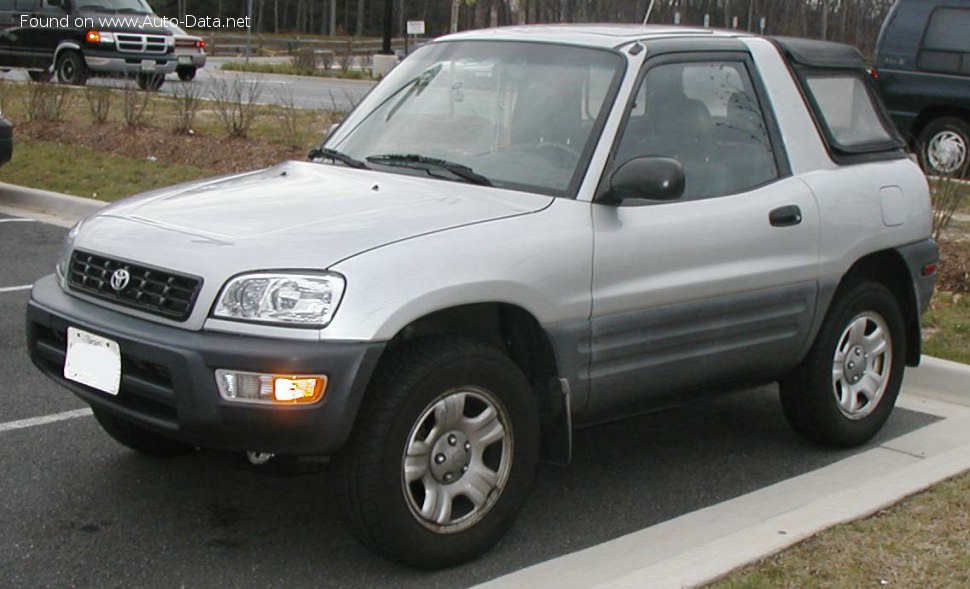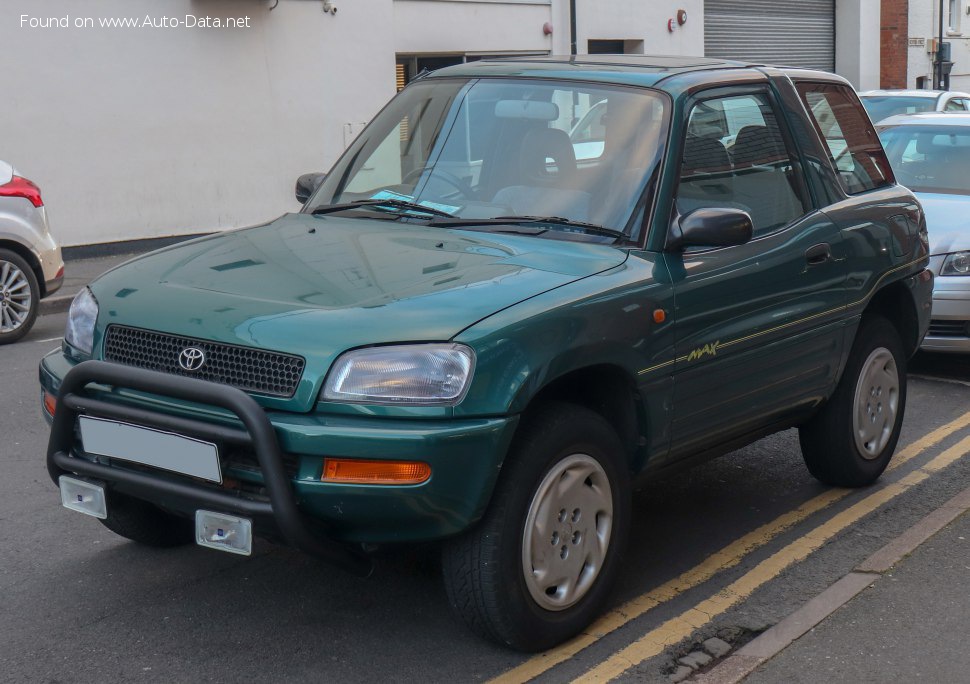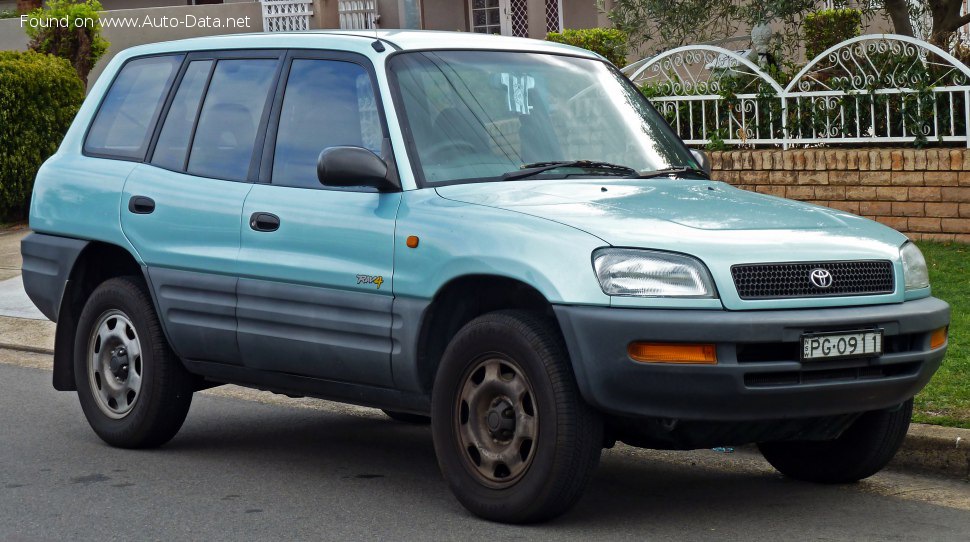
Toyota RAV4 II (XA20) 3-door 1.8 VVTi (125 Hp)
The Toyota RAV4, an acronym for “Recreational Activity Vehicle: 4-wheel drive,” debuted in 1994, pioneering the compact SUV segment. The second generation, designated XA20, built upon this successful formula, offering a more refined and capable package. Produced from 2000 to 2005, the XA20 generation solidified the RAV4’s position as a global leader in its class. This article focuses specifically on the Toyota RAV4 II (XA20) 3-door 1.8 VVTi (125 Hp) variant, a model primarily aimed at European and Asian markets, where its compact dimensions and efficient powertrain resonated strongly with urban and suburban buyers seeking versatility without the bulk of traditional SUVs. While the five-door RAV4 was a significant player in the North American market, the three-door model offered a unique blend of sporty appeal and practical utility in regions favoring smaller, more agile vehicles.
Engine and Performance: The 1.8 VVTi Heart of the Toyota RAV4 II (XA20) 3-door 1.8 VVTi (125 Hp)
Under the hood of this particular Toyota RAV4 II (XA20) 3-door 1.8 VVTi (125 Hp) model lies the venerable 1ZZ-FE engine, a 1.8-liter (1794 cm³ or 109.48 cu. in.) naturally aspirated inline-four gasoline engine. This powerplant was a hallmark of Toyota’s engineering prowess during the early 2000s, known for its reliability and the integration of Variable Valve Timing with intelligence (VVTi) technology. VVTi dynamically adjusts the timing of the intake valves, optimizing engine performance across the RPM range, leading to improved fuel efficiency and a broader torque curve.
The 1ZZ-FE engine in this RAV4 delivers a respectable 125 horsepower at 6000 rpm, translating to a power-per-liter output of 69.7 Hp/l. Torque peaks at 161 Nm (118.75 lb.-ft.) at 4200 rpm, providing adequate pulling power for city driving and light highway duties. Power is sent to the front wheels via a smooth-shifting 5-speed manual transmission, emphasizing driver engagement and control.
Performance figures for the Toyota RAV4 II (XA20) 3-door 1.8 VVTi (125 Hp) are modest but entirely appropriate for its intended purpose. It accelerates from 0 to 60 mph in a calculated 11.6 seconds (0-100 km/h in 12.2 seconds) and reaches a maximum speed of 108.74 mph (175 km/h). These numbers underscore its role as a practical, everyday vehicle rather than a performance-oriented machine. Fuel economy was a significant selling point, with a combined rating of 38.6 US mpg (6.1 l/100 km), reflecting the efficiency benefits of the VVTi system and the relatively light curb weight of 2480.2 to 2722.71 lbs. (1125-1235 kg). The engine’s DOHC (Double Overhead Camshaft) valvetrain with 4 valves per cylinder further contributed to its efficiency and responsiveness.
Design and Features: Compact Utility and Enduring Style
The Toyota RAV4 II (XA20) 3-door variant distinguished itself with its more compact and somewhat sportier appearance compared to its five-door sibling. Measuring between 151.57 and 152.17 inches (3850-3865 mm) in length, 68.31 to 70.28 inches (1735-1785 mm) in width, and 65.16 inches (1655 mm) in height, it was designed for maneuverability in tighter urban environments. The 3-door SUV body type, while sacrificing some rear-seat accessibility, offered a unique aesthetic that appealed to a younger demographic or those prioritizing a more nimble footprint.
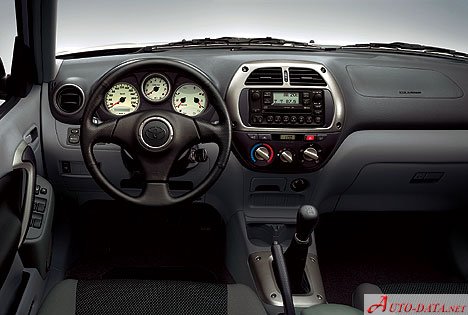
Despite its compact exterior, the Toyota RAV4 II (XA20) 3-door still offered a surprising amount of interior space, accommodating five occupants. The interior design of the XA20 generation was functional and ergonomic, featuring durable materials built to withstand the rigors of daily use. While not laden with luxury, the RAV4 provided essential conveniences and a comfortable cabin for its time.
Practicality was a strong suit, with a minimum trunk space of 5.3 cu. ft. (150 liters) that could expand significantly to 24.37 cu. ft. (690 liters) with the rear seats folded, making it versatile for carrying gear or groceries. The vehicle’s design included a relatively short wheelbase of 89.76 inches (2280 mm), contributing to its tight turning circle of 32.81 ft. (10 m), an invaluable asset in crowded city streets.
Safety features for the era included an Anti-lock Braking System (ABS) as a standard assisting system, paired with ventilated disc brakes at the front and disc brakes at the rear, providing reliable stopping power. The suspension setup, featuring an independent McPherson type at the front and a double wishbone at the rear, offered a comfortable ride quality and stable handling, balancing SUV characteristics with car-like dynamics. The hydraulic power steering system, coupled with a rack and pinion setup, ensured responsive and precise control.
Technical Specifications
| Category | Specification |
|---|---|
| General Information | |
| Brand | Toyota |
| Model | RAV4 |
| Generation | RAV4 II (XA20) 3-door |
| Type (Engine) | 1.8 VVTi (125 Hp) |
| Start of Production | 2000 year |
| End of Production | 2003 year |
| Powertrain Architecture | Internal Combustion engine |
| Body type | SUV |
| Seats | 5 |
| Doors | 3 |
| Performance Specs | |
| Fuel consumption (economy) – urban | 7.8 l/100 km (30.2 US mpg) |
| Fuel consumption (economy) – extra urban | 5.1 l/100 km (46.1 US mpg) |
| Fuel consumption (economy) – combined | 6.1 l/100 km (38.6 US mpg) |
| Fuel Type | Petrol (Gasoline) |
| Acceleration 0 – 60 mph | 11.6 sec |
| Acceleration 0 – 100 km/h | 12.2 sec |
| Maximum speed | 175 km/h (108.74 mph) |
| Weight-to-power ratio | 9 kg/Hp (111.1 Hp/tonne) |
| Weight-to-torque ratio | 7 kg/Nm (143.1 Nm/tonne) |
| Engine Specs | |
| Power | 125 Hp @ 6000 rpm |
| Power per liter | 69.7 Hp/l |
| Torque | 161 Nm @ 4200 rpm (118.75 lb.-ft. @ 4200 rpm) |
| Engine layout | Front, Transverse |
| Engine Model/Code | 1ZZ-FE |
| Engine displacement | 1794 cm³ (1.8 l / 109.48 cu. in.) |
| Number of cylinders | 4 |
| Engine configuration | Inline |
| Cylinder Bore | 79 mm (3.11 in.) |
| Piston Stroke | 91.5 mm (3.6 in.) |
| Compression ratio | 10:1 |
| Number of valves per cylinder | 4 |
| Fuel injection system | Multi-port manifold injection |
| Engine aspiration | Naturally aspirated engine |
| Valvetrain | DOHC, VVT-i |
| Engine oil capacity | 3.7 l (3.91 US qt) |
| Coolant | 6.4 l (6.76 US qt) |
| Space, Volume and Weights | |
| Kerb Weight | 1125-1235 kg (2480.2 – 2722.71 lbs.) |
| Max. weight | 1595 kg (3516.37 lbs.) |
| Max load | 360-470 kg (793.66 – 1036.17 lbs.) |
| Trunk (boot) space – minimum | 150 l (5.3 cu. ft.) |
| Trunk (boot) space – maximum | 690 l (24.37 cu. ft.) |
| Fuel tank capacity | 57 l (15.06 US gal) |
| Dimensions | |
| Length | 3850-3865 mm (151.57 – 152.17 in.) |
| Width | 1735-1785 mm (68.31 – 70.28 in.) |
| Height | 1655 mm (65.16 in.) |
| Wheelbase | 2280 mm (89.76 in.) |
| Front track | 1510 mm (59.45 in.) |
| Rear (Back) track | 1500 mm (59.06 in.) |
| Drag coefficient (Cd) | 0.35 |
| Minimum turning circle (turning diameter) | 10 m (32.81 ft.) |
| Drivetrain, Brakes and Suspension Specs | |
| Drivetrain Architecture | The Internal combustion engine (ICE) drives the front wheels of the vehicle. |
| Drive wheel | Front wheel drive |
| Number of gears and type of gearbox | 5 gears, manual transmission |
| Front suspension | Independent type McPherson |
| Rear suspension | Double wishbone |
| Front brakes | Ventilated discs |
| Rear brakes | Disc |
| Assisting systems | ABS (Anti-lock braking system) |
| Steering type | Steering rack and pinion |
| Power steering | Hydraulic Steering |
| Tires size | 215/70 R16 |
| Wheel rims size | 6.5J x 16 |
Legacy and Market Impact of the Toyota RAV4 II (XA20) 3-door
The second-generation Toyota RAV4, and particularly its 3-door variant, played a crucial role in shaping the burgeoning compact SUV market of the early 2000s. While the 5-door model was the dominant force in North America, offering a more family-oriented package, the Toyota RAV4 II (XA20) 3-door 1.8 VVTi (125 Hp) carved out its niche in Europe, Japan, and other Asian markets. Here, its smaller footprint, efficient 1.8-liter engine, and distinctive styling appealed to buyers who valued urban maneuverability and fuel economy without sacrificing the elevated driving position and rugged aesthetics of an SUV.
Competitors in its segment varied by region but generally included vehicles like the Honda CR-V (though often larger), Nissan X-Trail, Suzuki Grand Vitara, and various European compact SUVs from brands like Land Rover (Freelander) or even some smaller offerings from Volkswagen. The RAV4 consistently stood out due to Toyota’s reputation for unparalleled reliability and build quality, which translated into strong resale values and low ownership costs. The VVTi engine, a standard feature across many Toyota models, further enhanced its appeal by offering a balance of performance and efficiency that was competitive for its time.
The historical significance of the XA20 generation lies in its evolution of the compact SUV concept. It moved further away from its utilitarian, off-road roots towards a more car-like driving experience, a trend that would define the crossover segment for decades to come. The 3-door model, in particular, highlighted the potential for SUVs to be more than just family haulers; they could be stylish, agile, and efficient vehicles for individuals or small families. Its robust construction and dependable mechanicals ensured a long service life for many owners, contributing to Toyota’s enduring image of durability.
In conclusion, the Toyota RAV4 II (XA20) 3-door 1.8 VVTi (125 Hp) may not have been a direct sales giant in the United States, but it was a vital part of the RAV4’s global success story. It represented a smart, practical, and well-engineered compact SUV that perfectly met the needs of its target markets, further cementing the RAV4’s legacy as a pioneer and consistent front-runner in one of the automotive industry’s most competitive segments.