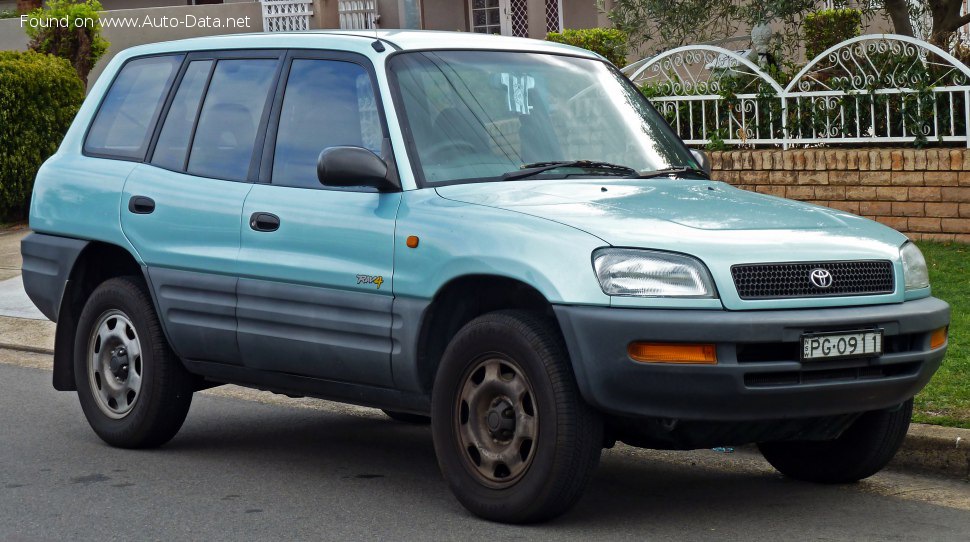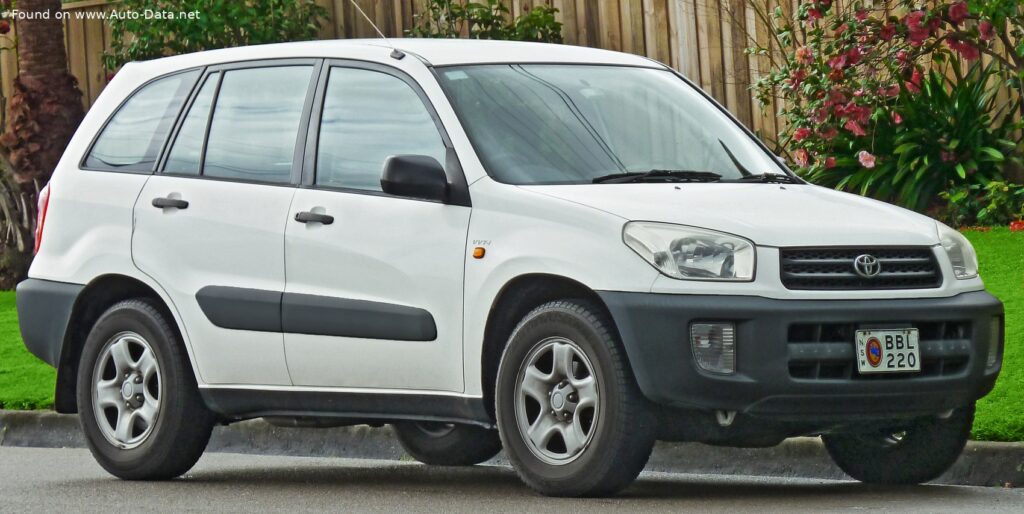
Toyota RAV4 II (XA20) 5-door 1.8 VVTi (125 Hp)
The Toyota RAV4 II (XA20) represents the second generation of Toyota’s groundbreaking compact Sport Utility Vehicle (SUV), produced from 2000 to 2005. This specific variant, the 5-door 1.8 VVTi (125 Hp), was a key offering in the lineup, particularly appealing to consumers seeking a blend of practicality, fuel efficiency, and a car-like driving experience within the burgeoning compact SUV segment. Launched in 2000, the XA20 generation built upon the success of its predecessor, refining its design, enhancing its interior, and improving its overall driving dynamics. The 1.8 VVTi model, produced until 2003, typically featured a front-wheel-drive (FWD) architecture, positioning it as an ideal choice for urban and suburban families who valued versatility and economy over rugged off-road capability.
Evolution of the Toyota RAV4 II (XA20)
The second-generation Toyota RAV4, internally designated XA20, marked a significant step forward for the model. Following the original RAV4’s pioneering role in establishing the compact SUV segment, the XA20 aimed to solidify its market position by offering more refinement, space, and a broader appeal. While the first generation was often seen as a niche, somewhat quirky vehicle, the XA20 matured into a more mainstream offering. It retained the unibody construction and independent suspension that gave it excellent on-road manners, distinguishing it from traditional body-on-frame SUVs. The 5-door configuration, in particular, provided enhanced practicality and passenger comfort, making it a viable alternative to traditional sedans or wagons for many families globally. This 1.8 VVTi variant, with its focus on efficiency and a responsive yet economical engine, was a strategic move to capture a wider audience, especially in markets where fuel costs were a significant consideration.
Engine and Performance
At the heart of the Toyota RAV4 II (XA20) 5-door 1.8 VVTi (125 Hp) lies Toyota’s renowned 1ZZ-FE engine. This 1.8-liter (1794 cm3 or 109.48 cu. in.) inline four-cylinder powerplant was a sophisticated unit for its time, featuring a Double Overhead Camshaft (DOHC) valvetrain and Toyota’s Variable Valve Timing with intelligence (VVT-i) technology. The VVT-i system dynamically adjusts the timing of the intake valves, optimizing engine performance across the RPM range for better power delivery, improved fuel economy, and reduced emissions. This naturally aspirated engine produced a respectable 125 horsepower at 6000 rpm, with a power per liter output of 69.7 Hp/l, showcasing its efficient design. Torque peaked at 118.75 lb.-ft. (161 Nm) at 4200 rpm, providing adequate pulling power for daily driving.
Mated to a smooth-shifting 5-speed manual transmission, the 1.8 VVTi variant delivered power to the front wheels. This front-wheel-drive architecture contributed to its lighter weight and superior fuel economy compared to its all-wheel-drive counterparts. Performance figures for this model included an acceleration from 0 to 60 mph in a calculated 11.6 seconds (0-100 km/h in 12.2 seconds), with a top speed of 108.74 mph (175 km/h). While not a performance powerhouse, these figures were competitive for the compact SUV segment of the early 2000s, perfectly suiting its intended role as a versatile family vehicle.
Fuel efficiency was a strong suit for the 1.8 VVTi engine. The combined fuel consumption was rated at an impressive 31.8 US mpg (7.4 l/100 km). Urban driving yielded approximately 25 US mpg (9.4 l/100 km), while extra-urban (highway) driving could achieve up to 37.9 US mpg (6.2 l/100 km). These figures made the RAV4 1.8 VVTi an economical choice, a significant factor in its popularity during a period of increasing awareness about running costs.
Design and Features
The Toyota RAV4 II (XA20) 5-door presented a more refined and contemporary aesthetic than its predecessor. Its design language was less angular and more curvaceous, aligning with early 2000s automotive trends. The 5-door SUV body type offered a practical and spacious cabin for five occupants, making it a popular choice for families. The exterior dimensions were compact enough for urban maneuverability, with a length ranging from 165.35 to 167.72 inches and a width from 68.31 to 70.28 inches. A wheelbase of 98.03 inches contributed to a stable ride and generous interior volume.
Inside, the RAV4 II focused on ergonomics and utility. The cabin was well-appointed with durable materials, and the layout was intuitive. Storage solutions were plentiful, and the rear seats could typically fold or slide to enhance cargo capacity. The minimum trunk space of 14.48 cubic feet (410 liters) was ample for daily errands, expanding significantly to 34.26 cubic feet (970 liters) with the rear seats folded, demonstrating its versatility for hauling larger items or luggage for road trips. The vehicle’s drag coefficient of 0.35 was respectable for an SUV of its era, contributing to both fuel efficiency and reduced wind noise.
In terms of chassis and safety, the RAV4 II (XA20) was well-equipped for its time. It featured an independent McPherson strut front suspension and a sophisticated double wishbone rear suspension, providing a comfortable ride and agile handling characteristic of a passenger car. Braking power came from ventilated discs at the front and solid discs at the rear, complemented by an Anti-lock Braking System (ABS) as a standard or widely available assisting system, enhancing safety during emergency stops. The steering system was a hydraulic rack and pinion setup, offering direct feedback and ease of use, particularly with power steering. The vehicle rode on 215/70 R16 tires mounted on 6.5J x 16-inch wheel rims, providing a good balance of grip and ride comfort.
Technical Specifications
| General Information | |
|---|---|
| Brand | Toyota |
| Model | RAV4 |
| Generation | RAV4 II (XA20) 5-door |
| Type (Engine) | 1.8 VVTi (125 Hp) |
| Start of Production | 2000 year |
| End of Production | 2003 year |
| Powertrain Architecture | Internal Combustion engine |
| Body Type | SUV |
| Seats | 5 |
| Doors | 5 |
| Performance Specs | |
| Fuel Consumption (economy) – urban | 9.4 l/100 km (25 US mpg) |
| Fuel Consumption (economy) – extra urban | 6.2 l/100 km (37.9 US mpg) |
| Fuel Consumption (economy) – combined | 7.4 l/100 km (31.8 US mpg) |
| Fuel Type | Petrol (Gasoline) |
| Acceleration 0 – 60 mph | 11.6 sec |
| Acceleration 0 – 100 km/h | 12.2 sec |
| Maximum Speed | 175 km/h (108.74 mph) |
| Engine Specs | |
| Power | 125 Hp @ 6000 rpm |
| Power per liter | 69.7 Hp/l |
| Torque | 161 Nm @ 4200 rpm (118.75 lb.-ft. @ 4200 rpm) |
| Engine Layout | Front, Transverse |
| Engine Model/Code | 1ZZ-FE |
| Engine Displacement | 1794 cm3 (1.8 l / 109.48 cu. in.) |
| Number of Cylinders | 4 |
| Engine Configuration | Inline |
| Cylinder Bore | 79 mm (3.11 in.) |
| Piston Stroke | 91.5 mm (3.6 in.) |
| Compression Ratio | 10:1 |
| Number of Valves per Cylinder | 4 |
| Fuel Injection System | Multi-port manifold injection |
| Engine Aspiration | Naturally aspirated engine |
| Valvetrain | DOHC, VVT-i |
| Engine Oil Capacity | 3.7 l (3.91 US qt) |
| Coolant | 6.4 l (6.76 US qt) |
| Space, Volume and Weights | |
| Max. Weight | 1825 kg (4023.44 lbs.) |
| Trunk (boot) space – minimum | 410 l (14.48 cu. ft.) |
| Trunk (boot) space – maximum | 970 l (34.26 cu. ft.) |
| Fuel Tank Capacity | 57 l (15.06 US gal) |
| Dimensions | |
| Length | 4200-4260 mm (165.35 – 167.72 in.) |
| Width | 1735-1785 mm (68.31 – 70.28 in.) |
| Wheelbase | 2490 mm (98.03 in.) |
| Front Track | 1510 mm (59.45 in.) |
| Rear (Back) Track | 1500 mm (59.06 in.) |
| Drag Coefficient (Cd) | 0.35 |
| Minimum Turning Circle (turning diameter) | 11.2 m (36.75 ft.) |
| Drivetrain, Brakes and Suspension Specs | |
| Drivetrain Architecture | The Internal combustion engine (ICE) drives the front wheels of the vehicle. |
| Drive Wheel | Front wheel drive |
| Number of Gears and Type of Gearbox | 5 gears, manual transmission |
| Front Suspension | Independent type McPherson |
| Rear Suspension | Double wishbone |
| Front Brakes | Ventilated discs |
| Rear Brakes | Disc |
| Assisting Systems | ABS (Anti-lock braking system) |
| Steering Type | Steering rack and pinion |
| Power Steering | Hydraulic Steering |
| Tires Size | 215/70 R16 |
| Wheel Rims Size | 6.5J x 16 |
Legacy and Market Impact
The Toyota RAV4 II (XA20), particularly variants like the 1.8 VVTi 5-door, played a crucial role in solidifying the compact SUV segment’s global appeal. Its reputation for exceptional reliability, practicality, and fuel efficiency became hallmarks of the RAV4 brand. Toyota’s commitment to quality engineering ensured that the RAV4 II was a dependable vehicle, often outlasting many of its contemporaries with minimal issues. This reliability, combined with low running costs, made it a popular choice for budget-conscious buyers and those seeking a trouble-free ownership experience.
In its primary markets, which included North America, Europe, and Asia, the RAV4 II faced stiff competition from rivals such as the Honda CR-V, Nissan X-Trail (known as the Rogue in some markets), Ford Escape (Kuga in Europe), and the Subaru Forester. However, the RAV4 consistently held its own, often leading sales charts due to its strong brand recognition and well-rounded package. The 1.8 VVTi FWD model specifically carved out a niche for urban commuters and small families who needed the versatility of an SUV without the added cost or complexity of an all-wheel-drive system, further expanding the RAV4’s market reach.
The RAV4 II’s impact was significant in demonstrating that an SUV could be as easy to drive and as economical as a conventional car. It helped to popularize the “crossover” concept, bridging the gap between traditional passenger cars and rugged utility vehicles. This generation of the RAV4 continued the legacy of its predecessor by proving that a compact, car-based SUV could offer an ideal balance of comfort, capability, and efficiency for a wide range of consumers. Its lasting influence can be seen in the continued proliferation of the compact crossover segment, which remains one of the most competitive and popular categories in the automotive industry today.