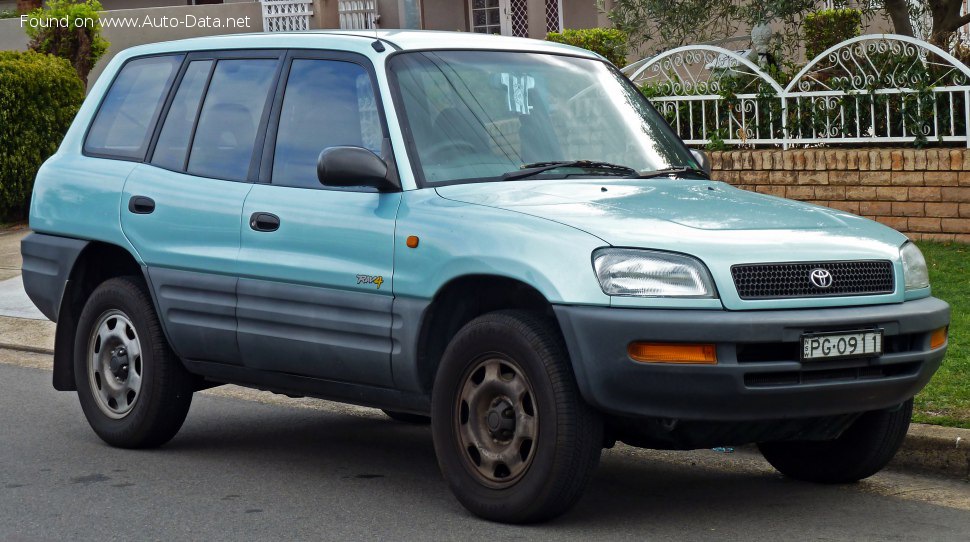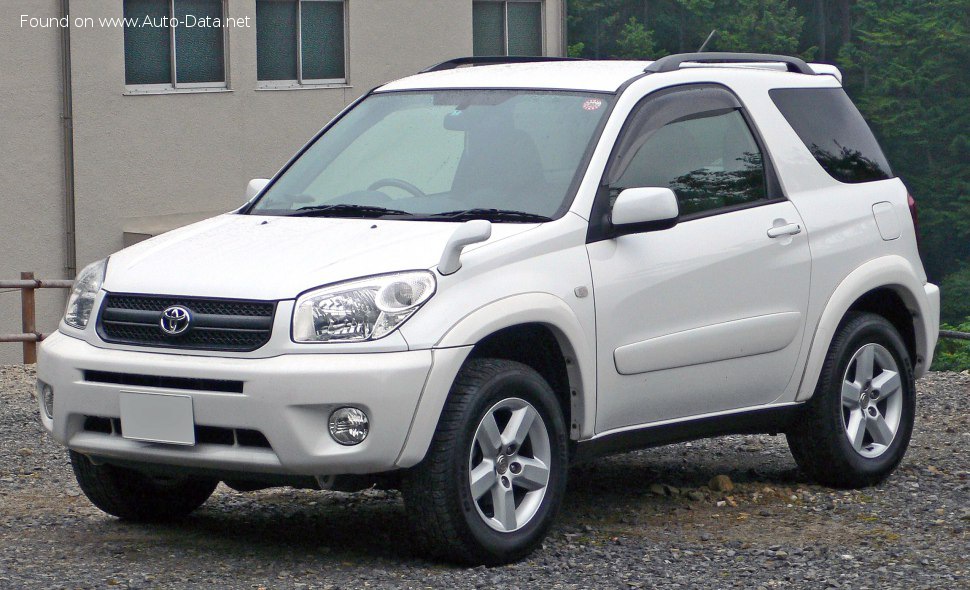
The Toyota RAV4 II (XA20, facelift 2003) 3-door: A Compact SUV Pioneer
The Toyota RAV4, an acronym for “Recreational Activity Vehicle: 4-wheel drive,” cemented its legacy as one of the earliest and most successful compact crossover SUVs. The second generation, designated XA20, continued this trend, evolving the concept with enhanced refinement and capability. This article focuses specifically on the facelifted 2003 model year, particularly the distinctive Toyota RAV4 II (XA20, facelift 2003) 3-door variant equipped with the 2.0i 16V (150 Hp) 4WD powertrain. Produced from December 2003 to January 2006, this iteration represented a refreshed and more polished version of the popular XA20 platform, offering a compelling blend of urban maneuverability, light off-road capability, and Toyota’s renowned reliability. While the 5-door variant typically garnered more attention in markets like the United States for its practicality, the 3-door model carved out a niche for buyers seeking a sportier, more compact, and visually distinct entry into the burgeoning compact SUV segment.
Engine and Performance of the Toyota RAV4 II (XA20, facelift 2003) 3-door
Under the hood of the Toyota RAV4 II (XA20, facelift 2003) 3-door lies the robust 1AZ-FE engine, a 2.0-liter (1998 cm3 or 121.93 cu. in.) inline four-cylinder unit. This powerplant, known for its durability and smooth operation, features a Double Overhead Camshaft (DOHC) valvetrain with 16 valves (4 per cylinder) and multi-port manifold injection. As a naturally aspirated engine, it delivers a respectable 150 horsepower at 6000 rpm, translating to a power-per-liter output of 75.1 Hp/l. Torque peaks at 141.61 lb.-ft. (192 Nm) at 4000 rpm, providing ample pulling power for daily driving and occasional light-duty hauling.
Power is channeled through a precise 5-speed manual transmission, offering engaging control for the driver. This particular RAV4 variant boasts a permanent all-wheel-drive (4×4) system, ensuring confident traction across various road conditions, from slick city streets to unpaved trails. Performance figures for this compact SUV were competitive for its era. It could accelerate from 0 to 60 mph in a brisk 10.1 seconds (0-100 km/h in 10.6 seconds) and reach a maximum speed of 114.95 mph (185 km/h). The vehicle’s weight-to-power ratio stands at 8.6 kg/Hp (116.7 Hp/tonne), indicating a lively feel for its class.
In terms of efficiency, the 2.0i 16V engine demonstrated reasonable fuel economy for an all-wheel-drive SUV of its time. The combined fuel consumption was rated at 8.7 liters per 100 kilometers, which translates to approximately 27 US mpg. Urban driving yielded about 20.8 US mpg, while extra-urban cruising improved to 32.7 US mpg. With CO2 emissions of 207 g/km, the vehicle met the Euro 4 emission standard, reflecting Toyota’s commitment to environmental considerations even in the early 2000s. The fuel tank capacity of 15.06 US gallons (57 liters) provided a decent cruising range.
Design and Features
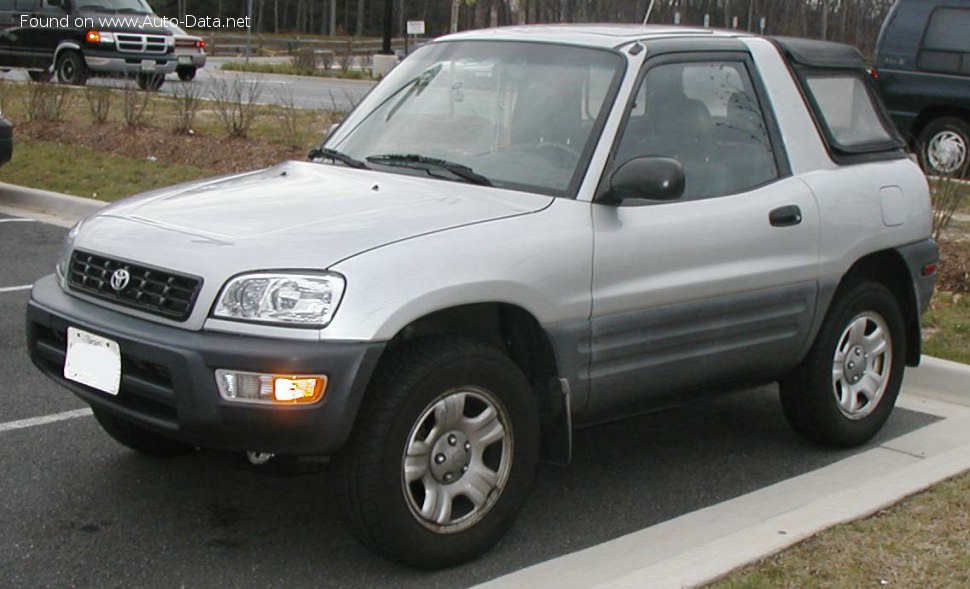
The Toyota RAV4 II (XA20, facelift 2003) 3-door stood out with its compact and athletic SUV body type. Measuring 150.59 inches (3825 mm) in length, 68.31 inches (1735 mm) in width, and 66.14 inches (1680 mm) in height, its dimensions made it highly maneuverable in urban environments, a key selling point for the compact SUV segment. The shorter wheelbase of 89.76 inches (2280 mm) compared to its 5-door sibling contributed to its nimble handling and distinctive profile. The facelift introduced subtle but effective styling updates, including revised front and rear bumpers, a refreshed grille, and updated headlight designs, giving the RAV4 a more contemporary and sophisticated appearance.
Despite its compact exterior, the 3-door RAV4 offered seating for four occupants. While the rear access was naturally less convenient than the 5-door, the interior was thoughtfully designed for functionality. Cargo versatility was a strong suit, with a minimum trunk space of 5.3 cu. ft. (150 liters) that could expand significantly to 27.05 cu. ft. (766 liters) by folding down the rear seats, making it surprisingly practical for a vehicle of its size. The kerb weight of 2832.94 lbs. (1285 kg) underscored its lightweight construction, contributing to both performance and efficiency.
The chassis and suspension setup were engineered to provide a balanced ride quality and competent handling. The front suspension featured an independent McPherson strut design with coil springs and an anti-roll bar, while the rear utilized a double wishbone setup, a more sophisticated arrangement for improved ride comfort and stability. Braking duties were handled by ventilated discs at the front and solid discs at the rear, complemented by an Anti-lock Braking System (ABS) for enhanced safety during emergency stops. Steering was a hydraulic rack and pinion system, offering direct feedback to the driver. The vehicle rode on 215/70 R16 tires mounted on 6.5J x 16 wheel rims, providing a good balance of grip and ride comfort.
Technical Specifications
| Category | Specification | Value |
|---|---|---|
| General Information | ||
| Brand | Toyota | RAV4 |
| Model | Generation | RAV4 II (XA20, facelift 2003) 3-door |
| Engine Type | 2.0i 16V (150 Hp) 4WD | |
| Production Start | December, 2003 | |
| Production End | January, 2006 | |
| Powertrain Architecture | Internal Combustion engine | |
| Body Type | SUV | |
| Seats | 4 | |
| Doors | 3 | |
| Performance Specifications | ||
| Fuel Consumption (Urban) | 11.3 l/100 km (20.8 US mpg) | |
| Fuel Consumption (Extra Urban) | 7.2 l/100 km (32.7 US mpg) | |
| Fuel Consumption (Combined) | 8.7 l/100 km (27 US mpg) | |
| CO2 Emissions | 207 g/km | |
| Fuel Type | Petrol (Gasoline) | |
| Acceleration 0-60 mph | 10.1 sec | |
| Acceleration 0-100 km/h | 10.6 sec | |
| Maximum Speed | 114.95 mph (185 km/h) | |
| Emission Standard | Euro 4 | |
| Weight-to-Power Ratio | 8.6 kg/Hp (116.7 Hp/tonne) | |
| Weight-to-Torque Ratio | 6.7 kg/Nm (149.4 Nm/tonne) | |
| Engine Specifications | ||
| Power | 150 Hp @ 6000 rpm | |
| Power per Liter | 75.1 Hp/l | |
| Torque | 141.61 lb.-ft. @ 4000 rpm (192 Nm) | |
| Engine Layout | Front, Transverse | |
| Engine Model/Code | 1AZ-FE | |
| Engine Displacement | 1998 cm3 (121.93 cu. in.) | |
| Number of Cylinders | 4 | |
| Engine Configuration | Inline | |
| Cylinder Bore | 3.39 in. (86 mm) | |
| Piston Stroke | 3.39 in. (86 mm) | |
| Compression Ratio | 9.8:1 | |
| Valves per Cylinder | 4 | |
| Fuel Injection System | Multi-port manifold injection | |
| Engine Aspiration | Naturally aspirated engine | |
| Valvetrain | DOHC | |
| Engine Oil Capacity | 4.44 US qt (4.2 l) | |
| Coolant Capacity | 6.66 US qt (6.3 l) | |
| Space, Volume and Weights | ||
| Kerb Weight | 2832.94 lbs. (1285 kg) | |
| Max. Weight | 3714.79 lbs. (1685 kg) | |
| Max Load | 881.85 lbs. (400 kg) | |
| Trunk Space (Minimum) | 5.3 cu. ft. (150 l) | |
| Trunk Space (Maximum) | 27.05 cu. ft. (766 l) | |
| Fuel Tank Capacity | 15.06 US gal (57 l) | |
| Max. Roof Load | 220.46 lbs. (100 kg) | |
| Permitted Trailer Load with Brakes (12%) | 3306.93 lbs. (1500 kg) | |
| Permitted Trailer Load without Brakes | 1410.96 lbs. (640 kg) | |
| Dimensions | ||
| Length | 150.59 in. (3825 mm) | |
| Width | 68.31 in. (1735 mm) | |
| Height | 66.14 in. (1680 mm) | |
| Wheelbase | 89.76 in. (2280 mm) | |
| Drivetrain, Brakes and Suspension Specs | ||
| Drive Wheel | All-wheel drive (4×4) | |
| Number of Gears | 5 gears, manual transmission | |
| Front Suspension | Independent, McPherson with coil spring and anti-roll bar | |
| Rear Suspension | Double wishbone | |
| Front Brakes | Ventilated discs | |
| Rear Brakes | Disc | |
| Assisting Systems | ABS (Anti-lock braking system) | |
| Steering Type | Steering rack and pinion | |
| Power Steering | Hydraulic Steering | |
| Tires Size | 215/70 R16 | |
| Wheel Rims Size | 6.5J x 16 | |
Legacy and Market Impact
The Toyota RAV4, particularly its second generation, played a pivotal role in popularizing the compact SUV segment globally, including in the highly competitive North American market. The Toyota RAV4 II (XA20, facelift 2003) 3-door, while less common than its 5-door counterpart, represented a distinct offering within this segment. It appealed to buyers who valued its compact footprint, easier parking, and a sportier aesthetic that harked back to the original RAV4’s more playful design. Its permanent all-wheel-drive system, combined with a robust Toyota powertrain, offered a sense of security and versatility, making it suitable for varying climates and light recreational activities.
In the early 2000s, the compact SUV market was rapidly expanding, with key competitors including the Honda CR-V, Ford Escape, Subaru Forester, and Nissan X-Trail (the latter primarily in markets outside the US, though similar in concept). The RAV4 differentiated itself with Toyota’s sterling reputation for reliability and low ownership costs, factors that consistently ranked high with American consumers. While the 3-door variant might have been seen as less practical for families due to limited rear access, its shorter length and more agile feel made it an attractive option for younger buyers, couples, or as a secondary vehicle.
The facelifted XA20 generation, produced until 2006, continued to build on the RAV4’s heritage as a dependable and efficient choice in its class. Its “car-like” driving dynamics, derived from a unibody construction, offered a comfortable and refined experience compared to more traditional, truck-based SUVs. The 3-door model, in particular, has gained a certain cult following over the years for its unique character and relative rarity. Today, these vehicles are often sought after in the used car market for their enduring mechanical robustness and straightforward maintenance. The RAV4’s legacy is undeniable; it helped define the modern crossover, blending the utility of an SUV with the driving comfort and efficiency of a passenger car, paving the way for the segment’s continued dominance.