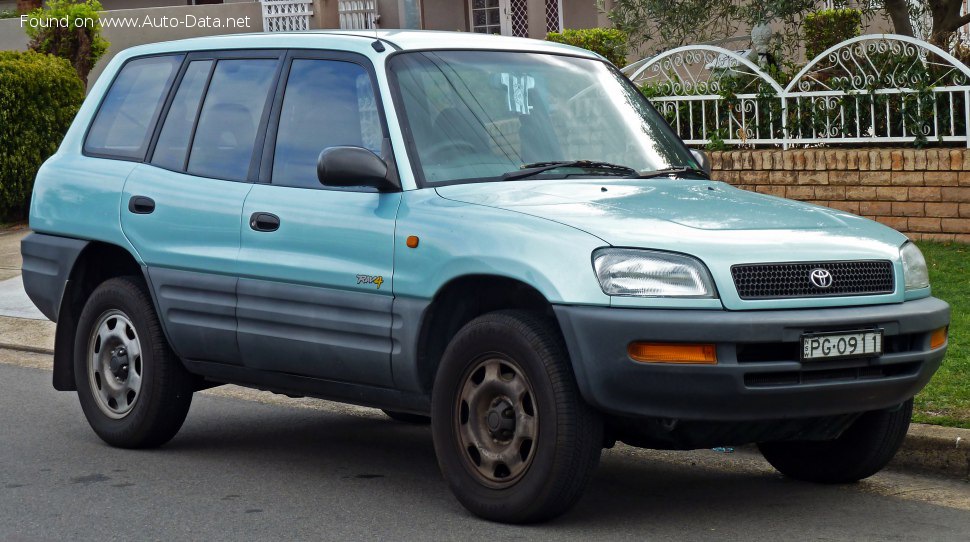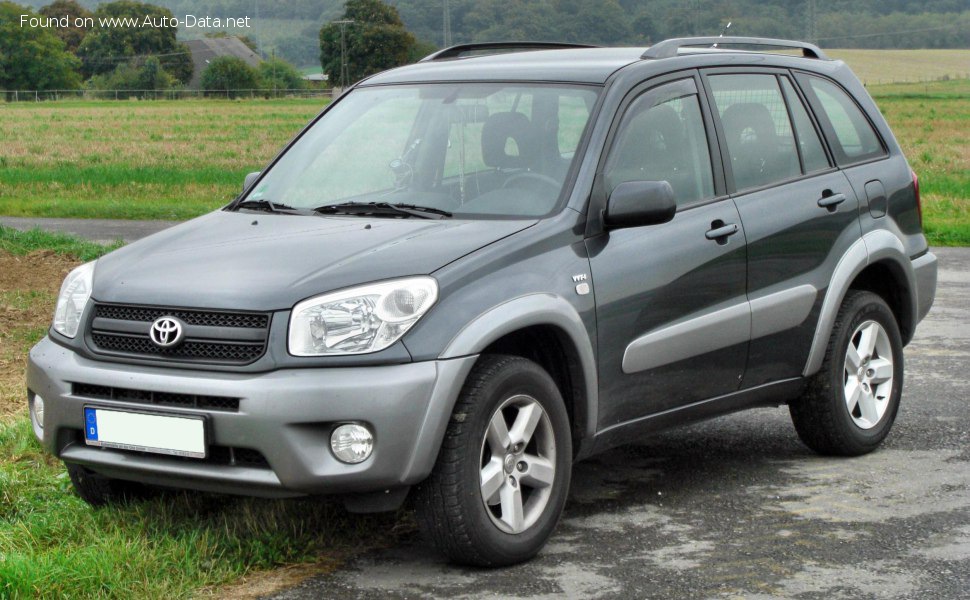
Toyota RAV4 II (XA20, facelift 2003) 5-door: A Pioneer in the Compact SUV Segment
The Toyota RAV4, an acronym for “Recreational Activity Vehicle: 4-wheel drive,” revolutionized the automotive landscape upon its introduction, effectively creating the compact SUV segment. The second generation, designated XA20, built upon this legacy, offering a more refined and capable package. The focus of this detailed article is on the facelifted 2003 model of the Toyota RAV4 II (XA20, facelift 2003) 5-door with the 2.0i 16V (150 HP) 4WD powertrain, a configuration that represented a sweet spot of performance, efficiency, and utility for its era. Produced from December 2003 until January 2006, this particular iteration served as a crucial bridge between the RAV4’s pioneering roots and its future as a global best-seller. It maintained its position as a versatile and reliable choice for consumers seeking the practicality of an SUV without the bulk or fuel penalty of larger, truck-based models, making it highly relevant in markets worldwide, including North America.
Engine & Performance: The Robust 2.0-liter 1AZ-FE
At the heart of the Toyota RAV4 II (XA20, facelift 2003) 5-door described here lies the dependable 1AZ-FE engine. This 2.0-liter (1998 cm3 or 121.93 cu. in.) inline four-cylinder gasoline unit was engineered for a balance of power and efficiency. Featuring a DOHC (Double Overhead Camshaft) valvetrain with 16 valves (four per cylinder) and multi-port manifold injection, it delivered a respectable 150 horsepower at 6000 rpm. This output translated to a power per liter figure of 75.1 HP/l, showcasing Toyota’s ability to extract healthy performance from a naturally aspirated engine.
Torque output was equally important for an SUV, even a compact one, and the 1AZ-FE provided 192 Nm (141.61 lb.-ft.) at a accessible 4000 rpm. This relatively low peak torque RPM ensured decent pulling power in various driving conditions, from city commuting to light off-road excursions. The engine’s layout was front, transverse, a common configuration for front-wheel-drive-based SUVs that optimized interior space.
Power was sent to all four wheels via a full-time all-wheel-drive (4×4) system, paired with a smooth-shifting 5-speed manual transmission. This combination allowed the RAV4 to accelerate from 0 to 60 mph in a brisk 10.1 seconds, with 0-100 km/h achieved in 10.6 seconds. Its maximum speed was rated at 175 km/h (108.74 mph), which was more than adequate for highway cruising.
Fuel efficiency, a growing concern even in the early 2000s, was competitive for its class. The combined fuel consumption was reported at 8.8 l/100 km, which translates to approximately 26.7 US mpg. Urban consumption stood at 11.4 l/100 km (20.6 US mpg), while extra-urban driving could yield 7.3 l/100 km (32.2 US mpg). The vehicle met the Euro 4 emission standard, with CO2 emissions of 211 g/km, reflecting its compliance with the environmental regulations of the time. The engine oil capacity was 4.2 liters (4.44 US quarts), and the cooling system held 6.3 liters (6.66 US quarts).
Design & Features: Practicality Meets Refinement
The facelifted 2003 Toyota RAV4 II (XA20) retained its distinctive compact SUV silhouette while receiving subtle updates to keep it fresh. Its 5-door body type offered excellent practicality, accommodating five occupants comfortably. The overall dimensions were compact enough for urban maneuverability, with a length of 4220 mm (166.14 in.), a width of 1735 mm (68.31 in.), and a height of 1690 mm (66.54 in.). A wheelbase of 2490 mm (98.03 in.) contributed to its stable ride and interior packaging.
Inside, the RAV4 was designed with versatility in mind. The cargo space was generous for its class, offering a minimum of 400 liters (14.13 cu. ft.) with all seats in place, expanding significantly to 1150 liters (40.61 cu. ft.) when the rear seats were folded, making it suitable for hauling gear, groceries, or luggage. The curb weight of the vehicle was 1345 kg (2965.22 lbs.), giving it a favorable weight-to-power ratio of 9 kg/HP. Its maximum permissible weight was 1825 kg (4023.44 lbs.), allowing for a maximum load of 480 kg (1058.22 lbs.).
Suspension components were engineered for a comfortable ride and competent handling. The front featured an independent McPherson strut setup with coil springs and an anti-roll bar, while the rear utilized a double wishbone arrangement. Braking duties were handled by ventilated discs at the front and solid discs at the rear, complemented by an Anti-lock Braking System (ABS) for enhanced safety during emergency stops. Steering was a hydraulic rack and pinion system, providing direct feedback to the driver. The vehicle rode on 215/70 R16 tires mounted on 6.5J x 16 wheel rims, a common size that offered a good balance of comfort and traction. Additional practical features included a 57-liter (15.06 US gallon) fuel tank, a maximum roof load of 100 kg (220.46 lbs.), and a towing capacity of 1500 kg (3306.93 lbs.) with brakes, or 640 kg (1410.96 lbs.) without brakes.
Technical Specifications: Toyota RAV4 II (XA20, facelift 2003) 5-door 2.0i 16V (150 Hp) 4WD
| Category | Specification |
|---|---|
General Information |
|
| Brand | Toyota |
| Model | RAV4 |
| Generation | RAV4 II (XA20, facelift 2003) 5-door |
| Type (Engine) | 2.0i 16V (150 Hp) 4WD |
| Start of Production | December, 2003 |
| End of Production | January, 2006 |
| Powertrain Architecture | Internal Combustion engine |
| Body Type | SUV |
| Seats | 5 |
| Doors | 5 |
Performance Specs |
|
| Fuel Consumption (Urban) | 20.6 US mpg (11.4 l/100 km) |
| Fuel Consumption (Extra Urban) | 32.2 US mpg (7.3 l/100 km) |
| Fuel Consumption (Combined) | 26.7 US mpg (8.8 l/100 km) |
| CO2 Emissions | 211 g/km |
| Fuel Type | Gasoline |
| Acceleration 0 – 60 mph | 10.1 seconds |
| Acceleration 0 – 100 km/h | 10.6 seconds |
| Maximum Speed | 108.74 mph (175 km/h) |
| Emission Standard | Euro 4 |
| Weight-to-Power Ratio | 9 kg/Hp (111.5 Hp/tonne) |
| Weight-to-Torque Ratio | 7 kg/Nm (142.8 Nm/tonne) |
Engine Specs |
|
| Power | 150 Hp @ 6000 rpm |
| Power per Liter | 75.1 Hp/l |
| Torque | 141.61 lb.-ft. @ 4000 rpm (192 Nm @ 4000 rpm) |
| Engine Layout | Front, Transverse |
| Engine Model/Code | 1AZ-FE |
| Engine Displacement | 121.93 cu. in. (1998 cm3) |
| Number of Cylinders | 4 |
| Engine Configuration | Inline |
| Cylinder Bore | 3.39 in. (86 mm) |
| Piston Stroke | 3.39 in. (86 mm) |
| Compression Ratio | 9.8:1 |
| Number of Valves per Cylinder | 4 |
| Fuel Injection System | Multi-port manifold injection |
| Engine Aspiration | Naturally aspirated engine |
| Valvetrain | DOHC |
| Engine Oil Capacity | 4.44 US qt (4.2 l) |
| Coolant Capacity | 6.66 US qt (6.3 l) |
Space, Volume, and Weights |
|
| Curb Weight | 2965.22 lbs. (1345 kg) |
| Max. Weight (Gross Vehicle Weight) | 4023.44 lbs. (1825 kg) |
| Max Load | 1058.22 lbs. (480 kg) |
| Trunk (Cargo) Space – Minimum | 14.13 cu. ft. (400 l) |
| Trunk (Cargo) Space – Maximum | 40.61 cu. ft. (1150 l) |
| Fuel Tank Capacity | 15.06 US gal (57 l) |
| Max. Roof Load | 220.46 lbs. (100 kg) |
| Permitted Trailer Load with Brakes (12%) | 3306.93 lbs. (1500 kg) |
| Permitted Trailer Load without Brakes | 1410.96 lbs. (640 kg) |
Dimensions |
|
| Length | 166.14 in. (4220 mm) |
| Width | 68.31 in. (1735 mm) |
| Height | 66.54 in. (1690 mm) |
| Wheelbase | 98.03 in. (2490 mm) |
Drivetrain, Brakes, and Suspension Specs |
|
| Drive Wheel | All-wheel drive (4×4) |
| Number of Gears and Type of Gearbox | 5 gears, manual transmission |
| Front Suspension | Independent, McPherson with coil spring and anti-roll bar |
| Rear Suspension | Double wishbone |
| Front Brakes | Ventilated discs |
| Rear Brakes | Disc |
| Assisting Systems | ABS (Anti-lock braking system) |
| Steering Type | Steering rack and pinion |
| Power Steering | Hydraulic Steering |
| Tires Size | 215/70 R16 |
| Wheel Rims Size | 6.5J x 16 |
Legacy & Market Impact of the Toyota RAV4 II (XA20, facelift 2003) 5-door
The second-generation Toyota RAV4, particularly the facelifted XA20 model from 2003, played a pivotal role in solidifying Toyota’s dominance in the burgeoning compact SUV market. Building on the success of the original, the XA20 offered a more mature design, improved interior refinement, and enhanced safety features, all while retaining the core attributes of versatility, reliability, and fuel efficiency that RAV4 buyers cherished. This blend made it an incredibly popular choice in North America, Europe, and Asia.
In the highly competitive US market, the RAV4 faced strong rivals such as the Honda CR-V, Ford Escape, and Subaru Forester. Against these competitors, the RAV4 distinguished itself with Toyota’s legendary reputation for bulletproof reliability and strong resale values. The availability of a competent all-wheel-drive system, coupled with its relatively car-like driving dynamics, made it appealing to a wide range of buyers, from young families to active individuals who needed a vehicle capable of handling diverse conditions without feeling cumbersome.
The 2.0-liter 150 HP engine, while not a powerhouse, provided adequate performance for daily driving and highway travel, especially when paired with the precise 5-speed manual transmission. Its fuel economy was a significant selling point, offering a practical alternative to larger, thirstier SUVs. The compact dimensions made it easy to park and maneuver in urban environments, a crucial advantage in crowded cities. The thoughtful interior design, with its flexible cargo space and comfortable seating for five, further cemented its reputation as a highly practical and user-friendly vehicle.
The 2003 facelift brought subtle but meaningful updates, including refreshed styling elements and potential interior enhancements, keeping the RAV4 current in a rapidly evolving segment. Its adherence to the Euro 4 emission standards also highlighted Toyota’s commitment to environmental responsibility, a factor that was gaining increasing importance.
Ultimately, the Toyota RAV4 II (XA20, facelift 2003) 5-door 2.0i 16V (150 Hp) 4WD was more than just a car; it was a testament to Toyota’s foresight in identifying and capitalizing on new market trends. It helped define what a modern compact SUV should be: capable, efficient, reliable, and versatile. Its legacy paved the way for future generations of the RAV4, which would go on to become one of the best-selling vehicles globally, proving the enduring appeal of the formula perfected by this second-generation model. Its impact continues to be felt in the design and expectations of compact SUVs today.