Toyota RAV4 II (XA20, facelift 2003) 5-door 2.4i (161 Hp) 4WD: A Compact SUV Pioneer
The Toyota RAV4 II (XA20, facelift 2003) 5-door 2.4i (161 Hp) 4WD represents a pivotal moment in the evolution of the compact sport utility vehicle (SUV) segment. As the second generation of Toyota’s immensely popular “Recreational Activity Vehicle: 4-wheel drive,” the XA20 series, launched in 2000, further solidified the RAV4’s position as a trailblazer in the burgeoning crossover market. This specific iteration, produced between 2003 and 2005, benefited from a mid-cycle refresh that introduced subtle styling enhancements and, notably, a more potent 2.4-liter engine, enhancing its appeal to a broader audience seeking a versatile, efficient, and reliable vehicle for both urban commutes and light off-road adventures. The RAV4’s success, particularly in the North American market, proved that consumers were increasingly favoring the car-like driving dynamics and fuel economy of a unibody crossover over traditional body-on-frame SUVs.
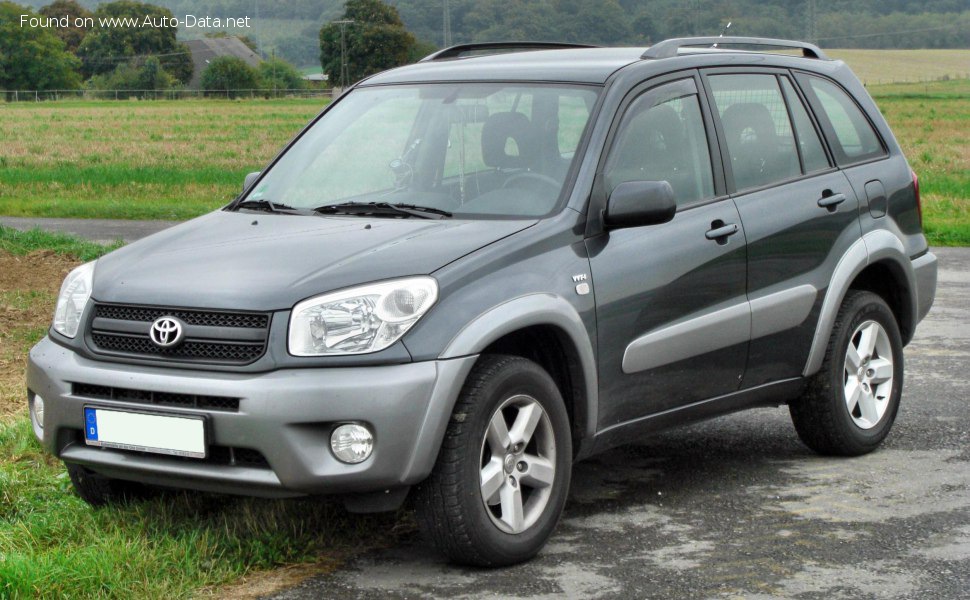
The 2003 facelift brought a fresh face to the XA20, maintaining its characteristic blend of rugged utility and approachable design. This era saw the RAV4 continue to grow in popularity, competing fiercely in a segment it had largely helped to create. Its compact dimensions, combined with a surprisingly spacious interior and the added security of all-wheel drive, made it an ideal choice for young families, active individuals, and anyone desiring a practical vehicle that didn’t compromise on Toyota’s renowned reputation for durability and low running costs. This article delves into the technical specifications, design philosophies, and market impact of this significant model.
Engine and Performance: The Heart of the Toyota RAV4 II (XA20, facelift 2003)
Under the hood of the Toyota RAV4 II (XA20, facelift 2003), the 2.4i variant boasted a robust and efficient 2AZ-FE engine. This naturally aspirated, inline four-cylinder powerplant featured a double overhead camshaft (DOHC) valvetrain with four valves per cylinder, a configuration known for its efficiency and smooth operation. With a displacement of 2,362 cubic centimeters (approximately 144.14 cubic inches), the engine delivered a respectable 161 horsepower at 6,000 rpm. This represented a significant upgrade over the earlier 2.0-liter engine, providing more confident acceleration and improved highway passing power.
Torque output was equally impressive for its class, peaking at 165.21 lb.-ft. (224 Nm) at a relatively accessible 4,000 rpm. This strong low-to-mid-range torque was crucial for the RAV4’s practical applications, facilitating easier merging into traffic and providing ample grunt for towing light loads, with a permitted trailer load of up to 3,306.93 lbs. (1,500 kg) with brakes. The engine utilized a multi-port manifold injection system, ensuring precise fuel delivery and optimal combustion efficiency. Its compression ratio of 9.8:1 further contributed to its power output and fuel economy.
Power was channeled to all four wheels via a 5-speed manual transmission, offering engaging driver control and making the most of the engine’s output. The all-wheel-drive system provided enhanced traction and stability, particularly beneficial in adverse weather conditions or on unpaved roads. Despite its SUV designation, the RAV4 maintained car-like fuel efficiency for its time. It achieved an urban fuel economy of approximately 21 US mpg (11.2 l/100 km) and an extra-urban rating of 26.1 US mpg (9 l/100 km), making it a cost-effective choice for daily driving. With a curb weight of 3,119.54 lbs. (1,415 kg), the RAV4 exhibited a favorable weight-to-power ratio of 8.8 kg/Hp, underscoring its lively performance characteristics.
Design and Features: Practicality Meets Modernity
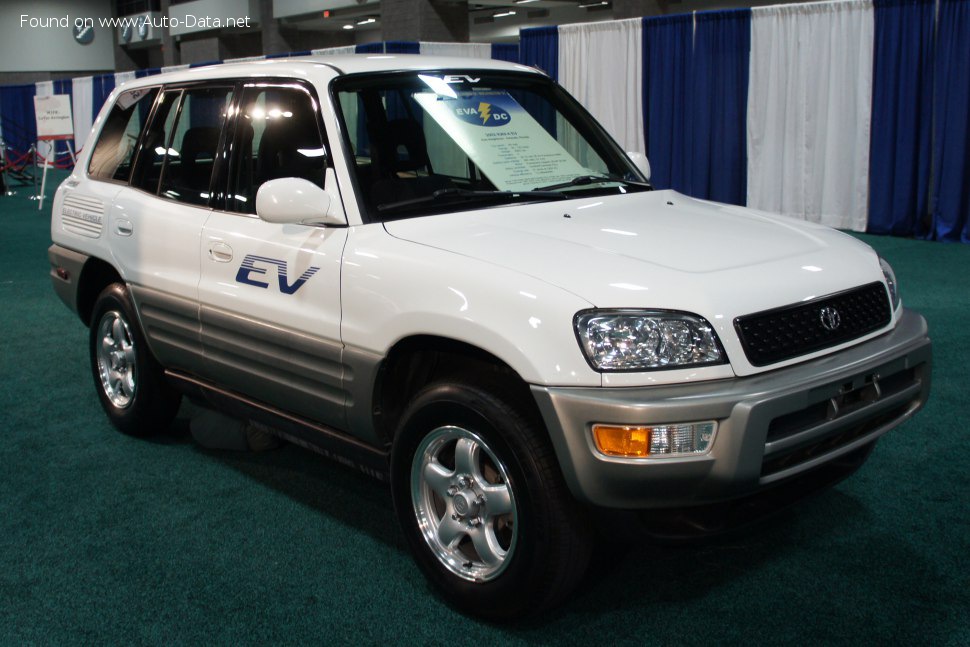
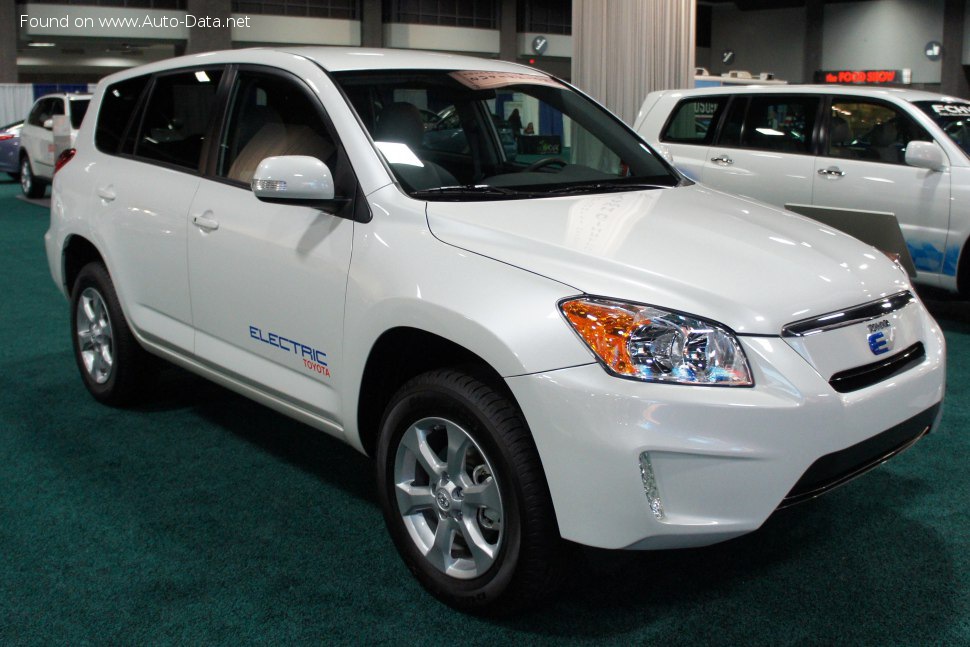
The 2003 facelift of the second-generation RAV4 retained its characteristic compact and somewhat rounded silhouette, embodying the era’s trend towards more aerodynamic and less boxy SUV designs. As a 5-door SUV, it offered excellent practicality and ease of access for both passengers and cargo. Its overall length ranged from 165.55 to 167.52 inches (4205-4255 mm), with a width between 68.31 and 70.28 inches (1735-1785 mm) and a height of 65.75 to 66.14 inches (1670-1680 mm). These dimensions made it maneuverable in urban environments while still projecting a capable stance.
The interior of the RAV4 II was designed with practicality and comfort in mind, offering seating for five occupants. Cargo versatility was a strong suit, with a minimum trunk space of 23.94 cubic feet (678 liters) that could expand to an impressive 67.42 cubic feet (1909 liters) with the rear seats folded, providing ample room for luggage, groceries, or recreational gear. The vehicle featured a relatively high ground clearance of 6.69 inches (170 mm), contributing to its ability to handle light off-road trails and navigate uneven terrain without difficulty. The minimum turning circle of 35.1 feet (10.7 meters) further enhanced its city driving prowess.
Key features for the 2003 model year included a rack and pinion steering system with hydraulic power steering, providing direct feedback and ease of maneuverability. The suspension system was composed of an independent McPherson strut setup with coil springs and an anti-roll bar at the front, paired with a double wishbone and trailing arm arrangement at the rear. This combination delivered a comfortable ride quality and stable handling. Braking power was provided by ventilated discs at the front and solid discs at the rear, augmented by an Anti-lock Braking System (ABS) for enhanced safety during emergency stops. The RAV4 rode on 16-inch wheels (6.5J x 16) fitted with either 215/70 R16 or 235/60 R16 tires, offering a good balance of grip and ride comfort.
Technical Specifications
| Category | Specification |
|---|---|
| Brand | Toyota |
| Model | RAV4 |
| Generation | RAV4 II (XA20, facelift 2003) 5-door |
| Type (Engine) | 2.4i (161 Hp) 4WD |
| Production Start | 2003 |
| Production End | 2005 |
| Powertrain Architecture | Internal Combustion Engine |
| Body Type | SUV |
| Seats | 5 |
| Doors | 5 |
| Performance Specs | |
| Fuel Consumption (Urban) | 21 US mpg (11.2 l/100 km) |
| Fuel Consumption (Extra Urban) | 26.1 US mpg (9 l/100 km) |
| Fuel Type | Petrol (Gasoline) |
| Weight-to-Power Ratio | 8.8 kg/Hp (113.8 Hp/tonne) |
| Weight-to-Torque Ratio | 6.3 kg/Nm (158.3 Nm/tonne) |
| Engine Specs | |
| Power | 161 Hp @ 6000 rpm |
| Power per Liter | 68.2 Hp/l |
| Torque | 165.21 lb.-ft. (224 Nm) @ 4000 rpm |
| Engine Layout | Front, Transverse |
| Engine Model/Code | 2AZ-FE |
| Engine Displacement | 2.4 liters (2362 cm³, 144.14 cu. in.) |
| Number of Cylinders | 4 |
| Engine Configuration | Inline |
| Cylinder Bore | 3.48 in. (88.5 mm) |
| Piston Stroke | 3.78 in. (96 mm) |
| Compression Ratio | 9.8:1 |
| Valves per Cylinder | 4 |
| Fuel Injection System | Multi-port manifold injection |
| Engine Aspiration | Naturally aspirated |
| Valvetrain | DOHC |
| Engine Oil Capacity | 4.02 US qt (3.8 l) |
| Coolant Capacity | 6.97 US qt (6.6 l) |
| Space, Volume and Weights | |
| Kerb Weight | 3119.54 lbs. (1415 kg) |
| Max. Weight | 4087.37 lbs. (1854 kg) |
| Max Load | 967.83 lbs. (439 kg) |
| Trunk (boot) Space (Min) | 23.94 cu. ft. (678 l) |
| Trunk (boot) Space (Max) | 67.42 cu. ft. (1909 l) |
| Fuel Tank Capacity | 14.79 US gal (56 l) |
| Permitted Trailer Load (with brakes) | 3306.93 lbs. (1500 kg) |
| Permitted Trailer Load (without brakes) | 1499.14 lbs. (680 kg) |
| Dimensions | |
| Length | 165.55 – 167.52 in. (4205-4255 mm) |
| Width | 68.31 – 70.28 in. (1735-1785 mm) |
| Height | 65.75 – 66.14 in. (1670-1680 mm) |
| Wheelbase | 98.03 in. (2490 mm) |
| Front Track | 59.25 – 60.04 in. (1505-1525 mm) |
| Rear Track | 58.86 – 59.84 in. (1495-1520 mm) |
| Ride Height (Ground Clearance) | 6.69 in. (170 mm) |
| Drag Coefficient (Cd) | 0.33 |
| Minimum Turning Circle | 35.1 ft. (10.7 m) |
| Approach Angle | 27-28° |
| Departure Angle | 28-29° |
| Drivetrain, Brakes and Suspension Specs | |
| Drive Wheel | All-wheel drive (4×4) |
| Number of Gears/Gearbox Type | 5 gears, Manual Transmission |
| Front Suspension | Independent, McPherson with coil spring and anti-roll bar |
| Rear Suspension | Double wishbone, Trailing arm |
| Front Brakes | Ventilated discs |
| Rear Brakes | Disc |
| Assisting Systems | ABS (Anti-lock braking system) |
| Steering Type | Steering rack and pinion |
| Power Steering | Hydraulic Steering |
| Tires Size | 215/70 R16; 235/60 R16 |
| Wheel Rims Size | 6.5J x 16 |
Legacy and Market Impact
The Toyota RAV4 II (XA20), particularly the facelifted 2003-2005 model with the 2.4-liter engine, solidified the RAV4’s reputation as a segment leader and an automotive industry trendsetter. When it first debuted in the mid-1990s, the RAV4 was one of the first vehicles to successfully blend the practicality and elevated driving position of an SUV with the fuel efficiency, car-like handling, and comfort of a sedan, effectively giving birth to the modern compact crossover. The second generation, and its refined 2003 iteration, continued this legacy, adapting to evolving consumer demands for more power and improved amenities.
In the North American market, the RAV4 faced stiff competition from other emerging compact crossovers such as the Honda CR-V, Ford Escape, and later, the Nissan Rogue. However, its core strengths—Toyota’s legendary reliability, strong resale value, and a reputation for being a pragmatic, no-nonsense vehicle—allowed it to maintain a commanding presence. The introduction of the more powerful 2.4-liter engine in the facelifted model was a direct response to market feedback, offering a more satisfying driving experience without significantly compromising on fuel economy, a key selling point for these vehicles.
The XA20 generation, including this specific 2003 facelift, played a crucial role in establishing the compact SUV as the dominant vehicle type for many families and individuals. It demonstrated that consumers didn’t always need a large, truck-based SUV for utility and all-weather capability. Instead, a smaller, more nimble, and more fuel-efficient crossover could fulfill most of these needs while being easier to park, more comfortable to drive, and less expensive to operate. The RAV4’s success set the stage for the proliferation of crossovers that defines today’s automotive landscape, making it a historically significant model in Toyota’s extensive lineup and in the broader automotive industry.
Today, the second-generation RAV4 remains a popular choice on the used car market, a testament to its enduring quality and reliability. Its simple, robust mechanicals, combined with a practical interior and respectable performance for its class, ensure that many examples continue to serve their owners faithfully. The Toyota RAV4 II (XA20, facelift 2003) 5-door 2.4i (161 Hp) 4WD stands as a prime example of Toyota’s engineering philosophy: building dependable, efficient, and user-friendly vehicles that resonate with a global audience.