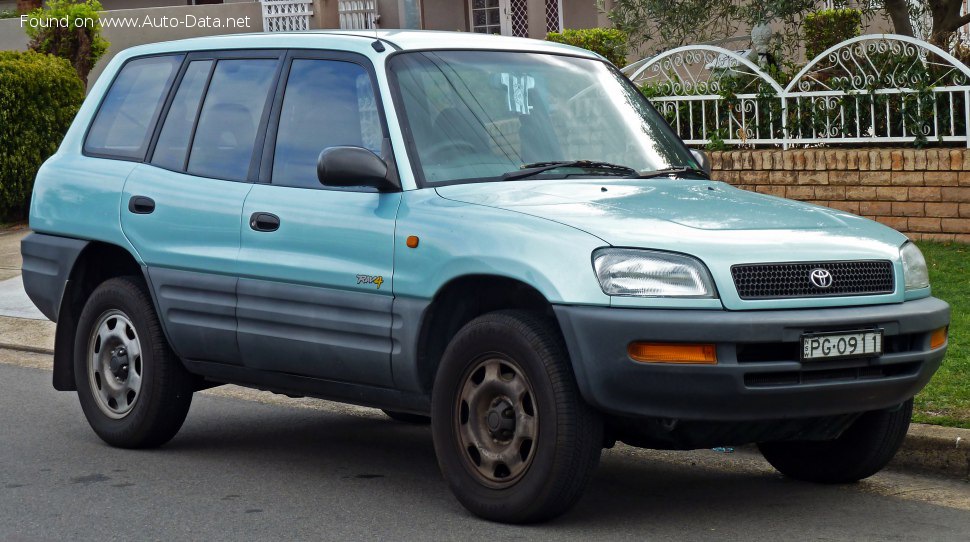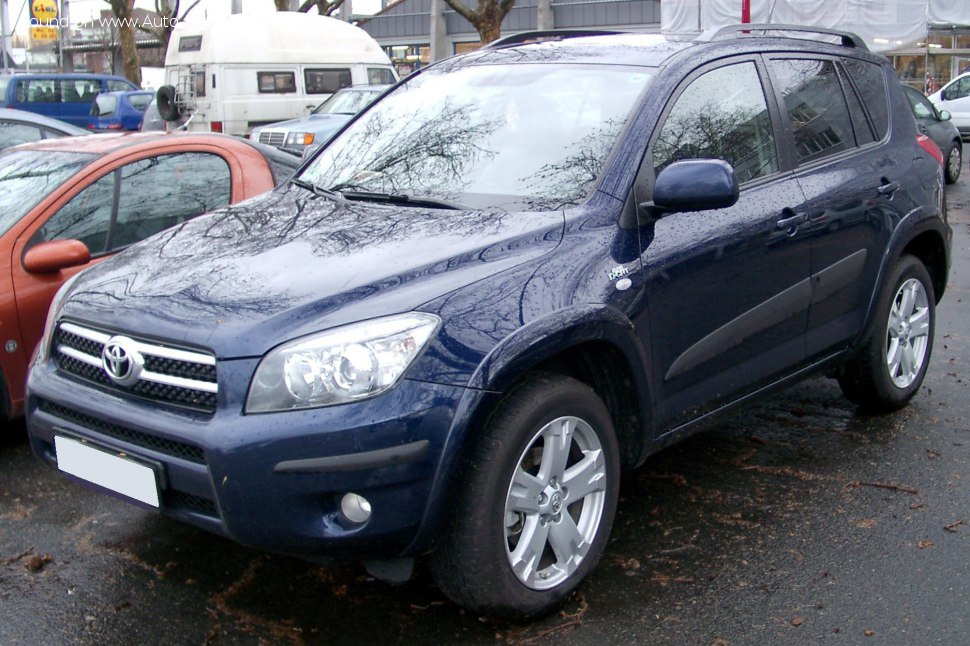
Toyota RAV4 III (XA30) 2.0 VVT-i (152 Hp) 4WD Automatic
The Toyota RAV4 III (XA30) represented the third generation of Toyota’s immensely popular compact crossover SUV, first introduced in November 2005. This iteration marked a significant evolution from its predecessors, growing in size, sophistication, and capability to meet the burgeoning global demand for versatile, family-friendly utility vehicles. The specific variant under review, the Toyota RAV4 III (XA30) 2.0 VVT-i (152 Hp) 4WD Automatic, was a core offering in many international markets, providing a blend of reasonable performance, Toyota’s renowned reliability, and all-weather capability.
Designed to bridge the gap between traditional SUVs and passenger cars, the XA30 generation RAV4 solidified its position as a segment leader. It moved away from the more rugged, off-road-oriented styling of earlier models, embracing a sleeker, more car-like aesthetic and driving experience. While not primarily sold with this specific 2.0-liter engine in the North American market, which typically received larger 2.4-liter and later 2.5-liter engines, this 2.0 VVT-i 4WD Automatic model was a cornerstone of the RAV4 lineup in Europe, Asia, and other regions. It catered to consumers seeking a practical, efficient, and capable vehicle for both urban commutes and light off-road excursions, embodying Toyota’s commitment to delivering reliable transportation solutions.
Engine and Performance of the Toyota RAV4 III (XA30)
At the heart of this particular Toyota RAV4 III (XA30) variant was a naturally aspirated 2.0-liter (1998 cm³ or 121.93 cubic inches) inline-four gasoline engine, designated with the model code 3ZR-FAE. This powerplant featured Toyota’s advanced VVT-i (Variable Valve Timing-intelligent) technology, which optimizes valve overlap for improved power delivery across the rev range and enhanced fuel efficiency. The engine produced a respectable 152 horsepower at 6000 rpm and 143.09 lb.-ft. of torque at 4000 rpm. This power output, combined with the engine’s DOHC (Double Overhead Camshaft) valvetrain and multi-port manifold injection system, ensured smooth and responsive operation.
Power was delivered to all four wheels via a conventional 4-speed automatic transmission, a common choice for SUVs in this segment during the mid-2000s. While not as sophisticated or as fuel-efficient as later continuously variable transmissions (CVTs) or multi-speed automatics, this gearbox provided a durable and predictable driving experience. The full-time all-wheel-drive (4WD) system offered enhanced traction and stability, particularly beneficial in adverse weather conditions or on unpaved roads. Performance figures included an acceleration time from 0 to 60 mph in a calculated 11.4 seconds (0-100 km/h in 12 seconds) and a top speed of 108.74 mph (175 km/h), making it suitable for highway cruising.
Fuel economy for the 2.0 VVT-i 4WD Automatic was rated at a combined 26.1 US mpg (9 l/100 km), with urban consumption at 20.3 US mpg (11.6 l/100 km) and extra-urban at 31.8 US mpg (7.4 l/100 km). These figures were competitive for its class and era, reflecting the engine’s efficiency and the transmission’s tuning. The vehicle met the Euro 4 emission standard, indicating a commitment to environmental considerations for its time, with CO2 emissions of 212 g/km.
Design and Features
The third-generation Toyota RAV4 III (XA30) adopted a more mature and sophisticated design language compared to its predecessors. It presented as a five-door SUV with seating for five occupants, emphasizing practicality and passenger comfort. The exterior styling was characterized by smoother lines, a more integrated front fascia, and a departure from the external spare tire that had been a signature element of earlier RAV4s in some markets, moving it to an underfloor mount or inside the cargo area for a cleaner look. Its dimensions ranged from 169.88 to 173.03 inches in length, 71.46 inches in width, and 66.34 to 67.72 inches in height, with a wheelbase of 100.79 inches. These proportions contributed to a spacious interior and a stable road presence.
Inside, the RAV4 III offered a well-appointed cabin with quality materials and an ergonomic layout. Standard features for its time likely included air conditioning, power windows, and a decent audio system. Safety was a key consideration, with the vehicle typically equipped with assisting systems such as ABS (Anti-lock Braking System), and depending on the market and trim level, multiple airbags and electronic stability control. The independent McPherson strut front suspension and double wishbone rear suspension provided a comfortable ride and competent handling, balancing SUV robustness with car-like maneuverability. The steering system utilized a rack and pinion setup, offering direct feedback to the driver. Braking power came from ventilated discs at the front (296 mm) and solid discs at the rear (281 mm), ensuring confident stopping performance.
Practicality was a strong suit, with a minimum trunk space of 20.69 cubic feet (586 liters), expandable by folding the rear seats. The fuel tank capacity was 15.85 US gallons (60 liters), providing a decent cruising range. With a curb weight of 3317.96 lbs (1505 kg) and a maximum load capacity of 1333.8 lbs (605 kg), the RAV4 III was capable of carrying a family and their gear. It also boasted a respectable ground clearance of 7.09 inches (180 mm), along with approach, departure, and ramp-over angles of 28°, 24°, and 20° respectively, enabling it to tackle light off-road terrain or challenging urban obstacles with ease.
Technical Specifications
| Category | Specification |
|---|---|
| Brand | Toyota |
| Model | RAV4 |
| Generation | RAV4 III (XA30) |
| Type (Engine) | 2.0 VVT-i (152 Hp) 4WD Automatic |
| Start of production | November, 2005 |
| End of production | 2009 |
| Powertrain Architecture | Internal Combustion Engine |
| Body type | SUV |
| Seats | 5 |
| Doors | 5 |
| Fuel consumption (economy) – urban | 20.3 US mpg (11.6 l/100 km) |
| Fuel consumption (economy) – extra urban | 31.8 US mpg (7.4 l/100 km) |
| Fuel consumption (economy) – combined | 26.1 US mpg (9 l/100 km) |
| CO2 emissions | 212 g/km |
| Fuel Type | Petrol (Gasoline) |
| Acceleration 0 – 60 mph | 11.4 seconds |
| Maximum speed | 108.74 mph (175 km/h) |
| Emission standard | Euro 4 |
| Power | 152 Hp @ 6000 rpm |
| Torque | 143.09 lb.-ft. (194 Nm) @ 4000 rpm |
| Engine layout | Front, Transverse |
| Engine Model/Code | 3ZR-FAE |
| Engine displacement | 2.0 liters (1998 cm³ / 121.93 cu. in.) |
| Number of cylinders | 4 |
| Engine configuration | Inline |
| Cylinder Bore | 3.39 inches (86 mm) |
| Piston Stroke | 3.39 inches (86 mm) |
| Compression ratio | 9.8:1 |
| Number of valves per cylinder | 4 |
| Fuel injection system | Multi-port manifold injection |
| Engine aspiration | Naturally aspirated engine |
| Valvetrain | DOHC, VVT-i |
| Engine oil capacity | 4.44 US qt (4.2 l) |
| Kerb Weight | 3317.96 lbs (1505 kg) |
| Max. weight | 4651.75 lbs (2110 kg) |
| Max load | 1333.8 lbs (605 kg) |
| Trunk (boot) space – minimum | 20.69 cu. ft. (586 l) |
| Fuel tank capacity | 15.85 US gal (60 l) |
| Permitted trailer load with brakes (12%) | 3306.93 lbs (1500 kg) |
| Permitted trailer load without brakes | 1653.47 lbs (750 kg) |
| Length | 169.88 – 173.03 inches (4315-4395 mm) |
| Width | 71.46 inches (1815 mm) |
| Height | 66.34 – 67.72 inches (1685-1720 mm) |
| Wheelbase | 100.79 inches (2560 mm) |
| Front track | 61.42 inches (1560 mm) |
| Rear (Back) track | 61.42 inches (1560 mm) |
| Front overhang | 33.86 inches (860 mm) |
| Rear overhang | 35.24 – 38.39 inches (895-975 mm) |
| Ride height (ground clearance) | 7.09 inches (180 mm) |
| Drag coefficient (Cd) | 0.31 |
| Minimum turning circle (turning diameter) | 33.46 ft (10.2 m) |
| Approach angle | 28° |
| Departure angle | 24° |
| Ramp-over (brakeover) angle | 20° |
| Drive wheel | All-wheel drive (4×4) |
| Number of gears and type of gearbox | 4 gears, automatic transmission |
| Front suspension | Independent type McPherson |
| Rear suspension | Double wishbone |
| Front brakes | Ventilated discs, 296 mm |
| Rear brakes | Disc, 281 mm |
| Assisting systems | ABS (Anti-lock braking system) |
| Steering type | Steering rack and pinion |
| Tires size | 215/70 R16 |
| Wheel rims size | 6.5J x 16 |
Legacy and Market Impact
The Toyota RAV4 III (XA30) played a pivotal role in solidifying the RAV4’s status as a global leader in the compact SUV segment. Building on the success of its predecessors, the XA30 generation further refined the concept of a car-like SUV, offering the practicality and higher driving position of an SUV without the cumbersome size or fuel inefficiency of larger, truck-based models. This generation helped popularize the compact crossover as the preferred family vehicle for many, especially in urban and suburban environments.
In the highly competitive international market, the RAV4 III faced strong rivals such as the Honda CR-V, Ford Escape (Kuga in Europe), Nissan Qashqai (Dualis in some markets), and the Subaru Forester. Toyota’s reputation for unwavering reliability, low running costs, and strong resale value consistently gave the RAV4 an edge. The 2.0 VVT-i 4WD Automatic variant, while not the most powerful or luxurious, was a testament to Toyota’s philosophy of offering a well-rounded, dependable vehicle that excelled in everyday usability.
Its impact was significant in demonstrating that a compact SUV could offer a comfortable ride, decent fuel economy (for its time), and adequate performance for most drivers, while still providing the utility and all-weather capability expected from an SUV. The XA30 generation’s evolution towards a more refined and spacious interior, coupled with its advanced safety features and efficient powertrains like the 2.0 VVT-i, ensured its continued success from its launch in 2005 until the end of its production run in 2009. The RAV4’s legacy is one of continuous adaptation and innovation, consistently meeting consumer demands and shaping the compact SUV segment into what it is today.