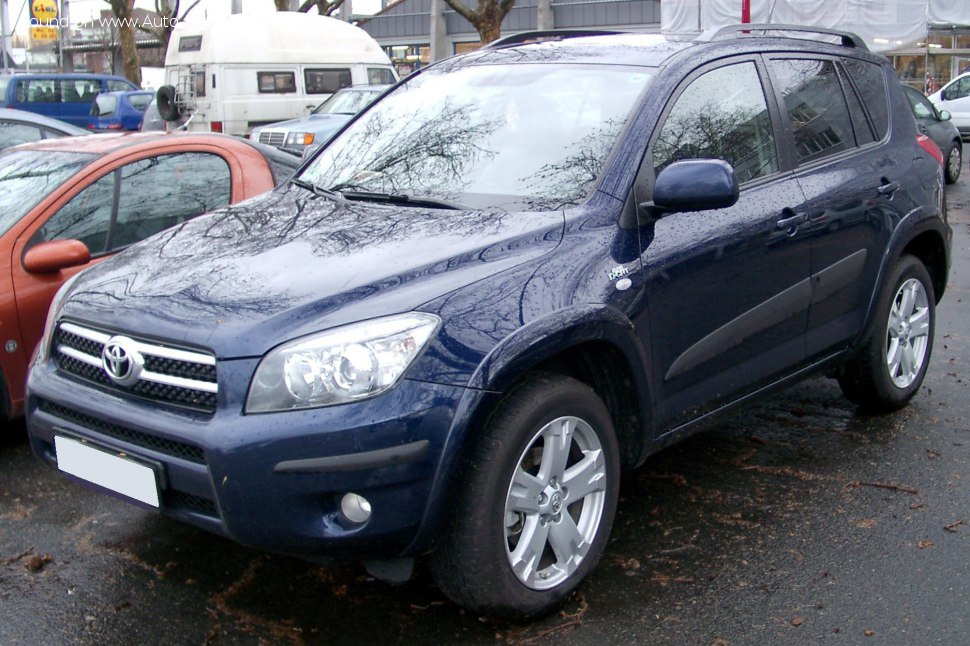
Introduction to the Toyota RAV4 III (XA30)
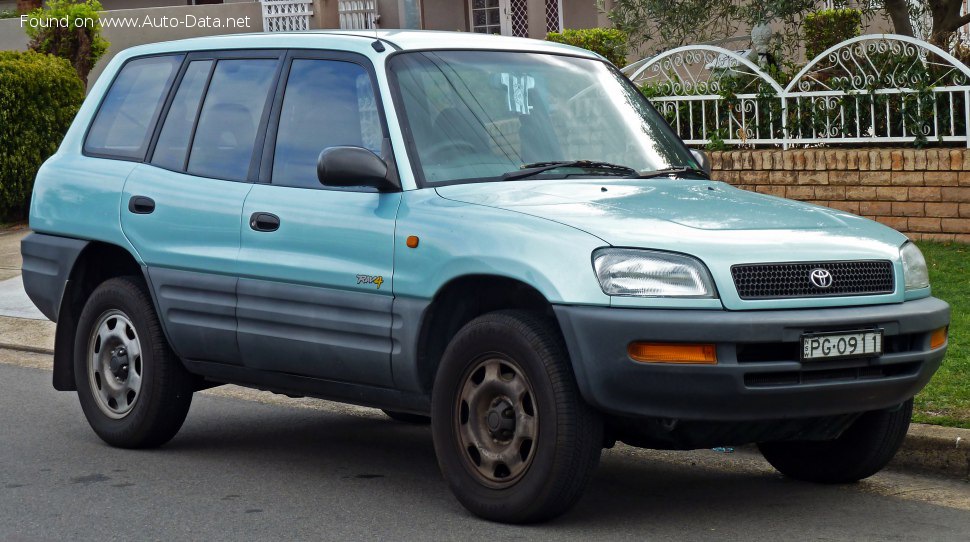
The Toyota RAV4, an acronym for “Recreational Activity Vehicle: 4-wheel drive,” pioneered the compact SUV segment upon its introduction in 1994. By the time the third generation, internally designated XA30, debuted in November 2005, the RAV4 had firmly established itself as a global benchmark for urban-friendly sport utility vehicles. The XA30 generation marked a significant evolution for the model, growing in size, sophistication, and target audience, moving further from its more rugged, compact roots towards a mainstream family hauler.
This detailed expert analysis focuses on a specific variant, the Toyota RAV4 III (XA30) 2.2 D-AD (136 Hp) 4WD, produced from 2005 to 2009. While gasoline-powered RAV4s were popular in the United States, this particular diesel-powered iteration was primarily targeted at European and Asian markets, where diesel engines were highly favored for their fuel efficiency and torque characteristics. It represented a compelling blend of Toyota’s renowned reliability, practical SUV utility, and the economic benefits of diesel propulsion, packaged in a stylish and comfortable five-door, five-seat SUV body.
Engine and Performance of the Toyota RAV4 III (XA30)
At the heart of the Toyota RAV4 III (XA30) 2.2 D-AD (136 Hp) 4WD lies Toyota’s robust 2AD-FTV diesel engine. This 2.2-liter (2231 cm³ or 136.14 cu. in.) inline-four powerplant was engineered for a balance of power, efficiency, and durability. Featuring a DOHC (Dual Overhead Camshaft) valvetrain with four valves per cylinder, a common rail fuel injection system, and a turbocharger with an intercooler, this engine was at the forefront of diesel technology for its era.
The engine delivers a respectable 136 horsepower at 3600 rpm, which, while not astonishing on paper, is complemented by a substantial 228.64 lb.-ft. of torque available across a broad rev range from 2000 to 2800 rpm. This characteristic low-end torque is a hallmark of diesel engines and proved highly advantageous for the RAV4, providing strong acceleration from a standstill and confident overtaking maneuvers without needing to constantly downshift.
Power is routed through a smooth-shifting 6-speed manual transmission to an intelligent all-wheel-drive (4×4) system. This combination allowed the RAV4 to achieve a 0-60 mph acceleration time of approximately 10 seconds, with a maximum speed of 111.85 mph. These figures were competitive for its segment, offering sufficient performance for both urban commuting and highway cruising.
Perhaps the most significant advantage of this diesel powertrain was its fuel economy. The 2.2 D-AD achieved an impressive combined fuel consumption of 35.6 US mpg (6.6 l/100 km). Even in urban settings, it managed 29 US mpg (8.1 l/100 km), while extra-urban driving could yield up to 42 US mpg (5.6 l/100 km). These figures, coupled with CO2 emissions of 173 g/km and compliance with Euro 4 emission standards, made it an economically and environmentally appealing choice in markets sensitive to fuel costs and emissions regulations. The 15.85 US gallon fuel tank also ensured a substantial cruising range.
Design and Features of the Third-Generation RAV4
The Toyota RAV4 III (XA30) represented a significant departure in design from its predecessors. It adopted a more mature and refined aesthetic, shedding some of the rugged, boxy characteristics of earlier models for a sleeker, more aerodynamic profile. The body type remained a practical 5-door SUV, designed to comfortably accommodate five occupants.
Dimensionally, the XA30 grew considerably. It measured between 169.88 and 173.03 inches in length, 71.46 inches in width, and 66.34 to 67.72 inches in height, all riding on a 100.79-inch wheelbase. This increase in size translated directly into a more spacious interior, particularly for rear-seat passengers and cargo. The minimum trunk space was a generous 20.69 cu. ft. (586 liters), expandable by folding the rear seats, making it a highly versatile vehicle for families and active lifestyles.
The chassis was engineered for a comfortable and composed ride, utilizing an independent MacPherson strut setup at the front and a sophisticated double wishbone suspension at the rear. This combination provided a good balance between on-road comfort and handling stability. The all-wheel-drive system, coupled with a ground clearance of 7.09 inches, gave the RAV4 decent capabilities for light off-roading or navigating challenging weather conditions, although it was primarily designed for paved roads.
Safety features were standard for its time, including an Anti-lock Braking System (ABS) paired with ventilated disc brakes measuring 296 mm at the front and solid disc brakes measuring 281 mm at the rear. The steering system was a responsive rack and pinion setup. The vehicle rode on 225/65 R17 tires mounted on 6.5J x 17 wheel rims, contributing to both its stance and ride quality. The drag coefficient (Cd) of 0.31 was quite respectable for an SUV of its size, aiding both fuel efficiency and reducing wind noise.
Technical Specifications: Toyota RAV4 III (XA30) 2.2 D-AD (136 Hp) 4WD
| Category | Specification |
|---|---|
| Brand | Toyota |
| Model | RAV4 |
| Generation | RAV4 III (XA30) |
| Type (Engine) | 2.2 D-AD (136 Hp) 4WD |
| Production Start | November, 2005 |
| Production End | 2009 |
| Powertrain Architecture | Internal Combustion Engine |
| Body Type | SUV |
| Seats | 5 |
| Doors | 5 |
| Performance Specs | |
| Fuel Consumption (Urban) | 29 US mpg (8.1 l/100 km) |
| Fuel Consumption (Extra Urban) | 42 US mpg (5.6 l/100 km) |
| Fuel Consumption (Combined) | 35.6 US mpg (6.6 l/100 km) |
| CO2 Emissions | 173 g/km |
| Fuel Type | Diesel |
| Acceleration 0 – 60 mph | 10 sec |
| Maximum Speed | 111.85 mph (180 km/h) |
| Emission Standard | Euro 4 |
| Weight-to-Power Ratio | 11.7 kg/Hp (85.8 Hp/tonne) |
| Weight-to-Torque Ratio | 5.1 kg/Nm (195.6 Nm/tonne) |
| Engine Specs | |
| Power | 136 Hp @ 3600 rpm |
| Power per Liter | 61 Hp/l |
| Torque | 228.64 lb.-ft. (310 Nm) @ 2000-2800 rpm |
| Engine Layout | Front, Transverse |
| Engine Model/Code | 2AD-FTV |
| Engine Displacement | 2.231 Liters (136.14 cu. in. / 2231 cm³) |
| Number of Cylinders | 4 |
| Engine Configuration | Inline |
| Cylinder Bore | 3.39 in. (86 mm) |
| Piston Stroke | 3.78 in. (96 mm) |
| Compression Ratio | 16.8:1 |
| Valves per Cylinder | 4 |
| Fuel Injection System | Diesel Commonrail |
| Engine Aspiration | Turbocharger, Intercooler |
| Valvetrain | DOHC |
| Engine Oil Capacity | 6.23 US qt (5.9 l) |
| Space, Volume and Weights | |
| Kerb Weight | 3494.33 lbs. (1585 kg) |
| Max. Weight | 4828.12 lbs. (2190 kg) |
| Max Load | 1333.8 lbs. (605 kg) |
| Trunk (boot) Space – Minimum | 20.69 cu. ft. (586 l) |
| Fuel Tank Capacity | 15.85 US gal (60 l) |
| Permitted Trailer Load with Brakes (12%) | 4409.25 lbs. (2000 kg) |
| Permitted Trailer Load without Brakes | 1653.47 lbs. (750 kg) |
| Dimensions | |
| Length | 169.88 – 173.03 in. (4315 – 4395 mm) |
| Width | 71.46 in. (1815 mm) |
| Height | 66.34 – 67.72 in. (1685 – 1720 mm) |
| Wheelbase | 100.79 in. (2560 mm) |
| Front Track | 61.42 in. (1560 mm) |
| Rear (Back) Track | 61.42 in. (1560 mm) |
| Front Overhang | 33.86 in. (860 mm) |
| Rear Overhang | 35.24 – 38.39 in. (895 – 975 mm) |
| Ride Height (Ground Clearance) | 7.09 in. (180 mm) |
| Drag Coefficient (Cd) | 0.31 |
| Minimum Turning Circle (Turning Diameter) | 33.46 ft. (10.2 m) |
| Approach Angle | 28° |
| Departure Angle | 24° |
| Ramp-over (Brakeover) Angle | 20° |
| Drivetrain, Brakes and Suspension Specs | |
| Drive Wheel | All Wheel Drive (4×4) |
| Number of Gears & Type | 6 gears, Manual Transmission |
| Front Suspension | Independent type McPherson |
| Rear Suspension | Double Wishbone |
| Front Brakes | Ventilated Discs, 296 mm |
| Rear Brakes | Disc, 281 mm |
| Assisting Systems | ABS (Anti-lock Braking System) |
| Steering Type | Steering Rack and Pinion |
| Tires Size | 225/65 R17 |
| Wheel Rims Size | 6.5J x 17 |
Legacy and Market Impact of the Toyota RAV4 III (XA30)
The third-generation Toyota RAV4 III (XA30), particularly in its 2.2 D-AD (136 Hp) 4WD diesel guise, played a crucial role in consolidating Toyota’s leadership in the compact SUV segment outside of North America. In markets like Europe and parts of Asia, where diesel engines held a significant market share due to their efficiency and lower fuel costs, this variant was a strong contender against rivals.
Its primary competitors in these regions included established players such as the Honda CR-V, Nissan Qashqai (known as Rogue Sport in the US), Volkswagen Tiguan, Ford Kuga, Hyundai Tucson, and Kia Sportage. The RAV4 distinguished itself through Toyota’s legendary reputation for reliability and build quality, coupled with a well-engineered all-wheel-drive system and the impressive fuel economy of the 2.2-liter diesel engine.
The XA30 generation signaled a strategic shift for the RAV4. It moved away from its earlier “cute-ute” image, which targeted younger, more adventurous buyers, towards a more sophisticated and family-oriented compact SUV. This repositioning broadened its appeal significantly, attracting buyers who valued practicality, comfort, and a commanding driving position without necessarily needing serious off-road capabilities. The diesel variant, specifically, catered to the European preference for high-torque, fuel-efficient engines, making it a popular choice for long-distance commuters and those seeking lower running costs.
Its impact on the market was substantial. The RAV4 III (XA30) helped to cement the compact SUV as a viable alternative to traditional sedans and wagons for families, offering a blend of passenger car comfort with SUV versatility. The 2.2 D-AD model, while not sold in the US, showcased Toyota’s engineering prowess in developing competitive diesel powertrains that met stringent European emission standards while delivering excellent real-world performance and economy. It reinforced the RAV4’s status as a global leader in its segment, contributing to its ongoing success and evolution into one of the best-selling SUVs worldwide. The XA30’s legacy is one of successful adaptation and refinement, proving that a well-executed compact SUV could cater to diverse global market demands.