The Toyota RAV4 III (XA30, facelift 2008) 2.0 VVT-i (158 Hp): A Global Compact SUV Pioneer
The Toyota RAV4, an acronym for “Recreational Activity Vehicle: 4-wheel drive,” has long been a trailblazer in the compact SUV segment. The third generation, known internally as the XA30, marked a significant evolution for the model, moving away from its more compact, car-like roots towards a larger, more mature SUV presence. Introduced in 2005, the XA30 generation received a notable facelift in April 2008, which is the focus of this detailed analysis. This particular variant, the Toyota RAV4 III (XA30, facelift 2008) 2.0 VVT-i (158 Hp), represented a popular and efficient choice in many international markets, especially in Europe and Asia, offering a balance of practicality, performance, and Toyota’s renowned reliability. While the North American market often received larger engine options, this 2.0-liter, front-wheel-drive, manual transmission configuration highlighted the RAV4’s versatility and appeal to a broader global audience seeking an economical yet capable family vehicle.
Engine & Performance of the Toyota RAV4 III (XA30, facelift 2008)
Powering this specific iteration of the Toyota RAV4 III (XA30, facelift 2008) is a sophisticated 2.0-liter VVT-i gasoline engine. Codenamed 3ZR-FAE, this naturally aspirated inline-four unit features Toyota’s Variable Valve Timing with intelligence (VVT-i) technology, which optimizes valve timing for both intake and exhaust, enhancing both power output and fuel efficiency across the rev range. This engine produces a respectable 158 horsepower at 6200 rpm, delivering a lively performance for its class. Peak torque stands at 146.04 lb.-ft. (198 Nm) at 4000 rpm, providing ample pulling power for daily driving and light hauling.
The powertrain architecture for this variant is a front, transverse-mounted internal combustion engine driving the front wheels. This front-wheel-drive setup, combined with a precise 6-speed manual transmission, contributes to its commendable fuel economy figures. The RAV4 III (XA30, facelift 2008) 2.0 VVT-i achieves an estimated 31.8 US mpg combined (7.4 l/100 km), with urban consumption at 25 US mpg (9.4 l/100 km) and extra-urban at an impressive 37.9 US mpg (6.2 l/100 km). With CO2 emissions of 174 g/km, it met the Euro 4 emission standard, reflecting its environmental considerations for the era.
Performance-wise, the 2.0-liter RAV4 is capable of accelerating from 0 to 60 mph in a brisk 9.7 seconds (0-100 km/h in 10.2 seconds), with a maximum speed of 114.95 mph (185 km/h). This makes it perfectly suitable for both city commutes and highway cruising, offering a responsive and engaging driving experience for a compact SUV. The engine’s bore and stroke are both 86 mm (3.39 inches), indicating a square engine design, which typically balances torque and horsepower output effectively.
Design & Features: The XA30 Facelift and its Practicality
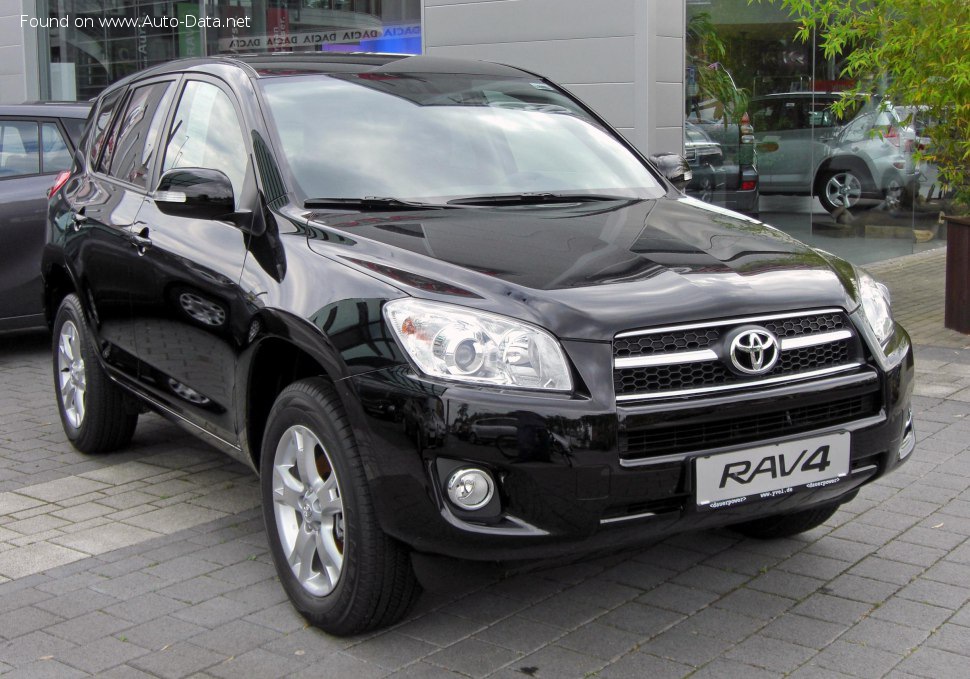
The Toyota RAV4 III (XA30, facelift 2008) maintained the robust and confident styling that defined the third generation, while introducing subtle enhancements to keep it competitive. As an SUV body type with five doors and seating for five occupants, it offered a practical and versatile package. The facelift brought revised front and rear fascias, updated grille designs, and new wheel options, giving it a fresher, more contemporary look without straying from its established identity.
Measuring 173.82 inches (4415 mm) in length, 71.46 inches (1815 mm) in width, and 67.72 inches (1720 mm) in height, with a wheelbase of 100.79 inches (2560 mm), the RAV4 provided a spacious cabin and a comfortable ride. Its elevated ride height of 7.48 inches (190 mm) and respectable approach (28°), departure (24°), and ramp-over (20°) angles, along with a wading depth of 11.81 inches (300 mm), hinted at its light off-road capabilities, reinforcing its SUV credentials. The minimum turning circle of 36.09 feet (11.0 m) ensured good maneuverability in urban environments.
Inside, the RAV4 offered a well-appointed and ergonomic cabin. The focus was on functionality and durability, typical of Toyota vehicles. With a minimum trunk space of 20.69 cu. ft. (586 liters), expandable to a generous 61.87 cu. ft. (1752 liters) with the rear seats folded, the RAV4 provided ample cargo capacity for families and adventurers alike. The maximum roof load capacity of 220.46 lbs (100 kg) further extended its utility for carrying gear.
Safety features for the era included an Anti-lock Braking System (ABS) as standard, ensuring stable braking performance. The vehicle utilized ventilated discs at the front and disc brakes at the rear, offering reliable stopping power. The suspension system comprised an independent MacPherson strut setup with coil springs and an anti-roll bar at the front, paired with a double wishbone rear suspension, providing a comfortable ride and stable handling characteristics. It rode on 225/65 R17 tires mounted on 6.5J x 17 wheel rims.
Technical Specifications
| Category | Specification |
|---|---|
| General Information | |
| Brand | Toyota |
| Model | RAV4 |
| Generation | RAV4 III (XA30, facelift 2008) |
| Type (Engine) | 2.0 VVT-i (158 Hp) |
| Production Start | April, 2008 |
| Production End | May, 2010 |
| Powertrain Architecture | Internal Combustion Engine |
| Body Type | SUV |
| Seats | 5 |
| Doors | 5 |
| Performance Specs | |
| Fuel Consumption (Urban) | 9.4 l/100 km (25 US mpg) |
| Fuel Consumption (Extra Urban) | 6.2 l/100 km (37.9 US mpg) |
| Fuel Consumption (Combined) | 7.4 l/100 km (31.8 US mpg) |
| CO2 Emissions | 174 g/km |
| Fuel Type | Petrol (Gasoline) |
| Acceleration 0 – 60 mph | 9.7 sec |
| Acceleration 0 – 100 km/h | 10.2 sec |
| Maximum Speed | 114.95 mph (185 km/h) |
| Emission Standard | Euro 4 |
| Weight-to-Power Ratio | 9.5 kg/Hp (105.3 Hp/tonne) |
| Weight-to-Torque Ratio | 7.6 kg/Nm (132 Nm/tonne) |
| Engine Specs | |
| Power | 158 Hp @ 6200 rpm |
| Power per Liter | 79.1 Hp/l |
| Torque | 146.04 lb.-ft. (198 Nm) @ 4000 rpm |
| Engine Layout | Front, Transverse |
| Engine Model/Code | 3ZR-FAE |
| Engine Displacement | 1998 cm3 (121.93 cu. in.) |
| Number of Cylinders | 4 |
| Engine Configuration | Inline |
| Cylinder Bore | 86 mm (3.39 in.) |
| Piston Stroke | 86 mm (3.39 in.) |
| Compression Ratio | 9.8:1 |
| Number of Valves per Cylinder | 4 |
| Fuel Injection System | Multi-port manifold injection |
| Engine Aspiration | Naturally aspirated engine |
| Valvetrain | DOHC, VVT-i |
| Engine Oil Capacity | 4.2 l (4.44 US qt) |
| Engine Oil Specification | Not specified in data |
| Dimensions, Space, Volume, and Weights | |
| Kerb Weight | 3306.93 lbs (1500 kg) |
| Maximum Weight | 4563.57 lbs (2070 kg) |
| Max Load | 1256.63 lbs (570 kg) |
| Trunk (Boot) Space – Minimum | 20.69 cu. ft. (586 l) |
| Trunk (Boot) Space – Maximum | 61.87 cu. ft. (1752 l) |
| Fuel Tank Capacity | 15.85 US gal (60 l) |
| Max. Roof Load | 220.46 lbs (100 kg) |
| Permitted Trailer Load with Brakes (12%) | 4409.25 lbs (2000 kg) |
| Permitted Trailer Load without Brakes | 1653.47 lbs (750 kg) |
| Permitted Towbar Download | 176.37 lbs (80 kg) |
| Length | 173.82 in. (4415 mm) |
| Width | 71.46 in. (1815 mm) |
| Height | 67.72 in. (1720 mm) |
| Wheelbase | 100.79 in. (2560 mm) |
| Ride Height (Ground Clearance) | 7.48 in. (190 mm) |
| Minimum Turning Circle | 36.09 ft. (11.0 m) |
| Approach Angle | 28° |
| Departure Angle | 24° |
| Ramp-over (Brakeover) Angle | 20° |
| Wading Depth | 11.81 in. (300 mm) |
| Drivetrain, Brakes, and Suspension Specs | |
| Drivetrain Architecture | Internal Combustion engine (ICE) drives the front wheels. |
| Drive Wheel | Front-wheel drive |
| Number of Gears and Type of Gearbox | 6 gears, manual transmission |
| Front Suspension | Independent, MacPherson with coil spring and anti-roll bar |
| Rear Suspension | Double wishbone |
| Front Brakes | Ventilated discs |
| Rear Brakes | Disc |
| Assisting Systems | ABS (Anti-lock braking system) |
| Steering Type | Steering rack and pinion |
| Tires Size | 225/65 R17 |
| Wheel Rims Size | 6.5J x 17 |
Legacy & Market Impact
The Toyota RAV4 III (XA30) generation, and particularly its facelifted 2008 model, solidified the RAV4’s position as a dominant force in the compact SUV segment globally. While the North American market often preferred the more powerful 2.5-liter or V6 engines and automatic transmissions, this 2.0-liter, front-wheel-drive, manual transmission variant was a highly strategic offering for markets where fuel efficiency, lower emissions, and a more engaging driving experience were prioritized. In regions like Europe, Australia, and parts of Asia, this configuration directly competed with popular models such as the Honda CR-V, Nissan Qashqai (Rogue Sport in the US), Volkswagen Tiguan, and Ford Kuga.
Its reputation for legendary reliability, low running costs, and strong resale value made it a compelling choice for families and individuals seeking a practical and dependable vehicle. The XA30 generation marked the RAV4’s transition from a niche, somewhat quirky soft-roader to a mainstream family SUV, offering a more refined ride, increased interior space, and enhanced safety features. The availability of a front-wheel-drive option, as seen in this 2.0 VVT-i variant, also broadened its appeal to urban dwellers who desired the elevated driving position and versatility of an SUV without the added cost, complexity, or fuel consumption penalties associated with all-wheel drive.
The 2008 facelift helped sustain the model’s appeal through its later years, keeping its design fresh and technology relevant. The Toyota RAV4 III (XA30, facelift 2008) 2.0 VVT-i (158 Hp) played a crucial role in Toyota’s global strategy, demonstrating the brand’s ability to tailor its offerings to diverse market demands while maintaining a core identity of quality and durability. Its legacy is one of continuous evolution, helping to define and popularize the compact SUV category that continues to be one of the most competitive and important segments in the automotive industry today.