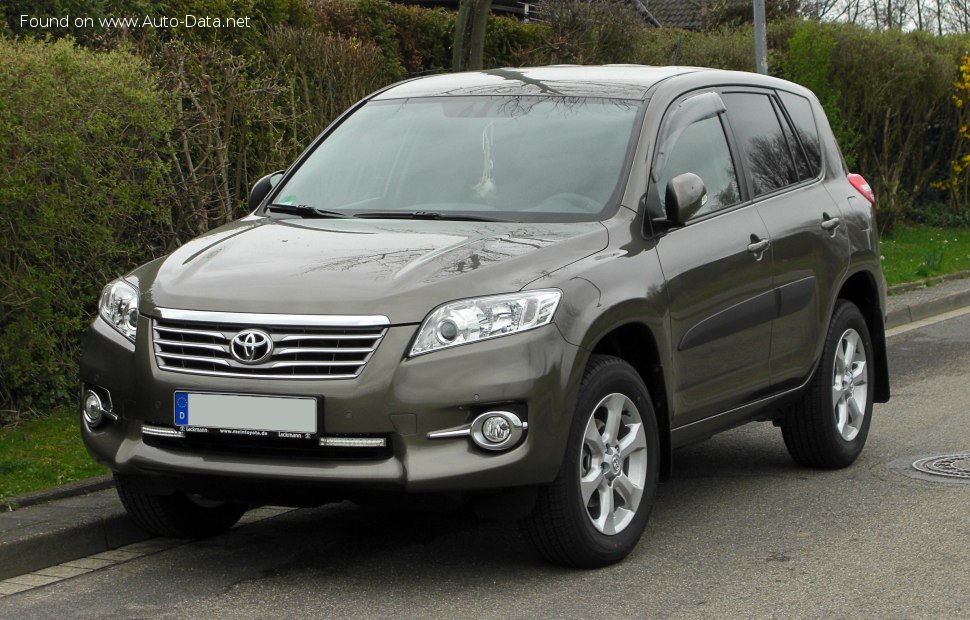
Introduction to the Toyota RAV4 III (XA30, facelift 2010)
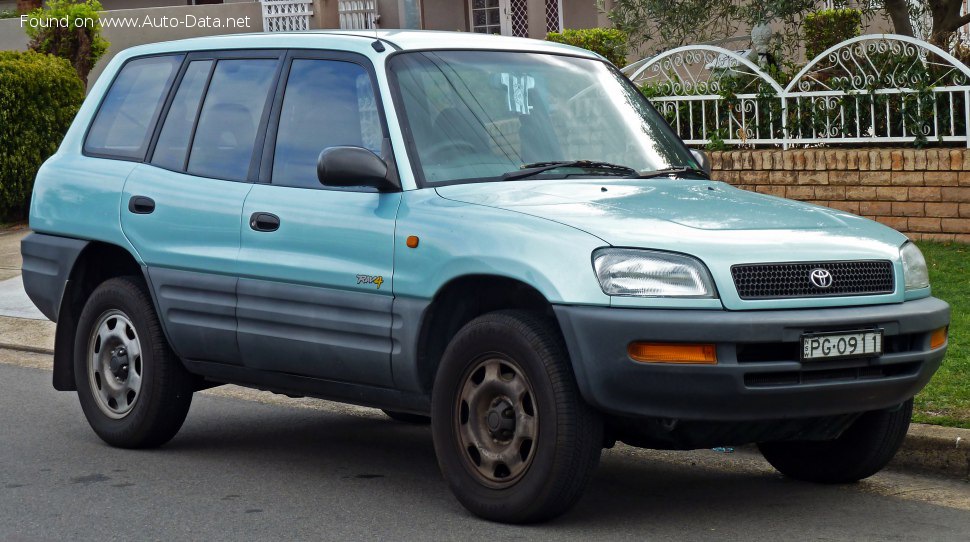
The Toyota RAV4, short for “Recreational Activity Vehicle: 4-wheel drive,” pioneered the compact crossover SUV segment upon its debut in 1994. By the time the third generation, internally codenamed XA30, was introduced in 2005, the RAV4 had firmly established itself as a global best-seller, celebrated for its practical blend of SUV utility, car-like driving dynamics, and Toyota’s hallmark reliability. The model under scrutiny here is the Toyota RAV4 III (XA30, facelift 2010) 2.0 VVT-i (158 Hp) 4WD, representing a key mid-cycle refresh that refined an already successful formula. Produced from May 2010 to February 2013, this iteration aimed to keep the RAV4 competitive in an increasingly crowded market, offering enhanced styling, updated features, and efficient powertrains for its target demographics, particularly in markets outside the United States where this specific engine configuration was prominent.
The XA30 generation marked a significant evolution for the RAV4, growing in size to offer more interior space and a more substantial road presence than its predecessors. The 2010 facelift brought subtle but impactful changes, primarily to the front fascia, aiming for a more contemporary and sophisticated look. This specific variant, powered by a 2.0-liter VVT-i engine and equipped with all-wheel drive, was a popular choice for consumers seeking a versatile daily driver capable of handling varied conditions, from urban commutes to light off-road excursions, all while maintaining reasonable fuel efficiency.
Engine and Performance of the Toyota RAV4 III (XA30, facelift 2010)
At the heart of this particular Toyota RAV4 III (XA30, facelift 2010) model is Toyota’s 2.0-liter (1998 cm³ or 121.93 cu. in.) 3ZR-FAE inline four-cylinder engine. This naturally aspirated gasoline powerplant is equipped with Toyota’s Variable Valve Timing with intelligence (VVT-i) system, a technology designed to optimize valve overlap for improved power delivery across the rev range and enhanced fuel efficiency. The engine generates a respectable 158 horsepower at 6200 rpm, providing ample power for its class. Torque output stands at 198 Nm (146.04 lb.-ft.) at a modest 4000 rpm, ensuring responsive acceleration and sufficient pulling power for daily driving scenarios.
Power is channeled to all four wheels via a precise and engaging 6-speed manual transmission, a choice that appealed to drivers who preferred more direct control over their vehicle’s dynamics. The all-wheel-drive (4×4) system provided enhanced traction and stability, particularly beneficial in adverse weather conditions or on unpaved roads. This combination allowed the RAV4 to achieve a 0-60 mph acceleration time of approximately 10 seconds (0-100 km/h in 10.5 seconds) and reach a top speed of 115 mph (185 km/h). While not a performance SUV, these figures were competitive for the segment, emphasizing practical usability and a balanced driving experience.
Fuel economy for this 2.0 VVT-i 4WD variant was a strong suit, benefiting from the VVT-i technology and the manual transmission. The combined fuel consumption was rated at 7.7 liters per 100 kilometers, translating to an impressive 30.5 US mpg. Urban driving saw consumption at 9.8 l/100 km (24 US mpg), while extra-urban figures were as low as 6.5 l/100 km (36.2 US mpg). With CO2 emissions of 178 g/km, the vehicle met the Euro 5 emission standard, reflecting Toyota’s commitment to environmental responsibility even in the early 2010s. The 60-liter (15.85 US gallon) fuel tank provided a substantial cruising range.
Design and Features
The Toyota RAV4 III (XA30, facelift 2010) retained the core design philosophy of the third generation, characterized by a more refined and less utilitarian appearance compared to its predecessors. As an SUV body type with 5 doors and seating for 5 occupants, it offered a versatile and family-friendly package. The 2010 facelift introduced revised styling cues, most notably a redesigned front bumper, grille, and headlights, giving the RAV4 a fresher, more assertive look that aligned with Toyota’s evolving design language of the era.
Measuring 171.85 inches (4365 mm) in length, 71.46 inches (1815 mm) in width, and 66.34 inches (1685 mm) in height, the RAV4 offered a compact footprint that made it easy to maneuver in urban environments, yet its generous 100.79-inch (2560 mm) wheelbase contributed to a stable ride and a spacious interior. The ground clearance of 7.52 inches (191 mm) further enhanced its versatility, allowing it to navigate rougher terrain or snowy conditions with confidence. The approach, departure, and ramp-over angles (28°, 24°, and 20° respectively) further underscored its capability beyond paved roads.
Inside, the RAV4 prioritized practicality and comfort. The cargo area was particularly impressive, offering a minimum of 20.69 cubic feet (586 liters) of trunk space, which could expand to a cavernous 61.87 cubic feet (1752 liters) with the rear seats folded down. This made it highly capable for hauling luggage, groceries, or sports equipment. Standard features included a multi-port manifold injection system, DOHC valvetrain with VVT-i, and essential safety systems like ABS (Anti-lock Braking System), contributing to both performance and occupant protection. The vehicle rode on 225/65 R17 tires mounted on 6.5J x 17 wheel rims, providing a good balance of comfort and grip.
Suspension-wise, the RAV4 featured an independent McPherson strut setup with coil springs and an anti-roll bar at the front, paired with a double wishbone arrangement at the rear. This configuration delivered a comfortable ride quality while maintaining competent handling characteristics. Braking duties were handled by ventilated discs at the front and solid discs at the rear, ensuring effective stopping power.
Technical Specifications
| Category | Specification |
|---|---|
| Brand | Toyota |
| Model | RAV4 |
| Generation | RAV4 III (XA30, facelift 2010) |
| Type (Engine) | 2.0 VVT-i (158 Hp) 4WD |
| Start of production | May, 2010 year |
| End of production | February, 2013 year |
| Powertrain Architecture | Internal Combustion engine |
| Body type | SUV |
| Seats | 5 |
| Doors | 5 |
| Performance Specs | |
| Fuel consumption (economy) – urban | 9.8 l/100 km (24 US mpg) |
| Fuel consumption (economy) – extra urban | 6.5 l/100 km (36.2 US mpg) |
| Fuel consumption (economy) – combined | 7.7 l/100 km (30.5 US mpg) |
| CO2 emissions | 178 g/km |
| Fuel Type | Petrol (Gasoline) |
| Acceleration 0 – 60 mph | 10 seconds |
| Acceleration 0 – 100 km/h | 10.5 seconds |
| Maximum speed | 185 km/h (114.95 mph) |
| Emission standard | Euro 5 |
| Weight-to-power ratio | 9.8 kg/Hp (101.9 Hp/tonne) |
| Weight-to-torque ratio | 7.8 kg/Nm (127.7 Nm/tonne) |
| Engine Specs | |
| Power | 158 Hp @ 6200 rpm |
| Power per liter | 79.1 Hp/l |
| Torque | 198 Nm @ 4000 rpm (146.04 lb.-ft. @ 4000 rpm) |
| Engine layout | Front, Transverse |
| Engine Model/Code | 3ZR-FAE |
| Engine displacement | 1998 cm³ (121.93 cu. in.) |
| Number of cylinders | 4 |
| Engine configuration | Inline |
| Cylinder Bore | 86 mm (3.39 in.) |
| Piston Stroke | 86 mm (3.39 in.) |
| Compression ratio | 9.8:1 |
| Number of valves per cylinder | 4 |
| Fuel injection system | Multi-port manifold injection |
| Engine aspiration | Naturally aspirated engine |
| Valvetrain | DOHC, VVT-i |
| Engine oil capacity | 4.2 l (4.44 US qt) |
| Space, Volume and Weights | |
| Kerb Weight | 1550 kg (3417.17 lbs.) |
| Max. weight | 2070 kg (4563.57 lbs.) |
| Max load | 520 kg (1146.4 lbs.) |
| Trunk (boot) space – minimum | 586 l (20.69 cu. ft.) |
| Trunk (boot) space – maximum | 1752 l (61.87 cu. ft.) |
| Fuel tank capacity | 60 l (15.85 US gal) |
| Max. roof load | 100 kg (220.46 lbs.) |
| Permitted trailer load with brakes (12%) | 2000 kg (4409.25 lbs.) |
| Permitted trailer load without brakes | 750 kg (1653.47 lbs.) |
| Permitted towbar download | 80 kg (176.37 lbs.) |
| Dimensions | |
| Length | 4365 mm (171.85 in.) |
| Width | 1815 mm (71.46 in.) |
| Height | 1685 mm (66.34 in.) |
| Wheelbase | 2560 mm (100.79 in.) |
| Ride height (ground clearance) | 191 mm (7.52 in.) |
| Minimum turning circle (turning diameter) | 11.0 m (36.09 ft.) |
| Approach angle | 28° |
| Departure angle | 24° |
| Ramp-over (brakeover) angle | 20° |
| Wading depth | 300 mm (11.81 in.) |
| Drivetrain, Brakes and Suspension Specs | |
| Drive wheel | All wheel drive (4×4) |
| Number of gears and type of gearbox | 6 gears, manual transmission |
| Front suspension | Independent, type McPherson with coil spring and anti-roll bar |
| Rear suspension | Double wishbone |
| Front brakes | Ventilated discs |
| Rear brakes | Disc |
| Assisting systems | ABS (Anti-lock braking system) |
| Steering type | Steering rack and pinion |
| Tires size | 225/65 R17 |
| Wheel rims size | 6.5J x 17 |
Legacy and Market Impact of the Toyota RAV4 III (XA30) Facelift
The Toyota RAV4 III (XA30), particularly in its facelifted 2010-2013 iteration, continued to build upon the model’s formidable legacy as a pioneer and enduring leader in the compact crossover SUV segment. While this specific 2.0 VVT-i (158 Hp) 4WD variant with a manual transmission was more prevalent in European and Asian markets, its underlying platform and design principles were consistent with the global RAV4 lineup, which saw significant success in North America as well.
The RAV4’s market impact stemmed from its ability to perfectly blend the practicality of an SUV with the driving comfort and fuel efficiency of a passenger car. It offered a compelling alternative to traditional sedans and larger, less efficient SUVs, appealing to a broad demographic from young families to active singles. Its reputation for bulletproof reliability, low maintenance costs, and strong resale value further solidified its position as a consumer favorite. This generation, with its enhanced size and more refined styling, moved the RAV4 further upscale, blurring the lines between mainstream and premium offerings.
In its competitive landscape, the RAV4 faced formidable rivals such as the Honda CR-V, Ford Escape, Nissan Rogue, and Subaru Forester. Each competitor offered unique strengths, but the RAV4 consistently stood out for its balanced approach to performance, utility, and dependability. The 2010 facelift ensured that the XA30 generation remained visually fresh and technologically relevant against these newer entrants. The availability of the 4WD system, coupled with a respectable ground clearance and towing capacity (up to 4409 lbs with brakes), provided a genuine sense of adventure and capability often missing from some of its more car-like competitors.
Historically, the RAV4’s success helped define the compact crossover segment, influencing countless other manufacturers to enter the market. The third generation, and especially the refreshed XA30, played a crucial role in this ongoing evolution, demonstrating that a vehicle could be practical, efficient, and capable without being overly rugged or unwieldy. It represented a mature and confident stage in the RAV4’s journey, setting the stage for future generations that would continue to dominate the crossover landscape. Its legacy is one of innovation, practicality, and unwavering reliability, making the Toyota RAV4 III (XA30, facelift 2010) a significant chapter in automotive history.