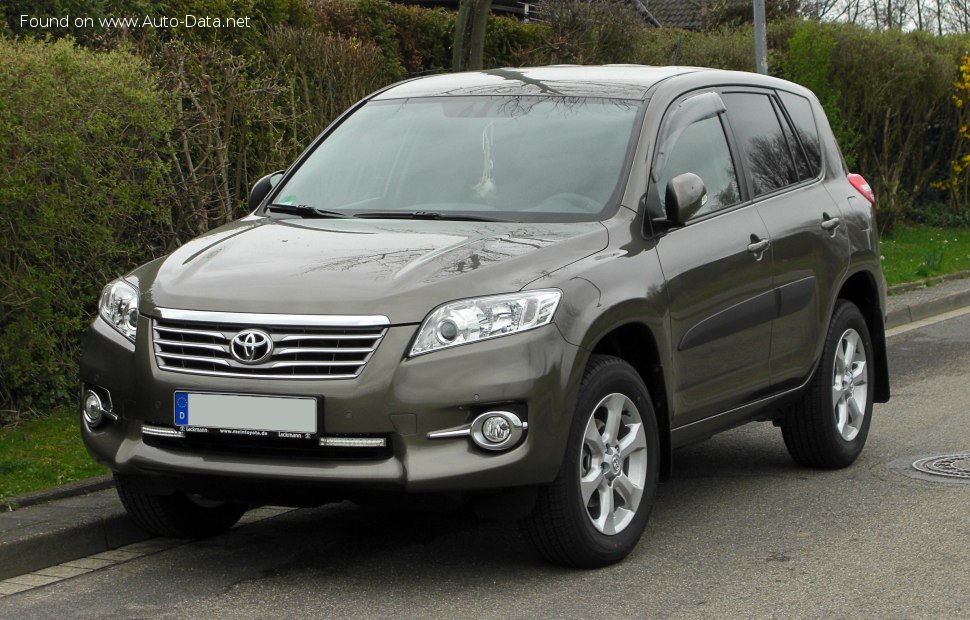
Toyota RAV4 III (XA30, Facelift 2010): A Refined Global Compact SUV
The Toyota RAV4 III (XA30, facelift 2010) represents a significant evolution in Toyota’s pioneering Recreational Activity Vehicle, offering a blend of car-like comfort and SUV utility. This particular variant, the 2.0 VVT-i (158 Hp) 4WD Multidrive, showcases the third generation’s commitment to efficiency, versatility, and driving refinement. Produced from May 2010 to February 2013, this mid-cycle refresh of the XA30 generation aimed to keep the RAV4 competitive in the burgeoning global compact SUV segment. While the RAV4 has been a staple in the American market since its inception, this specific powertrain configuration, featuring a 2.0-liter engine paired with Toyota’s Multidrive S continuously variable transmission (CVT) and all-wheel drive, was particularly prominent in European and Asian markets, where fuel efficiency and lower displacement engines were highly valued. It continued the RAV4’s legacy as a practical, reliable, and capable vehicle for both urban commutes and light off-road adventures.
Engine and Performance: The 2.0 VVT-i Powertrain
Under the hood of the Toyota RAV4 III (XA30, facelift 2010) 2.0 VVT-i 4WD Multidrive lies a naturally aspirated 2.0-liter (1998 cm³ or 121.93 cu. in.) inline-four engine, designated as the 3ZR-FAE. This engine is a prime example of Toyota’s commitment to advanced valvetrain technology, featuring Dual Overhead Camshafts (DOHC) and the Variable Valve Timing with intelligence (VVT-i) system. VVT-i optimizes valve timing across the RPM range, enhancing both power output and fuel efficiency.
The 2.0-liter engine produces a respectable 158 horsepower at 6200 rpm, delivering a power-per-liter ratio of 79.1 Hp/l. Torque peaks at 146.04 lb.-ft. (198 Nm) at 4000 rpm, providing ample thrust for daily driving and highway cruising. Power is delivered to all four wheels through Toyota’s Multidrive S automatic transmission, a continuously variable transmission (CVT) known for its smooth and seamless acceleration. While some enthusiasts might prefer a traditional automatic or manual, the Multidrive S was engineered for efficiency and convenience, offering a refined driving experience without noticeable gear shifts.
Performance figures for this variant are competitive within its class. The RAV4 III 2.0 VVT-i can accelerate from 0 to 60 mph in an estimated 10.5 seconds, with a top speed of 114.95 mph (185 km/h). Fuel economy figures are notable for a compact SUV with all-wheel drive, with a combined rating of 36.2 US mpg (6.5 l/100 km). Urban consumption stands at 24.5 US mpg (9.6 l/100 km), while extra-urban driving yields an impressive 36.2 US mpg (6.5 l/100 km). These figures, coupled with CO2 emissions of 177 g/km and adherence to Euro 5 emission standards, underscore its design for environmental consciousness in its target markets.
Design and Features
Exterior and Body Type
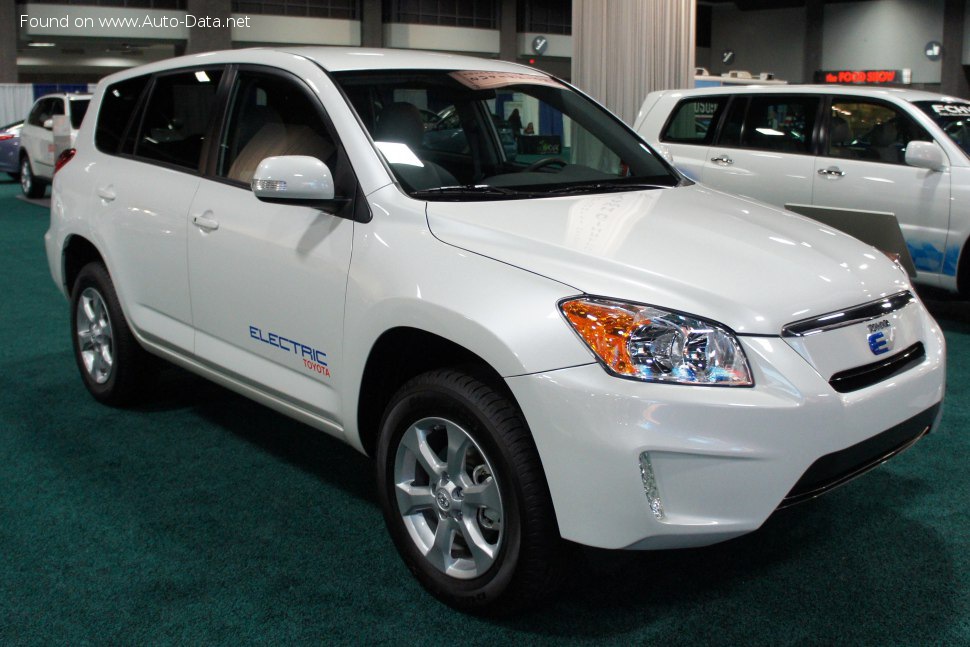
The Toyota RAV4 III (XA30) maintained its identity as a compact SUV, offering a blend of rugged appeal and urban sophistication. The 2010 facelift brought subtle but effective aesthetic enhancements, including revised front fascias, grilles, headlights, and taillights, giving it a fresher, more contemporary look. With a length of 171.85 inches (4365 mm), a width of 71.46 inches (1815 mm), and a height of 66.34 inches (1685 mm), the RAV4 struck an excellent balance between maneuverability and interior spaciousness. Its 100.79-inch (2560 mm) wheelbase contributed to a stable ride, while a ground clearance of 7.52 inches (191 mm) provided confidence over uneven terrain. The SUV body type, with five doors and seating for five, emphasized practicality and accessibility.
Interior and Utility
Inside, the RAV4 III offered a well-appointed and ergonomic cabin. The five-seat configuration provided comfortable accommodation for passengers, while the versatile cargo area was a key selling point. Minimum trunk space started at a generous 20.69 cu. ft. (586 liters), which could be expanded to a cavernous 61.87 cu. ft. (1752 liters) with the rear seats folded down, making it highly practical for hauling luggage, groceries, or sports equipment. The interior design was functional and durable, typical of Toyota, with logical control layouts and quality materials designed to withstand the rigors of family life.
Chassis, Suspension, and Safety
The RAV4 III utilized a car-like unibody construction, contributing to its refined on-road manners. The front suspension featured an independent McPherson strut setup with coil springs and an anti-roll bar, providing responsive handling and a comfortable ride. The rear employed a sophisticated double wishbone suspension, enhancing stability and control, particularly during cornering or when carrying a load. Braking duties were handled by ventilated discs at the front and solid discs at the rear, complemented by an Anti-lock Braking System (ABS) for enhanced safety. The all-wheel-drive (4×4) system provided improved traction and stability in adverse weather conditions or on light off-road trails, further cementing its utility as a versatile family vehicle. Standard tire size was 225/65 R17 on 6.5J x 17 wheel rims.
Technical Specifications: Toyota RAV4 III (XA30, facelift 2010) 2.0 VVT-i (158 Hp) 4WD Multidrive
| Category | Specification | Value |
|---|---|---|
| General Information | ||
| Brand | Toyota | |
| Model | RAV4 | |
| Generation | RAV4 III (XA30, facelift 2010) | |
| Type (Engine) | 2.0 VVT-i (158 Hp) 4WD Multidrive | |
| Start of Production | May, 2010 year | |
| End of Production | February, 2013 year | |
| Powertrain Architecture | Internal Combustion engine | |
| Body type | SUV | |
| Seats | 5 | |
| Doors | 5 | |
| Performance Specs | ||
| Fuel consumption (economy) – urban | 9.6 l/100 km (24.5 US mpg) | |
| Fuel consumption (economy) – extra urban | 6.5 l/100 km (36.2 US mpg) | |
| Fuel consumption (economy) – combined | 6.5 l/100 km (36.2 US mpg) | |
| CO2 emissions | 177 g/km | |
| Fuel Type | Petrol (Gasoline) | |
| Acceleration 0 – 60 mph | 10.5 sec | |
| Maximum speed | 114.95 mph (185 km/h) | |
| Emission standard | Euro 5 | |
| Weight-to-power ratio | 10 kg/Hp (100 Hp/tonne) | |
| Weight-to-torque ratio | 8 kg/Nm (125.3 Nm/tonne) | |
| Engine Specs | ||
| Power | 158 Hp @ 6200 rpm | |
| Torque | 146.04 lb.-ft. (198 Nm) @ 4000 rpm | |
| Engine layout | Front, Transverse | |
| Engine Model/Code | 3ZR-FAE | |
| Engine displacement | 1998 cm³ (121.93 cu. in.) | |
| Number of cylinders | 4 | |
| Engine configuration | Inline | |
| Cylinder Bore | 3.39 in. (86 mm) | |
| Piston Stroke | 3.39 in. (86 mm) | |
| Compression ratio | 9.8:1 | |
| Number of valves per cylinder | 4 | |
| Fuel injection system | Multi-port manifold injection | |
| Engine aspiration | Naturally aspirated engine | |
| Valvetrain | DOHC, VVT-i | |
| Engine oil capacity | 4.2 l (4.44 US qt) | |
| Space, Volume and Weights | ||
| Kerb Weight | 3483.3 lbs. (1580 kg) | |
| Max. weight | 4651.75 lbs. (2110 kg) | |
| Max load | 1168.45 lbs. (530 kg) | |
| Trunk (boot) space – minimum | 20.69 cu. ft. (586 l) | |
| Trunk (boot) space – maximum | 61.87 cu. ft. (1752 l) | |
| Fuel tank capacity | 15.85 US gal (60 l) | |
| Max. roof load | 220.46 lbs. (100 kg) | |
| Permitted trailer load with brakes (12%) | 3306.93 lbs. (1500 kg) | |
| Permitted trailer load without brakes | 1653.47 lbs. (750 kg) | |
| Permitted towbar download | 132.28 lbs. (60 kg) | |
| Dimensions | ||
| Length | 171.85 in. (4365 mm) | |
| Width | 71.46 in. (1815 mm) | |
| Height | 66.34 in. (1685 mm) | |
| Wheelbase | 100.79 in. (2560 mm) | |
| Ride height (ground clearance) | 7.52 in. (191 mm) | |
| Minimum turning circle (turning diameter) | 36.09 ft. (11.0 m) | |
| Approach angle | 28° | |
| Departure angle | 24° | |
| Ramp-over (brakeover) angle | 20° | |
| Wading depth | 11.81 in. (300 mm) | |
| Drivetrain, Brakes and Suspension Specs | ||
| Drive wheel | All wheel drive (4×4) | |
| Number of gears and type of gearbox | automatic transmission Multidrive S | |
| Front suspension | Independent, type McPherson with coil spring and anti-roll bar | |
| Rear suspension | Double wishbone | |
| Front brakes | Ventilated discs | |
| Rear brakes | Disc | |
| Assisting systems | ABS (Anti-lock braking system) | |
| Steering type | Steering rack and pinion | |
| Tires size | 225/65 R17 | |
| Wheel rims size | 6.5J x 17 | |
Legacy and Market Impact
The Toyota RAV4, particularly the third generation (XA30), played a pivotal role in solidifying the compact SUV segment globally. The Toyota RAV4 III (XA30, facelift 2010) 2.0 VVT-i (158 Hp) 4WD Multidrive variant, while not the primary offering in the North American market which often received larger displacement engines, was a cornerstone of Toyota’s strategy in Europe and Asia. In these markets, its combination of a refined 2.0-liter engine, efficient Multidrive S CVT, and capable all-wheel-drive system struck an ideal balance for buyers seeking versatility without excessive running costs.
Its reputation for reliability, fuel efficiency, and practical design made it a formidable competitor against rivals such as the Honda CR-V, Nissan Qashqai (Rogue Sport in some markets), Volkswagen Tiguan, and Ford Kuga (Escape in North America). While the RAV4 might not have been the most dynamically thrilling option in its class, its strengths lay in its well-rounded package, low ownership costs, and high resale value – hallmarks of the Toyota brand.
The XA30 generation, especially after its 2010 facelift, helped bridge the gap between the more utilitarian SUVs of the past and the increasingly car-like crossovers that dominate today’s market. It offered a comfortable ride, predictable handling, and a spacious interior, making it an excellent choice for families and individuals with active lifestyles. The inclusion of modern features for its era, such as VVT-i engine technology and the Multidrive S transmission, showcased Toyota’s ongoing commitment to innovation in mainstream vehicles. Its ability to handle light off-road duties, combined with its urban practicality, ensured its continued popularity and cemented the RAV4’s status as a global leader in the compact SUV segment, paving the way for future generations to build upon its successful formula.