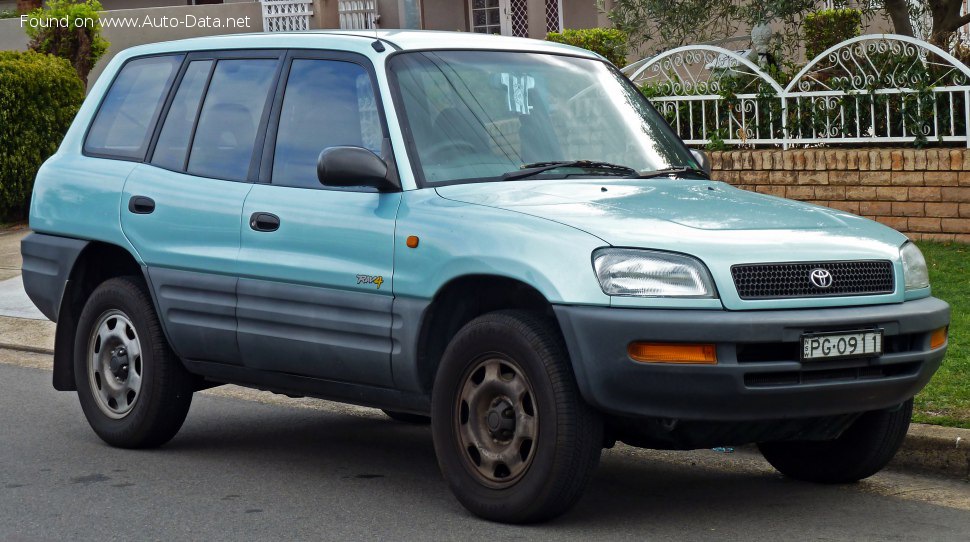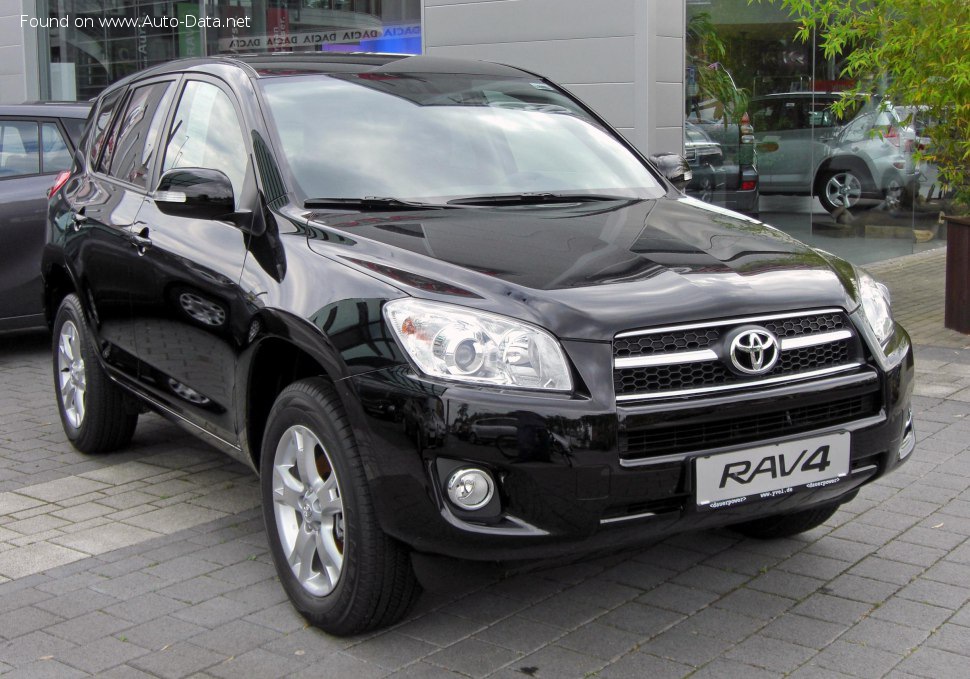
The Toyota RAV4 III (XA30, Facelift 2008) 2.0 VVT-i 4WD Multidrive S
The Toyota RAV4, an acronym for “Recreational Activity Vehicle: 4-wheel drive,” is widely recognized as one of the pioneering vehicles in the compact crossover SUV segment. The third generation, known internally as the XA30 series, marked a significant evolution in the model’s history, moving away from its more utilitarian roots towards a refined, family-oriented SUV. Introduced in 2005, the XA30 generation received a notable facelift in 2008, enhancing its aesthetic appeal and technological offerings. This article specifically focuses on the Toyota RAV4 III (XA30, facelift 2008) with the 2.0-liter VVT-i engine, paired with a sophisticated 4WD system and a Multidrive S continuously variable transmission (CVT).
During its production run from 2008 to 2010, this iteration of the RAV4 continued to solidify Toyota’s position in the highly competitive compact SUV market. It offered a compelling blend of car-like driving dynamics, enhanced cargo and passenger space, and the versatility of all-wheel drive, making it a popular choice for urban commuters and adventurous families alike. The XA30 generation, particularly after its 2008 update, represented a mature and globally relevant product, catering to diverse market demands from North America to Europe and Asia.
Engine and Performance of the Toyota RAV4 III (XA30, Facelift 2008)
At the heart of this particular Toyota RAV4 III (XA30, facelift 2008) variant is the 2.0-liter (1987 cm³ or 121.25 cu. in.) 3ZR-FAE inline-four gasoline engine. This naturally aspirated unit is a testament to Toyota’s engineering prowess, incorporating advanced technologies such as Variable Valve Timing with intelligence (VVT-i) and Valvematic. VVT-i optimizes valve timing for improved power output and fuel efficiency across the engine’s RPM range, while Valvematic takes this a step further by continuously varying the amount of valve lift, allowing for more precise control over the air intake and significantly enhancing combustion efficiency.
The engine delivers a respectable 158 horsepower (Hp) at an unspecified RPM, resulting in a power-to-liter ratio of 79.5 Hp/l. Torque output stands at 198 Nm (146.04 lb.-ft.) peaking at 4000 rpm, providing ample pulling power for daily driving and light hauling. This powertrain architecture, with its front, transverse engine layout, is optimized for efficient packaging and ensures a balanced weight distribution.
Power is transmitted through Toyota’s Multidrive S automatic transmission, a continuously variable transmission (CVT) designed for smooth, seamless acceleration and optimized fuel economy. Unlike traditional automatic transmissions with fixed gear ratios, the Multidrive S can continuously adjust its ratio to keep the engine operating at its most efficient point. This results in a refined driving experience, free from the noticeable shift shock of conventional gearboxes. The vehicle’s drivetrain employs an intelligent all-wheel-drive (4WD) system. The internal combustion engine primarily drives the front wheels, with power seamlessly routed to the rear wheels via an electrically or mechanically operated clutch when slippage is detected or when additional traction is required, such as on loose surfaces or during spirited driving.
In terms of performance, the Toyota RAV4 III (XA30, facelift 2008) 2.0 VVT-i 4WD Multidrive S offers a competitive acceleration for its class, reaching 60 mph from a standstill in an estimated 10.5 seconds (0-100 km/h in 11 seconds). Its maximum speed is rated at 115 mph (185 km/h). Fuel economy figures are commendable for a 4WD SUV of its era: 24.8 US mpg in urban driving, 36.8 US mpg on the extra-urban cycle, and a combined rating of 31.4 US mpg. CO2 emissions are listed at 177 g/km, adhering to Euro 4 emission standards.
Design and Features
The Toyota RAV4 III (XA30, facelift 2008) retained the core design philosophy of the third generation, characterized by a more aerodynamic and less boxy profile compared to its predecessors. The 2008 facelift introduced subtle yet effective changes, often including revised front grilles, updated headlamp and taillamp designs, and new bumper treatments, giving the RAV4 a fresher, more contemporary look. Its body type is a practical 5-door SUV, designed to comfortably accommodate five occupants.
Measuring 173.82 inches (4415 mm) in length, 71.46 inches (1815 mm) in width, and 67.72 inches (1720 mm) in height, the XA30 RAV4 strikes an excellent balance between exterior compactness and interior spaciousness. Its 100.79-inch (2560 mm) wheelbase contributes to a stable ride and generous cabin room. The ground clearance of 7.52 inches (191 mm), coupled with approach and departure angles of 28° and 24° respectively, provides sufficient capability for tackling uneven terrain or navigating challenging weather conditions without being a dedicated off-roader.
Inside, the RAV4 prioritizes functionality and comfort. The five-seat configuration offers versatile seating and cargo options. The trunk space is generous, ranging from 15.89 cu. ft. (450 liters) with all seats in place to a cavernous 61.87 cu. ft. (1752 liters) when the rear seats are folded down, making it highly practical for hauling luggage, groceries, or sports equipment. The interior design of the XA30 facelift focused on ergonomic controls, quality materials for the segment, and improved sound insulation to enhance the driving experience.
The chassis and suspension setup contribute significantly to the RAV4’s car-like driving dynamics. It features an independent McPherson strut suspension with coil springs and an anti-roll bar at the front, providing precise steering and good ride comfort. The rear utilizes a sophisticated double wishbone setup, which further enhances stability and handling. Braking power comes from ventilated discs at the front and solid discs at the rear, complemented by an Anti-lock Braking System (ABS) to ensure controlled stopping in various conditions. Steering is managed by a rack-and-pinion system with electric power steering, offering light effort at low speeds for easy maneuvering and more feedback at higher speeds. The vehicle rides on 225/65 R17 tires mounted on 7J x 17-inch wheel rims.
Technical Specifications
| Category | Specification |
|---|---|
| General Information | |
| Brand | Toyota |
| Model | RAV4 III (XA30, facelift 2008) |
| Type (Engine) | 2.0 VVT-i (158 Hp) 4WD Multidrive S |
| Start of Production | 2008 |
| End of Production | 2010 |
| Powertrain Architecture | Internal Combustion Engine |
| Body Type | SUV |
| Seats | 5 |
| Doors | 5 |
| Performance Specifications | |
| Fuel Consumption (Urban) | 9.5 l/100 km (24.8 US mpg) |
| Fuel Consumption (Extra Urban) | 6.4 l/100 km (36.8 US mpg) |
| Fuel Consumption (Combined) | 7.5 l/100 km (31.4 US mpg) |
| CO2 Emissions | 177 g/km |
| Fuel Type | Petrol (Gasoline) |
| Acceleration 0-60 mph | 10.5 sec |
| Maximum Speed | 185 km/h (114.95 mph) |
| Emission Standard | Euro 4 |
| Weight-to-Power Ratio | 9.5 kg/Hp (20.94 lbs/Hp) |
| Weight-to-Torque Ratio | 7.6 kg/Nm |
| Engine Specifications | |
| Power | 158 Hp |
| Power per Liter | 79.5 Hp/l |
| Torque | 198 Nm (146.04 lb.-ft.) @ 4000 rpm |
| Engine Layout | Front, Transverse |
| Engine Model/Code | 3ZR-FAE |
| Engine Displacement | 1987 cm³ (121.25 cu. in.) |
| Number of Cylinders | 4 |
| Engine Configuration | Inline |
| Cylinder Bore | 80.5 mm (3.17 in.) |
| Piston Stroke | 97.6 mm (3.84 in.) |
| Number of Valves per Cylinder | 4 |
| Fuel Injection System | Multi-port manifold injection |
| Engine Aspiration | Naturally aspirated engine |
| Valvetrain | DOHC, VVT-i, Valvematic |
| Engine Oil Capacity | 4.2 l (4.44 US qt) |
| Coolant Capacity | 6 l (6.34 US qt) |
| Space, Volume and Weights | |
| Kerb Weight | 1505-1570 kg (3317.96 – 3461.26 lbs) |
| Max. Weight (GVWR) | 2110 kg (4651.75 lbs) |
| Max Load | 540-605 kg (1190.5 – 1333.8 lbs) |
| Trunk (Boot) Space – Minimum | 450 l (15.89 cu. ft.) |
| Trunk (Boot) Space – Maximum | 1752 l (61.87 cu. ft.) |
| Fuel Tank Capacity | 60 l (15.85 US gal) |
| Max. Roof Load | 100 kg (220.46 lbs) |
| Permitted Trailer Load with Brakes (12%) | 1500 kg (3306.93 lbs) |
| Permitted Trailer Load without Brakes | 750 kg (1653.47 lbs) |
| Permitted Towbar Download | 60 kg (132.28 lbs) |
| Dimensions | |
| Length | 4415 mm (173.82 in.) |
| Width | 1815 mm (71.46 in.) |
| Height | 1720 mm (67.72 in.) |
| Wheelbase | 2560 mm (100.79 in.) |
| Front Track | 1560 mm (61.42 in.) |
| Rear (Back) Track | 1560 mm (61.42 in.) |
| Ride Height (Ground Clearance) | 191 mm (7.52 in.) |
| Minimum Turning Circle (Turning Diameter) | 11 m (36.09 ft.) |
| Approach Angle | 28° |
| Departure Angle | 24° |
| Drivetrain, Brakes and Suspension Specs | |
| Drivetrain Architecture | ICE drives front wheels permanently, rear wheels driven via electrically/mechanically operated clutch if necessary. |
| Drive Wheel | All-wheel drive (4×4) |
| Number of Gears and Type of Gearbox | Automatic transmission Multidrive S (CVT) |
| Front Suspension | Independent, McPherson with coil spring and anti-roll bar |
| Rear Suspension | Double wishbone |
| Front Brakes | Ventilated discs |
| Rear Brakes | Disc |
| Assisting Systems | ABS (Anti-lock braking system) |
| Steering Type | Steering rack and pinion |
| Power Steering | Electric Steering |
| Tires Size | 225/65 R17 |
| Wheel Rims Size | 7J x 17 |
Legacy and Market Impact
The Toyota RAV4, particularly the XA30 generation, played a pivotal role in shaping the global automotive landscape by popularizing the compact SUV segment. When the RAV4 first debuted in the mid-1990s, it offered a novel concept: the practicality of an SUV combined with the driving comfort and fuel efficiency of a passenger car. The third generation, and specifically the facelifted 2008 model with its 2.0 VVT-i 4WD Multidrive S powertrain, further refined this formula, appealing to a broader audience seeking a versatile, reliable, and relatively economical family vehicle.
In its primary markets, including North America, Europe, and Asia, the Toyota RAV4 III (XA30, facelift 2008) faced stiff competition from rivals such as the Honda CR-V, Ford Escape, Nissan Rogue (X-Trail in some markets), and the Subaru Forester. Despite this, the RAV4 consistently maintained strong sales figures, largely due to Toyota’s reputation for unparalleled reliability, durability, and low ownership costs. The XA30 model was particularly praised for its improved interior space, refined ride quality, and the effectiveness of its on-demand all-wheel-drive system, which provided peace of mind in various driving conditions without significantly impacting fuel economy.
The 2.0-liter VVT-i engine, coupled with the Multidrive S CVT, offered a smooth and efficient powertrain option that was well-suited to the demands of European and Asian markets, where smaller displacement engines and fuel economy are often prioritized. While larger engine options, such as the V6, were popular in the North American market, this 2.0-liter variant showcased Toyota’s ability to deliver a balanced package of performance and efficiency for global consumption.
The RAV4’s historical significance lies in its continuous evolution to meet changing consumer preferences. The XA30 generation moved away from the side-hinged rear door with an external spare tire, a signature feature of earlier models, to a more conventional top-hinged liftgate, reflecting a move towards a more mainstream, family-friendly design. This change, along with its increasingly refined driving dynamics, helped solidify the compact SUV’s position as a viable alternative to sedans and wagons for many households.
Ultimately, the Toyota RAV4 III (XA30, facelift 2008) 2.0 VVT-i 4WD Multidrive S stands as a testament to Toyota’s commitment to innovation and market responsiveness. It was a well-engineered vehicle that successfully navigated the demands of a rapidly growing segment, leaving a lasting legacy as a reliable, practical, and highly influential compact SUV that continues to impact the global automotive industry.