Toyota RAV4 III (XA30, facelift 2008) 2.2 D-4D (150 Hp): A European Workhorse
The Toyota RAV4 III (XA30, facelift 2008) 2.2 D-4D (150 Hp) represents a significant iteration of Toyota’s popular compact SUV, specifically tailored for markets outside of North America, where diesel powertrains held considerable appeal. Launched in October 2008 as part of the XA30 generation’s mid-cycle refresh, this particular variant, with its 2.2-liter D-4D diesel engine, was a cornerstone of Toyota’s offerings in Europe and other regions until its production concluded in May 2009. While the RAV4 has been a global phenomenon, particularly in the United States as a pioneer in the compact SUV segment, this diesel-powered model underscores Toyota’s strategic adaptation to diverse global market demands, prioritizing fuel efficiency and torque characteristics favored by European consumers.
The third-generation RAV4 (XA30) marked a departure from its predecessors in several key aspects. It grew in size, adopting a more mature and substantial presence, moving further away from its initial “Recreational Activity Vehicle: 4-wheel drive” roots as a niche, compact off-roader. The facelifted 2008 model introduced subtle but effective styling updates, enhancing its visual appeal and aligning it with contemporary Toyota design language. This 2.2 D-4D variant, characterized by its robust diesel engine, was positioned as a capable and economical choice within the compact SUV segment, offering a compelling blend of practicality, comfort, and respectable performance for daily driving and light adventuring.
Engine and Performance: The 2.2 D-4D Powertrain
At the heart of the Toyota RAV4 III (XA30, facelift 2008) 2.2 D-4D (150 Hp) lies the 2AD-FTV engine, a 2.2-liter (2231 cm3 or 136.14 cu. in.) inline four-cylinder diesel unit. This engine was engineered to deliver a balance of power, torque, and fuel efficiency, making it highly suitable for the demands of European driving conditions. Equipped with a DOHC valvetrain, 4 valves per cylinder, and a sophisticated Diesel Commonrail fuel injection system, the engine produced a healthy 150 horsepower at 3600 rpm. Its power-per-liter rating of 67.2 Hp/l was competitive for its era, showcasing efficient power delivery from its displacement.
Perhaps even more crucial for a diesel SUV, the 2.2 D-4D engine generated a substantial 250.77 lb.-ft. (340 Nm) of torque, peaking at a relatively low 2000 rpm. This ample low-end torque was a key characteristic, providing strong pulling power, excellent responsiveness in city traffic, and confident highway cruising. The engine’s aspiration system, featuring a turbocharger and intercooler, was instrumental in achieving these figures, ensuring efficient combustion and robust power output across the rev range.
Performance figures for this RAV4 variant were respectable. It could accelerate from 0 to 60 mph in a brisk 9.7 seconds (0-100 km/h in 10.2 seconds) and reach a maximum speed of 118.06 mph (190 km/h). These numbers positioned it as a sprightly performer within its class, capable of handling various driving scenarios with ease. Mated to a 6-speed manual transmission, the powertrain offered engaging control and allowed drivers to optimize the engine’s torque band for both performance and fuel economy.
Fuel efficiency was a strong suit for the 2.2 D-4D, a major selling point in its target markets. The combined fuel consumption was rated at an impressive 39.2 US mpg (6 l/100 km), with urban consumption at 31.8 US mpg (7.4 l/100 km) and extra-urban at 45.2 US mpg (5.2 l/100 km). This efficiency, combined with a 15.85 US gallon (60 l) fuel tank, provided a substantial cruising range. Furthermore, with CO2 emissions of 156 g/km and compliance with Euro 5 emission standards, the vehicle demonstrated a commitment to environmental responsibility, a growing concern in the late 2000s. The inclusion of a particulate filter was also a standard feature, further reducing harmful emissions.
Design and Features: Practicality Meets Modernity
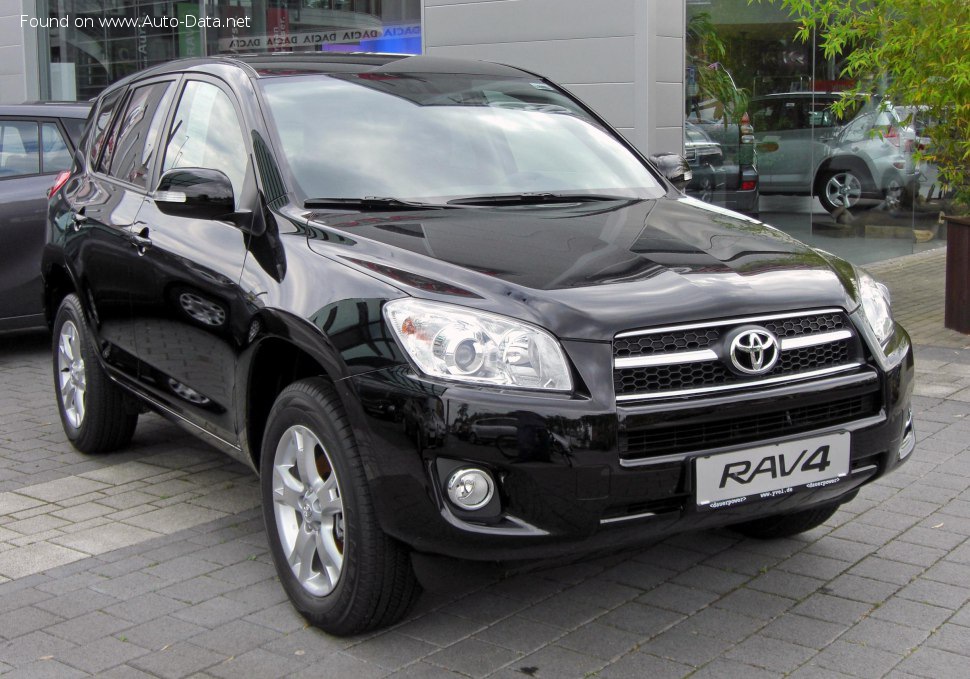
The Toyota RAV4 III (XA30, facelift 2008) maintained the five-door SUV body type that had become synonymous with the RAV4 nameplate, offering seating for five occupants. The facelift introduced a refreshed front grille, updated bumpers, and revised headlamp and taillamp designs, giving the RAV4 a more contemporary and assertive look. Its dimensions – 173.82 inches in length, 71.46 inches in width, and 67.72 inches in height – provided a spacious interior while retaining a manageable footprint for urban environments. The 100.79-inch wheelbase contributed to a stable ride and comfortable passenger accommodation.
Inside, the RAV4 focused on practicality and user-friendliness. The cabin featured durable materials and intuitive controls, designed to withstand the rigors of family life. Cargo versatility was a key strength, with a minimum trunk space of 20.69 cubic feet (586 liters), expandable to a generous 61.87 cubic feet (1752 liters) with the rear seats folded down. This expansive cargo area made the RAV4 an ideal choice for hauling luggage, sports equipment, or groceries.
For its time, the RAV4 offered a solid array of features, emphasizing safety and convenience. Standard safety equipment included ABS (Anti-lock Braking System), a crucial feature for maintaining control during emergency braking. The vehicle’s robust construction and comprehensive airbag systems further contributed to occupant protection. The suspension setup, featuring an independent McPherson strut system with coil springs and an anti-roll bar at the front, and a double wishbone system at the rear, provided a comfortable ride quality and competent handling characteristics. Ventilated disc brakes at the front and disc brakes at the rear ensured effective stopping power.
While this specific 2.2 D-4D variant was primarily front-wheel drive, offering a lighter weight and improved fuel economy over all-wheel-drive models, its SUV stance and available ground clearance (with approach, departure, and ramp-over angles of 28.0°, 24.0°, and 20.0° respectively) still hinted at its capability for light off-road excursions or navigating challenging weather conditions. The turning circle of 36.09 feet (11.0 m) made it maneuverable in tight spaces, a practical consideration for urban drivers.
Technical Specifications
| Toyota RAV4 III (XA30, facelift 2008) 2.2 D-4D (150 Hp) | |
|---|---|
| General Information | |
| Brand | Toyota |
| Model | RAV4 |
| Generation | RAV4 III (XA30, facelift 2008) |
| Type (Engine) | 2.2 D-4D (150 Hp) |
| Start of Production | October, 2008 |
| End of Production | May, 2009 |
| Powertrain Architecture | Internal Combustion engine |
| Body type | SUV |
| Seats | 5 |
| Doors | 5 |
| Performance Specifications | |
| Fuel consumption (economy) – urban | 31.8 US mpg (7.4 l/100 km) |
| Fuel consumption (economy) – extra urban | 45.2 US mpg (5.2 l/100 km) |
| Fuel consumption (economy) – combined | 39.2 US mpg (6 l/100 km) |
| CO2 emissions | 156 g/km |
| Fuel Type | Diesel |
| Acceleration 0 – 60 mph | 9.7 sec |
| Maximum speed | 118.06 mph (190 km/h) |
| Emission standard | Euro 5 |
| Weight-to-power ratio | 10.8 kg/Hp (92.6 Hp/tonne) |
| Weight-to-torque ratio | 4.8 kg/Nm (209.9 Nm/tonne) |
| Engine Specifications | |
| Power | 150 Hp @ 3600 rpm |
| Power per liter | 67.2 Hp/l |
| Torque | 250.77 lb.-ft. (340 Nm) @ 2000 rpm |
| Engine layout | Front, Transverse |
| Engine Model/Code | 2AD-FTV |
| Engine displacement | 2.2 Liters (2231 cm3, 136.14 cu. in.) |
| Number of cylinders | 4 |
| Engine configuration | Inline |
| Cylinder Bore | 3.39 in. (86 mm) |
| Piston Stroke | 3.78 in. (96 mm) |
| Compression ratio | 15.7:1 |
| Number of valves per cylinder | 4 |
| Fuel injection system | Diesel Commonrail |
| Engine aspiration | Turbocharger, Intercooler |
| Valvetrain | DOHC |
| Engine oil capacity | 6.23 US qt (5.9 l) |
| Coolant | 7.71 US qt (7.3 l) |
| Engine systems | Particulate filter |
| Space, Volume and Weights | |
| Kerb Weight | 3571.49 lbs. (1620 kg) |
| Max. weight | 4717.89 lbs. (2140 kg) |
| Max load | 1146.4 lbs. (520 kg) |
| Trunk (boot) space – minimum | 20.69 cu. ft. (586 l) |
| Trunk (boot) space – maximum | 61.87 cu. ft. (1752 l) |
| Fuel tank capacity | 15.85 US gal (60 l) |
| Max. roof load | 220.46 lbs. (100 kg) |
| Permitted trailer load with brakes (12%) | 4409.25 lbs. (2000 kg) |
| Permitted trailer load without brakes | 1653.47 lbs. (750 kg) |
| Permitted towbar download | 176.37 lbs. (80 kg) |
| Dimensions | |
| Length | 173.82 in. (4415 mm) |
| Width | 71.46 in. (1815 mm) |
| Height | 67.72 in. (1720 mm) |
| Wheelbase | 100.79 in. (2560 mm) |
| Minimum turning circle (turning diameter) | 36.09 ft. (11.0 m) |
| Approach angle | 28.0° |
| Departure angle | 24.0° |
| Ramp-over (brakeover) angle | 20.0° |
| Wading depth | 11.81 in. (300 mm) |
| Drivetrain, Brakes and Suspension Specs | |
| Drivetrain Architecture | The Internal combustion engine (ICE) drives the front wheels of the vehicle. |
| Drive wheel | Front wheel drive |
| Number of gears and type of gearbox | 6 gears, manual transmission |
| Front suspension | Independent, type McPherson with coil spring and anti-roll bar |
| Rear suspension | Double wishbone |
| Front brakes | Ventilated discs |
| Rear brakes | Disc |
| Assisting systems | ABS (Anti-lock braking system) |
| Steering type | Steering rack and pinion |
| Tires size | 225/65 R17 |
| Wheel rims size | 6.5J x 17 |
Legacy and Market Impact
The Toyota RAV4, particularly its third generation (XA30), played a pivotal role in solidifying the compact SUV segment globally. While the 2.2 D-4D variant was not offered in the United States, its impact in Europe and other diesel-friendly markets was substantial. It contributed significantly to Toyota’s sales volume in these regions, offering a fuel-efficient alternative to gasoline-powered competitors and larger, less economical SUVs. Its reputation for Toyota’s hallmark reliability and low running costs made it a popular choice among families and individuals seeking a versatile and dependable vehicle.
In its primary markets, the Toyota RAV4 III (XA30, facelift 2008) 2.2 D-4D (150 Hp) faced stiff competition from other European and Asian manufacturers. Key rivals included the Volkswagen Tiguan, Ford Kuga, Nissan Qashqai (known as Rogue Sport in the US), Honda CR-V, and the Hyundai Tucson. The RAV4 distinguished itself with its robust diesel engine, offering a strong balance of performance and economy that often surpassed its gasoline-powered counterparts and stood toe-to-toe with other diesel offerings. Its slightly more rugged, yet still refined, aesthetic also appealed to a broad demographic.
The XA30 generation RAV4, including this diesel variant, marked a period where the compact SUV segment fully embraced a more car-like driving experience, moving away from traditional SUV ruggedness towards greater on-road comfort and handling. This shift was instrumental in the segment’s explosive growth. The 2.2 D-4D model’s success demonstrated Toyota’s ability to adapt its global product strategy to local market preferences, providing a powertrain option that resonated deeply with European consumers focused on fuel economy and torque for diverse driving conditions.
Though its production run was relatively short for the facelifted diesel model (October 2008 to May 2009), it served as an important bridge, showcasing Toyota’s continued refinement of its diesel technology ahead of the next generation. Today, these models are still valued in the used car market for their durability, efficiency, and practical design, standing as a testament to Toyota’s engineering prowess and its understanding of global automotive demands. The 2.2 D-4D RAV4 remains a respected choice for those seeking a dependable and economical compact SUV outside of North America, embodying the global versatility of the RAV4 nameplate.