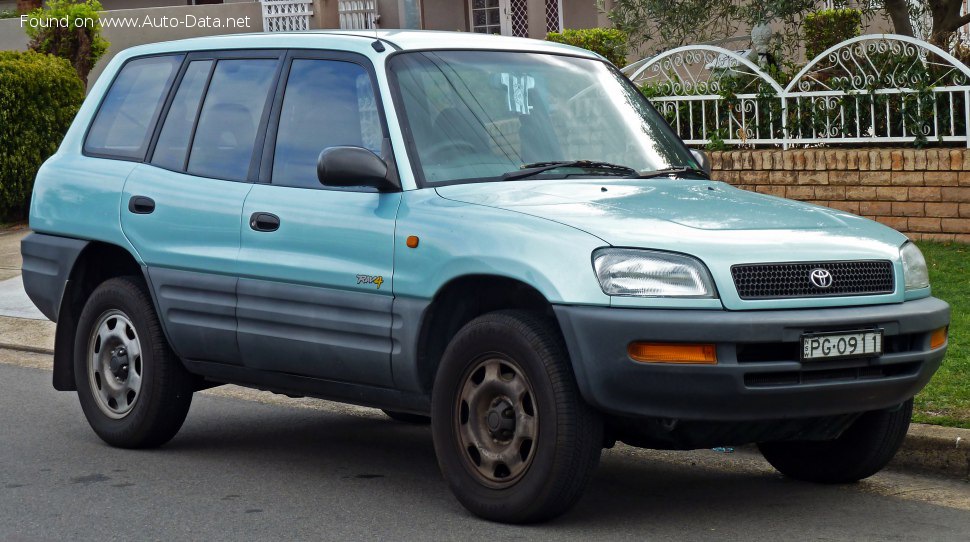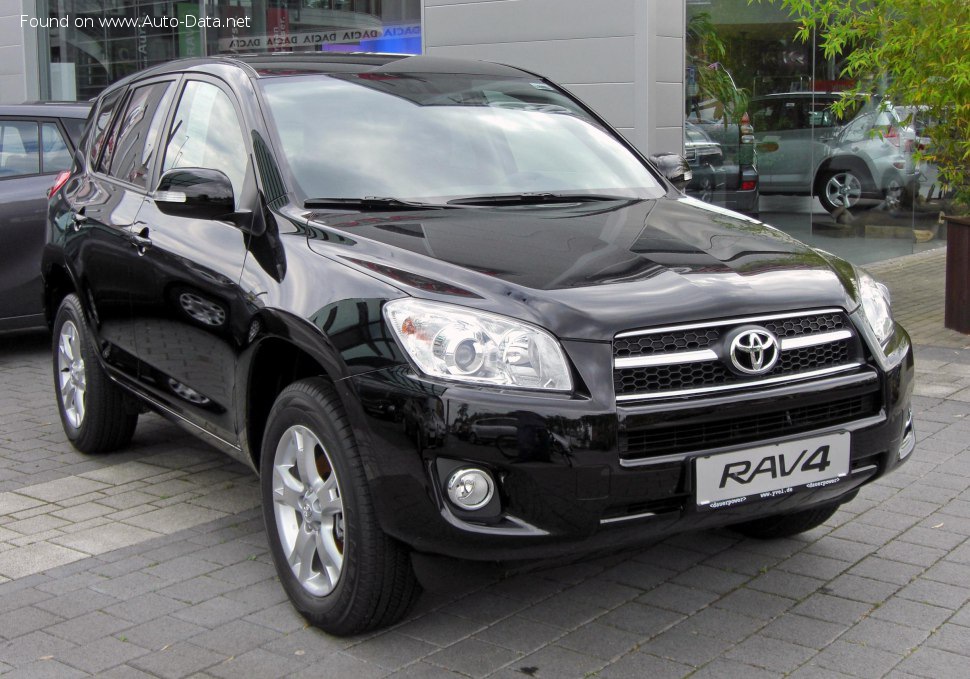
The Toyota RAV4, a pioneering compact crossover SUV, entered its third generation (XA30) in 2005, marking a significant evolution in its design and market positioning. The model underwent a notable facelift in 2008, introducing refreshed styling and powertrain enhancements. Among the updated offerings, the Toyota RAV4 III (XA30 facelift) 2.2 D-4D (150 Hp) 4WD variant stood out, particularly in non-North American markets such as Europe and Asia, where diesel engines were highly favored for their fuel efficiency and robust torque output. This specific configuration, produced from April 2008 to May 2010, exemplified Toyota’s commitment to providing a versatile, capable, and economically sensible vehicle in the fiercely competitive compact SUV segment. Unlike its gasoline-only counterparts sold in the United States, this diesel variant catered to a different set of consumer priorities, emphasizing long-distance cruising efficiency and lower running costs while retaining the RAV4’s renowned practicality and all-wheel-drive capability.
Engine and Performance of the Toyota RAV4 III (XA30 facelift) 2.2 D-4D (150 Hp) 4WD
At the heart of the Toyota RAV4 III (XA30 facelift) 2.2 D-4D (150 Hp) 4WD lies a sophisticated 2.2-liter (2231 cm³, 136.14 cu. in.) 2AD-FTV inline-four diesel engine. This powerplant features a DOHC (Dual Overhead Camshaft) valvetrain with 16 valves (four per cylinder), ensuring efficient air intake and exhaust flow. The engine benefits from a common rail direct fuel injection system, which precisely controls fuel delivery for optimal combustion, contributing to both performance and efficiency. A key component of its robust output is the inclusion of a turbocharger paired with an intercooler, which forces more air into the cylinders, significantly boosting power and torque across a broad RPM range.
This 2.2 D-4D engine generates a substantial 150 horsepower at 3600 revolutions per minute (rpm) and an impressive 250.77 lb-ft (340 Nm) of torque, readily available from a low 2000 rpm. This low-end torque is particularly beneficial for off-road excursions, towing, and everyday driving, providing strong acceleration without needing to rev the engine high. Power is transmitted through a precise 6-speed manual transmission, offering drivers engaging control over the vehicle’s output. The permanent all-wheel-drive (4WD) system enhances traction and stability, making the RAV4 capable across various terrains and challenging weather conditions.
Performance figures for this variant underscore its balanced capabilities. The Toyota RAV4 III (XA30 facelift) 2.2 D-4D (150 Hp) 4WD can accelerate from 0 to 60 miles per hour in a respectable 9.7 seconds, with a maximum speed of 118 mph (190 km/h). Despite its strong performance, fuel economy remains a highlight, especially for a vehicle of its size and capability. The combined fuel consumption is rated at an economical 39.2 US mpg (6 l/100 km), with urban consumption at 31.4 US mpg (7.5 l/100 km) and extra-urban at an impressive 45.2 US mpg (5.2 l/100 km). With CO2 emissions of 159 g/km, this model met the Euro 5 emission standard, a testament to its relatively clean operation for a diesel of its era, further aided by a standard particulate filter.
Design and Features
The 2008 facelift of the Toyota RAV4 III (XA30) brought subtle yet effective updates to its exterior styling, enhancing its contemporary appeal without straying from its established identity. As a compact SUV, the Toyota RAV4 III (XA30 facelift) 2.2 D-4D (150 Hp) 4WD maintained its practical five-door, five-seat configuration. Its dimensions—173.82 inches (4415 mm) in length, 71.46 inches (1815 mm) in width, and 67.72 inches (1720 mm) in height, with a wheelbase of 100.79 inches (2560 mm)—provided a compact footprint ideal for urban maneuverability while offering ample interior space.
The exterior design featured a blend of ruggedness and sophistication, characterized by its confident stance, clear lines, and functional elements. The facelift typically included revised front grilles, headlights, and bumpers, giving it a fresher look. For practical utility, the vehicle boasted an approach angle of 28.0 degrees, a departure angle of 24.0 degrees, and a ramp-over angle of 20.0 degrees, alongside a wading depth of 11.81 inches (300 mm), indicating its readiness for light off-road adventures. The standard tire size was 225/65 R17 on 6.5J x 17 wheel rims, contributing to both aesthetics and performance.
Inside, the RAV4 prioritized ergonomics and versatility. The cabin offered comfortable seating for five adults, with a focus on durable materials and intuitive controls. Cargo capacity was a strong suit, providing a minimum of 20.69 cubic feet (586 liters) of trunk space, which could expand to a generous 61.87 cubic feet (1752 liters) with the rear seats folded, making it highly adaptable for various hauling needs. The maximum roof load capacity of 220.46 lbs (100 kg) and a permitted trailer load with brakes of 4409.25 lbs (2000 kg) further underscored its utility.
In terms of safety and driving dynamics, the Toyota RAV4 III (XA30 facelift) 2.2 D-4D (150 Hp) 4WD was equipped with essential systems for its time. Front suspension utilized an independent McPherson strut setup with coil springs and an anti-roll bar, while the rear featured a double wishbone configuration, providing a comfortable ride and stable handling. Braking was handled by ventilated discs at the front and disc brakes at the rear, supported by an Anti-lock Braking System (ABS) for enhanced stopping control. The steering was a rack and pinion type, offering precise feedback. These features, combined with the all-wheel-drive system, contributed to a secure and confident driving experience, a hallmark of Toyota’s engineering philosophy.
Technical Specifications
| Category | Specification |
|---|---|
| Brand | Toyota |
| Model | RAV4 |
| Generation | RAV4 III (XA30, facelift 2008) |
| Type (Engine) | 2.2 D-4D (150 Hp) 4WD |
| Production Start | April, 2008 |
| Production End | May, 2010 |
| Powertrain Architecture | Internal Combustion Engine |
| Body Type | SUV |
| Seats | 5 |
| Doors | 5 |
| Performance Specs | |
| Fuel Consumption (Urban) | 7.5 l/100 km (31.4 US mpg) |
| Fuel Consumption (Extra Urban) | 5.2 l/100 km (45.2 US mpg) |
| Fuel Consumption (Combined) | 6 l/100 km (39.2 US mpg) |
| CO2 Emissions | 159 g/km |
| Fuel Type | Diesel |
| Acceleration 0 – 60 mph | 9.7 sec |
| Maximum Speed | 190 km/h (118.06 mph) |
| Emission Standard | Euro 5 |
| Weight-to-Power Ratio | 11.1 kg/Hp (89.8 Hp/tonne) |
| Weight-to-Torque Ratio | 4.9 kg/Nm (203.6 Nm/tonne) |
| Engine Specs | |
| Power | 150 Hp @ 3600 rpm |
| Power per liter | 67.2 Hp/l |
| Torque | 340 Nm @ 2000 rpm (250.77 lb-ft @ 2000 rpm) |
| Engine Layout | Front, Transverse |
| Engine Model/Code | 2AD-FTV |
| Engine Displacement | 2231 cm³ (136.14 cu. in.) |
| Number of Cylinders | 4 |
| Engine Configuration | Inline |
| Cylinder Bore | 86 mm (3.39 in.) |
| Piston Stroke | 96 mm (3.78 in.) |
| Compression Ratio | 15.7:1 |
| Number of Valves per Cylinder | 4 |
| Fuel Injection System | Diesel Commonrail |
| Engine Aspiration | Turbocharger, Intercooler |
| Valvetrain | DOHC |
| Engine Oil Capacity | 5.9 l (6.23 US qt) |
| Coolant Capacity | 7.3 l (7.71 US qt) |
| Engine Systems | Particulate filter |
| Space, Volume and Weights | |
| Kerb Weight | 1670 kg (3681.72 lbs) |
| Max. Weight | 2190 kg (4828.12 lbs) |
| Max Load | 520 kg (1146.4 lbs) |
| Trunk (boot) Space – Minimum | 586 l (20.69 cu. ft.) |
| Trunk (boot) Space – Maximum | 1752 l (61.87 cu. ft.) |
| Fuel Tank Capacity | 60 l (15.85 US gal) |
| Max. Roof Load | 100 kg (220.46 lbs) |
| Permitted Trailer Load with Brakes (12%) | 2000 kg (4409.25 lbs) |
| Permitted Trailer Load without Brakes | 750 kg (1653.47 lbs) |
| Permitted Towbar Download | 80 kg (176.37 lbs) |
| Dimensions | |
| Length | 4415 mm (173.82 in.) |
| Width | 1815 mm (71.46 in.) |
| Height | 1720 mm (67.72 in.) |
| Wheelbase | 2560 mm (100.79 in.) |
| Minimum Turning Circle | 11.0 m (36.09 ft.) |
| Approach Angle | 28.0° |
| Departure Angle | 24.0° |
| Ramp-over (Brakeover) Angle | 20.0° |
| Wading Depth | 300 mm (11.81 in.) |
| Drivetrain, Brakes and Suspension Specs | |
| Drive Wheel | All-wheel drive (4×4) |
| Number of Gears and Type of Gearbox | 6 gears, manual transmission |
| Front Suspension | Independent, McPherson with coil spring and anti-roll bar |
| Rear Suspension | Double wishbone |
| Front Brakes | Ventilated discs |
| Rear Brakes | Disc |
| Assisting Systems | ABS (Anti-lock Braking System) |
| Steering Type | Steering rack and pinion |
| Tires Size | 225/65 R17 |
| Wheel Rims Size | 6.5J x 17 |
Legacy and Market Impact
The Toyota RAV4, particularly its third generation (XA30), played a pivotal role in solidifying the compact SUV segment globally. The Toyota RAV4 III (XA30 facelift) 2.2 D-4D (150 Hp) 4WD variant, while not available in the United States, was a significant contributor to the model’s success in European, Asian, and other international markets. Its reputation for bulletproof reliability, practical versatility, and strong resale value made it a compelling choice for families and individuals seeking a capable and economical vehicle.
In its primary markets, this diesel RAV4 competed fiercely with rivals such as the Honda CR-V, Nissan Qashqai (known as Rogue Sport in some markets) and X-Trail, Volkswagen Tiguan, and Ford Kuga. What set the RAV4 apart was its blend of Toyota’s legendary dependability with a well-engineered all-wheel-drive system and the inherent efficiency benefits of its D-4D