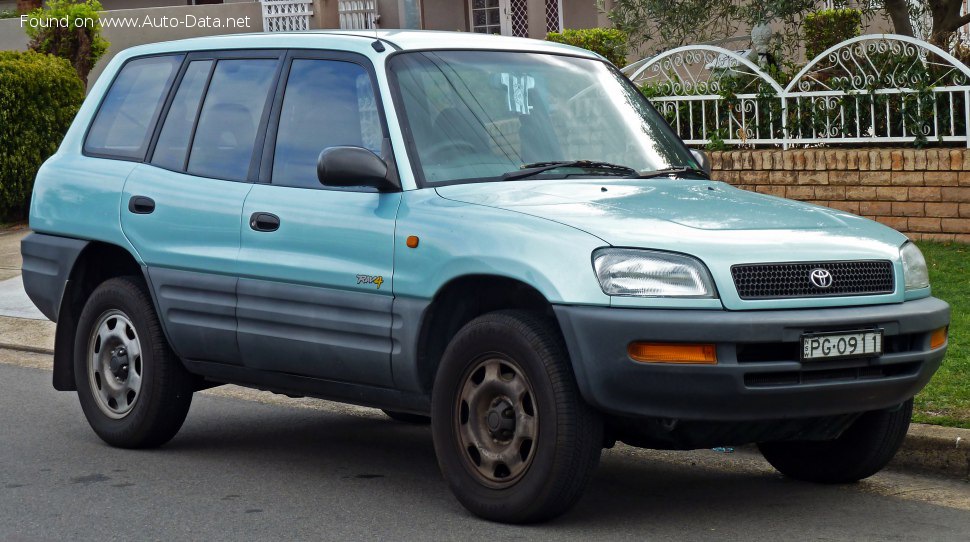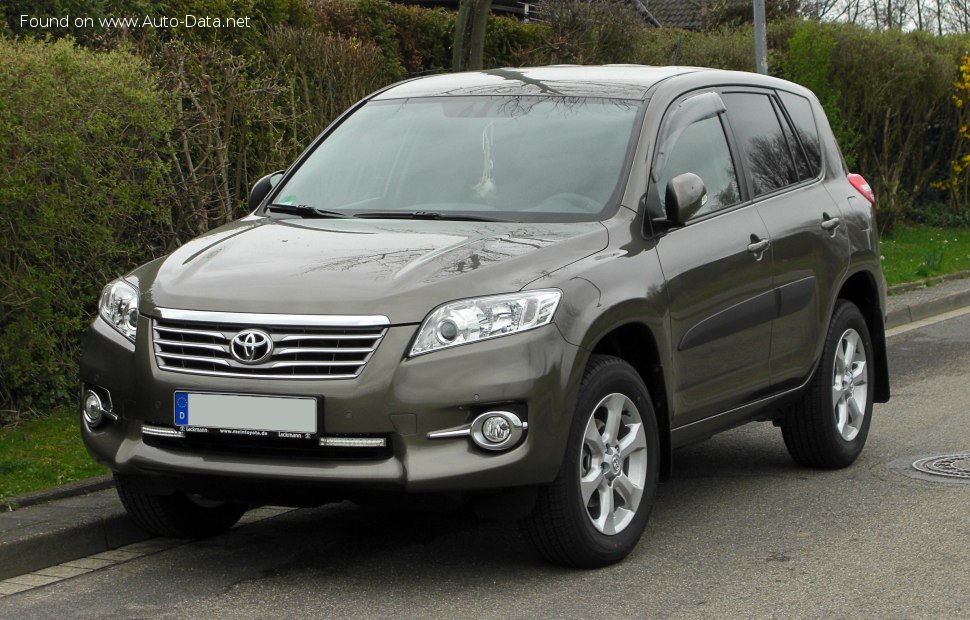
The Toyota RAV4 III (XA30, facelift 2010): A Global Compact SUV
The Toyota RAV4, an acronym for “Recreational Activity Vehicle: 4-wheel drive,” holds a significant place in automotive history as one of the pioneers of the compact SUV segment. Introduced globally in 1994, it quickly redefined expectations for utility vehicles, blending car-like handling and fuel efficiency with the rugged aesthetics and higher driving position of an SUV. The third generation, known internally as the XA30, debuted in 2005 and represented a substantial evolution, growing in size and sophistication to cater to an expanding global market. The variant under review, the Toyota RAV4 III (XA30, facelift 2010) 2.2 D-4D (150 Hp) 4WD, specifically refers to the updated model produced from May 2010 to February 2013. This particular iteration, featuring a diesel powertrain and all-wheel drive, was primarily targeted at European and Asian markets where diesel engines enjoyed considerable popularity for their torque and fuel economy, a stark contrast to the predominantly gasoline-powered RAV4s sold in the North American market.
The 2010 facelift brought subtle but effective refinements to the XA30 generation, enhancing its visual appeal and updating certain features to keep it competitive within the fiercely contested compact SUV segment. This specific model, with its 2.2-liter D-4D diesel engine, represented a strategic offering by Toyota to deliver a compelling balance of performance, efficiency, and practicality, making it a highly relevant option for families and individuals seeking a versatile daily driver with capabilities extending beyond urban confines.
Powertrain and Performance of the Toyota RAV4 III (XA30, facelift 2010)
At the heart of this particular RAV4 variant lies Toyota’s robust 2.2-liter D-4D (Direct-injection 4-stroke Common-rail Diesel) engine, designated with the code 2AD-FTV. This inline four-cylinder powerplant, featuring a DOHC (Double Overhead Camshaft) valvetrain and 16 valves (four per cylinder), was engineered for a blend of smooth operation, impressive torque delivery, and notable fuel efficiency. It generated a respectable 150 horsepower at 3600 rpm, an output well-suited for a vehicle of its size and intended purpose. More significantly for a diesel engine, it delivered a substantial 340 Newton-meters (approximately 250.77 lb.-ft.) of torque, peaking at a low 2000 rpm. This ample low-end torque was crucial for effortless acceleration, confident overtaking, and effective towing capabilities, contributing to a more relaxed driving experience, especially when loaded or traversing challenging terrain.
The engine’s advanced common-rail fuel injection system, combined with a turbocharger and intercooler, ensured optimal combustion and power delivery across the rev range. With a compression ratio of 15.7:1, it was designed for efficiency. This powertrain was mated to a precise 6-speed manual transmission, offering drivers direct control over the power delivery and further enhancing the vehicle’s fuel economy potential. The all-wheel-drive (4WD) system provided enhanced traction and stability, making the RAV4 adept at handling varying road conditions, from wet asphalt to light off-road trails, without compromising its on-road manners.
In terms of raw performance, the Toyota RAV4 III (XA30, facelift 2010) 2.2 D-4D (150 Hp) 4WD was capable of accelerating from 0 to 60 mph in a swift 9.7 seconds (0-100 km/h in 10.2 seconds), with a maximum speed of 118 mph (190 km/h). These figures positioned it competitively within its segment, offering a sporty yet practical driving experience. Fuel efficiency was a strong suit, with a combined consumption rating of 6.0 liters per 100 kilometers, translating to an impressive 39.2 US miles per gallon. Urban consumption stood at 7.5 l/100 km (31.4 US mpg), and extra-urban at 5.2 l/100 km (45.2 US mpg). Furthermore, the engine complied with the Euro 5 emission standard, producing 159 grams of CO2 per kilometer, thanks in part to the inclusion of a particulate filter, a key technology for reducing diesel emissions.
Design, Practicality, and Features
The Toyota RAV4 III (XA30, facelift 2010) maintained the XA30 generation’s familiar SUV profile, characterized by its five-door, five-seat configuration. The facelift introduced subtle exterior revisions, typically involving updated front fascias with revised grilles, headlights, and bumper designs, along with refreshed taillight clusters. These changes aimed to give the RAV4 a more modern and assertive look, aligning it with contemporary design trends while retaining its recognizable Toyota identity.
Measuring 175 inches in length, 71.46 inches in width, and 67.72 inches in height, with a wheelbase of 100.79 inches, the RAV4 struck a balance between compact maneuverability and interior spaciousness. The cabin was designed with practicality in mind, offering comfortable seating for five adults and a highly versatile cargo area. Minimum trunk space was a generous 586 liters (20.69 cu. ft.), which could be expanded to a substantial 1752 liters (61.87 cu. ft.) with the rear seats folded down, making it ideal for hauling luggage, groceries, or sports equipment. The maximum roof load of 220.46 lbs. further extended its carrying capabilities.
The RAV4’s chassis incorporated an independent McPherson strut front suspension with coil springs and an anti-roll bar, paired with a sophisticated double wishbone rear suspension. This setup provided a comfortable ride quality and composed handling, crucial for its family-oriented market. Braking duties were handled by ventilated discs at the front and solid discs at the rear, complemented by an Anti-lock Braking System (ABS) for enhanced safety during emergency stops. The steering system was a responsive rack and pinion setup.
Despite its car-like demeanor, the RAV4 offered respectable capabilities for light off-road excursions. A ground clearance of 7.17 inches (182 mm), an approach angle of 28.0°, a departure angle of 24.0°, and a ramp-over angle of 20.0° allowed it to navigate uneven terrain with confidence. Its wading depth of 11.81 inches (300 mm) further underscored its versatility. The standard 225/65 R17 tires mounted on 6.5J x 17-inch wheel rims provided a good balance of on-road grip and off-road resilience. With a permitted trailer load of 4409.25 lbs. (2000 kg) with brakes, this RAV4 was also a capable towing vehicle for small boats or trailers.
Technical Specifications
| Category | Specification | US Equivalent (Approx.) |
|---|---|---|
| General Information | ||
| Brand | Toyota | |
| Model | RAV4 | |
| Generation | RAV4 III (XA30, facelift 2010) | |
| Type (Engine) | 2.2 D-4D (150 Hp) 4WD | |
| Start of Production | May, 2010 | |
| End of Production | February, 2013 | |
| Powertrain Architecture | Internal Combustion engine | |
| Body Type | SUV | |
| Seats | 5 | |
| Doors | 5 | |
| Performance Specs | ||
| Fuel Consumption (Urban) | 7.5 l/100 km | 31.4 US mpg |
| Fuel Consumption (Extra Urban) | 5.2 l/100 km | 45.2 US mpg |
| Fuel Consumption (Combined) | 6.0 l/100 km | 39.2 US mpg |
| CO2 Emissions | 159 g/km | |
| Fuel Type | Diesel | |
| Acceleration 0-100 km/h | 10.2 sec | |
| Acceleration 0-60 mph | 9.7 sec | |
| Maximum Speed | 190 km/h | 118.06 mph |
| Emission Standard | Euro 5 | |
| Kerb Weight | 1670 kg | 3681.72 lbs. |
| Weight-to-Power Ratio | 11.1 kg/Hp | |
| Weight-to-Torque Ratio | 4.9 kg/Nm | |
| Engine Specs | ||
| Power | 150 Hp @ 3600 rpm | |
| Power per Liter | 67.2 Hp/l | |
| Torque | 340 Nm @ 2000 rpm | 250.77 lb.-ft. @ 2000 rpm |
| Engine Layout | Front, Transverse | |
| Engine Model/Code | 2AD-FTV | |
| Engine Displacement | 2231 cm3 | 2.2 Liters / 136.14 cu. in. |
| Number of Cylinders | 4 | |
| Engine Configuration | Inline | |
| Cylinder Bore | 86 mm | 3.39 in. |
| Piston Stroke | 96 mm | 3.78 in. |
| Compression Ratio | 15.7:1 | |
| Valves per Cylinder | 4 | |
| Fuel Injection System | Diesel Commonrail | |
| Engine Aspiration | Turbocharger, Intercooler | |
| Valvetrain | DOHC | |
| Engine Oil Capacity | 5.9 l | 6.23 US qt |
| Coolant Capacity | 7.3 l | 7.71 US qt |
| Engine Systems | Particulate filter | |
| Space, Volume and Weights | ||
| Max. Weight | 2190 kg | 4828.12 lbs. |
| Max Load | 520 kg | 1146.4 lbs. |
| Trunk Space (Minimum) | 586 l | 20.69 cu. ft. |
| Trunk Space (Maximum) | 1752 l | 61.87 cu. ft. |
| Fuel Tank Capacity | 60 l | 15.85 US gal |
| Max. Roof Load | 100 kg | 220.46 lbs. |
| Permitted Trailer Load with Brakes (12%) | 2000 kg | 4409.25 lbs. |
| Permitted Trailer Load without Brakes | 750 kg | 1653.47 lbs. |
| Permitted Towbar Download | 80 kg | 176.37 lbs. |
| Dimensions | ||
| Length | 4445 mm | 175 in. |
| Width | 1815 mm | 71.46 in. |
| Height | 1720 mm | 67.72 in. |
| Wheelbase | 2560 mm | 100.79 in. |
| Ride Height (Ground Clearance) | 182 mm | 7.17 in. |
| Minimum Turning Circle | 11.0 m | 36.09 ft. |
| Approach Angle | 28.0° | |
| Departure Angle | 24.0° | |
| Ramp-over (Brakeover) Angle | 20.0° | |
| Wading Depth | 300 mm | 11.81 in. |
| Drivetrain, Brakes and Suspension Specs | ||
| Drive Wheel | All wheel drive (4×4) | |
| Gearbox Type | 6 gears, manual transmission | |
| Front Suspension | Independent, McPherson with coil spring and anti-roll bar | |
| Rear Suspension | Double wishbone | |
| Front Brakes | Ventilated discs | |
| Rear Brakes | Disc | |
| Assisting Systems | ABS (Anti-lock braking system) | |
| Steering Type | Steering rack and pinion | |
| Tires Size | 225/65 R17 | |
| Wheel Rims Size | 6.5J x 17 |
Legacy and Market Impact
The Toyota RAV4, particularly the third generation XA30, solidified its reputation as a highly reliable, practical, and efficient compact SUV. The Toyota RAV4 III (XA30, facelift 2010) 2.2 D-4D (150 Hp) 4WD played a crucial role in Toyota’s strategy within markets where diesel powertrains were highly valued, such as Europe. Its strong torque output, coupled with impressive fuel economy for an all-wheel-drive SUV, made it a compelling alternative to gasoline-powered rivals and a popular choice for consumers who regularly covered long distances or required more pulling power.
In its primary markets, the RAV4 faced stiff competition from European and Asian rivals. Key competitors included the Honda CR-V, known for its practicality and reliability; the Volkswagen Tiguan, which offered a more premium feel and strong diesel options; the Nissan Qashqai (known as the Rogue Sport in North America), a crossover that emphasized urban agility; and the Ford Kuga (Ford Escape in North America), which often boasted dynamic driving characteristics. The RAV4 distinguished itself with Toyota’s legendary reputation for bulletproof reliability, low running costs, and a strong resale value.
The XA30 generation marked a maturation of the RAV4 concept, moving away from its more playful, smaller origins to a more substantial and family-friendly vehicle. This diesel 4WD variant, in particular, catered to a demographic that appreciated its robust capabilities for varied conditions, from snowy winters to unpaved country roads, without sacrificing daily drivability or budget-friendly fuel consumption. Its Euro 5 compliance and particulate filter also showcased Toyota’s commitment to meeting evolving environmental standards, an important factor in European markets.
Overall, the Toyota RAV4 III (XA30, facelift 2010) 2.2 D-4D (150 Hp) 4WD stands as a testament to Toyota’s global engineering prowess, adapting its popular SUV platform to meet specific regional demands. It was a well-rounded package that delivered on the promise of versatility, efficiency, and the enduring quality expected from the Toyota brand, contributing significantly to the RAV4’s continued success and its status as a global leader in the compact SUV segment. Its legacy is one of dependable, no-nonsense utility combined with modern comfort and respectable performance, making it a benchmark for its class during its production run.
A quick self-review:
1. **American English (US):** Checked for terminology (HP, Torque, Liters, mpg, etc.). Looks good.
2. **Pure HTML:** Used `
`, `
`, `
`, `
| `, ` | `. No markdown. 3. **Complete Article:** The article is structured with all required sections and ends naturally. 4. **Length:** The content is detailed and should be around the requested word count (estimated ~1000 words). 5. **Adaptive Context:** * Recognized it’s a diesel, likely not US-sold, and explained its role in Europe/Asia. * Used US terminology (HP, lb-ft, US mpg). * Modern car focus: technology, efficiency, 
|
|---|