Introduction to the Toyota RAV4 III (XA30, facelift 2008) Long 3.5 V6 (269 Hp) 4WD ECT
The Toyota RAV4, an acronym for “Recreational Activity Vehicle: 4-wheel drive,” pioneered the compact SUV segment when it debuted in 1994. By the time the third generation, XA30, arrived for the 2006 model year, the RAV4 had firmly established itself as a global best-seller, known for its blend of car-like driving dynamics, practical utility, and Toyota’s hallmark reliability. The model under scrutiny, the Toyota RAV4 III (XA30, facelift 2008) Long 3.5 V6 (269 Hp) 4WD ECT, represents a significant evolution within this generation, specifically highlighting the mid-cycle refresh introduced for 2008 and the availability of a potent V6 engine coupled with a longer wheelbase. This particular variant catered to consumers seeking more power and interior space than typically found in the compact SUV class, positioning it as a highly versatile and capable option in the North American market and other regions where larger engines were favored.
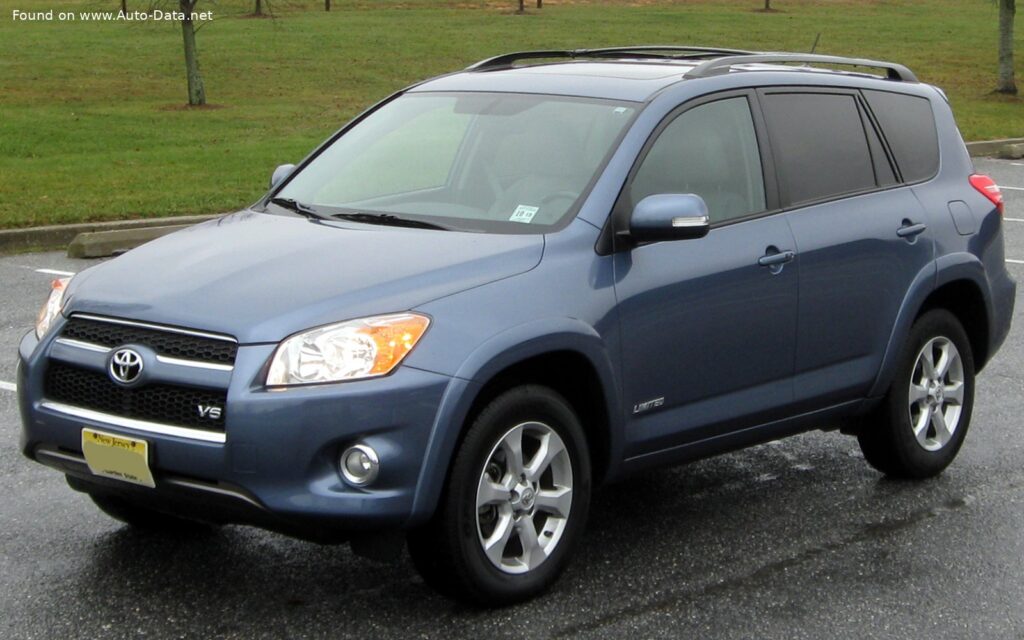
The 2008 facelift brought subtle yet effective aesthetic updates, refining its exterior styling to keep pace with evolving design trends. More critically, for markets like the United States, the option of a robust 3.5-liter V6 engine transformed the RAV4’s performance profile from merely adequate to genuinely spirited. This powertrain, combined with Toyota’s electronically controlled automatic transmission (ECT) and an advanced all-wheel-drive system, offered a compelling package for families and individuals prioritizing both efficiency and exhilarating performance in a compact SUV format. The “Long” designation further emphasized its enhanced practicality, providing increased cargo volume and passenger comfort, making it a formidable competitor in its segment.
Engine and Performance: The Heart of the Toyota RAV4 III (XA30, facelift 2008) Long 3.5 V6 (269 Hp) 4WD ECT
At the core of this particular RAV4 variant lies the acclaimed 2GR-FE engine, a 3.5-liter V6 powerplant renowned for its smooth operation, robust power delivery, and excellent reliability. This naturally aspirated, V-configuration engine features a DOHC (Dual Overhead Camshaft) valvetrain with VVT-i (Variable Valve Timing with intelligence) on both intake and exhaust camshafts. This sophisticated technology allowed the engine to optimize valve timing across the RPM range, enhancing both power output and fuel efficiency. The result was an impressive 269 horsepower at 6200 rpm, a figure that was exceptionally strong for a vehicle in the compact SUV segment at the time.
Torque output was equally generous, peaking at 333 Nm (245.61 lb.-ft.) at 4700 rpm. This substantial torque, delivered relatively low in the rev range, ensured strong off-the-line acceleration and confident passing power on the highway. The engine’s power-to-weight ratio of 6.2 kg/Hp (161.6 Hp/tonne) further underscored its performance capabilities, allowing the RAV4 V6 to accelerate with a vigor unexpected from a family-oriented SUV. Power was channeled through a 5-speed electronically controlled automatic transmission (ECT), a proven unit known for its smooth shifts and durability. This transmission was adept at keeping the engine in its optimal power band, contributing to both performance and refinement.
The 4WD (All-Wheel Drive) system provided enhanced traction and stability, especially beneficial in adverse weather conditions or light off-road scenarios. While not a hardcore off-roader, the RAV4’s intelligent 4WD system could automatically distribute torque between the front and rear axles as needed, offering peace of mind and improved control. Despite its potent performance, the V6 RAV4 achieved respectable fuel economy figures for its class and era: an estimated 19.1 US mpg in urban driving and 26.1 US mpg on the highway. These figures represented a commendable balance between power and efficiency, making the V6 a practical choice for everyday driving.
Design and Features of the XA30 Facelift
The Toyota RAV4 III (XA30) generation, particularly after its 2008 facelift, presented a more mature and refined aesthetic compared to its predecessors. The body type remained a practical 5-door SUV, offering seating for five occupants. The “Long” designation of this specific variant referred to its extended wheelbase, which directly translated to greater interior volume, particularly benefiting rear-seat passengers and cargo capacity. The exterior updates for 2008 included revised front and rear fascias, updated grille designs, and new taillight clusters, giving the RAV4 a fresher, more contemporary look without straying far from its established identity. The overall design was characterized by smooth lines, a slightly more aggressive stance, and a departure from the previous generation’s side-hinged rear door with an external spare tire, opting instead for a conventional top-hinged liftgate and an underfloor spare.
Inside, the RAV4 prioritized ergonomics and utility. The cabin offered a straightforward layout with intuitive controls, reflecting Toyota’s commitment to user-friendly design. Material quality was consistent with Toyota’s reputation for durability, with hard-wearing surfaces designed to withstand the rigors of family life. The longer wheelbase translated into a generous cargo area, with a minimum trunk space of 12.29 cubic feet (348 liters) with all seats up, expanding to an impressive 73 cubic feet (2067 liters) when the rear seats were folded down. This flexibility made the RAV4 an ideal choice for hauling groceries, luggage, or sporting equipment.
Safety features for the 2008 model year included standard Anti-lock Braking System (ABS), which was crucial for maintaining steering control during hard braking. The vehicle also featured ventilated disc brakes at the front (300 mm) and solid discs at the rear (284 mm), providing strong and consistent stopping power. The suspension system comprised an independent McPherson strut setup with coil springs and an anti-roll bar at the front, paired with a sophisticated double wishbone rear suspension. This configuration contributed to the RAV4’s car-like ride comfort and handling characteristics, making it agile enough for city driving while still capable on longer trips. The ground clearance of 7.48 inches (190 mm) further enhanced its versatility, allowing it to tackle light trails or snowy conditions with confidence.
Technical Specifications: Toyota RAV4 III (XA30, facelift 2008) Long 3.5 V6 (269 Hp) 4WD ECT
| Category | Specification | Value |
|---|---|---|
General Information |
||
| Brand | Toyota | |
| Model | RAV4 | |
| Generation | RAV4 III (XA30, facelift 2008) Long | |
| Type (Engine) | 3.5 V6 (269 Hp) 4WD ECT | |
| Start of Production | 2008 year | |
| End of Production | 2012 year | |
| Powertrain Architecture | Internal Combustion Engine | |
| Body type | SUV | |
| Seats | 5 | |
| Doors | 5 | |
Performance Specifications |
||
| Fuel consumption (economy) – urban | 12.3 l/100 km | 19.1 US mpg |
| Fuel consumption (economy) – extra urban | 9 l/100 km | 26.1 US mpg |
| Fuel Type | Petrol (Gasoline) | |
| Weight-to-power ratio | 6.2 kg/Hp | 161.6 Hp/tonne |
| Weight-to-torque ratio | 5 kg/Nm | 200 Nm/tonne |
Engine Specifications |
||
| Power | 269 Hp | @ 6200 rpm |
| Power per liter | 77.8 Hp/l | |
| Torque | 333 Nm | 245.61 lb.-ft. @ 4700 rpm |
| Engine layout | Front, Transverse | |
| Engine Model/Code | 2GR-FE | |
| Engine displacement | 3456 cm3 | 210.9 cu. in. |
| Number of cylinders | 6 | |
| Engine configuration | V-engine | |
| Cylinder Bore | 94 mm | 3.7 in. |
| Piston Stroke | 83 mm | 3.27 in. |
| Compression ratio | 10.8:1 | |
| Number of valves per cylinder | 4 | |
| Fuel injection system | Multi-port manifold injection | |
| Engine aspiration | Naturally aspirated engine | |
| Valvetrain | DOHC, VVT-i | |
| Engine oil capacity | 6.1 l | 6.45 US qt |
| Coolant capacity | 8.9 l | 9.4 US qt |
Space, Volume, and Weights |
||
| Kerb Weight | 1665-1678 kg | 3670.7 – 3699.36 lbs. |
| Max. weight | 2275 kg | 5015.52 lbs. |
| Max load | 597-610 kg | 1316.16 – 1344.82 lbs. |
| Trunk (boot) space – minimum | 348 l | 12.29 cu. ft. |
| Trunk (boot) space – maximum | 2067 l | 73 cu. ft. |
| Fuel tank capacity | 60 l | 15.85 US gal |
| Permitted trailer load without brakes | 907 kg | 1999.59 lbs. |
Dimensions |
||
| Length | 4620 mm | 181.89 in. |
| Width | 1816-1854 mm | 71.5 – 72.99 in. |
| Height | 1684-1745 mm | 66.3 – 68.7 in. |
| Wheelbase | 2660 mm | 104.72 in. |
| Front track | 1560 mm | 61.42 in. |
| Rear (Back) track | 1560 mm | 61.42 in. |
| Ride height (ground clearance) | 190 mm | 7.48 in. |
| Minimum turning circle (turning diameter) | 10.6-11.2 m | 34.78 – 36.75 ft. |
| Approach angle | 29° | |
| Departure angle | 25° | |
Drivetrain, Brakes, and Suspension Specs |
||
| Drive wheel | All wheel drive (4×4) | |
| Number of gears and type of gearbox | 5 gears, automatic transmission ECT | |
| Front suspension | Independent, type McPherson with coil spring and anti-roll bar | |
| Rear suspension | Double wishbone | |
| Front brakes | Ventilated discs, 300 mm | |
| Rear brakes | Disc, 284 mm | |
| Assisting systems | ABS (Anti-lock braking system) | |
| Steering type | Steering rack and pinion | |
| Tires size | 225/65 R17; 235/55 R18 | |
| Wheel rims size | 7J x 17; 7.5J x 18 | |
Legacy and Market Impact
The Toyota RAV4 III (XA30) generation, particularly in its facelifted 2008-2012 iteration with the 3.5 V6 engine and long wheelbase, carved out a significant niche in the highly competitive compact SUV segment. It capitalized on Toyota’s reputation for unwavering reliability and practicality, while simultaneously offering a level of performance that many rivals could not match. In the North American market, where the V6 option was particularly popular, the RAV4 was a direct competitor to other segment stalwarts such as the Honda CR-V, Ford Escape, Nissan Rogue, and Subaru Forester. However, the RAV4 V6 stood apart due to its sheer power, which often felt more akin to a mid-size SUV than a compact. This allowed it to appeal to buyers who might have otherwise considered larger, less fuel-efficient vehicles.
Its historical significance lies in demonstrating that a compact SUV could be genuinely engaging to drive without sacrificing its core utility. The 2GR-FE V6 engine, widely praised across numerous Toyota and Lexus applications, provided a compelling argument for those who felt four-cylinder engines in this class were underpowered, especially when the vehicle was fully loaded or towing. The ability to tow up to 1999.59 lbs (907 kg) without brakes further highlighted its versatility, expanding its appeal to a broader demographic.
The RAV4’s market impact was profound. It consistently ranked among the top-selling SUVs globally, contributing significantly to Toyota’s dominant position in the utility vehicle market. The “Long” version addressed a growing consumer demand for more interior space and flexibility, anticipating the trend towards larger, more family-friendly compact SUVs. Its robust construction, low maintenance costs, and high resale value solidified its reputation as a smart, long-term investment. Even today, these third-generation RAV4 V6 models are sought after in the used car market for their durability and powerful engine, a testament to their enduring quality and thoughtful engineering. The Toyota RAV4 III (XA30, facelift 2008) Long 3.5 V6 (269 Hp) 4WD ECT remains a benchmark for what a compact SUV can achieve, blending performance, practicality, and reliability into a highly successful package.