Introduction: The Evolution of a Crossover Icon
The Toyota RAV4 III (XA30) Long 2.4 VVT-i (166 Hp) Automatic represents a pivotal moment in the evolution of the compact SUV segment. Launched in November 2005, this third-generation RAV4 moved further away from its more rugged, off-road-oriented predecessors, embracing a refined, car-like driving experience that resonated deeply with mainstream consumers. The XA30 generation, produced until 2009 for this specific variant, cemented the RAV4’s status as a formidable contender in the rapidly growing crossover market, especially in North America.
The “Long” designation of this particular model is significant, indicating a longer wheelbase version that allowed for greater interior space and, crucially, the option of a third row of seating, expanding its appeal to families needing more versatility than a traditional compact SUV typically offered. This strategic move positioned the RAV4 to compete not just with other compact crossovers but also to encroach on the territory of mid-size SUVs and minivans for buyers prioritizing fuel efficiency and maneuverability.
The Toyota RAV4 III (XA30) Long: A Global Player
The Toyota RAV4 III (XA30), particularly its longer-wheelbase variant, was a global product, but it found immense success in the United States. Its blend of Toyota’s renowned reliability, practical design, and efficient powertrain options made it a top seller. For this specific model, the 2.4-liter VVT-i engine paired with an automatic transmission offered a compelling balance of performance for daily driving and reasonable fuel economy, characteristics highly valued by American consumers.
Engine and Performance: The 2.4 VVT-i Powertrain
At the heart of the Toyota RAV4 III (XA30) Long 2.4 VVT-i (166 Hp) Automatic lies the robust and widely utilized Toyota 2AZ-FE engine. This naturally aspirated, 2.4-liter (2362 cm3 or 144.14 cu. in.) inline-four cylinder engine was a staple in many Toyota models during this era, celebrated for its smooth operation and bulletproof reliability. Featuring a DOHC (Double Overhead Camshaft) valvetrain with Toyota’s VVT-i (Variable Valve Timing with intelligence) system, the engine was designed to optimize valve timing for improved power delivery across the RPM range and enhanced fuel efficiency.
The 2AZ-FE unit in this RAV4 generated a respectable 166 horsepower at 6000 rpm, providing ample power for merging onto highways and navigating urban environments. Torque output stood at 224 Nm (165.21 lb.-ft.) at 4000 rpm, ensuring responsive acceleration and sufficient grunt for hauling cargo or passengers. With a compression ratio of 9.8:1 and a multi-port manifold injection system, the engine delivered a power-per-liter figure of 70.3 Hp/l, showcasing its efficient design.
Driving Dynamics
Power was delivered to the front wheels via a conventional but reliable 4-speed automatic transmission. While later generations would adopt more gears, this transmission was well-matched to the engine’s power band, providing smooth shifts suitable for the vehicle’s intended purpose as a comfortable family hauler. The drivetrain architecture was front-wheel drive, contributing to better fuel economy and lighter curb weight compared to all-wheel-drive variants, which were also available for the RAV4 III.
Fuel economy figures for this 2.4-liter, front-wheel-drive model were competitive for its time: approximately 24 US mpg in urban driving and 30.2 US mpg on the highway. These numbers demonstrated Toyota’s commitment to efficiency, even in a larger, more capable crossover. The vehicle’s weight-to-power ratio was 9 kg/Hp (110.9 Hp/tonne), indicating a balanced performance profile rather than outright sportiness, aligning with its family-oriented mission.
Design and Features: Evolving the Compact SUV
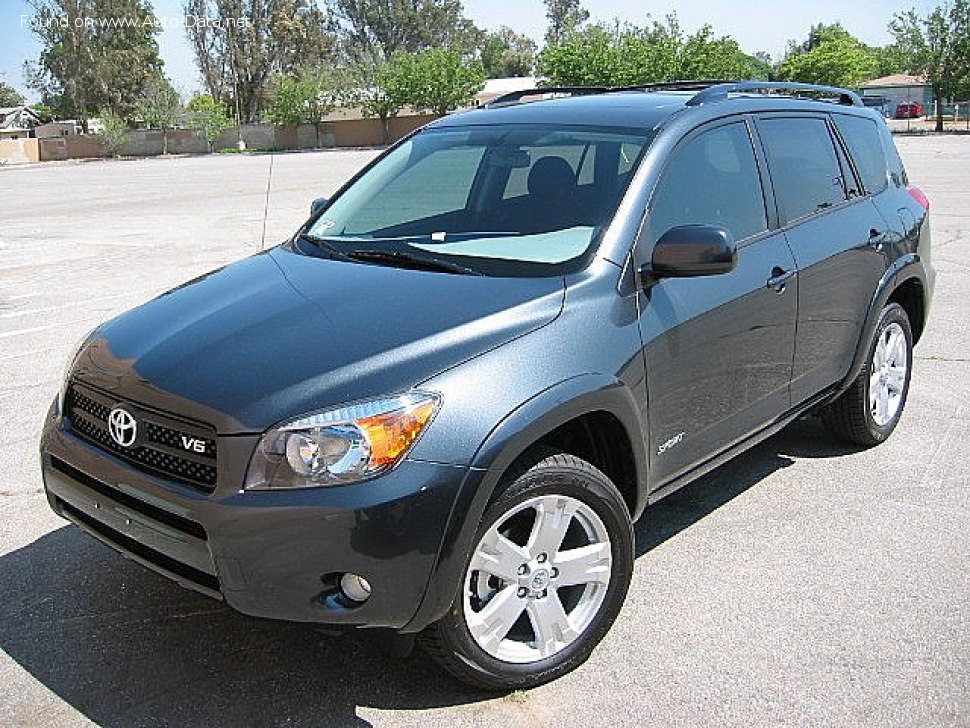
The Toyota RAV4 III (XA30) Long represented a significant stylistic departure from its predecessors. It adopted a more mature and sophisticated design, shedding some of the rugged, angular aesthetics of the first two generations. The body type was a classic SUV configuration with five doors, offering seating for 5 to 7 passengers thanks to its extended wheelbase. With an overall length of 181.1 inches (4600 mm), a width ranging from 71.46 to 73.03 inches (1815-1855 mm), and a height of 68.7 to 69.09 inches (1745-1755 mm), the XA30 Long was noticeably larger than its forebears, providing a more substantial road presence.
The design featured smoother lines, a more integrated front fascia, and a generally less utilitarian appearance, reflecting the growing trend towards car-like comfort and aesthetics in the crossover segment. The drag coefficient (Cd) of 0.33 was commendable for an SUV of its size, contributing to both fuel efficiency and reduced wind noise.
Interior and Versatility
Inside, the Toyota RAV4 III (XA30) Long prioritized practicality and comfort. The longer wheelbase, measuring 104.72 inches (2660 mm), translated directly into a more spacious cabin, especially for rear passengers. The availability of a third-row seat was a major selling point, making it a viable alternative for families who occasionally needed to transport more than five people. Cargo versatility was excellent, with a minimum trunk space of 12.29 cu. ft. (348 liters) that could expand to a cavernous 73 cu. ft. (2067 liters) with the rear seats folded down, accommodating everything from groceries to camping gear.
The interior design was functional and ergonomic, featuring durable materials and straightforward controls. While not overtly luxurious, it offered the expected amenities for a vehicle of its class and era, including air conditioning, power windows, and a capable audio system. The elevated driving position provided good visibility, a characteristic highly valued by SUV buyers.
Safety and Technology
Safety was a key consideration for the XA30 RAV4. Standard features included an Anti-lock Braking System (ABS) with ventilated discs at the front and solid discs at the rear, ensuring confident stopping power. The suspension system comprised an independent MacPherson strut setup with coil springs and an anti-roll bar at the front, paired with a double wishbone rear suspension, providing a comfortable ride and stable handling. The rack and pinion steering offered precise control, making the RAV4 easy to maneuver despite its increased size.
The vehicle rode on 225/65 R17 tires mounted on 7J x 17-inch wheel rims, providing a good balance of grip and ride comfort. The ground clearance of 7.48 inches (190 mm) gave it sufficient capability for light off-road excursions or navigating snowy conditions, while approach and departure angles of 29.3° and 25.4°, respectively, further enhanced its versatility.
Technical Specifications: Toyota RAV4 III (XA30) Long 2.4 VVT-i Automatic
| Category | Specification | US Equivalent |
|---|---|---|
| General Information | ||
| Brand | Toyota | |
| Model | RAV4 | |
| Generation | RAV4 III (XA30) Long | |
| Type (Engine) | 2.4 VVT-i (166 Hp) Automatic | |
| Production Start | November, 2005 | |
| Production End | 2009 | |
| Powertrain Architecture | Internal Combustion Engine | |
| Body Type | SUV | |
| Seats | 5-7 | |
| Doors | 5 | |
| Performance Specs | ||
| Fuel Consumption (Urban) | 9.8 l/100 km | 24 US mpg |
| Fuel Consumption (Extra Urban) | 7.8 l/100 km | 30.2 US mpg |
| Fuel Type | Petrol (Gasoline) | |
| Weight-to-power ratio | 9 kg/Hp | 110.9 Hp/tonne |
| Weight-to-torque ratio | 6.7 kg/Nm | 149.6 Nm/tonne |
| Engine Specs | ||
| Power | 166 Hp @ 6000 rpm | 166 Hp @ 6000 rpm |
| Power per liter | 70.3 Hp/l | |
| Torque | 224 Nm @ 4000 rpm | 165.21 lb.-ft. @ 4000 rpm |
| Maximum Engine Speed | 6500 rpm | |
| Engine Layout | Front, Transverse | |
| Engine Model/Code | 2AZ-FE | |
| Engine Displacement | 2362 cm3 | 2.4 liters (144.14 cu. in.) |
| Number of Cylinders | 4 | |
| Engine Configuration | Inline | |
| Cylinder Bore | 88.5 mm | 3.48 in. |
| Piston Stroke | 96 mm | 3.78 in. |
| Compression Ratio | 9.8:1 | |
| Valves per Cylinder | 4 | |
| Fuel Injection System | Multi-port manifold injection | |
| Engine Aspiration | Naturally aspirated engine | |
| Valvetrain | DOHC, VVT-i | |
| Engine Oil Capacity | 4.3 l | 4.54 US qt |
| Coolant Capacity | 6.8 l | 7.19 US qt |
| Space, Volume and Weights | ||
| Kerb Weight | 1497 kg | 3300.32 lbs. |
| Max. Weight (GVWR) | 2009 kg | 4429.09 lbs. |
| Max Load | 512 kg | 1128.77 lbs. |
| Trunk Space (Min) | 348 l | 12.29 cu. ft. |
| Trunk Space (Max) | 2067 l | 73 cu. ft. |
| Fuel Tank Capacity | 60 l | 15.85 US gal |
| Permitted Trailer Load (Unbraked) | 680 kg | 1499.14 lbs. |
| Dimensions | ||
| Length | 4600 mm | 181.1 in. |
| Width | 1815-1855 mm | 71.46 – 73.03 in. |
| Height | 1745-1755 mm | 68.7 – 69.09 in. |
| Wheelbase | 2660 mm | 104.72 in. |
| Front Track | 1560 mm | 61.42 in. |
| Rear Track | 1560 mm | 61.42 in. |
| Ride Height (Ground Clearance) | 190 mm | 7.48 in. |
| Drag Coefficient (Cd) | 0.33 | |
| Minimum Turning Circle | 11.4 m | 37.4 ft. |
| Approach Angle | 29.3° | |
| Departure Angle | 25.4° | |
| Drivetrain, Brakes and Suspension Specs | ||
| Drivetrain Architecture | Front-wheel drive, Internal Combustion Engine | |
| Drive Wheel | Front-wheel drive | |
| Number of Gears | 4-speed automatic transmission | |
| Front Suspension | Independent, MacPherson with coil spring and anti-roll bar | |
| Rear Suspension | Double wishbone | |
| Front Brakes | Ventilated discs | |
| Rear Brakes | Disc | |
| Assisting Systems | ABS (Anti-lock Braking System) | |
| Steering Type | Steering rack and pinion | |
| Tires Size | 225/65 R17 | |
| Wheel Rims Size | 7J x 17 | |
Legacy and Market Impact
The Toyota RAV4 III (XA30) Long, particularly with the 2.4 VVT-i engine and automatic transmission, played a crucial role in shaping the perception and growth of the compact crossover segment. It built upon the strong foundation of its predecessors, but with a more refined approach that prioritized on-road comfort, interior space, and family-friendly versatility. This generation solidified the RAV4’s reputation as a practical, reliable, and efficient vehicle, hallmarks of the Toyota brand.
Market Positioning and Competitors
In the fiercely competitive North American market, the XA30 RAV4 carved out a significant niche. Its primary competitors included the Honda CR-V, which offered a similar blend of practicality and car-like driving; the Ford Escape, known for its robust sales; and later, entrants like the Nissan Rogue and Hyundai Tucson. The RAV4 distinguished itself with its optional third row of seating, a feature not commonly found in its direct compact SUV rivals at the time, giving it an edge for growing families.
Toyota’s reputation for quality, durability, and reliability (QDR) was a major selling point. Consumers trusted the RAV4 to deliver years of trouble-free service, contributing to strong resale values. Its fuel economy, while not segment-leading, was a significant improvement over larger, body-on-frame SUVs, making it an attractive option during periods of fluctuating gasoline prices.
Enduring Appeal
The Toyota RAV4 III (XA30)‘s legacy is one of successful adaptation and market leadership. It demonstrated that a compact SUV could offer the spaciousness and utility of a larger vehicle without sacrificing the efficiency and driving dynamics of a car. This generation helped popularize the crossover concept, making it a viable and desirable alternative to sedans and traditional SUVs for a broad demographic.
Even today, used examples of the RAV4 III (XA30) are sought after for their dependability and practicality. Its straightforward engineering, combined with Toyota’s commitment to quality, ensures that many of these vehicles continue to provide reliable transportation. The 2.4 VVT-i engine, in particular, remains a testament to Toyota’s engineering prowess, offering a balance of power and longevity that has stood the test of time. The XA30 RAV4 didn’t just meet market demands; it helped define them, setting a benchmark for future compact crossovers.