Introduction to the Toyota RAV4 IV
The Toyota RAV4, an acronym for “Recreational Activity Vehicle: 4-wheel drive,” pioneered the compact crossover SUV segment upon its original debut in the mid-1990s. The fourth generation, known as the Toyota RAV4 IV, built upon this legacy, bringing a more refined design, enhanced driving dynamics, and a broadened appeal to a global audience. Produced from 2012 to 2015, this iteration marked a significant evolution for the model, moving towards a more conventional SUV aesthetic while retaining its characteristic practicality and reliability.
Among the diverse powertrain options offered internationally, the 2.2 D-CAT (Diesel Clean Advanced Technology) variant with 150 horsepower and an automatic 4WD system stood out as a particularly compelling choice in markets where diesel engines were highly favored for their efficiency and torque, such as Europe and parts of Asia. While the North American market primarily received gasoline-powered RAV4s, this specific diesel model underscored Toyota’s commitment to offering tailored solutions for different regional demands, balancing performance with impressive fuel economy and lower CO2 emissions for its class. The Toyota RAV4 IV continued to define the compact SUV segment, offering a blend of urban maneuverability and light off-road capability.
Engine and Performance: The 2.2 D-CAT Powertrain
At the heart of this particular Toyota RAV4 IV model was the robust 2.2-liter D-CAT (Diesel Clean Advanced Technology) inline-four engine, designated by the code 2AD-FHV. This sophisticated turbodiesel unit was engineered to deliver a compelling balance of power, torque, and fuel efficiency, making it an ideal choice for both daily commuting and longer journeys. With a displacement of 2231 cm³ (136.14 cubic inches), the engine featured a DOHC (Double Overhead Camshaft) valvetrain with 4 valves per cylinder, ensuring optimal airflow and combustion.
The engine’s performance figures were respectable for its segment, generating a peak output of 150 horsepower at 3600 rpm. More notably, it produced a substantial 250.77 lb.-ft. of torque, available across a broad and usable range from 2000 to 2800 rpm. This torque characteristic was crucial for the RAV4’s responsiveness, particularly in urban driving or when tackling inclines, allowing for confident acceleration and effortless cruising.
Power was seamlessly delivered to all four wheels via a 6-speed automatic transmission, enhancing driving comfort and mitigating driver fatigue, especially in stop-and-go traffic. The all-wheel-drive (4WD) system provided improved traction and stability across various road conditions, from wet asphalt to snowy paths. In terms of acceleration, the Toyota RAV4 IV 2.2 D-CAT could sprint from 0 to 60 mph in a brisk 9.5 seconds, reaching a maximum speed of 114.95 mph.
Efficiency was a key selling point for the D-CAT engine. The combined fuel economy was rated at 35.6 US mpg, with urban consumption at 29 US mpg and extra-urban figures reaching an impressive 40.6 US mpg. These figures were competitive for its class, especially for a 4WD SUV equipped with an automatic transmission. The D-CAT system also incorporated a particulate filter, allowing the vehicle to meet stringent Euro 5 emission standards, with CO2 emissions of 173 g/km, reflecting Toyota’s commitment to environmental responsibility even in its diesel offerings.
Design and Features: Form Meets Function in the Toyota RAV4 IV
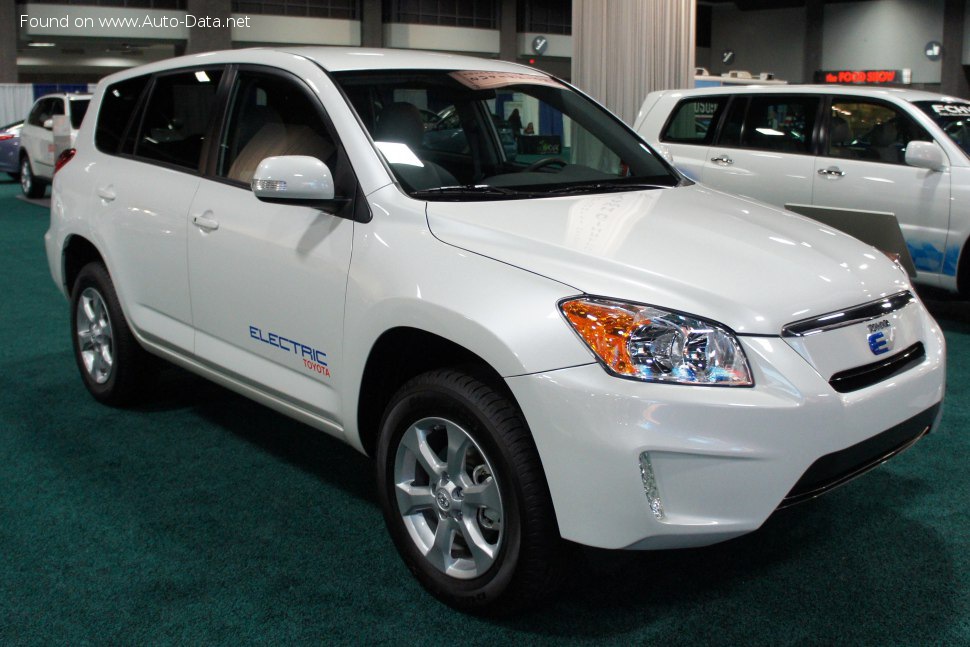
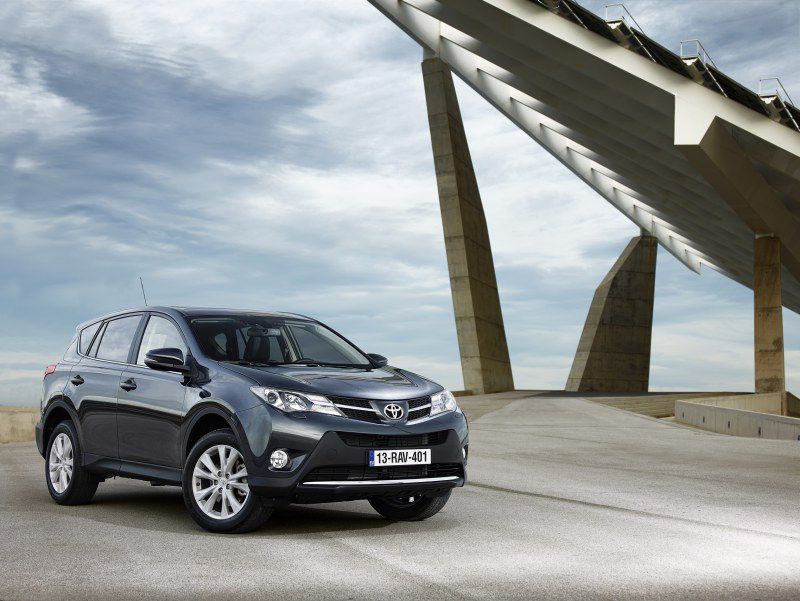
The fourth-generation Toyota RAV4 IV represented a significant departure in design from its more rounded predecessors, adopting a sharper, more angular aesthetic that aligned with Toyota’s evolving design language of the early 2010s. It embraced a more conventional SUV silhouette, shedding the externally mounted spare tire that had been a RAV4 hallmark in some markets, and opting for a side-hinged rear door in favor of a top-hinged liftgate for easier cargo access.
As a five-door SUV with five seats, the RAV4 IV prioritized practicality and passenger comfort. Its dimensions—179.92 inches in length, 72.64 inches in width, and 65.35 inches in height—contributed to a commanding road presence while remaining maneuverable in urban environments. The 104.72-inch wheelbase provided a stable ride and generous interior space for its class. The trunk offered a substantial minimum capacity of 19.32 cubic feet, which could be expanded considerably by folding the rear seats, making it highly versatile for families, adventurers, or those needing ample cargo room.
Underneath its contemporary styling, the Toyota RAV4 IV featured a well-engineered chassis designed for both comfort and capability. The front suspension utilized an independent McPherson strut setup, known for its balance of ride comfort and handling precision. At the rear, a double wishbone suspension system further enhanced stability and improved ride quality, particularly over uneven surfaces. Braking performance was ensured by ventilated discs at the front and solid discs at the rear, complemented by an Anti-lock Braking System (ABS) for enhanced safety during emergency stops.
Standard features for this configuration included a steering rack and pinion system, providing responsive and predictable steering. The vehicle rode on 225/65 R17 tires mounted on 7J x 17-inch wheel rims, offering a good compromise between ride comfort and road holding. Other practical considerations included a 15.85 US gallon fuel tank, a maximum roof load of 187.39 lbs., and respectable towing capacities of 3968.32 lbs. with brakes and 1653.47 lbs. without brakes, further cementing its utility as a versatile family vehicle.
Technical Specifications
| Toyota RAV4 IV 2.2 D-CAT (150 Hp) 4WD Automatic – Specifications | |
|---|---|
| General Information | |
| Brand | Toyota |
| Model | RAV4 |
| Generation | RAV4 IV |
| Type (Engine) | 2.2 D-CAT (150 Hp) 4WD Automatic |
| Start of production | 2012 year |
| End of production | 2015 year |
| Powertrain Architecture | Internal Combustion engine |
| Body type | SUV |
| Seats | 5 |
| Doors | 5 |
| Performance Specs | |
| Fuel consumption (economy) – urban | 29 US mpg (8.1 l/100 km) |
| Fuel consumption (economy) – extra urban | 40.6 US mpg (5.8 l/100 km) |
| Fuel consumption (economy) – combined | 35.6 US mpg (6.6 l/100 km) |
| CO2 emissions | 173 g/km |
| Fuel Type | Diesel |
| Acceleration 0 – 60 mph | 9.5 sec |
| Maximum speed | 114.95 mph (185 km/h) |
| Emission standard | Euro 5 |
| Engine Specs | |
| Power | 150 Hp @ 3600 rpm |
| Power per liter | 67.2 Hp/l |
| Torque | 250.77 lb.-ft. @ 2000-2800 rpm (340 Nm) |
| Engine layout | Front, Transverse |
| Engine Model/Code | 2AD-FHV |
| Engine displacement | 136.14 cu. in. (2231 cm³) |
| Number of cylinders | 4 |
| Engine configuration | Inline |
| Cylinder Bore | 3.39 in. (86 mm) |
| Piston Stroke | 3.78 in. (96 mm) |
| Compression ratio | 15.7:1 |
| Number of valves per cylinder | 4 |
| Fuel injection system | Diesel Commonrail |
| Engine aspiration | Turbocharger, Intercooler |
| Valvetrain | DOHC |
| Engine oil capacity | 6.23 US qt (5.9 l) |
| Coolant | 7.71 US qt (7.3 l) |
| Engine systems | Particulate filter |
| Space, Volume and Weights | |
| Max. weight | 4938.35 lbs. (2240 kg) |
| Trunk (boot) space – minimum | 19.32 cu. ft. (547 l) |
| Fuel tank capacity | 15.85 US gal (60 l) |
| Max. roof load | 187.39 lbs. (85 kg) |
| Permitted trailer load with brakes (12%) | 3968.32 lbs. (1800 kg) |
| Permitted trailer load without brakes | 1653.47 lbs. (750 kg) |
| Permitted towbar download | 165.35 lbs. (75 kg) |
| Dimensions | |
| Length | 179.92 in. (4570 mm) |
| Width | 72.64 in. (1845 mm) |
| Height | 65.35 in. (1660 mm) |
| Wheelbase | 104.72 in. (2660 mm) |
| Front track | 61.81 in. (1570 mm) |
| Rear (Back) track | 61.81 in. (1570 mm) |
| Drag coefficient (Cd) | 0.314 |
| Minimum turning circle (turning diameter) | 37.4 ft. (11.4 m) |
| Drivetrain, Brakes and Suspension Specs | |
| Drive wheel | All-wheel drive (4×4) |
| Number of gears and type of gearbox | 6 gears, automatic transmission |
| Front suspension | Independent type McPherson |
| Rear suspension | Double wishbone |
| Front brakes | Ventilated discs |
| Rear brakes | Disc |
| Assisting systems | ABS (Anti-lock braking system) |
| Steering type | Steering rack and pinion |
| Tires size | 225/65 R17 |
| Wheel rims size | 7J x 17 |
Legacy and Market Impact
The Toyota RAV4 IV, and specifically its 2.2 D-CAT 4WD Automatic variant, played a crucial role in maintaining Toyota’s dominance in the compact SUV segment across various international markets. While gasoline engines were the norm in North America, this diesel option was strategically important for regions like Europe, where diesel powertrains were highly valued for their fuel economy and low-end torque, especially for vehicles of this size and capability.
The RAV4’s reputation for unwavering reliability and low running costs, hallmarks of the Toyota brand, continued with the fourth generation. This, combined with its practical interior, comfortable ride, and available all-wheel-drive system, made it a strong contender against key rivals. In Europe, it competed fiercely with other popular compact SUVs that offered diesel options, such as the Honda CR-V, Mazda CX-5, Volkswagen Tiguan, and Ford Kuga (known as the Escape in the US). The RAV4 often distinguished itself with its superior perceived quality, robust engineering, and strong resale values.
The 2.2 D-CAT engine, with its “Clean Advanced Technology,” was instrumental in demonstrating Toyota’s ability to produce efficient and relatively clean diesel engines that met evolving emissions standards like Euro 5. This helped the Toyota RAV4 IV appeal to environmentally conscious buyers who still desired the torque and range benefits of diesel fuel. Its blend of power (150 HP), torque (250.77 lb.-ft.), and excellent combined fuel economy (35.6 US mpg) made it an economical choice for families and individuals seeking a versatile vehicle without compromising on performance.
Ultimately, the Toyota RAV4 IV‘s legacy is one of successful adaptation and continued relevance. It evolved to meet contemporary design trends and consumer demands for more sophisticated and efficient powertrains, particularly in its international diesel configurations. It solidified the RAV4’s position as a global leader in the compact SUV segment, a segment it helped create, proving that a vehicle could be both practical for daily life and capable enough for recreational activities, all wrapped in Toyota’s renowned package of durability and value. This generation paved the way for even more advanced and electrified RAV4 models that would follow, building on a foundation of innovation and market responsiveness.