The Toyota RAV4 IV 2.5 (176 Hp) ECT-i: A Deep Dive into a Compact SUV Icon
The Toyota RAV4, an acronym for “Recreational Activity Vehicle: 4-wheel drive,” has long been a trailblazer in the compact SUV segment. The fourth generation, known as the RAV4 IV, launched in 2012, marked a significant evolution for the model, solidifying its position as a global leader and a perennial best-seller in markets like the United States. This iteration moved away from some of the more rugged design cues of its predecessors, embracing a sleeker, more car-like aesthetic while retaining the practicality and reliability that Toyota is renowned for. Specifically, the Toyota RAV4 IV 2.5 (176 Hp) ECT-i variant, produced from 2012 to 2015, represented a core offering, balancing performance, efficiency, and everyday usability for a broad audience seeking a versatile family vehicle.
In its fourth generation, the RAV4 continued to be a critical player for Toyota, consistently ranking among the top-selling SUVs worldwide. It offered a compelling package for consumers transitioning from sedans who desired more cargo space, a higher driving position, and the perceived security of an SUV, without the cumbersome dimensions or fuel consumption of larger models. The 2.5-liter engine variant, in particular, was a popular choice in North America, providing ample power for daily driving and highway cruising, making the Toyota RAV4 IV 2.5 (176 Hp) ECT-i a highly competitive entry in its class.
Engine & Performance: The Heart of the Toyota RAV4 IV 2.5 (176 Hp) ECT-i
Under the hood of the Toyota RAV4 IV 2.5 (176 Hp) ECT-i lies Toyota’s well-regarded 2AR-FE inline-four engine. This naturally aspirated 2.5-liter (2494 cm3 or 152.19 cu. in.) powerplant was engineered for a blend of smooth power delivery and respectable fuel economy. It produces a robust 176 horsepower at 6000 rpm, which, for a compact SUV of its time, provided brisk acceleration and confident merging capabilities. Torque output stands at 171.85 lb.-ft. (233 Nm) peaking at 4100 rpm, ensuring sufficient pulling power for daily tasks and light hauling.
The engine features a DOHC (Dual Overhead Camshaft) valvetrain with 4 valves per cylinder, a common and efficient setup for modern internal combustion engines, contributing to its power per liter rating of 70.6 hp/l. Fuel is delivered via a multi-port manifold injection system, a reliable and well-proven technology. With a compression ratio of 10.4:1 and a bore of 3.54 inches (90 mm) and a stroke of 3.86 inches (98 mm), the engine is designed for durability and efficiency. It operates on gasoline and meets the ULEV-II (Ultra-Low Emission Vehicle) standard, reflecting Toyota’s commitment to environmental responsibility during this period.
Power is managed by a 6-speed automatic transmission with ECT-i (Electronically Controlled Transmission with intelligence). This transmission was lauded for its smooth shifts and intelligent adaptation to driving conditions, optimizing both performance and fuel efficiency. The specific variant detailed here utilizes a front-wheel-drive (FWD) architecture, where the engine drives the front wheels, contributing to a lighter curb weight and often better fuel economy compared to all-wheel-drive counterparts. The vehicle’s weight-to-power ratio is 8.9 kg/Hp (113 Hp/tonne), and its weight-to-torque ratio is 6.7 kg/Nm (149.6 Nm/tonne), indicating a well-balanced power-to-weight profile for its segment.
Fuel economy figures for the FWD Toyota RAV4 IV 2.5 (176 Hp) ECT-i were competitive. In urban driving, it achieved approximately 24 US mpg (9.8 l/100 km), while extra-urban (highway) driving yielded around 30.9 US mpg (7.6 l/100 km). These figures made it an economical choice for families and commuters, especially when considering its overall utility. The fuel tank capacity of 15.85 US gallons (60 liters) provided a decent cruising range.
Design & Features: Form Meets Function in the RAV4 IV
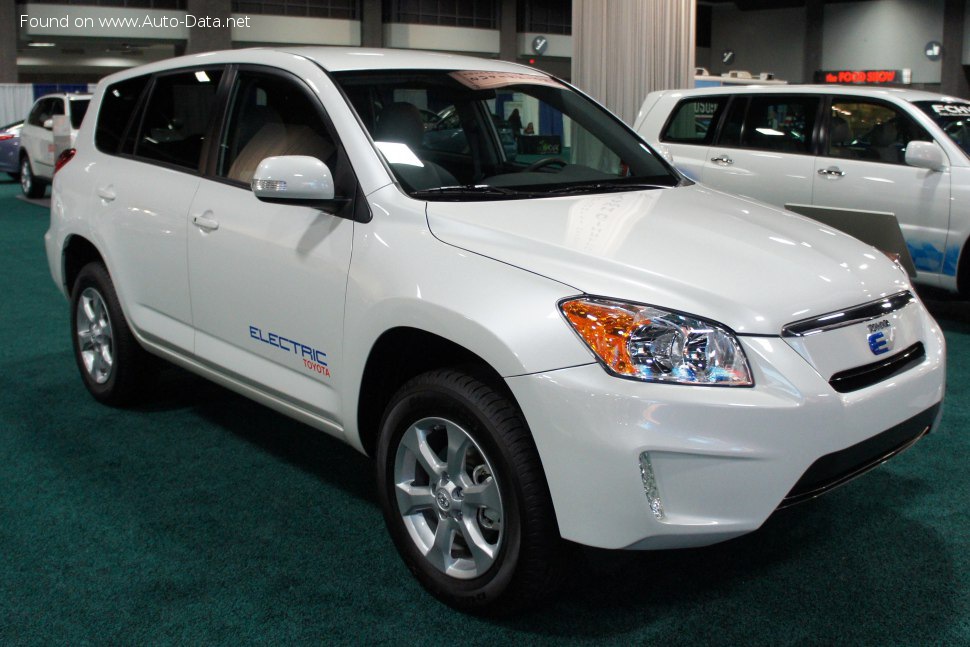
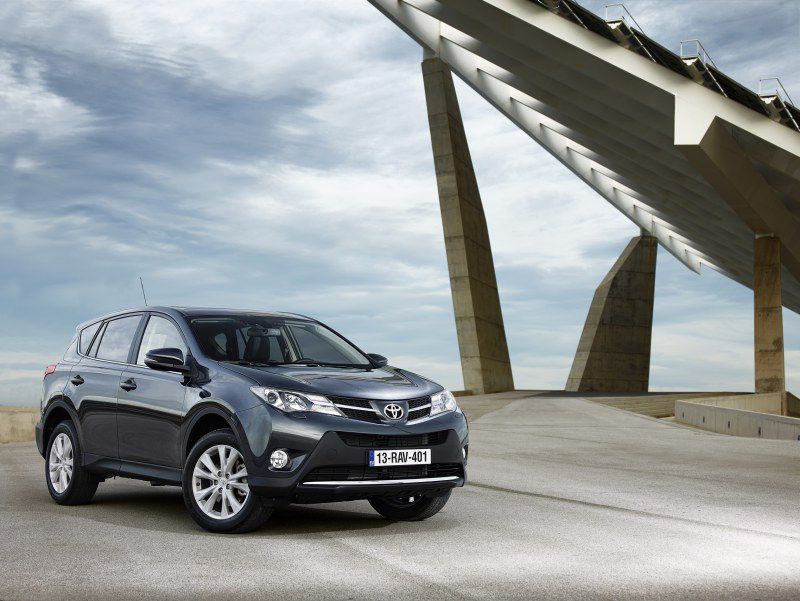
The fourth-generation RAV4 represented a significant stylistic departure from its predecessors. It adopted a more streamlined and aggressive design language, aligning with Toyota’s global design direction at the time. The body type is a classic five-door SUV, offering seating for five occupants. Its exterior dimensions are substantial yet manageable for urban environments: a length of 179.88 inches (4569 mm), a width of 72.6 inches (1844 mm), and a height of 65.39 inches (1661 mm). The wheelbase measures 104.69 inches (2659 mm), contributing to a stable ride and generous interior space.
Inside, the RAV4 IV prioritized practicality and comfort. The cabin was designed with user-friendliness in mind, featuring intuitive controls and ample storage solutions. Cargo capacity was a significant strong point; with the rear seats in place, the trunk offered a minimum of 38.39 cu. ft. (1087 liters) of space. Folding the rear seats down expanded this volume to an impressive 73.38 cu. ft. (2078 liters), making it highly versatile for hauling luggage, groceries, or sports equipment.
The chassis and suspension system were engineered to provide a comfortable ride and confident handling. The front suspension employs an independent McPherson strut setup with a transverse stabilizer, while the rear features a double wishbone system, also with a transverse stabilizer, trailing arm, and coil springs. This combination aimed to strike a balance between ride comfort on varied road surfaces and stable cornering. Braking duties are handled by ventilated discs at the front and solid discs at the rear, supported by ABS (Anti-lock Braking System) for enhanced safety. The steering system is a rack and pinion type with electric power steering, offering light effort at low speeds for easy maneuvering and a more weighted feel at higher speeds for stability. The vehicle rides on 225/65 R17 tires mounted on 7J x 17 wheel rims, providing a good balance of grip and ride comfort. With a ground clearance of 6.3 inches (160 mm), it was suitable for light off-road excursions and tackling varied road conditions, though this FWD variant was primarily designed for paved roads.
Technical Specifications: Toyota RAV4 IV 2.5 (176 Hp) ECT-i
| Category | Specification |
|---|---|
| General Information | |
| Brand | Toyota |
| Model | RAV4 |
| Generation | RAV4 IV |
| Type (Engine) | 2.5 (176 Hp) ECT-i |
| Production Start | 2012 year |
| Production End | 2015 year |
| Powertrain Architecture | Internal Combustion Engine |
| Body Type | SUV |
| Seats | 5 |
| Doors | 5 |
| Performance Specs | |
| Fuel Consumption (Urban) | 24 US mpg (9.8 l/100 km) |
| Fuel Consumption (Extra Urban) | 30.9 US mpg (7.6 l/100 km) |
| Fuel Type | Petrol (Gasoline) |
| Emission Standard | ULEV-II |
| Weight-to-Power Ratio | 8.9 kg/Hp (113 Hp/tonne) |
| Weight-to-Torque Ratio | 6.7 kg/Nm (149.6 Nm/tonne) |
| Engine Specs | |
| Power | 176 Hp @ 6000 rpm |
| Power per Liter | 70.6 Hp/l |
| Torque | 171.85 lb.-ft. (233 Nm) @ 4100 rpm |
| Engine Layout | Front, Transverse |
| Engine Model/Code | 2AR-FE |
| Engine Displacement | 2.5 liters (2494 cm3, 152.19 cu. in.) |
| Number of Cylinders | 4 |
| Engine Configuration | Inline |
| Cylinder Bore | 3.54 in. (90 mm) |
| Piston Stroke | 3.86 in. (98 mm) |
| Compression Ratio | 10.4:1 |
| Valves per Cylinder | 4 |
| Fuel Injection System | Multi-port manifold injection |
| Engine Aspiration | Naturally aspirated |
| Valvetrain | DOHC |
| Engine Oil Capacity | 4.65 US qt (4.4 l) |
| Coolant Capacity | 7.19 US qt (6.8 l) |
| Space, Volume & Weights | |
| Kerb Weight | 3434.8 lbs. (1558 kg) |
| Max. Weight (Gross Vehicle Weight) | 4484.2 lbs. (2034 kg) |
| Max Load | 1049.4 lbs. (476 kg) |
| Trunk (Boot) Space – Minimum | 38.39 cu. ft. (1087 l) |
| Trunk (Boot) Space – Maximum | 73.38 cu. ft. (2078 l) |
| Fuel Tank Capacity | 15.85 US gal (60 l) |
| Permitted Trailer Load with Brakes (12%) | 1499.14 lbs. (680 kg) |
| Dimensions | |
| Length | 179.88 in. (4569 mm) |
| Width | 72.6 in. (1844 mm) |
| Height | 65.39 in. (1661 mm) |
| Wheelbase | 104.69 in. (2659 mm) |
| Front Track | 61.81 in. (1570 mm) |
| Rear (Back) Track | 61.81 in. (1570 mm) |
| Ride Height (Ground Clearance) | 6.3 in. (160 mm) |
| Minimum Turning Circle | 34.78 ft. (10.6 m) |
| Approach Angle | 29° |
| Departure Angle | 22° |
| Drivetrain, Brakes & Suspension | |
| Drivetrain Architecture | Internal combustion engine drives the front wheels. |
| Drive Wheel | Front wheel drive |
| Number of Gears & Gearbox Type | 6 gears, automatic transmission ECT-i |
| Front Suspension | Independent McPherson, Transverse stabilizer |
| Rear Suspension | Double wishbone, Transverse stabilizer, Trailing arm, Coil spring |
| Front Brakes | Ventilated discs |
| Rear Brakes | Disc |
| Assisting Systems | ABS (Anti-lock braking system) |
| Steering Type | Steering rack and pinion |
| Power Steering | Electric Steering |
| Tires Size | 225/65 R17 |
| Wheel Rims Size | 7J x 17 |
Legacy & Market Impact of the Toyota RAV4 IV
The fourth-generation RAV4, particularly models like the Toyota RAV4 IV 2.5 (176 Hp) ECT-i, continued to build upon the model’s formidable reputation for reliability, practicality, and strong resale value. In the highly competitive compact SUV segment, the RAV4 consistently vied for top sales spots against formidable rivals such as the Honda CR-V, Ford Escape, Mazda CX-5, and Subaru Forester. Its appeal lay in its balanced approach: it wasn’t the sportiest, nor the most luxurious, but it excelled in offering a dependable, comfortable, and highly functional vehicle that met the needs of a wide demographic, from young families to empty-nesters.
The RAV4 IV’s impact on the market was significant. It helped solidify the compact SUV as the default family vehicle, often replacing traditional sedans and minivans for many American households. Its move to a more conventional rear liftgate (dropping the side-hinged door and externally mounted spare tire of previous generations) and a more refined interior design were well-received, contributing to its broader appeal. The 2.5-liter engine, specifically, was a sweet spot in the lineup, offering a noticeable power upgrade over the smaller engines available in some markets, without a significant penalty in fuel economy.
Toyota’s reputation for quality and low cost of ownership further enhanced the RAV4’s market standing. Owners appreciated the vehicle’s longevity and minimal maintenance requirements, making it a sensible long-term investment. The presence of advanced safety features for its time, such as ABS, underscored Toyota’s commitment to occupant protection. The RAV4 IV paved the way for the even more popular fifth-generation model, demonstrating Toyota’s ability to adapt and innovate within a rapidly evolving automotive landscape, while staying true to the core values that made the RAV4 an icon.